The Scale-Up Playbook: How to Build High-Conversion Promo Campaigns with Digital Character Voices
Traditional voiceover production is a bottleneck for high-velocity marketing. Discover how to leverage digital character voices to scale your creative output without sacrificing impact.
In the high-stakes world of performance marketing, creative fatigue is the silent killer of ad spend. Running the exact same video ad to the same audience for weeks on end leads to skyrocketing acquisition costs and plummeting click-through rates. To stay competitive, growth teams must constantly refresh their creative assets, testing new hooks, angles, and messaging variants every single week.
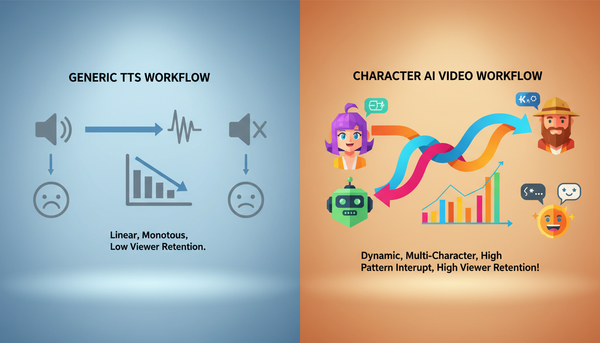
Yet, traditional voiceover production remains a massive operational bottleneck. Waiting days for voice talent bookings, paying high studio rates, and dealing with slow pickup sessions makes rapid iteration impossible. This is why forward-thinking brands are turning to platforms like Fanfun to leverage expressive digital character voices. By utilizing high-impact, instantly recognizable AI interpretations of popular personalities and archetypes, marketers can scale their video production from a handful of static ads to dozens of hyper-targeted, high-conversion promo campaigns in minutes.
The Bottleneck of Traditional Voiceovers (And Why Scale Demands Digital)
Traditional voiceover workflows are fundamentally incompatible with high-velocity digital marketing. When you are managing ad accounts across TikTok, Meta, and YouTube, you need to be agile. If a specific hook starts converting well on Tuesday, you want to launch five variations of that hook by Wednesday morning. If you rely on traditional voice talent, that pivot could take over a week, causing you to completely miss the trend window.
Furthermore, the financial overhead of traditional production limits your willingness to experiment. Paying talent fees, usage rights, and studio costs for every single minor script variation means you only test your safest, most conservative ideas. Digital voices remove this friction entirely. With a digital voice generator, the cost of testing a bold, weird, or highly specific angle drops to virtually zero. This creative freedom allows you to find the unexpected winners that traditional production budgets would have deemed too risky to produce.
By integrating digital character voices into your creative pipeline, you also solve the problem of consistency. If you need to update an offer, change a product name, or tweak a call to action months after the original ad was produced, you do not have to worry about whether the original voice actor is still available or if their home studio setup has changed. You simply log back in, adjust the text, and generate the updated audio track instantly. This level of operational agility is what separates brands that struggle to scale from those that dominate the social feed.
Structuring the Promo: The 3-Part Hook, Body, and Call-to-Action Framework
To maximize the conversion rate of an ad featuring a digital voice, you cannot simply copy and paste a script designed for a standard corporate voiceover. You must write specifically for the medium, optimizing the rhythm, pacing, and structure to command attention and maintain high retention rates. A successful high-conversion promo should follow a strict three-part framework designed for short-form video formats.
The Hook (0-3 seconds)
The first three seconds of your ad are the most critical. If your hook fails to stop the scroll, the rest of your video does not matter. When using digital character voices, your hook should leverage the unique personality of the voice immediately. Do not start with a slow introduction or a generic brand logo. Instead, open with a high-energy pattern interrupt. For example, if you are using a bold, competitive character voice, start with a direct call-out: "Stop scrolling and look at this absolute disaster of a setup..." or "Your current strategy is completely broken, and here is why." The goal is to make the viewer feel like they have stumbled upon a live, authentic moment rather than a polished corporate advertisement.
The Body (3-15 seconds)
Once you have captured their attention, you must rapidly address a single, highly specific pain point. The biggest mistake marketers make in the body of their script is trying to explain too many features at once. This leads to long, complex sentences that can cause digital voices to sound rushed or lose their natural cadence. Instead, write in short, punchy sentences. Vary your sentence lengths to create a natural, conversational rhythm. If you are selling a mobile productivity app, your body copy should sound like a friend giving a quick, enthusiastic recommendation: "I used to spend three hours a day organizing tasks. Then I found this. It automates your entire schedule in one tap. Seriously, it is a game-changer."
The Call to Action (15-30 seconds)
Your call to action (CTA) must be singular, direct, and completely unambiguous. Because digital voices excel at delivering clear, authoritative statements, use this to your advantage. Do not offer multiple choices like "visit our site or follow us on social." Tell them exactly what to do: "Tap the link below to claim your fifty percent discount before it expires tonight." If your brand name or URL is uncommon or difficult to pronounce, use phonetic spelling in your script editor (e.g., writing "Fan-fun" instead of "Fanfun" if you need to adjust syllable emphasis) to guarantee flawless pronunciation and clarity.
Digital Voice Promo Script Matrix
| Campaign Goal | Vocal Archetype | Scripting Strategy | Key Punctuation Hack |
|---|---|---|---|
| Urgency & Flash Sales | Authoritative / Fast-Paced | Short, declarative sentences; bold, direct claims. | Use all-caps for core action verbs to inject natural vocal stress. |
| Top-of-Funnel Brand Awareness | Playful / Character-Driven | Self-referential humor; conversational, casual slang. | Use ellipses (...) to build in comedic pauses and dry timing. |
| Product Demos & Tutorials | Confident / Explainer | Step-by-step clarity; rhythmic pacing; focus on benefits. | Use hyphens to separate key steps and prevent the AI from rushing. |
Directing the Digital Voice for High-Impact Delivery
The difference between an ad that feels like a cheap automated video and one that drives massive engagement lies in the direction. Just as you would direct a live actor in a recording booth, you must actively direct your digital voice generator. Modern AI voice tools are incredibly responsive to punctuation, formatting, and structural cues, allowing you to shape the performance to match your brand's exact tone.
To move past flat, uninspired readings, you must master the art of text-based direction. If you want a character to sound contemplative or build suspense before a big reveal, do not write a continuous block of text. Use ellipses to force the AI to take a breath. If you want to emphasize a specific word—such as a discount code or a massive benefit—try capitalizing the word or wrapping it in quotation marks to signal to the generator that it requires additional vocal weight. For a comprehensive breakdown of these advanced formatting strategies, check out our guide on how to transition from basic text-to-speech to advanced voice direction techniques.
Additionally, you must match the vocal performance to the visual pacing of your video. If you are creating a high-retention gameplay ad or a fast-paced product walkthrough, your voiceover needs to maintain a rapid, engaging cadence without sounding unnatural. To understand how to align your audio pacing with fast-moving on-screen action to maximize viewer retention, read our deep dive on scripting and directing AI voices for high-retention gameplay videos. If your brand leans into more cinematic, dramatic, or narrative-driven creative, you can explore shaping sci-fi and fantasy character voices to build immersive, otherworldly audio profiles that stand out in a sea of generic social media ads.
Choosing Your Creative Angle: Meme-Style vs. High-Energy Commentary Promos
Your creative angle dictates your entire script structure and voice selection. To scale your campaigns effectively, you should build templates for two primary creative styles: the "Meme-Style Comedy" promo and the "High-Energy Commentary" promo. Both of these styles perform exceptionally well on social feeds because they mimic organic user-generated content rather than looking like polished corporate ads.
The Meme-Style Comedy Promo
This angle is highly effective for top-of-funnel campaigns aiming to build brand affinity and shareability. By using recognizable, playful, or satirical character voices, you can insert your product into popular cultural dynamics. The key to success here is comedic timing and self-awareness. If your script sounds like a traditional marketing pitch, the joke falls flat. Instead, write your script as a parody or a lighthearted debate between characters. To master this format, study our blueprint for structuring scripts for comedic timing and viral meme formats. This approach allows you to deliver your product's value proposition wrapped in a highly entertaining package that users actually want to share with their friends.
The High-Energy Commentary Promo
If your goal is direct-response conversions, flash sales, or product launches, the high-energy commentary angle is your best bet. This style mimics the rapid-fire, enthusiastic delivery of live sports broadcasters or hype-filled reaction videos. It creates an immediate sense of urgency, excitement, and FOMO (fear of missing out). To pull this off, your script needs to be packed with action verbs, immediate transitions, and enthusiastic inflections. If you are looking to capture that stadium-level intensity for your next product launch, refer to our guide on directing high-energy, play-by-play style voice tracks to learn how to keep your audience on the edge of their seats.
For brands targeting highly passionate, niche communities—such as anime fans, gamers, or tech enthusiasts—you can take this a step further by utilizing stylized, dramatic voices. Learning how to direct and mix dramatic, stylized character voices can help you create highly localized fan-dub style promos that speak directly to these tight-knit communities in their own creative language, driving unprecedented engagement rates.
The Localization and Personalization Matrix
The true power of digital character voices is realized when you move beyond a single master ad and begin scaling personalized variations. In traditional advertising, localizing a campaign for twenty different cities would require twenty separate voiceover sessions, making it cost-prohibitive for all but the largest brands. With digital voices, you can localize your campaigns at scale with zero added production overhead.
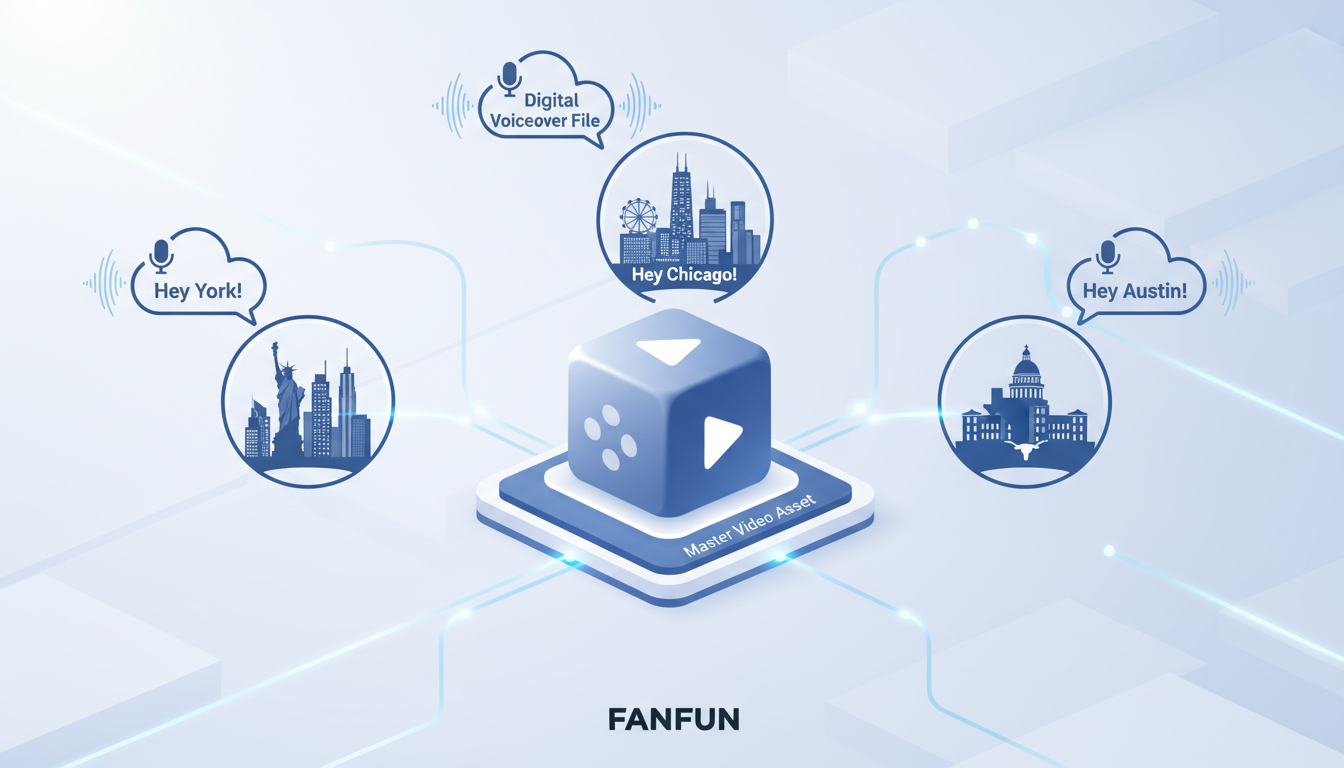
To implement this, build a master video template with dynamic visual elements, then use a batch-generation workflow to swap out specific variables in your voiceover script. You can easily create localized variants that mention specific cities, local landmarks, regional sports rivalries, or even current weather conditions. A national fitness brand, for example, can run ads saying, "Hey Chicago, winter is coming, time to move your workouts indoors," while simultaneously running a variant in Miami saying, "Hey Miami, beat the summer heat with our air-conditioned zones." This hyper-local relevance instantly boosts ad performance because viewers feel the content was created specifically for them.
You can also segment your audience by customer persona. A budget-conscious buyer might respond best to a high-energy, discount-focused character voice, while a premium buyer might prefer a calm, authoritative, and sophisticated character voice. By aligning your visual assets with customized, persona-specific digital voices generated on Fanfun, you can run highly targeted, multi-variant campaigns that speak directly to the unique motivations of every segment of your audience, maximizing your return on ad spend and scaling your growth to new heights.
How do I make digital character voices sound natural in video promos?
The secret lies in the punctuation. Use ellipses (...) to force natural pauses, use hyphens to break up complex words, and use all-caps to guide the AI on which words require emotional stress and emphasis. Writing in short, conversational sentences also prevents the voice from sounding rushed.
Can I use digital voices for commercial social media campaigns?
Yes. Digital character voices are highly effective for commercial social media ads. Utilizing platforms like Fanfun allows you to access a diverse library of expressive, high-impact voices designed specifically to capture attention and drive conversions on modern social feeds.
What is the best video length for a digital voice promo?
For social platforms like TikTok, Instagram Reels, and YouTube Shorts, keep your promos between 15 and 30 seconds. This fits perfectly into the 3-part framework: a 3-second hook, a 12-second body addressing a pain point, and a 15-second clear call to action.
How does localization help scale ad campaigns?
Localization increases ad relevance, which directly boosts click-through and conversion rates. By using digital voices, you can instantly swap out city names, regional slang, or local references in your scripts to generate dozens of highly targeted ad variants without the cost of re-recording with live talent.