How to Write Funny Parody Voiceover Scripts for Social Media Edits
Master the art of comedic contrast and script pacing. Learn how to write and format hilarious parody voiceovers that translate perfectly to digital voice engines.
To write a funny parody voiceover script, you must establish a stark contrast between a high-status, dramatic voice and a low-stakes, mundane conflict within the first five seconds. Success relies on subverting expectations with rapid pacing, exaggerating character tropes, and formatting your text with phonetic spellings and punctuation cues (like ellipses and dashes) so that digital voice engines deliver the correct comedic timing. On platforms like Fanfun, where creators can generate custom AI character videos in minutes, having a tightly written, properly formatted script is the difference between a viral hit and a flat delivery.
The Comedy of Contrast: Choosing Your Parody Angle
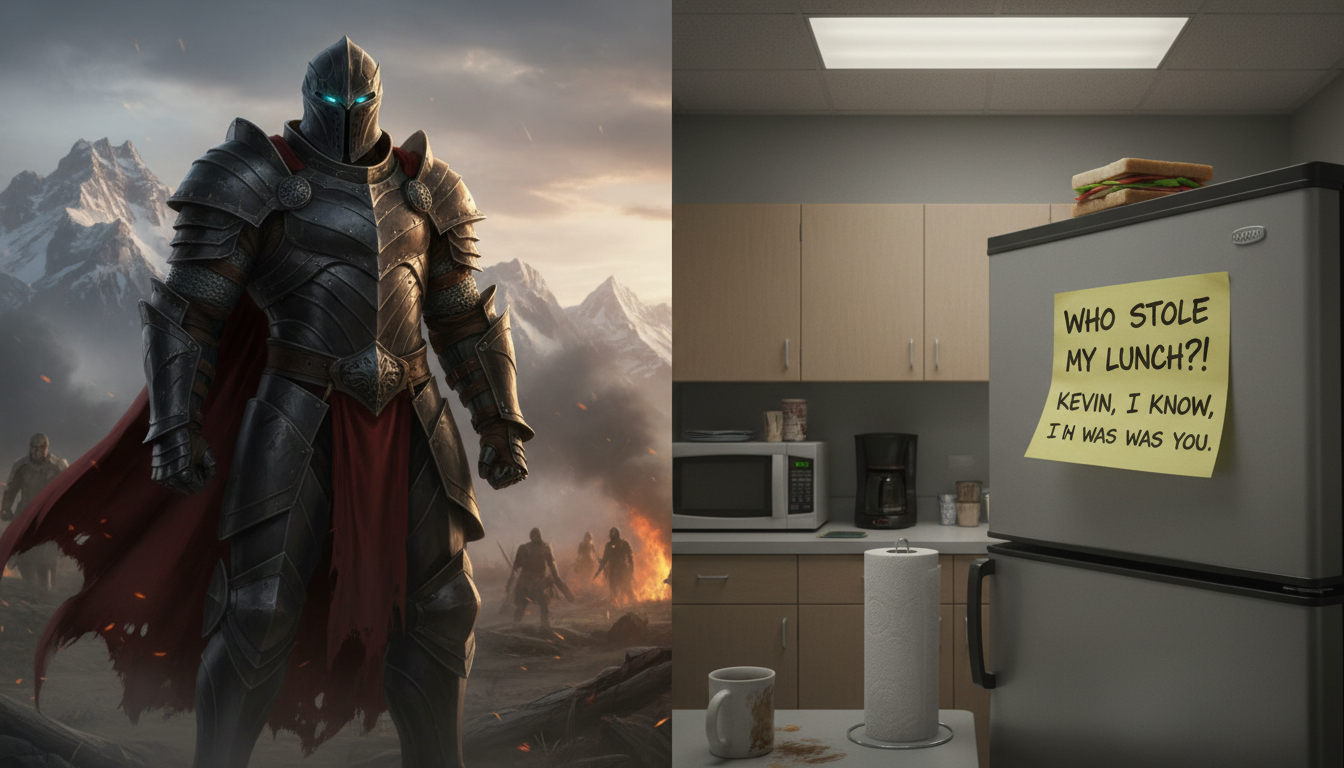
The secret to a highly engaging parody script lies in extreme contrast, specifically the "status flip." Comedy thrives when there is a massive gap between a character's perceived authority and their actual situation. Putting a legendary warrior, a dark fantasy narrator, or an anime protagonist in a mundane scenario—like disputing a passive-aggressive office sticky note or navigating a slow line at the DMV—instantly creates humor. When writing your script, look for these comedic juxtapositions to hook your audience immediately.
To build a strong parody premise, focus on these three pillars:
- The Status Flip: Take a high-status voice and drop them into a low-status, incredibly ordinary conflict. The more serious the voice sounds, the funnier the mundane argument becomes.
- Exaggerating Key Tropes: Identify the character's signature catchphrases, speech patterns, and vocal tics. If a narrator always speaks in sweeping, apocalyptic metaphors, use those exact metaphors to describe a dirty office microwave.
- Avoiding the Cringe: Keep the humor focused on situational absurdity rather than mean-spirited punching down. Parody works best when the character is genuinely passionate about something completely trivial.
If you are adapting this for a workplace setting, you can craft a hilarious, relatable video message for your team. Learn how to strike the right balance with our guide on creating funny office video greetings for coworkers, or discover how to keep your humor sharp but professional with an HR-friendly coworker roast video. Alternatively, if you want to bypass boring text updates entirely, explore how to transition beyond the dry Slack thread with custom video messages.
The 30-Second Script Blueprint: Structuring for Rapid Pacing
Short-form social media platforms like TikTok, Reels, and YouTube Shorts demand immediate hook rates. You cannot afford a slow build-up. A successful parody script must be structured to deliver rapid pacing and a subverted payoff within a tight 30-second window.
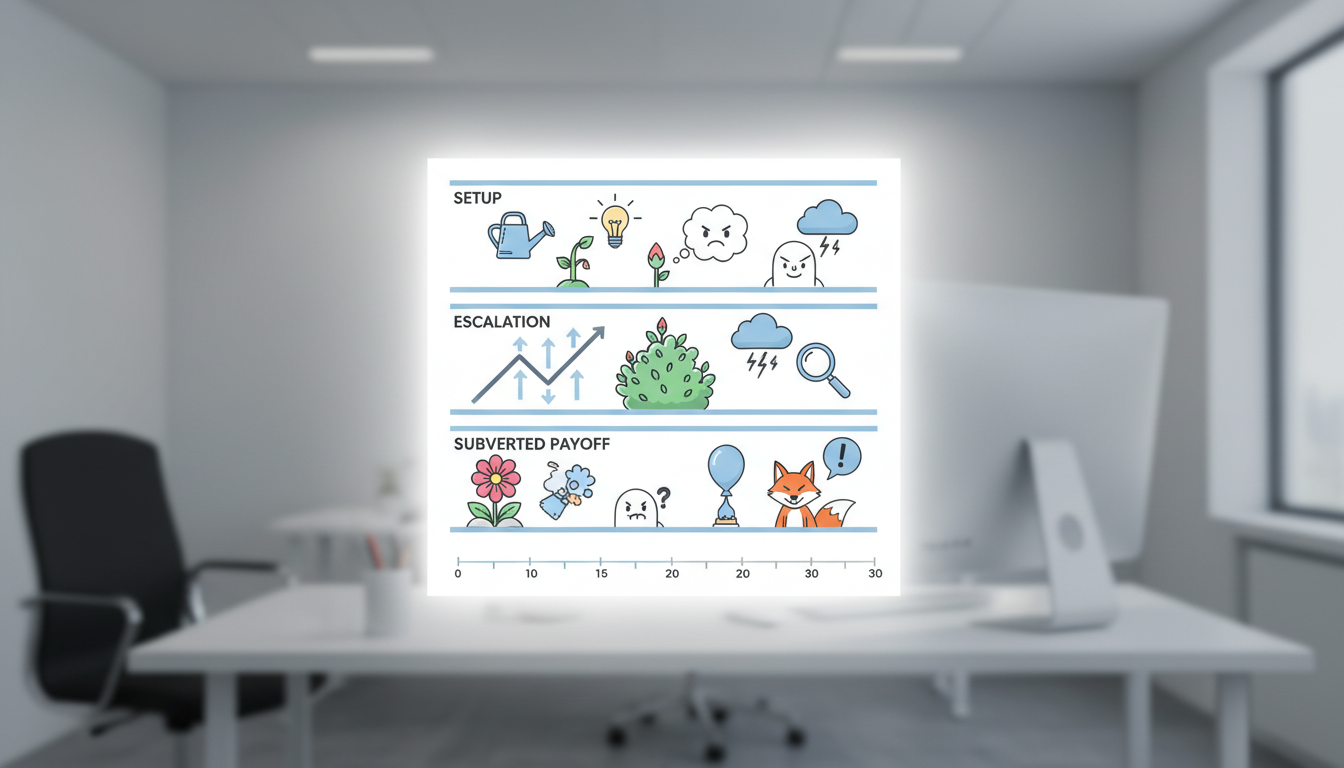
Use this three-part blueprint to structure your short-form parody scripts:
- The Setup (0-5s): Establish the recognizable voice and the jarringly ordinary scenario immediately. The audience should know within the first three seconds who is speaking and what minor problem they are facing.
- The Escalation (5-20s): Heighten the stakes using dramatic, cinematic language. Treat the mundane issue as if it were a matter of life and death, building tension with every line.
- The Subverted Payoff (20-30s): Resolve the conflict with an abrupt, anti-climactic punchline that completely deflates the built-up tension.
To see how this structure transforms a narrative, compare a weak, linear approach to a high-impact, subverted parody structure:
| Script Element | Weak, Linear Structure | High-Impact Parody Structure |
|---|---|---|
| Setup (0-5s) | A fantasy knight complains about a messy kitchen. | A booming, cinematic narrator declares an ancient, dark curse has fallen upon the breakroom. |
| Escalation (5-20s) | The knight asks who forgot to clean up and says it is annoying. | The narrator describes the crusty, splattered tomato soup inside the microwave as a "gory monument to human laziness" that threatens the realm's peace. |
| Payoff (20-30s) | The knight says please clean it up next time. | The narrator dramatically vows vengeance, only to be interrupted by a quiet, polite request to pass the paper towels. |
Writing for the Voice Engine: Formatting for Comedic Timing
Writing a great script is only half the battle; you also need to make sure your digital voiceover tool delivers the lines with the right comedic timing. Virtual voice actors do not automatically understand sarcasm, dramatic pauses, or regional accents. You must use specific text-formatting techniques to direct the performance.
When using an AI voice generator, standard punctuation often results in a flat, monotone delivery. To get the best results, apply these formatting rules:
- Phonetic Spelling: Spell out slang, memes, or accented words exactly how they should sound. For example, write "foh-real" instead of "for real," or "buh-bye" to force a specific inflection.
- Punctuation as Directing Cues: Use ellipses (...) for dramatic pauses, dashes (—) for sudden interruptions, and capitalization to indicate emphasis or a sudden spike in volume.
When working with digital generation tools, standard text formatting is rarely enough. To achieve natural pacing, you must master the art of formatting scripts for AI character videos. This involves using phonetic spellings and strategic punctuation to act as directing cues. Additionally, knowing how to choose and direct digital voiceover tools ensures your parody maintains high viewer retention and avoids a robotic, monotone delivery.
A Complete Parody Script Makeover: Before and After
Let's look at how to apply these comedic principles and formatting rules to a real script. Below is a comparison of a basic, literal script and a polished, formatted parody script designed for a dramatic fantasy narrator voice.
The "Before" Script (Flat and Literal)
"Someone took my yogurt from the office fridge today. It had my name on it. I am very mad about this. Please return it or buy me a new one."
The "After" Script (Polished Parody with Directing Cues)
"An act of... unspeakable betrayal has shattered the peace of Sector Four. [dramatic pause] The sacred strawberry yogurt... bearing the royal seal of 'D-A-V-I-D'... has been plundered from the cold depths of the breakroom vault! Whoever committed this vile theft... your days are numbered. Unless... you buy me a replacement by Friday. Or... strawberry-banana will also suffice."
The "After" script succeeds because it uses high-status, theatrical language to describe a low-stakes office crime. The strategic use of ellipses forces the voice generator to pause, building dramatic tension before delivering the anti-climactic compromise at the end. To take your project a step further, consider designing custom character audio tracks by adding cinematic background music and sound effects like dramatic swooshes or microwave beeps to complete the comedic atmosphere.
How do I write pauses in a script for an AI voice generator?
To create natural pauses, use ellipses (...) for brief hesitation, em-dashes (—) for abrupt stops, or break your script into short, separate lines. Some platforms also allow you to add manual pause tags or silence markers to control the rhythm of the delivery.
How long should a parody voiceover script be for TikTok or Reels?
For optimal engagement on short-form platforms, aim for 30 to 45 seconds, which equates to roughly 60 to 90 words. Keep the setup under 5 seconds to hook viewers before they swipe away.
Are there legal risks when writing parody scripts of famous characters?
Parody is generally protected under fair use, especially when it is transformative and used for comedic or critical purposes. However, to avoid intellectual property issues, avoid claiming official sponsorship or endorsement, and focus on creative, fan-made interpretations rather than commercial use.