How to Write Authentic Dialogue for Anime Character Voiceovers
Want to make your fan edits or custom videos sound like real anime? Learn how to write authentic dialogue by mastering character archetypes and script formatting.

Writing authentic anime character dialogue for voiceovers requires focusing on exaggerated emotional beats, distinct archetypal speech patterns, and specific phrasing that translates text into dramatic audio. Unlike naturalistic Western dialogue, anime scripts lean heavily into heightened drama, internal monologues, and sharp shifts in pacing. When writing scripts for voiceovers, structuring your text with clear emotional beats and natural phrasing can help guide the performance toward a style that feels genuinely cinematic rather than robotic.
The Anatomy of Anime Speech Patterns
Anime dialogue is inherently theatrical. It does not mimic real-world casual chatter; instead, it amplifies internal states and dramatizes basic actions to keep the audience emotionally invested. To capture this unique style, writers must master three core components:
- Internal Monologues and Vocalized Reactions: Characters frequently narrate their immediate thoughts or utter physical reactions. Incorporating actions like *gasp*, *sigh*, or *tch* directly into the text helps anchor the line in a physical moment.
- Dynamic Tension: To build suspense, vary your sentence length. Start with short, punchy declarations before delivering longer, explanatory clauses. For example, instead of a flat explanation, write: "It is over. I have spent three years training in the frozen wastes... just for this moment!"
- Signature Catchphrases and Speech Habits: Repetitive speech endings or unique verbal tics establish a character's identity instantly. Whether it is a confident boast or a nervous stutter, these recurring elements make the dialogue immediately recognizable.
Matching Dialogue to Anime Archetypes
To write authentic lines, you must align your dialogue with established anime tropes. Each archetype has a distinct rhythm, vocabulary, and emotional range that dictates how they speak. Learn more about crafting deep character interactions in our guide to scripting anime roleplay online.
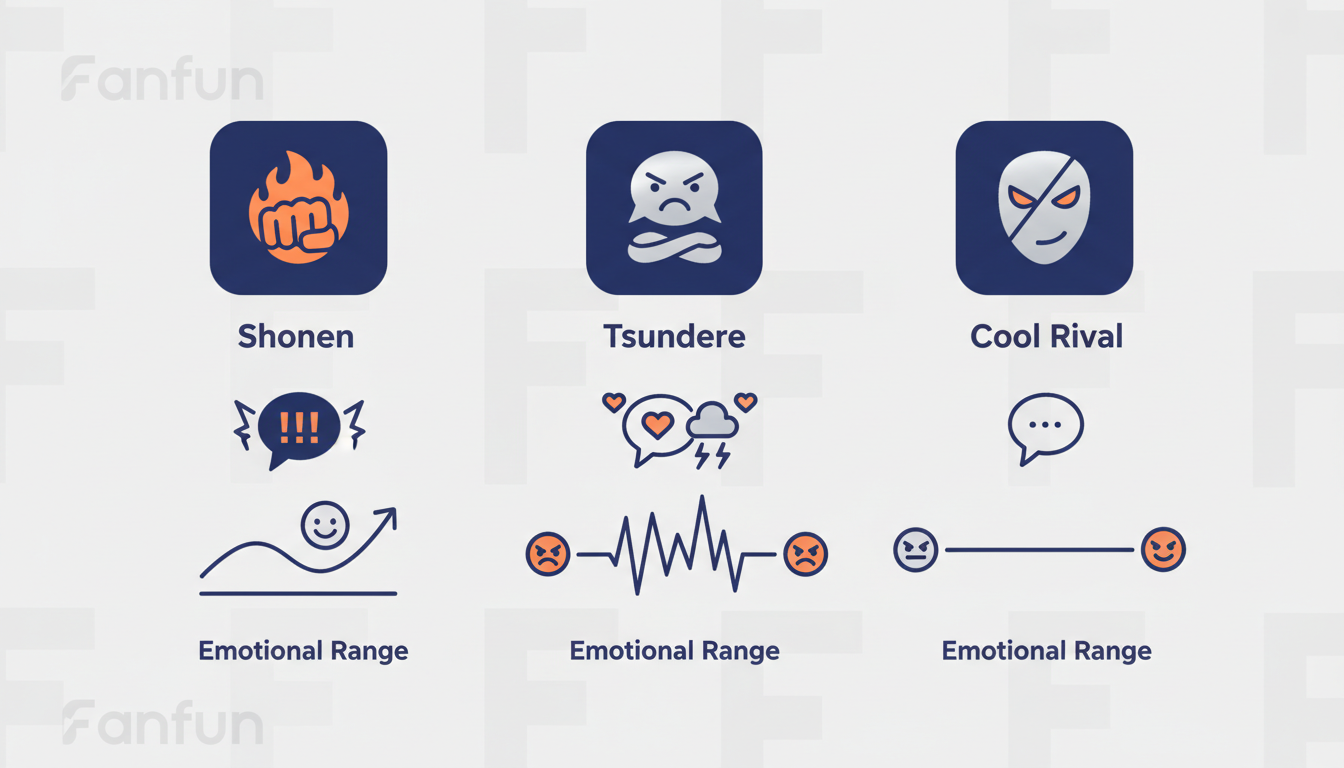
To help you choose the right direction for your script, consider this comparison of the three most popular anime archetypes:
| Archetype | Core Vocabulary | Sentence Structure | Typical Pacing | Key Emotional Shift |
|---|---|---|---|---|
| The Shonen Protagonist | Never, limit, promise, fight, believe | Short, exclamation-heavy, active verbs | Fast, breathless, explosive | Doubt to absolute resolve |
| The Tsundere | Idiot, baka, whatever, hmph, dummy | Fragmented, uses stutters ("b-but"), defensive | Erratic; fast when angry, slow when soft | Rage to embarrassed vulnerability |
| The Cool Rival | Foolish, pathetic, waste, predictable | Complex, grammatically perfect, concise | Slow, measured, quiet | Aloof indifference to grudging respect |
Formatting Scripts for AI Voice Generators
Writing for the ear is vastly different than writing for the page. When writing scripts for custom voiceovers, formatting your text clearly can help guide the overall delivery. Because voice tools interpret text based on standard linguistic rules, creative phrasing is a useful tool for directing the performance.
For a complete breakdown of formatting rules, check out our guide on writing scripts for AI character videos. In the meantime, use these three essential formatting rules:
- Use Punctuation for Pacing: Standard punctuation like ellipses (
...), dashes (--), and exclamation points (!) can help organize the script's flow and indicate where natural pauses or shifts in intensity should occur. - Consider Phonetic Phrasing: Japanese honorifics (like "-san" or "-kun") or custom fantasy terms can sometimes be challenging for standard text-to-speech engines. Writing them out with simplified phonetic approximations may help guide the pronunciation.
- Write in Short Beats: Avoid long, unbroken paragraphs. Instead, break your script into short, distinct beats. This structure keeps the energy high and prevents the voice from trailing off or losing its character-specific tone.
Before and After: Transforming Generic Dialogue into Anime Scripting
To see these principles in action, let us look at how standard, everyday messages can be rewritten into highly stylized, character-driven anime voiceover scripts.
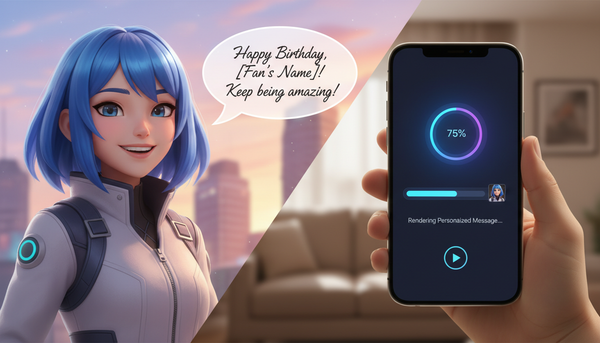
Example 1: The Birthday Greeting
Before (Generic): "Happy birthday, Alex! I hope you have a great day and get lots of cool presents. Enjoy your party!"
After (Shonen Protagonist Style): "Alex! *gasp* I can feel your power level rising today! This... this is the day you finally break through your limits! Happy birthday! Now, let us go out there and show the world what we are made of!"
Why it works: The rewrite replaces passive wishes with high-stakes battle imagery. It utilizes physical reactions and punctuation-driven pauses to build hype and dramatic energy.
Example 2: The Social Media Promo
Before (Generic): "Hey everyone, don't forget to check out my new video channel. Subscribe so you don't miss any of my weekly uploads."
After (Tsundere Style): "Hmph! It is not like I care if you watch my videos or anything... idiot! But... if you do not subscribe right now, don't expect me to make another one next week! B-baka, just click it already!"
Why it works: This version utilizes comedic contrast—switching rapidly between aloof irritation and frantic desperation—to keep the audience engaged. Discover how to balance humor and character traits using the comedy contrast method for voiceovers.
How do I handle Japanese honorifics in an English anime voiceover script?
If a voice generator struggles to pronounce honorifics like "-san" or "-kun," you can try writing them with simplified phonetic spelling. Additionally, use them sparingly so they feel natural within the flow of English dialogue rather than forced.
What is the best way to write natural-sounding pauses without making the voice sound disjointed?
Grouping words into logical semantic phrases and using standard punctuation like commas can help structure the script's natural breathing room. Avoid putting punctuation after every single word, which can disrupt the flow of the dialogue.
Can I use anime-style dialogue for commercial promos, or should I stick to fan content?
Anime-style dialogue works exceptionally well for personal greetings, roasts, and social media content. For commercial promos, ensure the dramatic, over-the-top tone aligns with your brand identity, and always verify that your scripts comply with the licensing and terms of service of the AI platform you are using.