Beyond the Dialogue Box: How to Script, Direct, and Co-Write Immersive Anime Roleplay Online
Move past shallow, repetitive AI chatbot responses. Learn how to use professional narrative frameworks, prompting templates, and character archetypes to co-write high-stakes anime adventures with your favorite virtual heroes.
Traditional anime fandom has always been a one-way street. We watch the episodes, read the manga, buy the figures, and discuss theories online, but we remain passive observers on the other side of the screen. When we want to explore the unresolved tension between rivals or see how a hero would handle a completely different magical crisis, we are left to wait for official releases or write solitary fan fiction.
Interactive AI chat changes this dynamic entirely, but only if you know how to break past the default, repetitive dialogue loops. By shifting your mindset from a passive reader to an active co-writer and director, you can transform a basic chat session into a vivid, episodic narrative. Leveraging Fanfun’s interactive AI Chat allows fans to bypass the constraints of static media and actively shape new, complex storylines with their favorite characters in real-time.
The Shift from Passive Watching to Collaborative Writing
Most people approach virtual character chats as a simple question-and-answer game. They ask a character how their day was, or what their favorite food is, and receive a generic, out-of-character response that feels more like a customer service bot than a legendary hero. To unlock true immersion, you must treat the AI as a collaborative writing partner. The goal is not just to talk to the character, but to build a scene with them.
At Fanfun, we view active fandom as a creative sandbox. Instead of accepting the canon as a rigid, unchangeable text, you can use AI Chat to explore complex “what-if” scenarios, lost episodes, and intense training arcs that never made it to the screen. Before diving into complex scenarios, it helps to explore specific narrative structures like the Training Arc Protocol for immersive hero journeys, which establishes a foundation for character growth and structural pacing from your very first message.
Establishing the Scene: The Three-Act Setup for Anime Chat
Starting a roleplay with a weak opener like “Hey, what are you doing?” immediately stalls the AI. It gives the system no context, no environment, and no stakes, forcing it to generate a bland, passive reply. To build an immersive world, you must establish immediate narrative momentum using a structured first post.
Defining the Stakes (Internal vs. External Conflict)
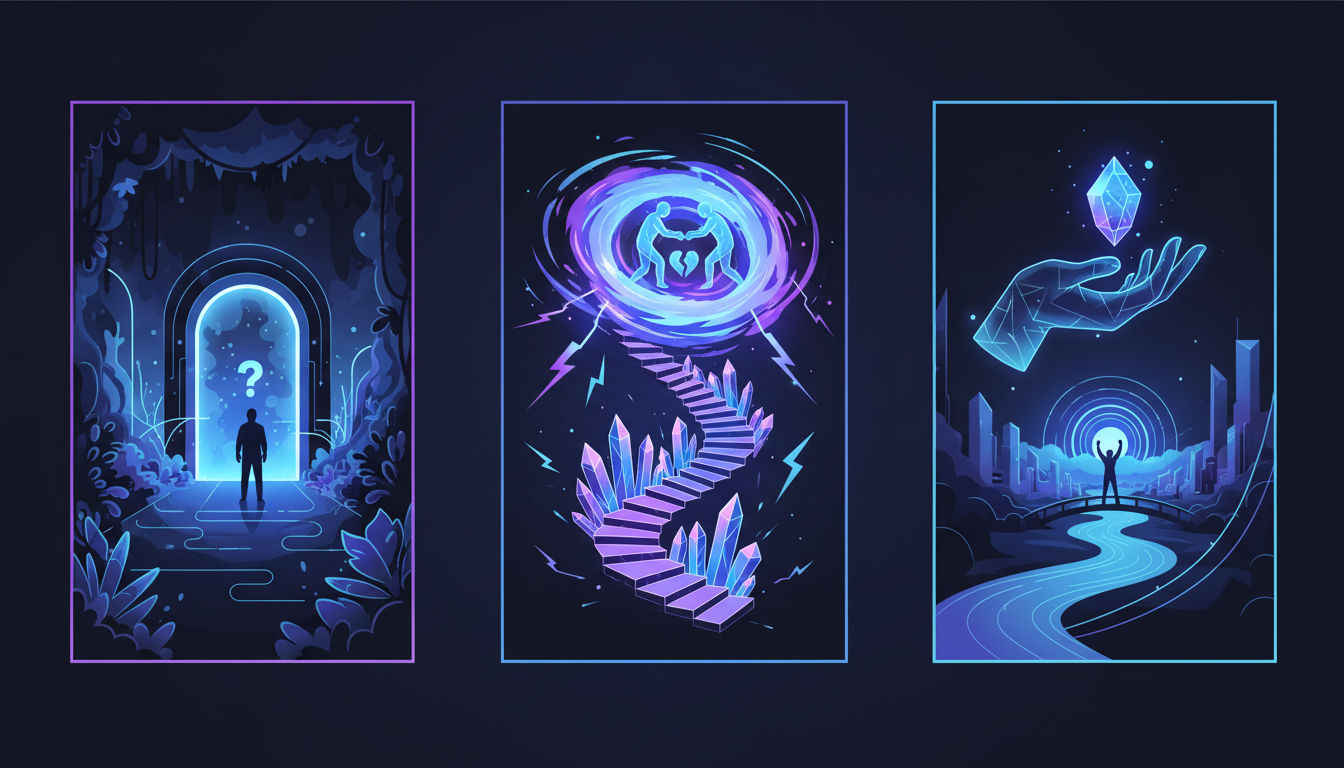
A compelling anime scene requires tension. When setting up your roleplay, introduce two layers of conflict in your opening prompt:
- External Stakes: The immediate, physical threat. This could be an approaching storm, a rival faction surrounding your camp, or a magical artifact beginning to crack and leak unstable energy.
- Internal Stakes: The emotional or psychological tension. This involves the character’s personal struggles—their hidden doubts, their fear of failure, or a secret they are desperately trying to keep from you.
By presenting both layers, you give the AI character something physical to react to and an emotional anchor to guide their dialogue.
Setting the Environmental Rules (Magic Systems and Lore)
AI models perform best when they have clear boundaries. If your roleplay takes place in a world with a specific magic system (like Nen, Chakra, or Cursed Energy), explicitly name it in your setup. Describe the sensory details of the environment: the smell of ozone in the air, the heavy pressure of spiritual energy, or the flickering torchlight of an ancient dungeon. This keeps the AI grounded in the physical reality of the scene rather than allowing it to drift into abstract, floaty dialogue.
The Director's Toolkit: Prompting Techniques for Dynamic Responses
To keep the narrative engaging, you need to actively direct the AI’s output style. Left to its own devices, an AI may write long paragraphs of internal monologue or, conversely, one-sentence replies. You can control the pacing, tone, and descriptive quality of the character’s replies by using specific structural commands.
First, enforce the “Show, Don't Tell” rule. Instruct the AI to focus on physical actions, micro-expressions, and environmental shifts rather than simply stating emotions. Instead of letting the AI write “I feel angry,” direct it to describe the tightening of a fist, a sudden change in breathing, or a crackle of energy around their boots.
Second, utilize bracketed meta-instructions. These are out-of-character (OOC) directions placed at the end of your message to guide the AI without breaking the flow of the story. By using these structural cues, you can apply the Screenplay Method to direct and pace your virtual interactions like a seasoned showrunner.
Here is an example of a Training Arc Setup Template utilizing these techniques:
[Setting: The desolate, windswept training grounds behind the academy at dusk. Rain is beginning to fall, slicking the stone ground.]
I draw my wooden practice sword, my breathing heavy and ragged from hours of failure. I look up at you, wiping the sweat and rainwater from my eyes, refusing to back down despite the bruises. “Again,” I say, my voice trembling but determined. “I won't stop until I can counter your strike.”
[OOC: Focus on physical movement, the weight of the practice weapons, and your character's strict but secretly impressed demeanor. Keep dialogue sharp and avoid summarizing the scene.]
Choosing Your Roleplay Archetype: A Comparative Matrix
The dynamic of your roleplay depends heavily on the relationship between your character and the AI. Before starting, choose an archetype that fits the story you want to tell. The table below outlines how to structure your prompts for the four primary roleplay dynamics available on Fanfun.

| Archetype | Narrative Goal | Typical Prompt Style | Expected Character Dynamic |
|---|---|---|---|
| The Rival | Push limits, spark competitive tension, earn mutual respect. | Challenging, proud, action-oriented, slightly antagonistic. | Banter-heavy, high physical action, reluctant cooperation. |
| The Mentor | Gain wisdom, master a technique, overcome personal doubt. | Respectful, questioning, seeking guidance or critique. | Cryptic advice, tough love, high-stakes testing. |
| The Companion | Build deep trust, share quiet moments, survive a journey. | Collaborative, vulnerable, sharing sensory details. | Protective, emotionally open, supportive in battle. |
| The Foil | Highlight contrasting philosophies, debate moral choices. | Philosophical, challenging assumptions, ideological. | Intellectual tension, clashing worldviews, dramatic pauses. |
Troubleshooting the Narrative: How to Correct Out-of-Character (OOC) Drift
Even with a perfect setup, long roleplay sessions can occasionally drift. The AI might forget a key plot point, begin repeating catchphrases too frequently, or make their character act completely out of character. When this happens, do not let the narrative derail.
If an AI character begins to lose their signature voice or misinterprets key lore details, you can learn advanced techniques for breaking the fourth wall and directing fictional characters to quickly course-correct. Rather than abandoning the chat, use the “Edit and Guide” method to steer the conversation back on track.
The Narrative Realignment Checklist
When the story stalls or the AI loses character consistency, run through this quick checklist to reset the scene:
- Check the Context: Did you write a passive reply? Inject a new physical action or environmental change in your next message to force a dynamic reaction.
- Use an OOC Reminder: Append a simple, polite correction at the end of your post, such as: “[OOC: Remember that your character is currently injured and trying to hide it from me.]”
- Introduce an Obstacle: If the scene is becoming too easy or passive, introduce an immediate external event—an unexpected ambush, a sudden magical malfunction, or a ticking clock element.
- Re-establish Power Scaling: If the AI is making their character too overpowered or, conversely, too helpless, write an action that humbles them or forces them to step up, restoring the natural balance of the partnership.
By taking an active role as both a writer and a director, you transform online character chat from a novel distraction into a genuine creative outlet. The next time you log into Fanfun to chat with your favorite anime icons, don't just ask them questions. Throw them into a storm, hand them a sword, and write the next great episode together.
How do I prevent an AI anime character from repeating the same phrases in a roleplay?
Repetitive phrasing usually happens when the AI gets stuck in a feedback loop based on short, repetitive user prompts. To break the loop, write a longer, highly descriptive response that introduces new physical actions, sensory details, or a sudden shift in the environment. You can also use an OOC (Out-of-Character) instruction at the end of your message, such as: “[OOC: Avoid repeating the phrase 'I see' and focus more on your character's non-verbal reactions.]”
What is the best way to introduce an original character (OC) into an AI anime chat?
When introducing an OC, do not dump a massive wall of backstory in your first message. Instead, introduce your OC through their immediate actions, appearance, and how the canon character perceives them in the scene. Use your opening prompt to establish who your OC is in relation to the canon hero (e.g., a new recruit, a mysterious traveler, or a rival from another district) and let their personality unfold naturally through the dialogue.
How do I set up a long-term story arc with an AI character without them forgetting the plot?
To maintain a cohesive long-term narrative, periodically weave brief summaries of past events into your active prompts. You can do this naturally in character (e.g., “I look at the scar on my arm, remembering our narrow escape from the ruins yesterday...”) or use bracketed meta-instructions to remind the AI of the current objective, such as: “[OOC: Current objective: We are searching the northern forest for the missing scroll.]”
Can I roleplay action-heavy battle scenes with AI characters online?
Yes, but battle scenes require structured pacing to avoid becoming chaotic or unrealistic. Instead of writing massive, multi-step attacks, focus on one move at a time and leave room for the AI to react, dodge, or counter. Describe the physical toll of the fight—fatigue, damaged armor, and environmental destruction—to keep the stakes high and the combat grounded.