The Conversation Designer’s Guide: How to Direct a Celebrity Chatbot with Voice for Immersive Fan Experiences
Discover the exact framework for designing, prompting, and directing a celebrity chatbot with voice. Move past basic text exchanges into highly immersive, real-time audio conversations that feel authentic and engaging.
Text messaging has long been the default medium for digital companions, but it carries an inherent limitation: it lacks the warmth, cadence, and immediate intimacy of the human voice. When a fan interacts with an AI representation of their favorite icon, reading text on a screen still feels like reading a script, missing the spontaneous energy that defines real human connection.
The transition to voice-enabled celebrity chatbots changes this dynamic entirely, turning passive text exchanges into immersive, real-time conversations. By treating chatbot design as a creative directing process, creators and fans can orchestrate tone, pacing, and dialogue flow on platforms like Fanfun to build highly engaging, interactive audio experiences that feel remarkably authentic.
Beyond the Text Box: Why Voice Redefines the Celebrity Chatbot Experience
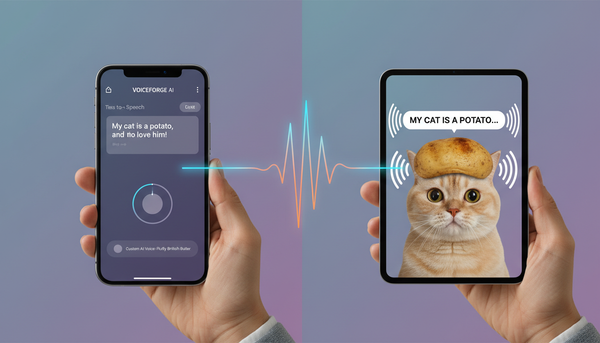
Text messages feel transactional, but voice triggers an immediate emotional connection, making interactions feel like a genuine phone call or private voice memo. When we read text, our brains perform the cognitive lifting of assigning tone, speed, and emotional weight. A voice-enabled chatbot eliminates this friction by delivering those cues directly. For fans, hearing a familiar cadence, a characteristic chuckle, or a signature verbal tic transforms a simple screen interaction into a memorable personal event.
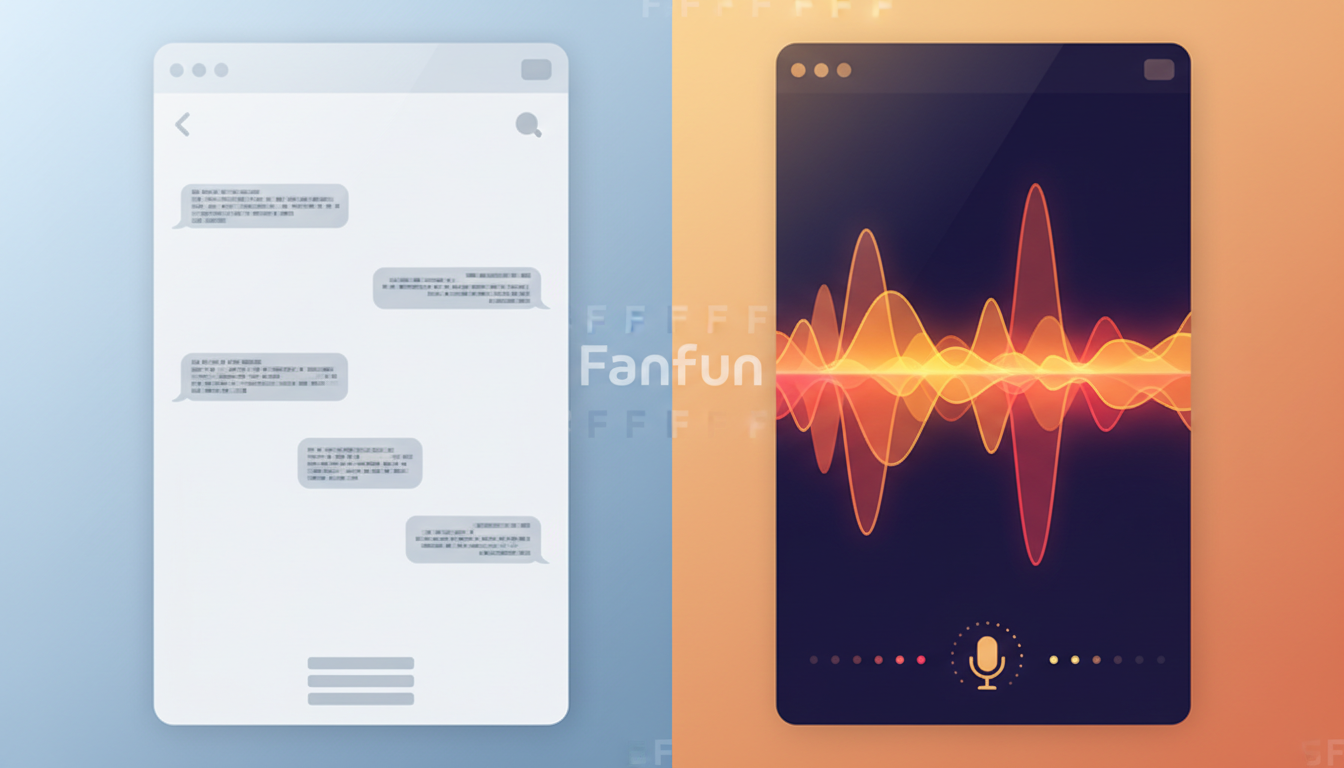
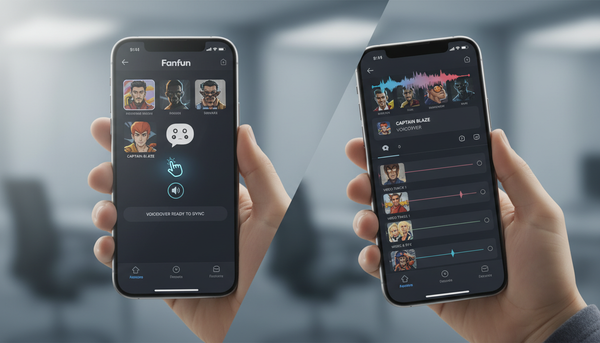
Fanfun’s interactive AI Chat bridges the gap between passive celebrity consumption and active, two-way spoken conversations. Instead of waiting days for a pre-recorded, one-way video shoutout, users can engage in dynamic, real-time dialogues that adapt to their input instantly. This shift from passive observer to active conversational partner opens up entirely new creative horizons for both casual fans and professional content creators.
By upgrading from text to high-fidelity audio, these chatbots unlock diverse use cases that extend far beyond simple entertainment. Creators can use them for personalized coaching, real-time creative brainstorming, or even interactive language practice where the character voice provides natural feedback. The voice layer adds a dimension of realism that makes the AI feel less like a database and more like a collaborator.
The Anatomy of a High-Fidelity Voice Chatbot
Creating a voice-enabled chatbot that feels authentic requires balancing complex technical systems under the hood. It is not simply about reading text aloud; it is about synthesizing speech that carries emotional nuance, appropriate pacing, and realistic vocal textures. If the AI sounds like a default GPS navigator, the illusion of talking to a celebrity or beloved character is instantly shattered.
To achieve high-fidelity output, platforms must manage the delicate balance between real-time processing speed and high-quality voice synthesis. This involves analyzing the user's text input, generating a contextually accurate response, and then translating that response into a synthesized voice file within milliseconds. When done correctly, the voice matches the emotional baseline of the conversation, rising in pitch during exciting moments and softening when discussing serious topics.
The Micro-Behaviors of Speech
What truly separates an immersive voice experience from a robotic generator are the subtle micro-behaviors of natural speech. Vocal signature elements—like breathing patterns, laughter, and characteristic pauses—matter far more than perfect pronunciation. A natural speaker hesitates, takes a breath before starting a long sentence, and occasionally slurs a minor syllable. Incorporating these imperfections is what allows a voice-enabled chatbot to escape the uncanny valley and build genuine rapport with the listener.
The Latency-to-Realism Ratio
In conversational AI, latency is the ultimate immersion killer. A delay of more than 1.5 seconds breaks the conversational illusion, turning a natural chat into an awkward walkie-talkie exchange. Human conversations are highly synchronized, with overlapping speech and rapid response times. If the user has to wait three to five seconds for the chatbot to synthesize its audio response, the psychological connection evaporates, and the interaction feels like a series of disconnected voice messages.
To solve this, Fanfun balances complex natural language processing with instant voice generation to maintain a natural conversational flow. By optimizing the pipeline from text generation to audio streaming, the platform ensures that the character responds with minimal delay. This rapid turnaround allows the user to stay fully engaged in the flow of the conversation, matching the rhythm of a real-time phone call.
Personality Mapping and Prompt Engineering
Before you begin a voice chat, you must design the conversational parameters that govern how the AI character thinks and speaks. This process, known as personality mapping, defines the "conversational sandbox." It sets clear boundaries for what the persona knows, how they react to conflict, and their default emotional tone. Without these guardrails, a celebrity chatbot will quickly default to a generic, overly polite assistant persona.
Structuring prompts with behavioral anchors is essential to maintaining character integrity. For instance, rather than simply telling the AI to "be funny," you should provide specific instructions like "use dry humor," "incorporate sports metaphors naturally," or "respond with short, punchy sentences." These anchors guide the natural language processing model to select vocabulary and sentence structures that align perfectly with the celebrity's established brand voice.
Crafting the Dialogue Flow: A Framework for Interactive Scenarios
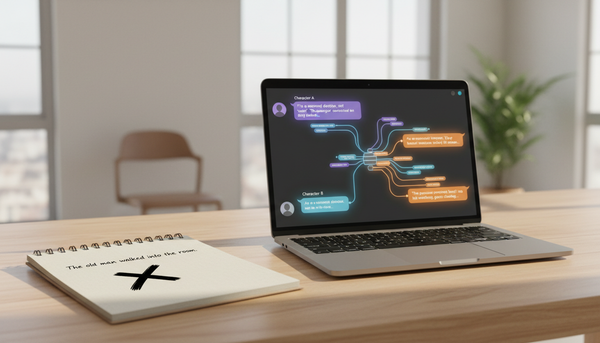
To prevent conversations from hitting dead ends, conversation designers use structured frameworks that guide the flow without making the interaction feel scripted. One of the most effective methods is the Hook, Pivot, and Prompt framework. The chatbot first hooks the user with a character-specific greeting, pivots to a relevant topic, and then prompts the user with an open-ended question that demands more than a yes-or-no answer.
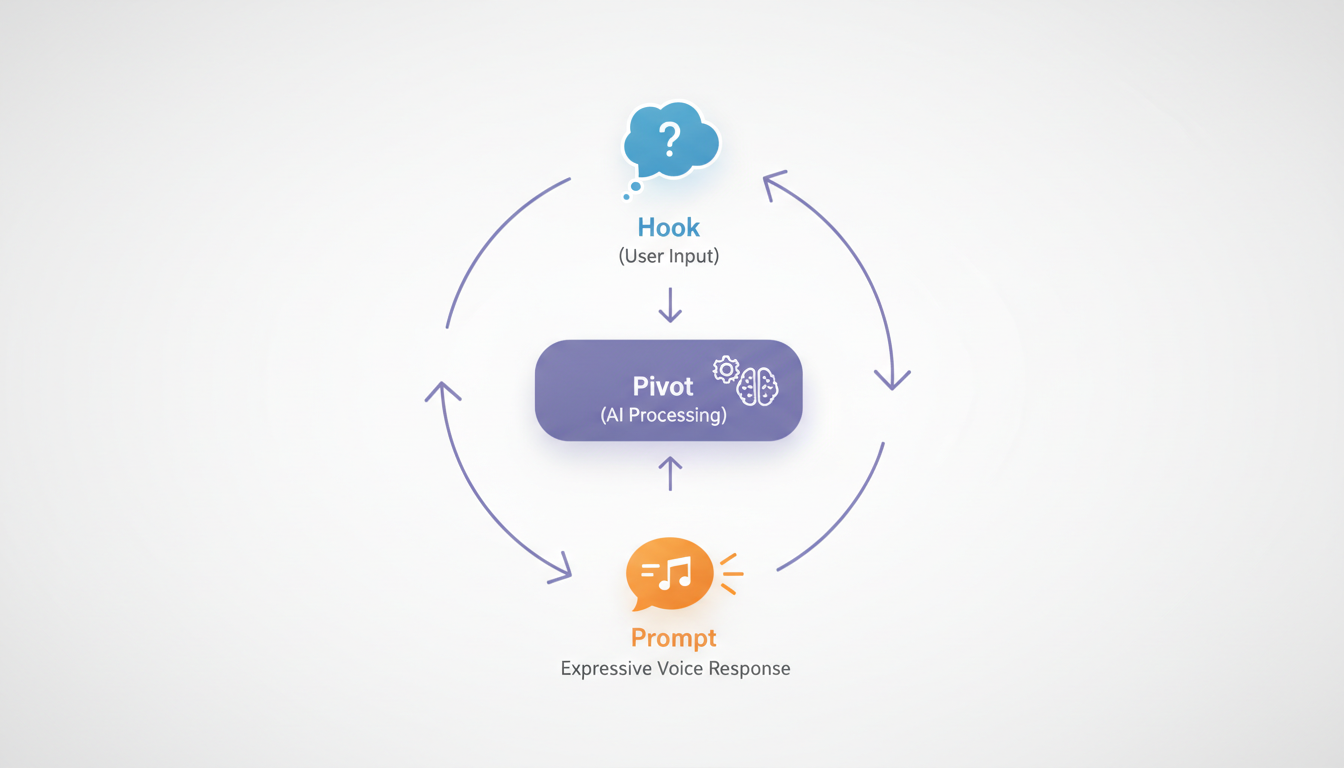
By utilizing this framework, content creators can easily generate raw material for social media, referencing the strategies detailed in the celebrity AI voice creator playbook to scale their production. The table below illustrates how changing your prompt style can dramatically improve the quality and depth of the chatbot's voiced responses:
| Prompt Style | Low-Engagement Prompt (Avoid) | High-Engagement Prompt (Recommended) |
|---|---|---|
| Topic Initiation | "Tell me a story about your career." | "What was the exact moment you realized you made it, and what did your first big purchase sound like?" |
| Creative Brainstorming | "Help me write a script for a video." | "Let's brainstorm a video hook. Give me three options using your signature catchphrases and high-energy pacing." |
| Improv & Roleplay | "Act like a coach and motivate me." | "I'm down by two points with ten seconds left on the clock. Give me the half-time locker room speech I need to hear." |
Managing the 'Uncanny Valley' in Real-Time Voice Synthesis
Real-time voice synthesis is a powerful tool, but it is not without its technical challenges. Flat, monotone delivery ruins immersion instantly, making it crucial to understand how to evaluate a celebrity voice generator online to ensure high-fidelity, expressive audio. The best platforms are capable of infusing synthesized speech with realistic emotional arcs, preventing the voice from sounding flat or robotic.
When directing a voice chatbot, you must also account for pronunciation quirks, homophones, and emotional shifts during a live voice chat. If a character mispronounces a key word or uses the wrong emotional tone for a serious sentence, it can break the illusion. To mitigate this, conversation designers can use phonetic spelling in their prompts or structure sentences to avoid complex homophones that might confuse the AI model.
Furthermore, the user-side input plays a critical role in the overall quality of the interaction. Speaking clearly, using natural phrasing, and avoiding heavy background noise helps the AI model accurately transcribe your voice and generate better-paced, contextually appropriate vocal responses. A clean input always yields a cleaner, more realistic output.
From Passive Listening to Active Co-Creation
The ultimate goal of voice-enabled celebrity chatbots is to move users from passive listening to active co-creation. Creators, fans, and marketers are no longer just chatting; they are actively collaborating with AI personas to produce premium content. Whether you are using a voice chatbot as a real-time script-reading partner, an improvisational prompt generator, or a character reference tool, the interactive nature of the medium makes the creative process incredibly dynamic.
Once you have captured a compelling live voice chat session, you can ethically transition those raw recordings into polished, edited creative assets. By utilizing advanced celebrity voice changers for premium content, creators can elevate their final audio output, ensuring that the pacing, tone, and vocal fidelity are perfectly optimized for social media platforms, podcasts, or promotional videos.
Ultimately, the future of digital entertainment lies in these collaborative, two-way experiences. By allowing the audience to co-create the narrative alongside their favorite AI personas, platforms like Fanfun are redefining what it means to be a fan, turning passive consumption into an immersive, participatory art form.
How does a celebrity chatbot with voice actually generate speech in real-time?
A voice-enabled celebrity chatbot works by combining three key technologies: Automatic Speech Recognition (ASR) to transcribe your spoken words, a Large Language Model (LLM) to generate a text response in the character's persona, and a Text-to-Speech (TTS) engine to synthesize the response into a realistic voice. Modern platforms like Fanfun optimize this pipeline to run in milliseconds, ensuring a seamless, real-time conversation.
Can I customize the personality and tone of a voiced AI celebrity chat?
Yes. By using advanced prompt engineering and personality mapping, you can define the character's emotional baseline, vocabulary, and conversational style. Giving the AI specific behavioral anchors—such as instructing it to use dry humor or specific catchphrases—helps shape how the voice-enabled chatbot reacts and speaks during your live session.
What makes a voice-enabled chatbot sound natural instead of robotic?
Natural sound relies on high-fidelity voice synthesis that includes natural breathing patterns, realistic pauses, and expressive emotional inflections. Minimizing latency is also crucial; if the delay between your input and the AI's response is under 1.5 seconds, the conversation flows naturally, mimicking a real phone call.
How do creators use voiced celebrity chatbots to brainstorm or write content?
Creators use voiced chatbots as real-time collaborative partners. By engaging in dynamic roleplay, script-reading, or improvisational exercises, creators can generate unique dialogue, brainstorm video hooks, and co-create engaging content concepts that can later be polished into premium social media assets.