How to Create High-Impact Video Promos Using AI Voices on a Bootstrapped Budget
Stop using flat, robotic narration for your video ads. Discover four creative video promo formats tailored for AI voices, a practical scripting blueprint for natural pacing, and essential commercial guidelines to scale your bootstrapped marketing campaigns.
To create high-impact video promos using AI voices on a bootstrapped budget, you must stop treating synthetic voices as cheap human replacements and start using them as deliberate, creative tools. By leveraging highly distinct character personas, theatrical delivery, and comedic contrast, bootstrapped brands can produce high-retention short-form video ads in minutes. However, success requires adapting your scripts for synthetic pacing and strictly navigating commercial licensing boundaries to avoid platform penalties.
Why Most AI Voice Promos Fail (and How to Fix Them)
The biggest mistake bootstrapped marketers make with synthetic audio is falling into the "generic narrator" trap. When an ad features a flat, monotone voice reading a standard product description, social media users scroll past instantly. Audiences have developed a subconscious filter for generic text-to-speech voices that sound like a robotic customer service line.
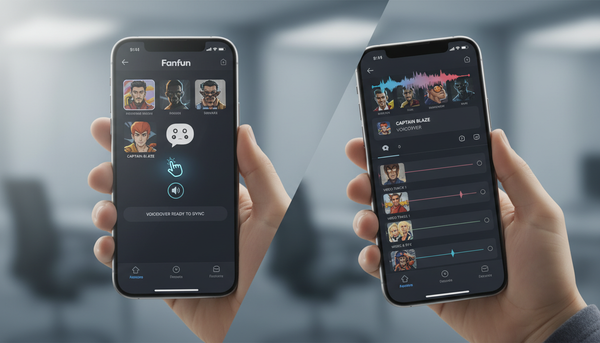
To break through this filter, you must lean into character and persona. Rather than trying to fool the audience with a generic, pseudo-human voiceover, successful campaigns embrace the medium's unique creative potential. Platforms like Fanfun allow creators to choose distinct, entertaining AI personas to deliver custom messages, roasts, or birthday wishes that stand out in a crowded social feed. This approach turns the synthetic nature of the voice into an asset rather than a compromise.
Using these virtual spokespersons also gives bootstrapped brands a massive speed advantage. Instead of coordinating with voice actors, booking studio time, and waiting days for revisions, you can generate custom video messages in minutes. This agility allows you to jump on trending formats and cultural memes immediately. For a detailed breakdown of how to execute this strategy efficiently, check out our guide on how to script and launch high-impact AI video ads on a bootstrapper’s budget.
4 Creative Promo Formats Tailored for AI Voices
When you shift your perspective from "how do I make this sound human?" to "what creative angle can *only* an AI voice pull off?", your options expand dramatically. Here are four high-retention promo formats specifically designed to leverage the unique strengths of synthetic and character voices.
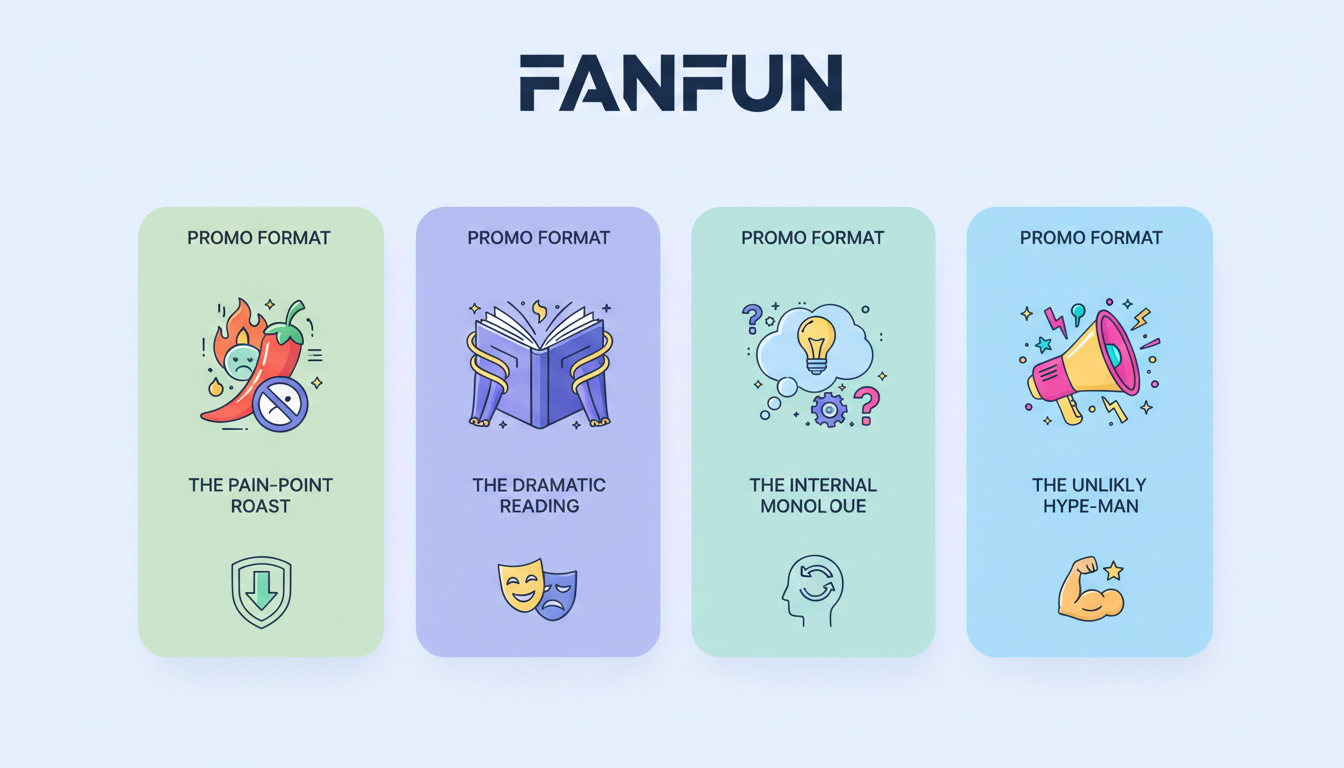
Format 1: The Pain-Point Roast
Instead of politely explaining what your product does, use a bold, humorous character voice to playfully critique the exact frustrations your target audience faces daily. For example, if you sell a project management tool, an over-the-top, dramatic AI character might roast the chaotic mess of a disorganized team's shared spreadsheet. The humor softens the sales pitch while highlighting the pain point instantly.
Format 2: The Dramatic Reading
Contrast is a powerful hook. In this format, you pair a highly theatrical, serious, or cinematic AI voice with completely mundane text. You could have a booming, movie-trailer voice read a boring, overly technical competitor instruction manual, or read a hilarious 1-star review of a generic product to highlight why your solution is different.
Format 3: The "Internal Monologue" Demo
Create a split-screen video. On one side, show a clean, simple screencast of your product in use. On the other side, use a fast-paced, slightly chaotic AI voice representing the inner thoughts of the customer as they struggle with the old way of doing things versus the ease of your solution. This format keeps viewers engaged because the voiceover matches the frantic pace of modern social feeds.
Format 4: The Unlikely Hype-Man
Pair a highly specific, unexpected voice persona with a completely unrelated product to create immediate comedic contrast. Think of a fantasy wizard character hyping up a B2B accounting software, or a vintage detective analyzing a modern skincare routine. The sheer absurdity of the pairing stops the scroll and keeps viewers watching until the call to action.
For more inspiration on pairing these formats with creative marketing angles, explore our strategic breakdown of high-impact ways to use AI voices in creative marketing.
Promo Format Selection Matrix
| Format | Best Suited For | Primary Emotion | Visual Pairing |
|---|---|---|---|
| The Pain-Point Roast | B2B SaaS, productivity tools, agency services | Humor & Relatability | Screenshots of bad UI or messy workflows |
| The Dramatic Reading | E-commerce, consumer goods, physical products | Amusement & Curiosity | Slow-motion product close-ups |
| Internal Monologue | Mobile apps, software tools, complex workflows | Empathy & Relief | Split-screen side-by-side demo |
| The Unlikely Hype-Man | Niche services, lifestyle brands, physical goods | Surprise & Entertainment | Fast-paced product montage |
The Scripting Blueprint: Writing for Synthetic Pacing
AI voice generators do not read scripts the way humans do. To get natural-sounding results, you must write specifically for the engine's punctuation and phonetic interpretation. Use this practical blueprint to optimize your scripts before generating your final audio.
1. Phonetic Spelling Hacks
Synthetic engines often stumble on brand names, industry acronyms, or uncommon words. If an AI voice mispronounces a word, do not try to fix it by typing the correct spelling repeatedly. Instead, spell it phonetically. For example:
- Write "SaaS" as "Sass" or "S-A-S" depending on how you want it pronounced.
- Write "ROI" as "Arr-Oh-Eye".
- Write "Fanfun" as "Fan fun" with a space to force a slight pause between syllables if the engine rushes the word.
2. Punctuation as Pacing Controls
Because you cannot easily tell an AI voice to "take a breath" or "slow down," you can experiment with punctuation to guide the pacing. Different voice engines interpret punctuation in unique ways, so it is best to test how your chosen tool responds to various marks. Commas, periods, ellipses, or line breaks may introduce pauses or shifts in tone depending on the platform. Previewing your script with different punctuation layouts is often the best way to find the right rhythm.
3. The 15-Second Rule
Short-form video algorithms prioritize completion rate. Keep your promo scripts tight, high-energy, and under 50 words for a 15-second ad. Place your hook in the first 3 seconds, deliver the core value proposition by second 8, and end with a clear, direct call to action by second 15.
Navigating Commercial Rights and Ethical Boundaries
Using AI voices in marketing requires careful attention to compliance, platform terms, and intellectual property. Before you launch your campaign, ensure you are operating within safe legal and ethical boundaries.
First, always verify the commercial use terms of the platform you are using. While many voice tools allow free personal use, running paid advertisements with specific character interpretations or celebrity-style voices may violate platform terms or advertising policies on Meta, TikTok, and Google. Always distinguish a fun, creative AI interpretation from an official endorsement. Never claim or imply that a real celebrity or public figure officially endorses your product unless you have an active, legally binding partnership with them.
Additionally, keep up with evolving platform policies. Major social networks increasingly require creators and advertisers to label content that contains realistic AI-generated voices or faces. Transparently labeling your video as "AI-voiced" or "AI-generated" not only keeps your ad accounts compliant but also builds trust with an audience that appreciates creative transparency.
Once you have established a compliant workflow and found a format that resonates with your audience, you can scale your creative concepts into broader, multi-channel ad campaigns. For a step-by-step framework on scaling your production, explore how to build high-conversion promo campaigns with digital character voices.
Do I need to hire a professional scriptwriter to use AI voices effectively?
No, you do not need a professional scriptwriter. However, you do need to adapt your writing style for synthetic pacing. Writing for AI voices often involves using phonetic spellings for complex words and experimenting with punctuation to find the right pacing. Keeping your script short, punchy, and structured around a single clear message is more important than advanced copywriting experience.
How do social media algorithms treat videos that use AI-generated voiceovers?
Social media algorithms do not inherently penalize videos with AI-generated voiceovers. In fact, highly engaging AI-voiced videos frequently go viral on platforms like TikTok and Instagram Reels. However, platforms may require you to apply an "AI-generated" label during the upload process to maintain transparency. The primary algorithmic ranking factor remains viewer retention, which is why choosing a high-energy, creative character voice is crucial.
Can I use Fanfun videos directly for paid social media advertisements?
Fanfun videos are designed primarily for personal creative uses, organic social sharing, roasts, and memes. If you plan to use an AI-generated character voice for paid social media advertising, you must ensure you have the appropriate commercial rights for that specific voice and comply with the ad policies of platforms like Meta or Google, which have strict rules regarding synthetic voices and celebrity likenesses.