The Audio Signature: 5 Creative Voiceover Formats to Hook Podcast Listeners Instantly
Most podcast intros are generic, boring, and immediately skipped. By treating your intro voiceover as a creative sonic signature using character contrasts, cinematic cold opens, and satirical mock ads, you can hook listeners in the first ten seconds.
We have all done it. You queue up a new podcast, hit play, and immediately hover your thumb over the "skip 30 seconds" button. The moment you hear the generic royalty-free corporate rock track fade in, followed by a sterile, overly polished voice announcing the show title and host in a classic "radio guy" cadence, your brain registers it as low-value filler. You skip ahead because your time is valuable, and that predictable intro did absolutely nothing to earn your attention.
At Fanfun, we believe that the first ten seconds of any audio experience should be a creative playground, not a chore. Your podcast intro voiceover is your show’s sonic signature—a vital piece of branding that sets the narrative stakes, establishes your community's subculture, and primes your listener's mood. Instead of settling for a boring template, you can use modern character-driven concepts and accessible AI voice tools to transform your intro into an unskippable hook.
The Death of the 'Radio Guy' Intro
The traditional, boomy "radio announcer" voiceover format is dead. It died because modern podcast listeners do not crave sterile, detached professionalism; they crave intimacy, authenticity, or high-concept entertainment. When an intro sounds like a local car commercial, it triggers immediate pattern recognition associated with advertisements, causing listeners to tune out or actively skip.
A truly great intro voiceover acts as a portal. It signals to the audience that they are entering a distinct, curated space. Whether you are hosting a gritty true-crime investigation, a high-level business show, or a pop-culture roundtable, your intro needs to establish a unique mood immediately. This requires moving away from predictable scripts ("Welcome to the show where we talk about...") and embracing creative formats that force the listener to pay attention.
Format 1: The Character Contrast (Injecting Unexpected Voices)
One of the most effective ways to break a listener's pattern recognition is through sheer contrast. If you run a serious podcast about software engineering, personal finance, or history, your audience expects a serious, measured introduction. By defying that expectation with an unexpected, highly stylized character voice, you create instant intrigue.
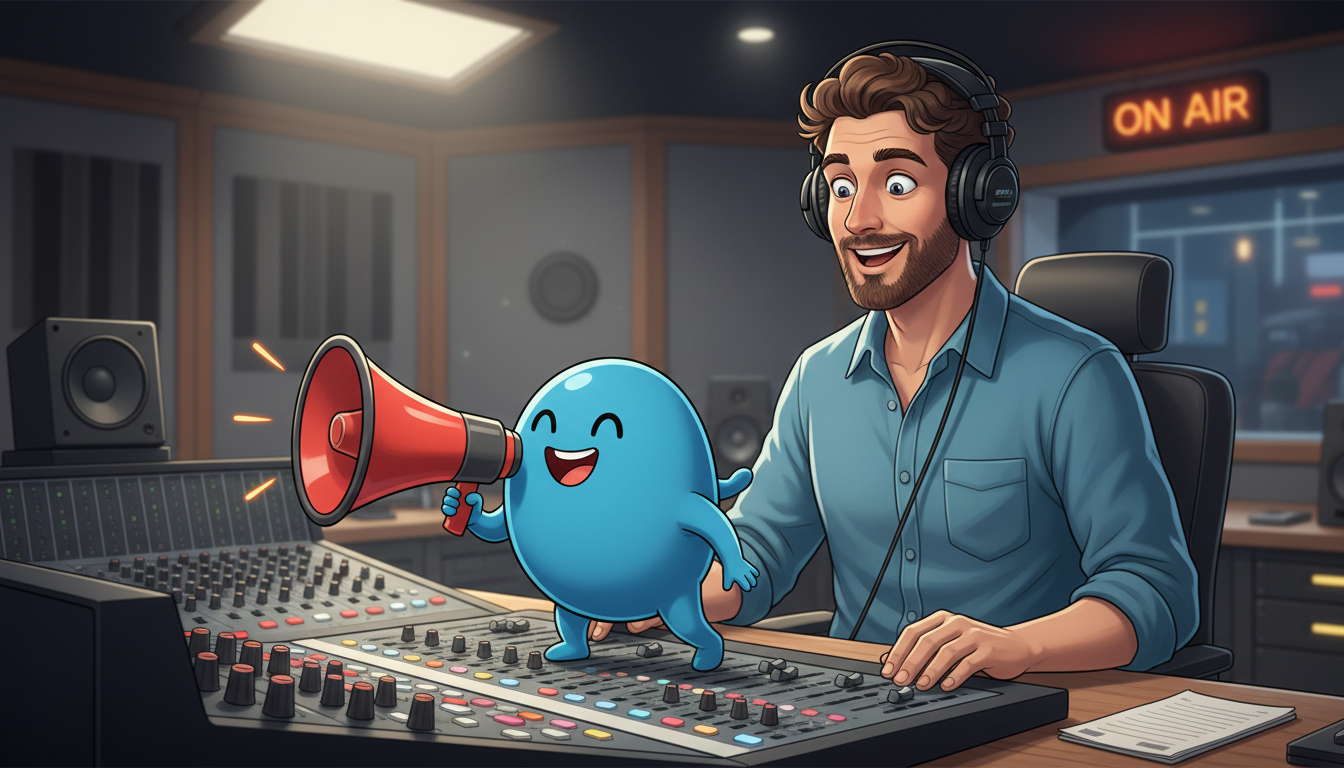
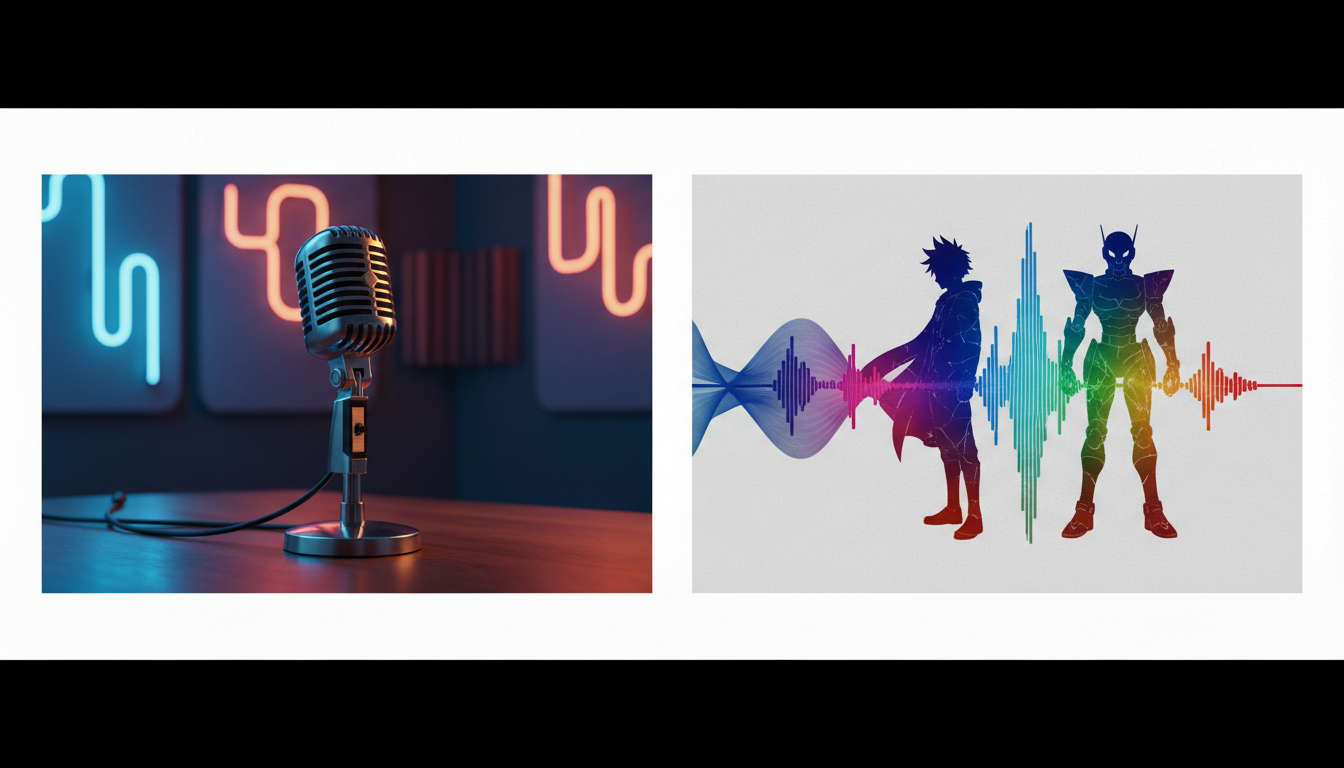
Imagine a deeply technical cybersecurity podcast introduced by a gritty, noir-style detective who sounds like he’s narrating a rainy night in 1940s Los Angeles. Or picture a fast-paced marketing show introduced by a hyper-energetic, anime-style hype-man. This stylistic mismatch immediately signals to the listener that your show is creative, self-aware, and entirely different from the competition. Using Fanfun’s AI Voice Generator, you can easily audition and deploy these unique character voices, experimenting with different archetypes without needing a massive voice-actor budget.
The 'Straight Man vs. Wild Card' Setup
To pull off this contrast effectively, you can employ a classic comedy dynamic: the straight man versus the wild card. Instead of a monologue, script a brief, two-voice exchange where your natural hosting voice is interrupted, corrected, or hyped up by a colorful character voice. This creates an immediate narrative dynamic that establishes your show's tone in under 15 seconds.
For example, you might start speaking your standard intro, only to have a colorful, high-energy character cut in to deliver the actual show title and host name with dramatic flair. Apply the principles of the comedy contrast method to balance your natural hosting style with an absurd or high-energy character voice. This setup keeps the energy high, delivers the necessary metadata (who you are and what the show is), and ensures your audience is smiling before the episode even officially begins.
Format 2: The In-Media-Res Cinematic Cold Open
Instead of greeting your audience, drop them directly into the middle of a scene. The "in-media-res" (in the middle of things) format bypasses all introductory pleasantries and starts with an atmospheric, scripted dramatic voiceover. This is incredibly effective for narrative, true-crime, history, or gaming podcasts.
Rather than saying, "Welcome to the Ancient Rome History Podcast," your episode could open with the crackle of a campfire, the distant march of legionnaires, and a whispered, urgent voiceover: "The wind in Gaul doesn't just blow; it bites. And tonight, Caesar's men are realizing they've marched into a trap."
To make this format work, you must support the voiceover with rich sound design. Static, background chatter, wind, or low-frequency drones build a cinematic world in the listener's mind. Once the dramatic tension peaks, you transition smoothly from the high-concept intro voiceover into your natural conversational voice, carrying that established momentum directly into your main topic.
Format 3: The Satirical Mock Commercial
If your podcast has a comedic, cynical, or highly conversational tone, a satirical mock commercial is an outstanding way to kick off each episode. This format involves writing a 15-to-30-second parody advertisement for a fictional product, service, or dystopian concept that perfectly aligns with your niche.
If you host a productivity podcast, you might open with a whispery, luxury-style voiceover advertising "FocusDust™: The organic, artisanal chalk you rub on your forehead to instantly ignore your family and answer emails." By using exaggerated vocal archetypes—like the over-enthusiastic infomercial host or the ultra-serious corporate narrator—you instantly hook the audience with humor. If you need inspiration for writing fast-paced, satirical scripts, explore our framework for generating funny AI voiceovers that capture attention. Over time, these mock commercials build a deep inside-joke culture with your core audience while keeping first-time listeners thoroughly entertained.
A Framework for Matching Your Show's Sonic Persona
Choosing the right voiceover style requires aligning your creative concept with your show's actual genre and target audience. Below is a comparison matrix to help you match your podcast’s theme with the ideal voiceover archetype, pacing, and musical backing.
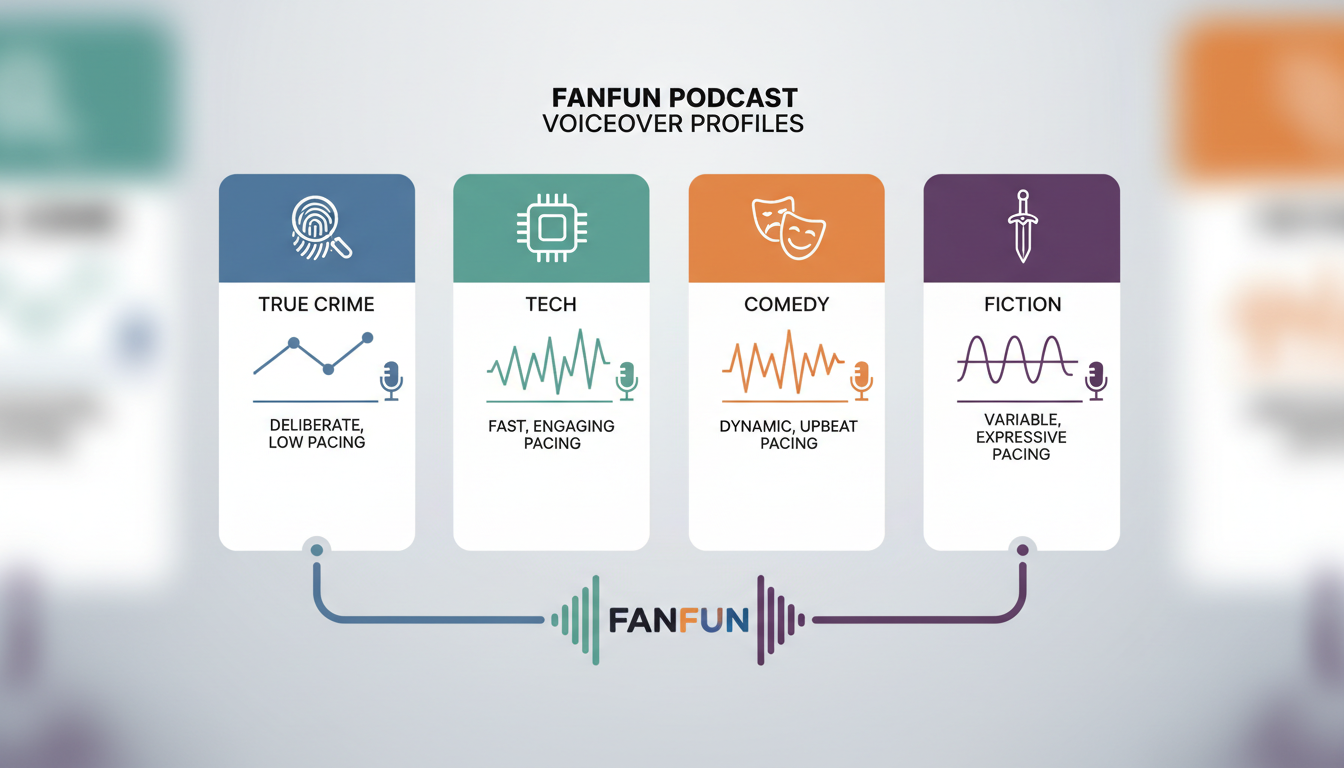
| Podcast Genre | Recommended Archetype | Pacing Style | Ideal Music Bed |
|---|---|---|---|
| Tech & Business | Retro-Futuristic AI or Cyberpunk Narrator | Measured, precise, rhythmic | Minimalist synth-wave or ambient electronic |
| True Crime & History | Gravelly Noir Detective or Intimate Reporter | Slow, deliberate, whispered | Low-frequency drones or melancholy cello |
| Comedy & Pop Culture | Hyperactive Hype-Man or Satirical Announcer | Fast, high-energy, dynamic | Upbeat funk, lo-fi hip-hop, or brassy jazz |
| Fiction & Gaming | Epic Fantasy Guide or Sci-Fi Commander | Dramatic, theatrical, atmospheric | Orchestral swells or cinematic percussion |
Regardless of the archetype you select, you must structure your script carefully. Keep your pacing tight; mastering short-form audio structuring is essential to prevent listeners from hitting the skip button during the first 15 seconds. Every syllable needs to earn its place in the mix.
How to Produce and Mix Your New Intro on a Budget
You do not need an expensive studio setup or a Hollywood production budget to create a high-impact, professional-sounding intro. By leveraging Fanfun’s platform, you can instantly test different character voices, accents, and delivery styles for your intro script. This allows you to rapidly iterate on your creative ideas until you find the exact voice that fits your show's identity.
Once you have generated your voiceover elements, pay close attention to the technical mix. Ensure your voiceover sits clearly "on top" of the music bed by using basic EQ to carve out space in the mid-range frequencies of your background track. Implement "ducking"—a production technique that automatically lowers the volume of your music bed by 3 to 6 decibels whenever the voiceover is active. Finally, add subtle room reverb or radio filters to your character voice to give it physical space and texture, and always test your completed mix on multiple devices, such as cheap earbuds, car speakers, and phone speakers, to ensure the voice remains crisp and legible in any environment.
For a complete technical walkthrough on building your audio file, check out our step-by-step guide on how to script and mix a custom AI voice podcast intro. With the right tools and a bit of creative daring, you can turn your show’s first few seconds into an unforgettable sonic signature that keeps your audience hooked week after week.
How long should a podcast intro voiceover be?
An ideal podcast intro voiceover should be between 15 and 30 seconds. Anything longer than 30 seconds risks triggering the "skip" behavior from repeat listeners. Keep your script tight, deliver the essential information quickly, and focus on establishing the mood.
Should I use a professional voice actor or an AI voice generator for my podcast intro?
While professional voice actors are great, they can be expensive and slow to work with if you want to iterate on your concept. An AI voice generator like Fanfun allows you to instantly experiment with dozens of unique character voices, accents, and tones at a fraction of the cost, giving you complete creative control and the ability to update your intro on the fly.
How do I choose background music that doesn't clash with my intro voiceover?
Look for instrumental tracks that do not have competing lead melodies in the vocal frequency range (around 1kHz to 4kHz). Use production techniques like EQ carving and automatic ducking to ensure your music bed naturally lowers in volume whenever the voiceover is speaking.
Is it a good idea to change my podcast intro voiceover for every episode?
While consistency helps build a strong brand, subtle variations can keep your show incredibly fresh. A hybrid approach works best: keep a consistent musical theme and ending hook, but rotate creative elements like cinematic cold opens, character dialogues, or satirical mock commercials to surprise and delight your listeners each week.