The Writer’s Room of the Future: Using Interactive AI Chats to Break Through Creative Blocks
Struggling with flat characters or a stalled plot? Discover how treating interactive AI chats as living sounding boards can revolutionize your creative writing process, moving you from passive outlining to dynamic, real-time character testing.
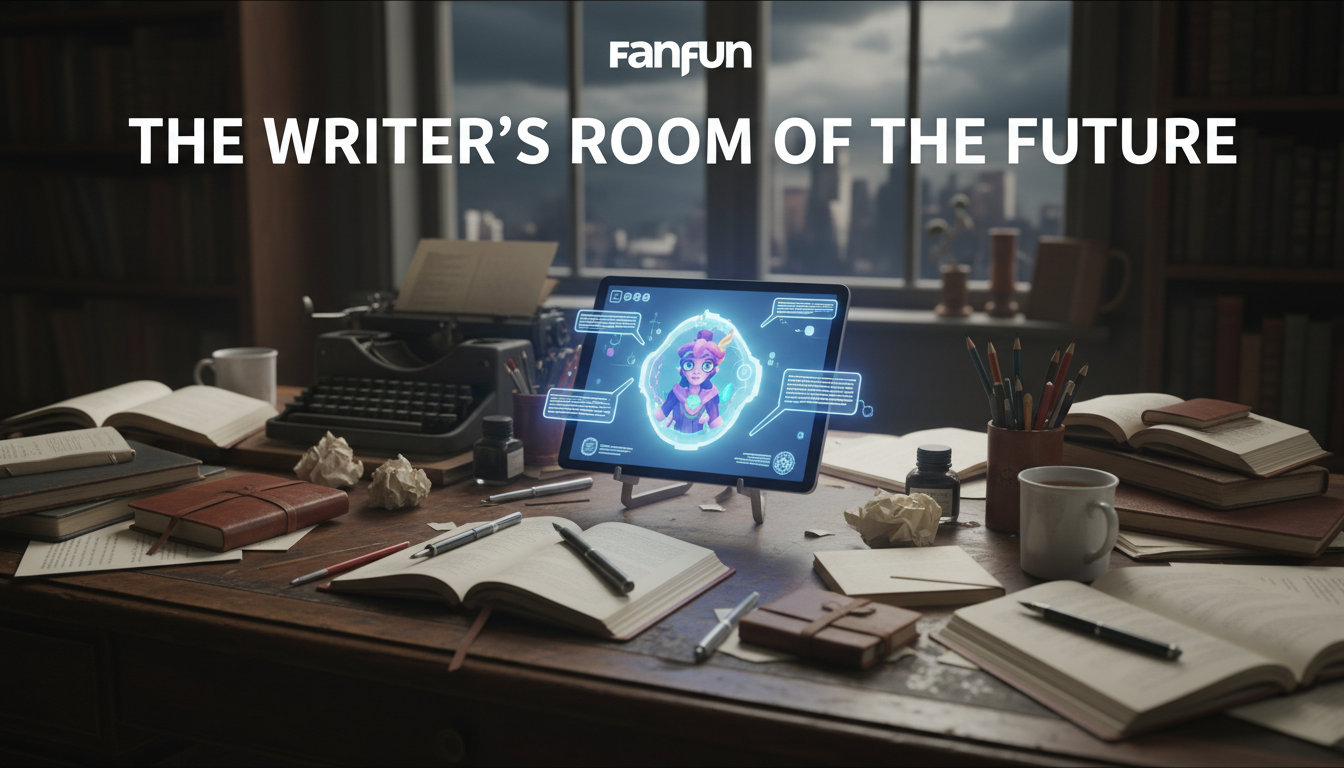
Creative blocks usually happen when characters stop talking to us. We stare at a static outline, scroll through character spreadsheets, or try to force a dynamic, living personality into a linear sequence of events. The traditional writer's room relies on bouncing ideas off other minds, but when you are writing solo, that feedback loop is entirely confined to your own head, often resulting in stale dialogue and predictable plot points.
This is where adopting a "Director" mindset changes the game. By stepping away from flat, one-way prompting and entering an active, conversational space, you can treat your characters as real-time collaborators. Learning how to direct interactive AI chats with cultural icons or bespoke personas on Fanfun transforms your writing process from solitary construction to dynamic improvisation.
Moving Beyond the Prompt: Why Character Interaction Beats Static Outlining
Standard AI writing tools often treat character generation like a clinical exercise. You input a list of traits—"stubborn, 34 years old, harbors a secret"—and the system spits out a generic, essay-like summary of how that character might act. This static approach lacks the friction required for genuine creative breakthroughs. It tells you what a character is, but it doesn't show you how they live, breathe, and react under pressure.
Interactive chats flip this dynamic. Instead of asking an AI to analyze your character, you step into a live sandbox and converse with them. This shift is part of a broader cultural movement; as explored in our look at the parasocial shift toward interactive AI companions, modern audiences and creators are trading passive feeds for highly personalized, two-way dynamics. When applied to creative writing, this interactivity introduces a crucial element: unpredictability.
A well-defined AI persona does not simply agree with your plot points. It responds based on its programmed temperament, linguistic quirks, and core motivations. If you suggest a course of action that violates the character's internal logic, the AI’s response will feel jarring or resistant. This immediate, "live" feedback loop is incredibly valuable for testing dialogue rhythm and exposing flaws in your character's psychological makeup before you commit thousands of words to the page.
The Interview Technique: Stress-Testing Your Protagonist
One of the most effective ways to break a creative block is to put your protagonist in a high-stakes, out-of-character scenario. This is the "Stress-Test Interview." By utilizing Fanfun’s diverse library of personas as stand-ins or direct inspiration, you can pressure-test how different archetypes handle specific plot twists or moral dilemmas. This technique is highly adaptable, whether you are writing a gritty crime thriller or using AI chats with fantasy icons for world-building.
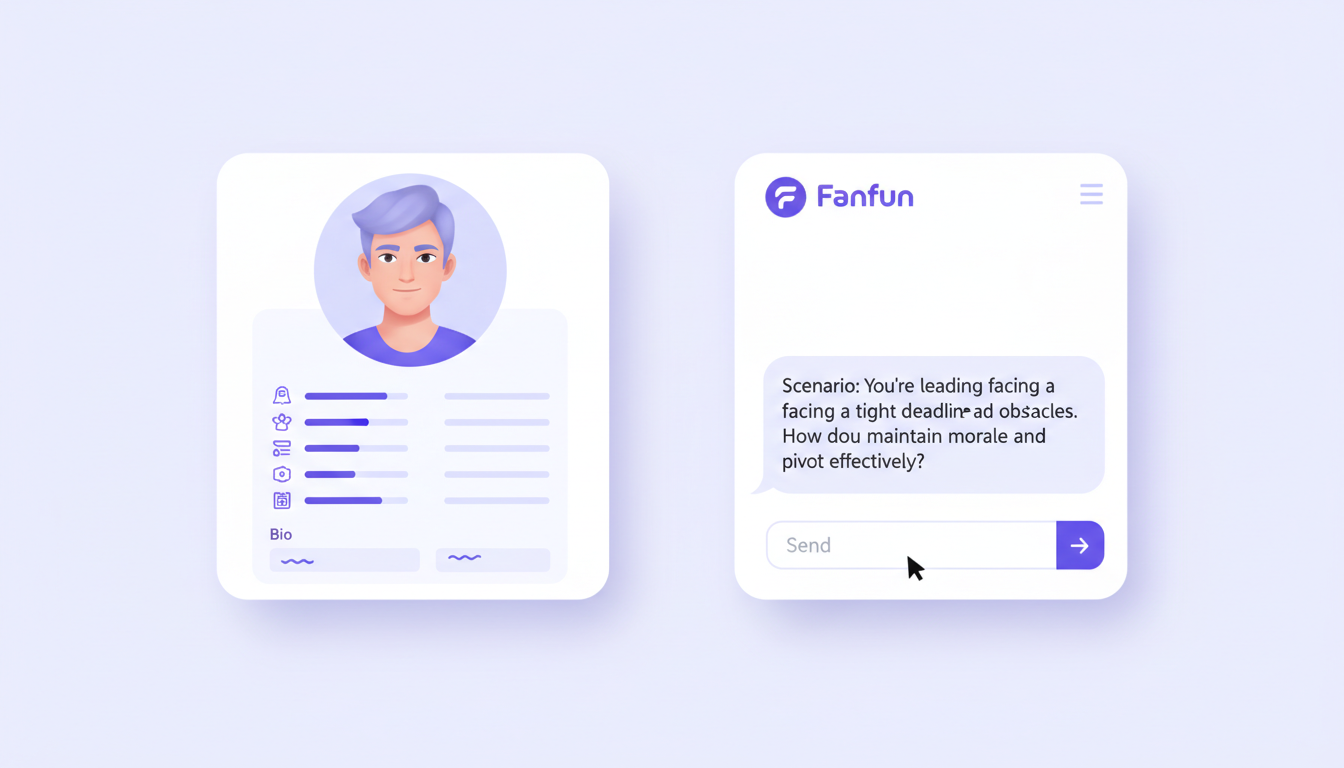
To execute a successful stress-test, follow this four-step diagnostic framework:
- Establish the Inciting Incident: Begin the chat by dropping the character into a sudden, high-pressure situation that forces an immediate choice (e.g., "You just found a blood-stained letter in your partner's desk. What do you do?").
- Block the Easy Out: If the character responds with a predictable, heroic cliché, introduce a complication that strips away their safety net (e.g., "The police are already knocking on the front door, and you only have ten seconds").
- Probe the Contradiction: Challenge their choices in real-time. If they claim to be a pacifist but immediately reach for a weapon, ask them to justify the discrepancy.
- Document the Pivot: Note the exact moment the character’s voice shifts from defensive to vulnerable. This transition is where true backstory is uncovered.
When a character reacts inconsistently during a live chat, do not view it as a system error. Instead, treat it as a creative clue. Ask yourself: Why would they lie in this moment? What past trauma makes them react with unearned anger here? These unexpected conversational detours frequently reveal the hidden motivations that make characters feel human and three-dimensional.
Dialogue Refinement and Voice Calibration
A common pitfall in fiction is "homogenized dialogue"—where every character in a scene speaks with the exact same cadence, vocabulary, and sentence structure (usually mimicking the author's own voice). Interactive AI chats act as an excellent diagnostic tool for identifying and correcting this voice drift.
Auditioning Dialogue Styles
To calibrate a character's voice, try "auditioning" key lines of dialogue within the chat. Paste a draft line from your manuscript into the chat and ask the AI persona to translate it into their own style, or observe how they respond to it naturally. For example, if you are writing a scene involving a hard-boiled detective and a naive rookie, you can feed the rookie's line to a cynical, noir-inspired AI persona and analyze the friction in the response. If the AI responds with overly polite, modern corporate jargon, you know your setup lacks the historical or atmospheric anchors needed to pull the character into the era.
Additionally, you can use interactive chats to generate "b-side" dialogue. These are conversations, arguments, or casual banter that may never make it into the final draft, but serve to deepen your understanding of how your characters interact when the plot isn't actively demanding their attention. Knowing how your characters bicker about dinner plans or argue over a trivial detail makes writing their high-stakes scenes significantly more authentic.
Building the 'Living' Bible: Tracking Iterations
Chatting with an AI is an excellent source of raw creative energy, but that energy is easily lost if you do not have a systemized way to capture and organize your insights. To bridge the gap between the interactive sandbox and your final manuscript, you should maintain a "Session Log" alongside your draft.
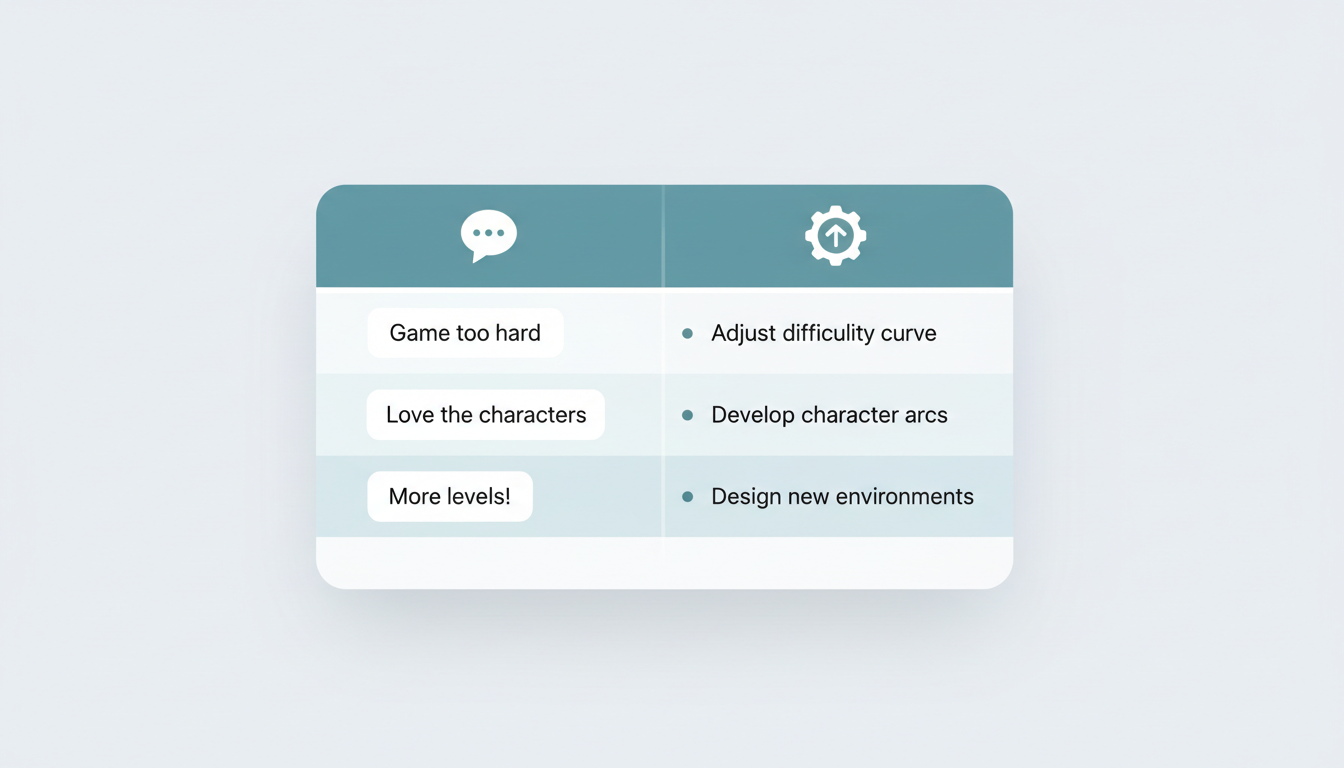
Use this simple table format to document the key breakthroughs from your interactive writing sessions:
| Scenario / Prompt Fed to AI | Unexpected Character Reaction | Implication for the Plot / Manuscript |
|---|---|---|
| Protagonist is offered a bribe to cover up a minor corporate safety violation. | The AI character accepted the bribe immediately, justifying it as a way to pay for their sibling's medical treatment. | Shift the protagonist from a flawless moral compass to a compromised figure driven by familial desperation. |
| A mentor figure is confronted about a past betrayal from twenty years ago. | The AI responded with cold, deflective humor rather than anger or remorse. | Rewrite Chapter 5 dialogue to emphasize evasion; the mentor uses jokes as a defense mechanism to hide deep-seated guilt. |
| The hero is trapped in an elevator with their primary antagonist. | The AI antagonist initiated a mundane conversation about the building's terrible architecture, ignoring the conflict entirely. | Use this bizarre, mundane tension to break up the melodrama of the climax; highlights the antagonist's sociopathic detachment. |
When transitioning these insights to your draft, remember that the goal is not to copy and paste the chat transcript verbatim. The magic of the session lies in the structural dynamics—the realization that a character avoids direct questions, or that their vocabulary shrinks when they are intimidated. Use the chat as a blueprint to rebuild the scene with your unique prose style, preserving the emotional spark while maintaining full control over the narrative flow.
The Ethics of Virtual Collaboration
As AI becomes deeply integrated into the creative workflow, writers must establish clear boundaries to maintain the integrity of their work. At Fanfun, we view AI as a powerful catalyst for human imagination, not a replacement for the writer's perspective. The technology is designed to help you explore the boundaries of your own creativity, acting as a sounding board, a sparring partner, and a sandbox for experimentation.
Maintaining creative ownership means using interactive chats to discover *direction* rather than outsourcing the actual craft of writing. An AI can help you realize that your mystery novel needs a faster pace, or that your protagonist's motivation feels weak, but it cannot replicate your lived experiences, your unique thematic voice, or your distinct perspective on the human condition. Use these virtual tools to challenge your assumptions, break through your blocks, and stress-test your ideas—then return to the keyboard and write the story that only you can tell.
Can I use AI characters to help me with character development?
Absolutely. Using interactive AI chats allows you to move beyond static, dry character worksheets. By conversing with an AI persona, you can test how your character reacts to sudden plot twists, moral dilemmas, and high-pressure scenarios in real-time, helping you uncover deeper motivations and more realistic behavioral patterns.
How do I ensure the AI stays in character during a long writing session?
To keep the AI aligned with your character's voice, establish clear boundaries at the beginning of the chat. If the voice begins to drift or sound too generic, use corrective prompts within the conversation (e.g., "Remember, you are a cynical detective from the 1940s—avoid modern slang"). Utilizing platforms like Fanfun, which feature highly calibrated, specific personas, also helps maintain consistent character behavior throughout your session.
Is it okay to use AI-generated dialogue ideas in my final manuscript?
Yes, using the concepts, rhythms, and structural ideas generated during a chat is a standard part of the collaborative process. However, we recommend using the chat as a blueprint rather than copying text verbatim. Polishing the dialogue yourself ensures that the final prose matches your unique authorial voice and fits seamlessly into your manuscript's style.
How does Fanfun’s interactive chat differ from standard AI writing tools?
Standard AI writing tools are typically designed for one-way generation, producing essays, summaries, or structured text based on static prompts. Fanfun focuses on dynamic, two-way interactive chats with specific, highly defined personas. This conversational unpredictability mimics real-world human interaction, making it a far more effective tool for brainstorming, dialogue calibration, and stress-testing narrative concepts.