The Hero's Sandbox: How to Direct AI Chats with Fantasy Icons for World-Building and Campaign Writing
Move beyond shallow, repetitive roleplay. Learn how to apply professional directorial frameworks to AI fantasy chats, transforming iconic heroes into active, collaborative partners for your D&D campaigns, world-building projects, and creative writing.
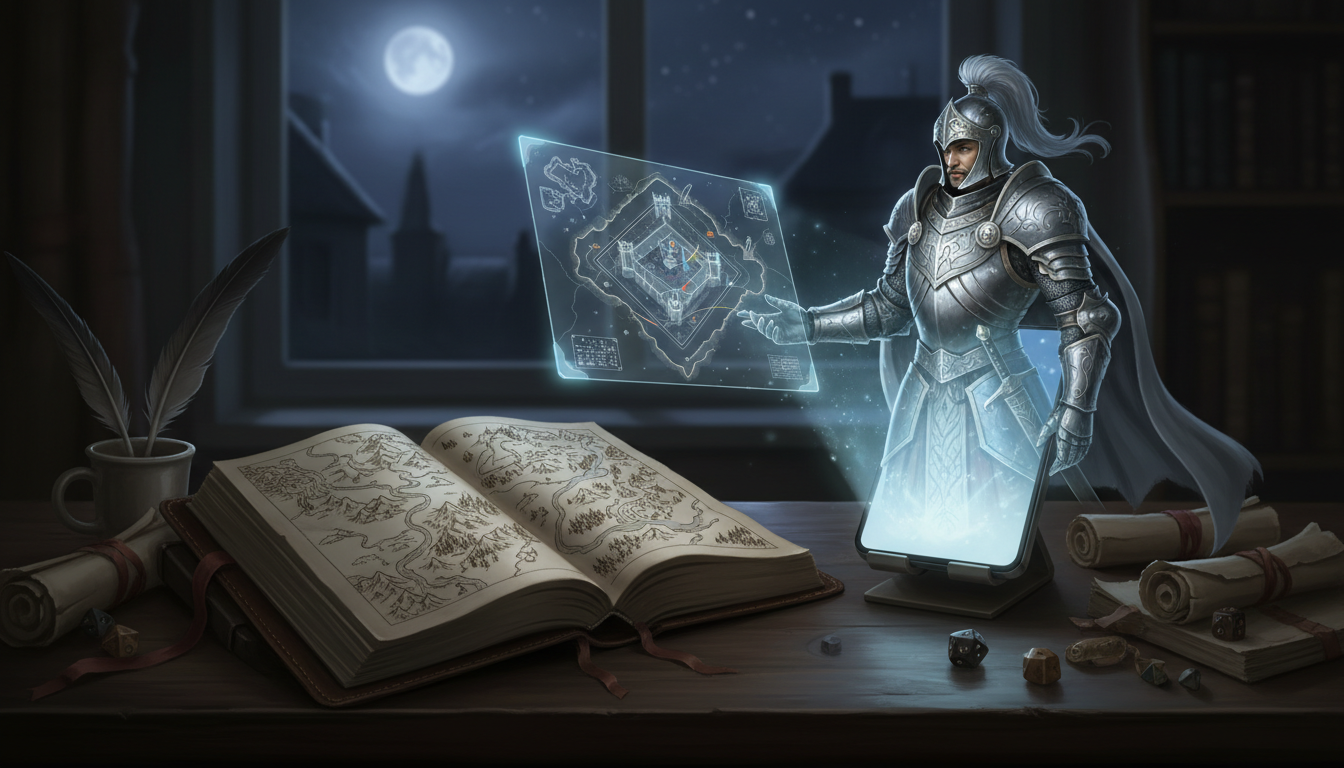
World-building is an exercise in pressure-testing. Whether you are drafting an epic fantasy novel, preparing a high-stakes Dungeons & Dragons campaign, or writing fan fiction, the hardest part is ensuring your characters react with authentic agency rather than acting as convenient mouthpieces for the plot. Too often, writers stare at a blank page trying to guess how a legendary elven commander or a cynical rogue would actually challenge their decisions, resulting in flat dialogue and predictable scenarios.
This is where interactive AI roleplay can act as your ultimate creative sandbox. By moving past passive reading and treating legendary fantasy icons as collaborative, living actors, you can stress-test your lore, refine your dialogue, and map out complex narratives in real time. To do this successfully, you need to transition from a casual prompter to an active director, using structured frameworks to unlock deep, lore-accurate conversations that feel true to the genre's deepest traditions.
Beyond the Tavern: Why Generic Prompts Fail Fantasy Heroes
The standard approach to AI character interaction usually begins and ends with some variation of: "Hi, I am [Character Name] from [Fantasy Setting]. Let's talk." While this might trigger a polite greeting, it almost always leads to a shallow, "Wikipedia-style" summary. Instead of engaging in an immersive scene, the AI simply recites its own backstory, breaking the illusion of the world and offering zero creative value to a writer or game master.
Fantasy heroes are not defined by their resumes; they are defined by their struggles, moral codes, and the unique rules of their magic systems. When you use generic prompts, the AI lacks the boundaries that make the character who they are. Without these constraints, a legendary, battle-hardened warrior will default to modern, polite platitudes, offering generic advice like "we must all work together to find peace" instead of suggesting a brutal, lore-accurate tactical maneuver.
To get high-substance responses, you must establish immediate stakes, a clear relationship, and a physical setting right from the very first message. You must give the character a problem to solve, an opinion to defend, or a boundary to push. By establishing these parameters early, you force the AI to draw on its specific lore to navigate the scene, turning a passive chatbot into an active conversational partner.
Framing the Scene: Three Conversational Blueprints for Fantasy Icons
To bypass the dreaded "tavern chat" trap, you need to drop your character into a scenario that demands immediate action or intellectual defense. For a broader look at how to manage these dynamic interactions, check out our guide on directing interactive AI character chats. When working specifically within the fantasy genre, you can instantly elevate your sessions by deploying one of these three high-concept conversational blueprints:
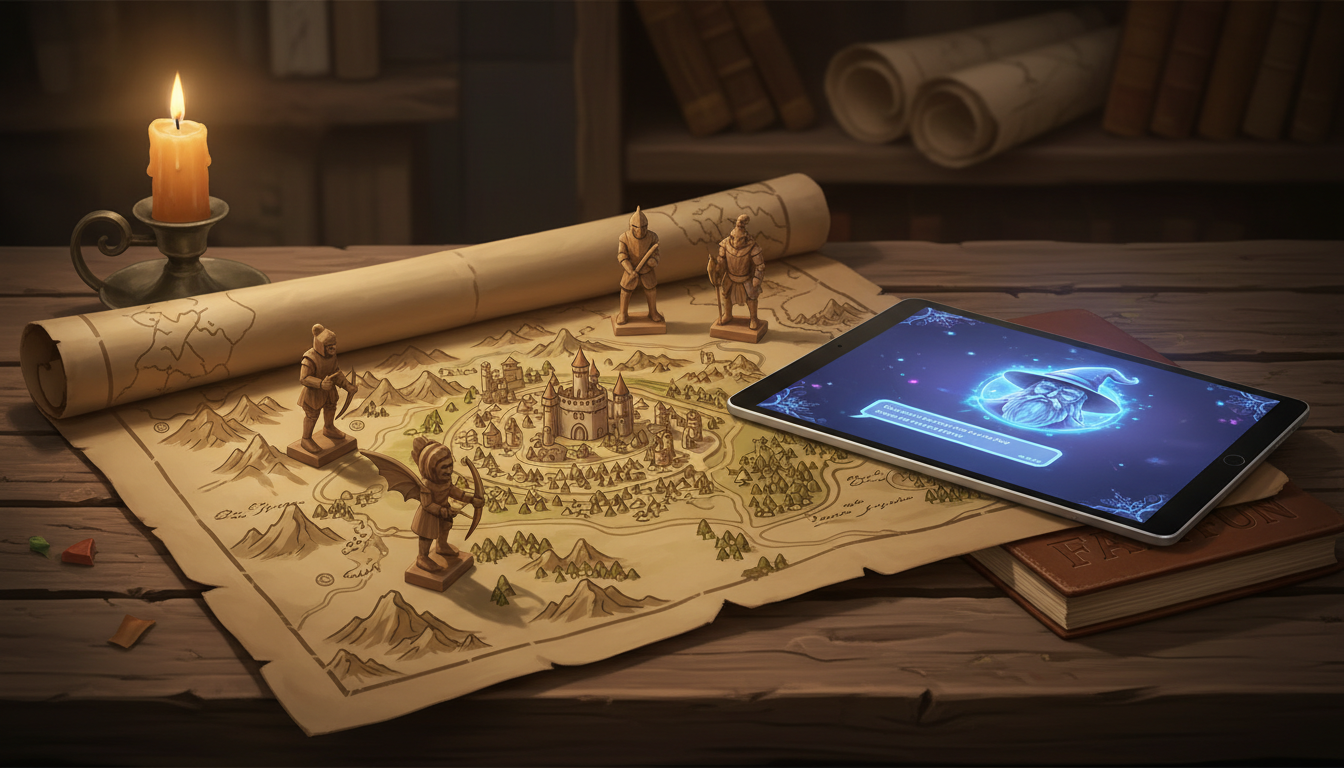
- The Tactical Council: Position the character as a military commander, advisor, or rebel leader. Present them with a complex, seemingly unwinnable battle plan. This scenario forces the AI to draw on its lore-based tactical style, whether that means prioritizing elven stealth, dwarven defensive fortifications, or reckless rogue skirmishing.
- The Magical Debate: Challenge a wizard, scholar, or high priest on the logical boundaries of their world's magic system. By questioning the source of their power or proposing a dangerous magical theory, you push the AI to defend its world's rules, helping you map out the hard and soft limits of your own campaign's magic.
- The Moral Dilemma: Force the hero to choose between two imperfect, high-stakes outcomes where there is no easy "good" choice. This format strips away generic heroism and reveals the character's core alignment, psychological depth, and emotional breaking points.
The Tactical Council: A Case Study in Strategic Debate
Let's look at how to execute the Tactical Council blueprint to stress-test a military scenario. Imagine you are writing a campaign where a besieged fortress must hold out against an overwhelming horde. Instead of simply writing what happens, you can run a simulation with a legendary commander to see how they would realistically approach the crisis.
To set this up, your opening prompt must establish the strategic stakes immediately. Instead of asking "What should we do?", outline the exact parameters of the crisis: the number of defending troops, the state of the rations, the terrain, and the nature of the approaching enemy. Specify the role the AI is playing—such as a veteran general—and command them to critique your proposed battle plan from their unique perspective.
Using Fanfun's interactive AI Chat sandbox, you can test these exact tactical scenarios and observe how a hero's unique personality and background influence their strategic choices. A noble knight might reject a plan that sacrifices the local peasantry, while a pragmatic assassin might insist on abandoning the walls entirely to hunt the enemy commander. This friction is exactly what makes for compelling storytelling, providing you with organic dialogue and unexpected plot twists that you can directly import into your own writing.
The Lore-Keeper's Toolkit: How to Feed Lore to Your AI Chat Companion
One of the biggest challenges in directing fantasy AI chats is managing the balance of information. If you feed the AI too much lore at once, its memory buffer can become overwhelmed, leading to repetitive or confused responses. To keep the immersion intact, you need a structured approach to context priming.
Begin by establishing "No-Go" zones in your initial setup. Explicitly instruct the AI to avoid modern terminology, contemporary slang, and overly casual phrasing. This ensures the tone remains grounded in the high-stakes, historical, or mythical atmosphere of your setting. This approach builds on the same techniques used to design immersive historical AI chats that break free from dry textbook summaries, prioritizing lived-in character voices over robotic facts.
Prompt Engineering Comparison
To see this in action, compare how a lazy, passive prompt compares to a high-impact, directive prompt designed for world-building:
| Lazy, Passive Prompt (Avoid This) | High-Impact, Directive Prompt (Use This) |
|---|---|
| "Let's pretend we are in a fantasy world. Tell me what your character thinks about magic and if you can help me write my D&D campaign." | "Act as a cynical, battle-weary wizard who views magic as a dangerous curse rather than a gift. We are sitting in the ruins of a tower destroyed by wild magic. I will propose a theory on how to harness this energy, and you will aggressively critique my theory using your knowledge of magical volatile feedback. Speak in formal, slightly archaic prose. Avoid modern slang." |
Directing the Voice: Infusing Dialect, Cadence, and Drama
An authentic fantasy character doesn't just say the right things; they say them with a distinct linguistic flavor. To prevent your AI companion from sounding like a modern customer service representative, you must actively direct its vocabulary, syntax, and physical presence. You can do this by incorporating formatting cues directly into your conversational flow.

Use asterisks to write physical actions and internal thoughts (e.g., *heavily leans against the stone hearth, staring into the dying embers*). This signals to the AI that it should also use descriptive action tags, which slows down the pacing of the conversation and builds dramatic tension. You can also prompt the AI to adopt specific speech patterns, such as the rhythmic, formal courtly speech of high elves, or the clipped, rugged, and blunt dialect of a northern scout.
If you want to take your character design to the next level, read our comprehensive guide on directing a celebrity chatbot with voice. Fanfun's advanced character engines are designed to naturally adapt to these stylistic cues, allowing you to seamlessly transition from text-based brainstorming to fully voiced, immersive character interactions that bring your fantasy world to life.
Co-Authoring with Icons: Using AI Chat to Stress-Test Your Own Fiction
For novelists, screenwriters, and tabletop Game Masters, directing AI chats is more than just a fun exercise—it is a powerful developmental tool. By casting a legendary fantasy icon as an antagonist, a rival, or a skeptical mentor, you can put your original characters through their paces. You can paste a paragraph of your original character's dialogue into the chat and ask the AI hero to react to it in-character, revealing whether your dialogue sounds natural or if your character's arguments hold up under pressure.
The resulting chat logs can serve as a highly detailed rough draft for your actual writing. Instead of struggling to write a tense negotiation scene from scratch, you can copy the natural back-and-forth of your AI chat session, clean up the formatting, and integrate the best lines directly into your manuscript or campaign notes. This active co-creation beats passive outlining every single time, keeping your writing dynamic, unpredictable, and deeply engaging.
Ultimately, platforms like Fanfun bridge the gap between passive fandom and active creative writing. By giving you the tools to step into the director's chair, you are no longer just consuming the fantasy worlds you love—you are actively collaborating with their greatest heroes to build entirely new legends of your own.
How do I prevent my AI fantasy chat from sounding too modern or using slang?
To keep the language immersive, establish strict linguistic boundaries in your very first prompt. Explicitly instruct the AI to avoid modern slang, contemporary idioms, and casual corporate language. Command it to use formal, archaic, or setting-specific vocabulary, and lead by example in your own messages by using genre-appropriate language.
Can I use AI fantasy character chats to help plan my Dungeons & Dragons campaign?
Yes! AI chats are incredibly useful for GMs. You can use them to playtest NPC interactions, brainstorm faction conflicts, or debate tactical military encounters. By roleplaying a scenario with an AI character, you can discover logical flaws in your campaign's plot or magic system before your players do.
What is the best opening line to start an immersive roleplay chat with a hero?
The best opening line establishes immediate physical context, relationships, and stakes. Instead of saying "Hello," try starting with an action and an urgent problem: "*Slams a blood-stained map onto the war table* We have three hours before the vanguard reaches the eastern gate, and our scouts just reported a dragon in their ranks. What is our play?"
How can I save or export my AI chat conversations to use in my own writing?
You can easily copy and paste your high-value chat logs directly from the Fanfun interface into your favorite writing software, markdown editor, or campaign manager. Many writers use these raw transcripts as a foundation for editing dialogue, polishing character interactions, and outlining novel chapters.