How to Write Fantasy Character Dialogue for AI Video Messages
Want to make a digital wizard, knight, or elf sound genuinely magical? Discover how to craft fantasy dialogue that flows naturally in AI video messages without sounding robotic.
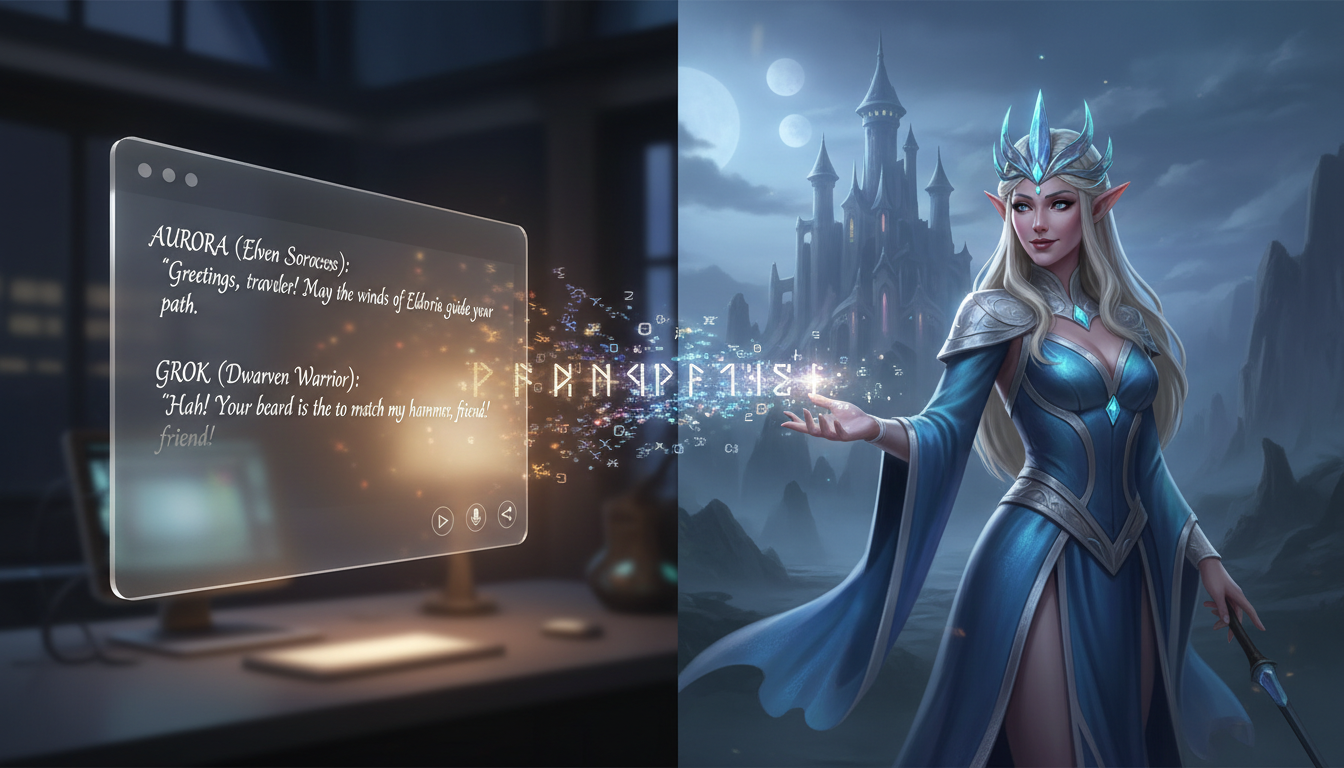
To write fantasy character dialogue that sounds authentic in an AI video message, you must balance immersive world-building vocabulary with phonetic simplicity. Instead of overloading your script with dense, archaic terms like "thee" or "thou"—which can cause synthetic voices to glitch or sound unnatural—focus on establishing clear speech rules, rhythmic pacing, and high emotional intent. This ensures your customized digital greeting remains highly readable and expressive for AI generation platforms like Fanfun.
Establish Your Character's Linguistic Rules
Every memorable fantasy character has a distinct way of speaking that reflects their origin, status, and environment. When writing a script for an AI persona, setting strict linguistic boundaries prevents them from sounding like a generic, modern assistant. To master the basics of tailoring text for artificial speech, you can refer to The Scriptwriter’s Promptbook, which details how to write dialogue that sounds human.
Define a "Speech Filter"
A speech filter is a set of rules that governs what your character will and won't say. For example, an ancient elven mage might completely avoid contractions (using "I cannot" instead of "I can't"), while a rugged dwarf blacksmith might speak in short, blunt sentences loaded with metalworking metaphors. Decide on your character's rules before writing a single line:
- Contractions: Do they use them? Leaving them out instantly makes a character sound formal, royal, or ancient.
- Sentence Complexity: Do they speak in winding, poetic riddles, or direct, active declarations?
- Imagery: What kind of metaphors do they use? A forest druid might compare emotions to seasons, while a pirate captain references tides and storms.
Avoid Archaic Overload
It is tempting to pepper your script with "hark," "forsooth," and "prithee" to force a medieval feel. However, synthetic voice models can struggle to pronounce highly obscure words naturally, potentially leading to awkward pauses or mechanical inflections. Instead, achieve a historical tone through word order and sentence structure. For instance, changing "You must go to the castle" to "To the castle you must go" creates a fantasy feel without using a single complex word.
Status and Environment
A character's social standing dictates their vocabulary. A royal queen speaks with measured grace, using passive verbs and grand pronouns. A street-smart rogue uses active, punchy verbs and sharp, informal phrasing. Keep this contrast consistent throughout your script to maintain the illusion of a living, breathing fantasy world.
The Fantasy Scripting Framework
To keep your video messages engaging, structure your script with a clear progression. For more on crafting messages that connect, see our guide on scripting realistic character video greetings. For fantasy characters, we recommend the Hook, Lore, Call-to-Action (CTA) framework.
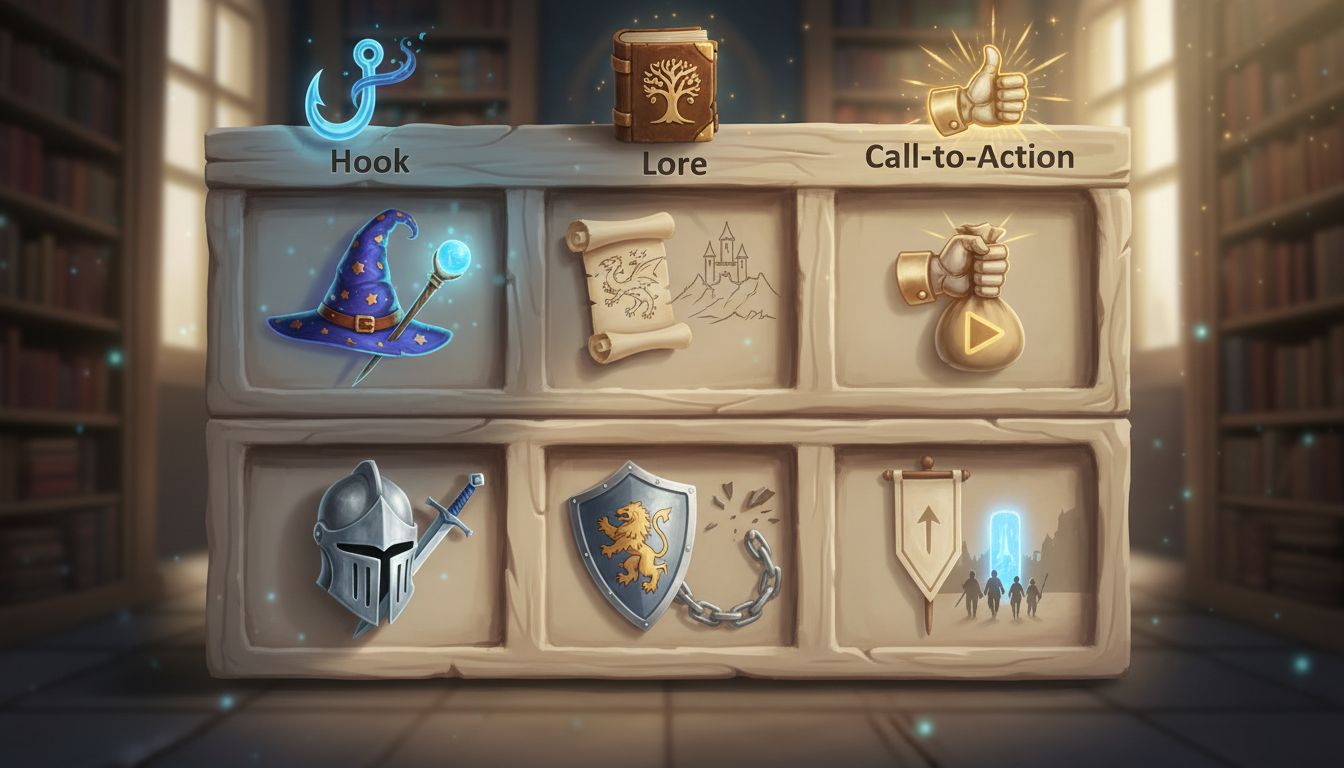
This structure keeps the message focused while allowing room for atmospheric flavor. Here is how it breaks down for different fantasy archetypes:
| Archetype | Hook (0-5s) | Lore / Flavor (5-20s) | Call-to-Action (20-30s) |
|---|---|---|---|
| The Wise Wizard | "Ah, the stars foretold your arrival at this very hour." | "The winds of change blow fiercely. I have spent decades studying the ancient scrolls of Eldoria to find this truth." | "Go forth with courage, young apprentice. Your journey has only just begun." |
| The Noble Knight | "Halt! Who approaches the southern gates?" | "By my sword and my shield, I swear to protect this realm from the shadow creeping over the eastern mountains." | "Join our ranks tonight at the tavern, and we shall toast to victory!" |
Pacing and Storyteller Rhythm
Fantasy dialogue relies heavily on rhythm. Good storytellers use pauses to build anticipation. When writing for an AI video generator, you can simulate this rhythm by breaking up long thoughts into shorter, distinct sentences. Give the character time to "breathe" between declarations.
Refining for AI Delivery
Writing for a digital voice is different from writing for a human actor. While a human can interpret subtext and adjust their pitch on the fly, an AI relies on the exact punctuation and phonetic structure you provide. This aligns closely with the principles in our animator's script-to-screen audio guide, which emphasizes matching performance to visual style.
Prioritize Phonetic Simplicity
Complex fantasy names and dense prose can trip up synthetic voice models. If your world features complex names like "Xal'atath" or "Mxyzptlk," consider spelling them phonetically in your script (e.g., "Zal-uh-tath") to ensure correct pronunciation. Keep your sentences streamlined to avoid slurred delivery or unnatural clipping.
Use Punctuation Strategically
Punctuation acts as the director's notes for an AI voice. Commas introduce brief pauses, periods create firm stops, and ellipses (...) can suggest mystery, deep thought, or hesitation. If you want your wizard to sound like they are searching their memory, write: "The ancient spell... yes, I believe it was written in gold."
The "Read Aloud" Test
Before you commit to generating your video message on Fanfun, always read your script aloud. If you stumble over a tongue-twister, or if you run out of breath mid-sentence, the AI will likely struggle to render it smoothly. Simplify your phrasing until the dialogue flows naturally from your own mouth.
How can I make my character sound ancient without being hard to understand?
To convey age without sacrificing clarity, avoid archaic vocabulary like "thou" and instead focus on formal sentence structures, an absence of modern contractions, and a slower, more deliberate pacing. Using metaphors drawn from nature or history also helps establish an ancient persona.
Should I use accents or phonetic spellings in my script for the AI?
You should write standard English words normally, but use phonetic spellings for fictional fantasy names or places (for example, writing "Zal-uh-tath" instead of "Xal'atath"). Avoid typing out heavy phonetic accents (like "ye" or "cap'n" excessively) as they can confuse the voice model; let the character's chosen voice profile handle the regional accent.
How long should a fantasy character video message be to keep the viewer's attention?
For custom greetings or gift videos, keeping the script between 30 and 60 seconds (roughly 75 to 150 words) is ideal. This ensures the pacing remains tight, the lore is punchy, and the performance maintains high engagement from start to finish.