Write, Don't Just Type: How to Script a Character Video Greeting That Feels Uncannily Real
Stop typing generic birthday templates. Learn how to deconstruct character voices, structure your scripts, and use advanced formatting to write AI video greetings that sound uncannily real.
Receiving a video message from a favorite character is a modern thrill, but there is a wide gap between a message that feels like a generic template and one that makes the recipient gasp in disbelief. Too often, creators fall into the trap of writing scripts that treat dynamic characters like dry text-to-speech engines. When the script relies on stale, formal phrasing, even the most advanced AI voice generator cannot salvage the illusion.
To bridge this gap, you must transition from a passive spectator to an active director. By leveraging Fanfun’s instant AI personalized videos, creators can bypass the weeks of waiting and high costs associated with traditional celebrity booking platforms. Taking full creative control means writing a script that captures the exact syntax, rhythm, and attitude of the character, making the final greeting feel uncannily real.
The Trap of the Generic Greeting (Why Most Character Scripts Fall Flat)
The biggest mistake in scriptwriting for AI character video greetings is relying on templates. Writing "Happy Birthday, Sarah! I hope you have a wonderful day filled with cake and laughter" might be polite, but it instantly breaks the illusion of the character. A futuristic cat robot like Doraemon, a battle-hardened anime anti-hero, or a legendary professional athlete would never speak in such bland, sanitized platitudes. They have distinct vocabularies, unique worldviews, and specific ways of expressing affection or motivation.
Traditional celebrity video platforms often suffer from this exact issue. Even when you pay premium rates and wait weeks for a real person to record a message, they often read from a generic script, resulting in a flat, uninspired delivery. Fanfun shifts the power dynamic from passive consumption to active creation. Because our AI video generator works instantly and affordably, you have the creative freedom to experiment, refine, and write highly customized scripts that push past standard templates.
The secret to a successful greeting lies in balancing personalization with character integrity. Personalization means incorporating specific details about the recipient—their hobbies, inside jokes, or recent achievements. Character integrity means delivering those details only in ways the character naturally would. If a character is known for being gruff and competitive, they shouldn't suddenly sound like a gentle preschool teacher just because they are wishing someone a happy birthday. They should deliver the wish as a challenge or a playful command.
Deconstructing Character Voice: The Three Pillars of Authenticity
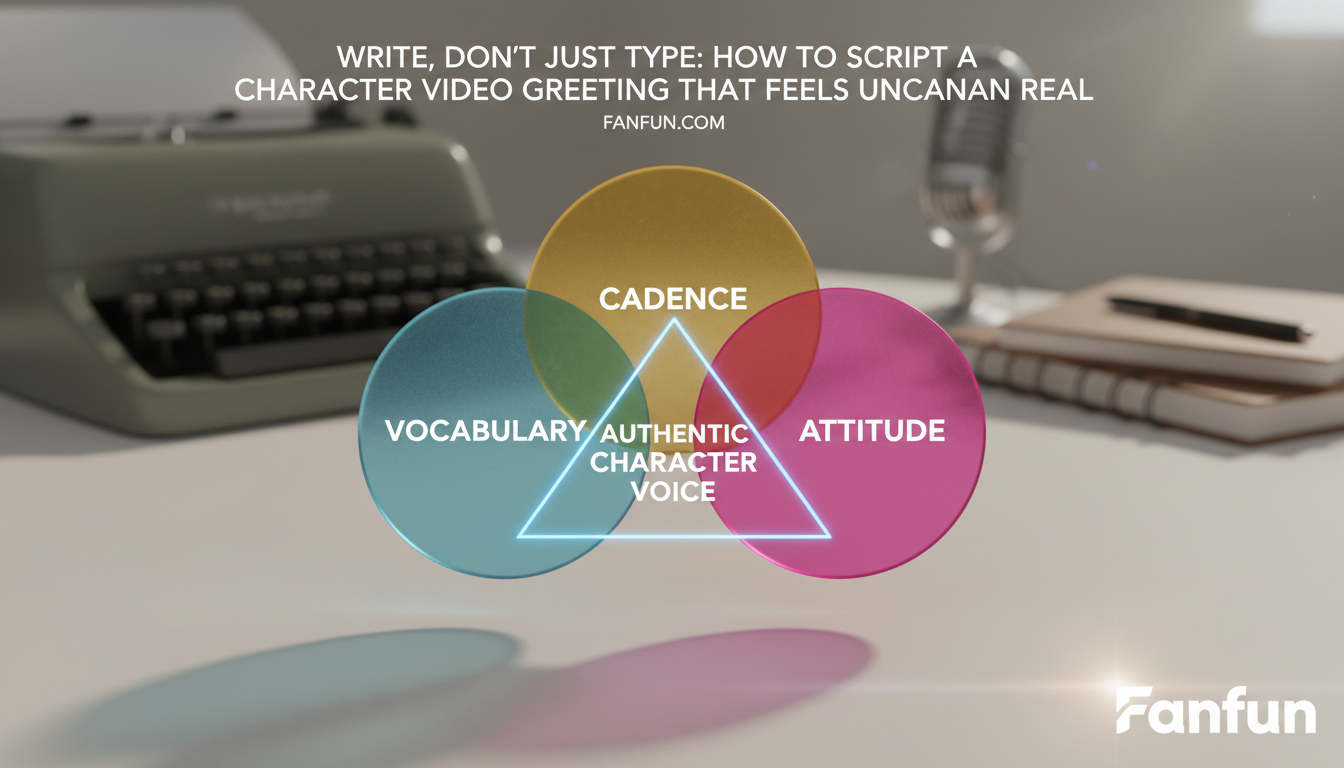
Before typing a single line of your script, you must deconstruct the character’s voice. This process goes beyond memorizing a catchphrase; it requires analyzing how they construct their thoughts and interact with others. We break this down into three essential pillars.
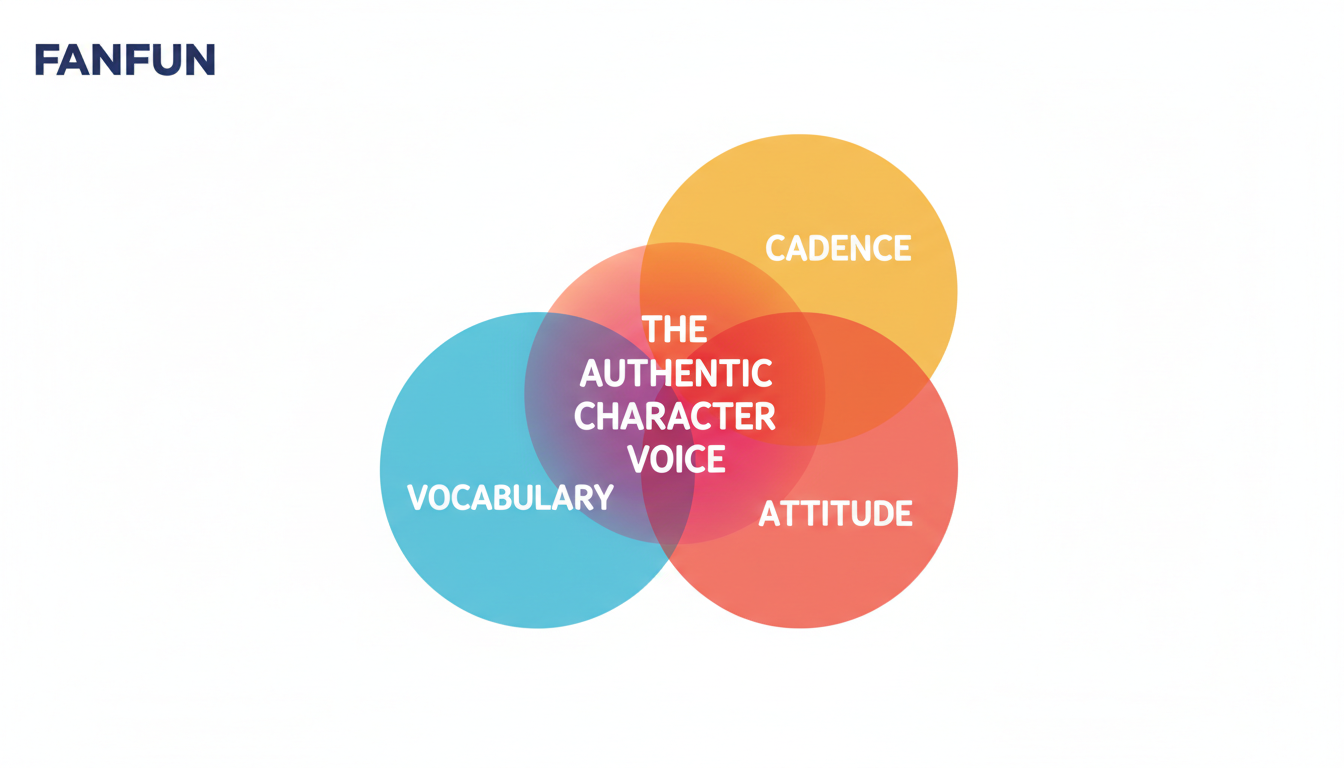
Pillar 1: Vocabulary and Lexicon
Every character has a unique vocabulary. This includes the specific slang they use, their preferred honorifics, and their verbal crutches. For example, a tech-savvy character might use modern digital slang, while an ancient warrior might speak in archaic, formal prose. Pay attention to how they address others. Do they use formal titles, casual nicknames, or playful insults? Incorporating these linguistic markers immediately signals authenticity to the listener.
Pillar 2: Cadence and Sentence Structure
Cadence is the rhythm of speech. Some characters speak in rapid-fire, breathless bursts, barely finishing one thought before jumping to the next. Others speak in slow, deliberate drawls, utilizing long pauses for dramatic effect. Sentence structure is equally telling. Intellectual characters often use complex, multi-clause sentences, while action-oriented characters tend to speak in short, punchy fragments. Match these patterns to make the AI voice generator sound natural.
Pillar 3: Attitude and Relationship Dynamics
How does the character view the world, and how do they view the recipient? An anime rival might treat the fan as a worthy competitor who needs to train harder. A helpful companion like Doraemon will approach the interaction with warmth, curiosity, and a desire to solve problems with futuristic gadgets. Establishing this dynamic gives the script an emotional anchor, transforming a simple shoutout into a meaningful narrative interaction.
To help you visualize these differences, refer to the Character Voice Matrix below when planning your next script:
| Character Archetype | Vocabulary & Lexicon | Cadence & Pacing | Attitude & Relationship |
|---|---|---|---|
| The Friendly Companion (e.g., Doraemon) | Polite, enthusiastic, gadget-focused, uses gentle exclamation | Bright, steady, moderate pacing with clear pauses | Nurturing, helpful, treats the recipient as a dear friend |
| The Anime Anti-Hero | Gruff, minimal slang, uses terms like "fool" or "rookie" | Staccato, abrupt, heavy pauses between phrases | Challenging, competitive, reluctantly respectful |
| The High-Energy Athlete | Motivational, sports metaphors, high-octane hype words | Rapid-fire, rising intonation, highly rhythmic | Coaching, intensely supportive, pushing for greatness |
The 4-Part Script Structure for Unforgettable Greetings
Writing a great character script does not require a Hollywood screenwriting degree. By following a structured, four-part blueprint, you can write compelling scripts quickly while ensuring every emotional beat lands perfectly.
- The Hook (0-5 seconds): Grab attention immediately. Do not start with "Hello, my name is..." Instead, drop the listener directly into the character's world. Use a signature catchphrase, a sudden exclamation, or a situational reference that establishes exactly who is speaking and why they are there.
- The Personalization Pivot (5-15 seconds): Transition from the hook to the recipient. This is where you weave in their name and specific personal details. The key is to make this pivot feel natural to the character’s reality. For example, instead of saying "I heard it's your birthday," have the character mention they saw it on a futuristic radar or heard about it from a mutual rival.
- The Core Message (15-40 seconds): This is the main body of your script. Whether you are delivering a heartfelt birthday wish, a hilarious roast, or an intense motivational speech, keep the character's unique perspective front and center. Use their specific lore, background, or habits to frame the message.
- The Sign-Off (40-45 seconds): End on a high note. Leave the recipient with a memorable final line, a call to action, or a classic catchphrase. The sign-off should feel like a natural exit, leaving them smiling long after the video ends.
For a deeper dive into specific script templates, check out our character greeting blueprint of script frameworks to see how these structural elements map to different genres and styles.
Tailoring the Tone: Birthday Wishes vs. Friendly Roasts vs. Motivational Promos
The tone of your script must match the occasion. A birthday wish requires a different emotional trajectory than a competitive roast or a high-energy promotional message. Understanding these nuances ensures your script achieves its intended impact.

For birthday wishes, the goal is to balance warmth with character-appropriate humor. If you are writing for a character who is typically serious or aloof, the humor comes from their slight discomfort with being sweet. Having them reluctantly admit that the recipient is doing a "decent job at growing older" feels far more authentic and rewarding than a generic, overly emotional speech.
When it comes to comedy, writing a friendly roast is a delicate art. The best roasts target lighthearted, highly relatable habits rather than deep personal insecurities. Focus on things like sleeping in too late, being terrible at a specific video game, or drinking too much coffee. Learn the nuances of writing a video roast script that strikes the perfect balance between humor and respect to ensure your comedic jabs land playfully without crossing the line into cruelty.
For motivational promos or creator content, high energy is key. These scripts should utilize urgent, action-oriented language. Frame the recipient's goals as an upcoming battle, a championship game, or a grand quest. Use short, punchy sentences that build momentum, driving the listener to take immediate action.
Directing the AI: Formatting Your Script for Natural Vocal Delivery
Writing a great script is only half the battle; you must also format your text so the AI voice generator understands how to perform it. Think of yourself as a director guiding an actor. Simple punctuation and spelling adjustments can radically change how the AI interprets the pacing, emphasis, and emotion of your words.
Punctuation is your primary tool for controlling timing. An ellipsis (...) is excellent for creating natural hesitations, dramatic build-ups, or moments of confusion. A double dash (—) can signal a sudden shift in thought or a rapid interruption. Exclamation points should be used sparingly; overusing them can make the delivery sound artificially strained, whereas placing them strategically on key words ensures a natural surge in energy.
Phonetic spelling is another crucial trick, especially for unique names, slang, or inside jokes. If the AI struggles to pronounce a specific word, spell it out phonetically in your script. For example, write "Shi-vawn" instead of "Siobhan," or "Fan-fun" to ensure perfect brand pronunciation. Testing these variations iteratively is incredibly simple on Fanfun, as our instant generation allows you to tweak a line, listen to the vocal output, and refine the text within minutes.
Master the art of pacing and formatting by reading our guide on how to direct an AI character video generator to unlock professional-grade voiceovers that sound completely natural. By treating the script as a live performance blueprint, you can elevate your custom video greetings from simple novelty clips to unforgettable, high-substance experiences.
How long should a script for a character video greeting be?
The sweet spot for a character video greeting is between 45 and 90 seconds, which translates to roughly 90 to 150 words. This duration is long enough to include deep personalization and character-specific lore, but short enough to keep the pacing brisk and the recipient fully engaged.
How do I make an AI character voice sound more natural in a video greeting?
To make the voice sound natural, write specifically for the character's unique speaking style rather than using formal grammar. Use punctuation like ellipses (...) for pauses, break up long sentences into shorter fragments, and use phonetic spellings for names or slang that the AI might mispronounce.
Can I write a script that roasts my friend without it sounding mean?
Yes. The key to a friendly roast is focusing on lighthearted, universally relatable quirks—such as losing in video games, sleeping through alarms, or having an obsession with a specific food—rather than personal insecurities. Always frame the roast through the character's unique, playful perspective.
What punctuation works best to create natural pauses in an AI voice generator?
Ellipses (...) are highly effective for creating soft, natural pauses or moments of hesitation. Em-dashes (—) work best for sudden, abrupt transitions or interruptions in thought, while commas and periods provide standard grammatical pauses.