The Character Greeting Blueprint: 5 Script Frameworks for Unforgettable AI Video Shoutouts
Ditch the generic birthday cards. Learn how to write hyper-specific, lore-compliant, and hilarious scripts for AI character video greetings using our five proven frameworks.
Most personalized video greetings suffer from a severe lack of imagination. We have all seen them: a celebrity standing in a poorly lit room, reading a generic script off a screen, and struggling to pronounce the recipient's name before signing off with a half-hearted wave. When you are using an AI-powered platform to create a custom message, repeating these same tired, passive formulas is a massive missed creative opportunity.
With Fanfun, you are no longer limited by real-world schedules, astronomical booking fees, or even the laws of reality. You can have legendary anime heroes, cultural icons, or world-class athletes deliver a personalized message instantly. The secret to making these videos truly unforgettable lies in the script—shifting away from passive, polite wishes and leaning into hyper-specific, culturally aware, and hilarious storytelling that makes the recipient the star of their own mini-episode.
Why Most Character Video Greetings Fall Flat (And How to Fix It)
The standard format for a video shoutout is painfully predictable. It usually goes: "Hey [Name], I hear it's your birthday! Hope you have a great day and eat lots of cake!" This is what we call "generic birthday card syndrome." It completely wastes the potential of an AI character video because it fails to leverage the character's unique universe, tone, or relationship with the fan. If a legendary warrior is speaking to your friend, they shouldn't sound like a polite coworker writing in a Slack channel.
Fanfun solves this creative bottleneck by offering instant, affordable access to both fictional characters and cultural icons. Because you are not paying hundreds of dollars for a single, rushed take, you have the freedom to experiment and write hyper-specific scripts. The critical shift here is moving from passive viewing to active, immersive storytelling. Instead of the character simply acknowledging the recipient's existence, the script should drag the recipient directly into the character's world, treating their real-life habits, inside jokes, and minor struggles as major plot points.
The Anatomy of a High-Impact Greeting Script
Before writing a single line of dialogue, you need to understand the structural formula that keeps a viewer hooked from the very first frame. A great custom video greeting is short, punchy, and highly structured.
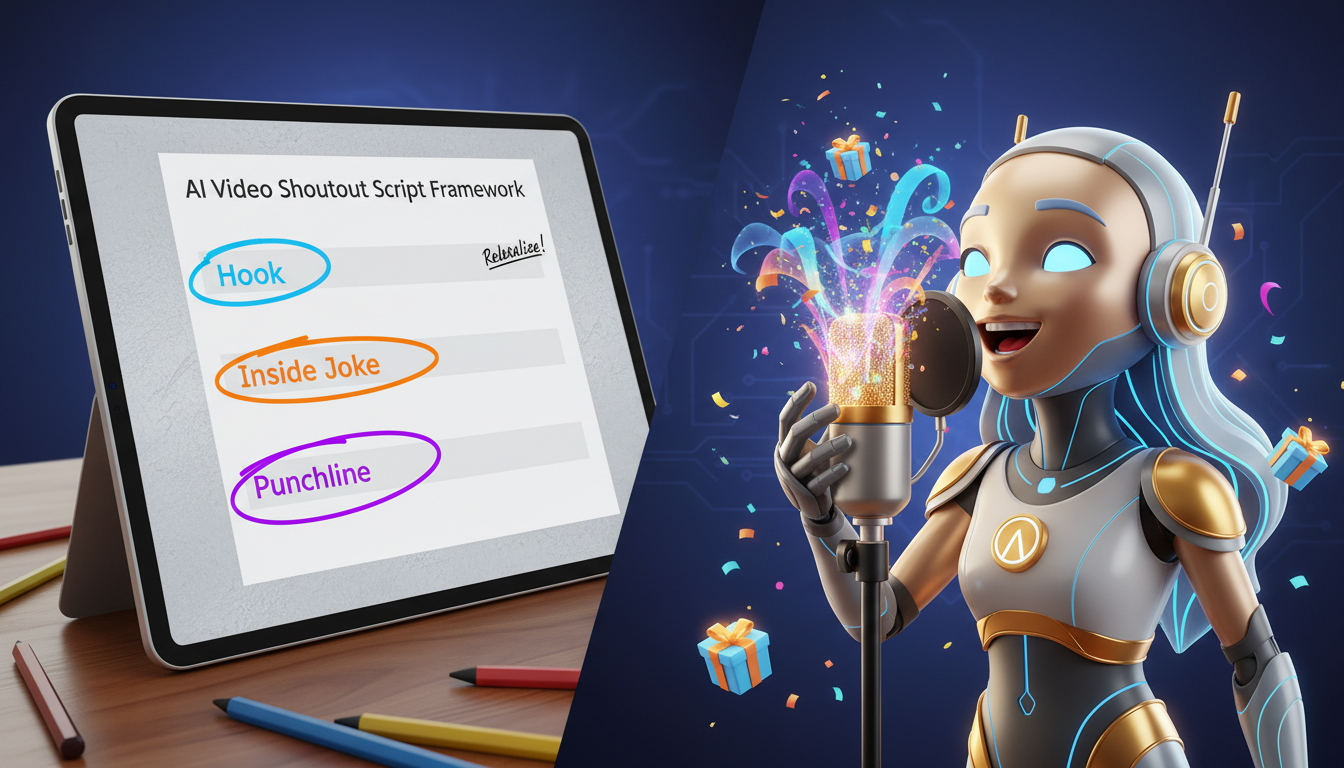
The Three Pillars of a Great AI Script
- The 3-Second Character Hook: Establish the persona's signature catchphrase, attitude, or vocal quirk immediately. Do not start with a polite introduction. If the character is chaotic, start with an explosion of energy or a dramatic sigh.
- The Hyper-Specific Detail: This is where the personalization actually lands. Integrate niche inside jokes, real-life habits, or specific achievements of the recipient (e.g., their obsession with iced coffee, their tendency to leave 47 tabs open on Chrome, or their legendary failure in a local fantasy football league).
- The Lore-Compliant Payoff: End the video with a call to action, a punchline, or a piece of advice that makes perfect sense within the character's fictional universe.
Framework 1: The 'Absurd Accomplishment' Roast
This framework is designed for lighthearted roasts, making it perfect for birthdays, promotions, or friendly teasing. Instead of congratulating the recipient on a major milestone, a famous icon or character congratulates them on an incredibly mundane, trivial, or slightly embarrassing "achievement." The key to a great roast is balancing affection with sharp comedic tension, ensuring the burn feels highly personalized rather than mean-spirited.
The Script Template:
"[Character Hook/Catchphrase]! I was looking through our global database, and I saw something truly shocking. Word on the street is that [Name] has officially achieved the impossible: surviving a consecutive [Number] of days without [mundane habit, e.g., burning a bag of microwave popcorn / replying to a single Slack message with just an emoji]. Frankly, I didn't think you had it in you. The entire team here is stunned. Keep up this mediocre work, and you might actually make something of yourself. Or, you know, just go back to your usual chaos. Happy [Occasion], kid!"
To dive deeper into the mechanics of writing comedic burns, check out our complete guide on crafting a perfectly balanced AI video roast: The Roast Writer’s Playbook: How to Script and Direct a Hilarious AI Video Roast for Your Friends.
Framework 2: The 'Fictional Sidekick' Recruitment Pitch
This framework treats the recipient not as a distant fan, but as an equal partner-in-crime who is running late for a critical, highly dramatic mission. It leverages specific pop-culture tropes, training arcs, or secret societies to maximize immersion. This is where Fanfun's library of fictional and cartoon characters shines, offering creative avenues that traditional, real-human cameo platforms simply cannot replicate.
The Script Template:
"Hey, [Name]! Why are you still sitting there staring at your screen? The [fictional threat, e.g., temporal rift / dark guild / laundry pile] is expanding, and your training arc was supposed to start twenty minutes ago! I don't care if it's your [Occasion]—the universe doesn't stop for cake. Grab your [recipient's favorite object/weapon], meet me at the usual coordinates, and don't forget the snacks this time. We've got a world to save, and you're the only sidekick crazy enough to help me pull this off. Let's move!"
For more strategies on using fictional personas to create high-impact messages, explore our guide on scripting virtual icons for custom shoutouts: Beyond the Real-Life Cameo: How to Script and Direct Virtual Icons for High-Impact Video Shoutouts.
Framework 3: The 'Unsolicited Life Coach' Intervention
This framework features an intense, overly passionate athlete, warrior, or mentor offering hilariously dramatic life advice. The comedy comes from the contrast of using high-stakes sports metaphors, military intensity, or philosophical gravity to address a completely minor, everyday habit of the recipient.
The Script Template:
"Listen to me very carefully, [Name]. I've been watching your performance lately, and frankly, we need to talk about your commitment to [everyday habit, e.g., ordering iced oat milk lattes / ignoring your phone's software updates]. Is that how a champion behaves? No! A champion looks at [habit] and says, 'Not today!' You need to dig deep, find that inner fire, and push through this [Occasion] like you're crossing the finish line. I want to see 110% effort. No excuses. Now get out there and dominate!"
The Character Voice Checklist: Matching Script to Persona
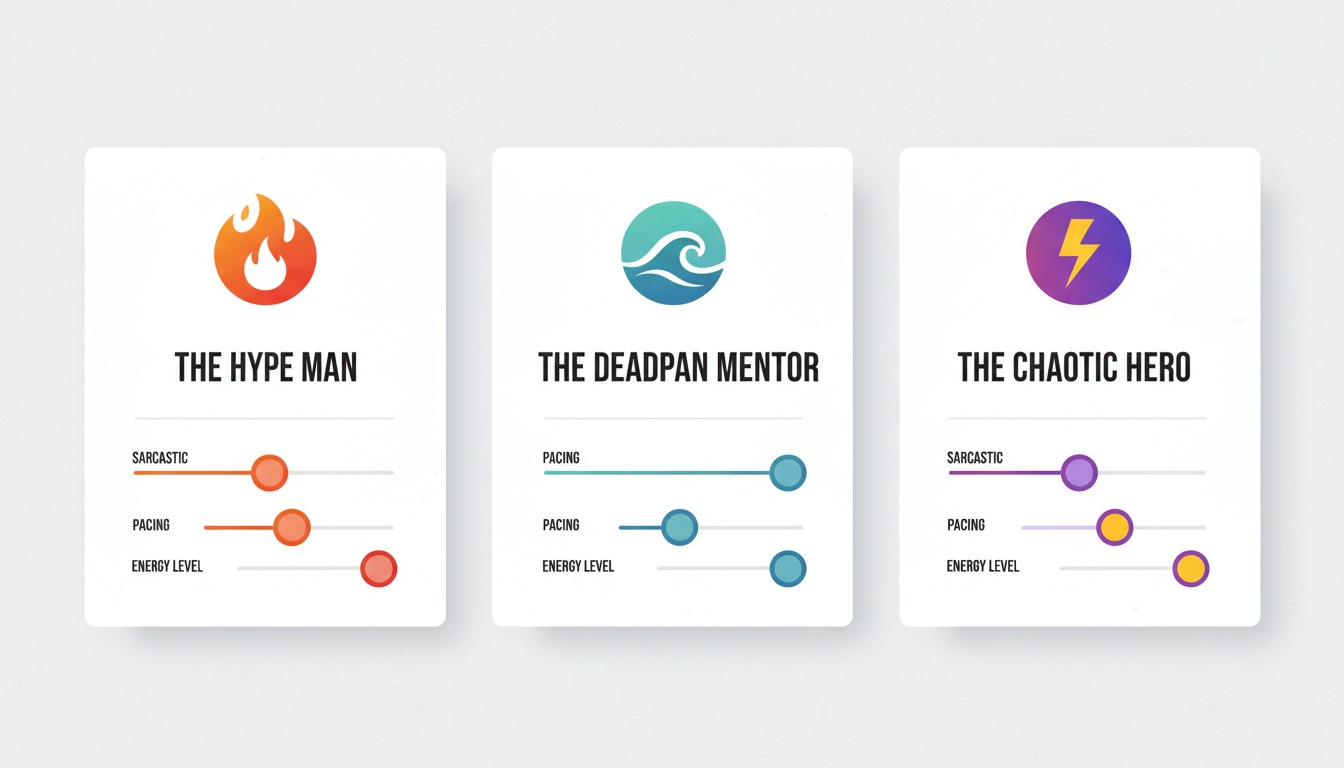
An amazing script can still fall flat if it is paired with the wrong vocal delivery. Different character archetypes require entirely different structural styles, sentence lengths, and punctuation setups. Use this reference table to match your script's structure to your chosen AI character archetype:
| Character Archetype | Ideal Pacing | Sentence Structure | Vocabulary & Style |
|---|---|---|---|
| The Hype Man (Athletes, energetic heroes) | Fast, explosive, high-energy | Short, punchy sentences. Use exclamation marks (!) liberally. | Slang, motivational metaphors, loud call-outs. |
| The Deadpan Mentor (Sages, villains, stoic warriors) | Slow, deliberate, rhythmic | Longer, complex sentences. Use ellipses (...) for pauses. | Formal, slightly archaic, dry sarcasm. |
| The Chaotic Hero (Anime protagonists, cartoon icons) | Erratic, shifting mid-sentence | Fragmented sentences, sudden volume shifts. | Expressive noises, highly informal, direct address. |
When generating your video on Fanfun, you can direct the AI voice generator's delivery by adjusting your written punctuation. For example, using phonetic spelling (writing "gonna" instead of "going to," or spelling out complex names phonetically like "Ah-leks" for Alex) can dramatically improve pronunciation. Commas and ellipses act as natural breath pauses, preventing the AI from rushing through your punchlines.
If you want to master the technical side of voice delivery, read our masterclass on directing an AI character video generator: The Digital Puppet Master: How to Cast, Script, and Direct an AI Character Video Generator for High-Engagement Content. By combining these structural frameworks with smart vocal direction, you will turn a simple digital greeting into a highly rewatchable piece of personalized media.
How long should a custom character video greeting script be?
The sweet spot for a highly engaging AI video greeting is between 45 and 90 seconds. This translates to roughly 80 to 150 written words. Keeping the script concise ensures the character's energy remains high and the punchlines land rapidly without dragging.
Can I use fictional and cartoon characters for personalized video greetings?
Yes! Unlike traditional video platforms that are limited strictly to real-world celebrities, Fanfun’s extensive library includes licensed and original AI personas, including iconic fictional characters, anime heroes, and cartoon legends, allowing you to script highly immersive, lore-based messages.
How do I make an AI character voice sound natural in a script?
To make the AI voice sound natural, write the way the character actually speaks. Use their signature slang, include ellipses (...) to create realistic pauses, and use phonetic spelling for difficult names or inside jokes. Testing your script with short previews on Fanfun helps you fine-tune the cadence before generating the final video.
What are the best occasions to send a personalized AI character video?
While birthdays and roasts are the most popular, personalized AI character videos are incredibly effective for celebrating job promotions, delivering friendly pre-game trash talk in fantasy sports leagues, sending motivational pep talks, or creating viral memes for social media channels.