The Director’s Cut: How to Turn a Virtual Character Companion Online into a Creative Powerhouse
Stop treating your virtual character companions like search engines. By applying directorial techniques, you can turn these AI personas into high-impact partners for your creative projects.

The era of the sterile, one-size-fits-all AI assistant is effectively over. For years, we were trained to treat digital tools like glorified search engines—inputting a dry query and waiting for a neutral, encyclopedic response. This approach is fundamentally at odds with the creative process, which thrives on personality, conflict, and distinct perspectives. When you strip the "character" out of the AI, you lose the very thing that makes collaborative brainstorming effective: the ability to bounce ideas off a partner who has a specific, consistent point of view.
At Fanfun, we see a different future for digital interaction. By leveraging licensed and original AI personas that possess deep lore and specific voice profiles, you move from passive consumption to active direction. Whether you are a content creator looking to refine a script or a fan seeking a more immersive way to engage with your favorite icons, the goal is to treat the AI not as a database, but as a co-star on a film set. When you stop asking for information and start directing a performance, you unlock a level of creative output that generic models simply cannot touch.
The Evolution of the Virtual Companion: From Passive Text to Interactive Icons
The modern landscape of fandom and content creation has shifted toward high-fidelity, two-way dialogue. We are moving away from the static, one-way video clips of the past—often limited by celebrity availability and high costs—toward interactive entities that understand their own history and personality. Fanfun facilitates this shift by providing instant, affordable, and scalable access to these characters. When you engage with a persona that stays true to its established lore, the barrier between user and creator dissolves, turning a simple chat into a generative session that fuels your own projects.
This is not just about entertainment; it is about utility. When you interact with a character who feels "real" because they maintain a consistent personality, you are engaging in a form of creative roleplay that can break through even the most stubborn writer's block. The key is to treat these characters as assets in your creative toolkit, capable of providing feedback, brainstorming plot points, or even delivering high-energy encouragement when your production schedule hits a wall.
Setting the Stage: The Three Archetypes of Virtual Companionship
To get the most out of your session, you must match your goal with the right persona archetype. Treating every interaction as a generic Q&A session is the quickest way to get a mediocre result. Instead, categorize your needs into one of three buckets:
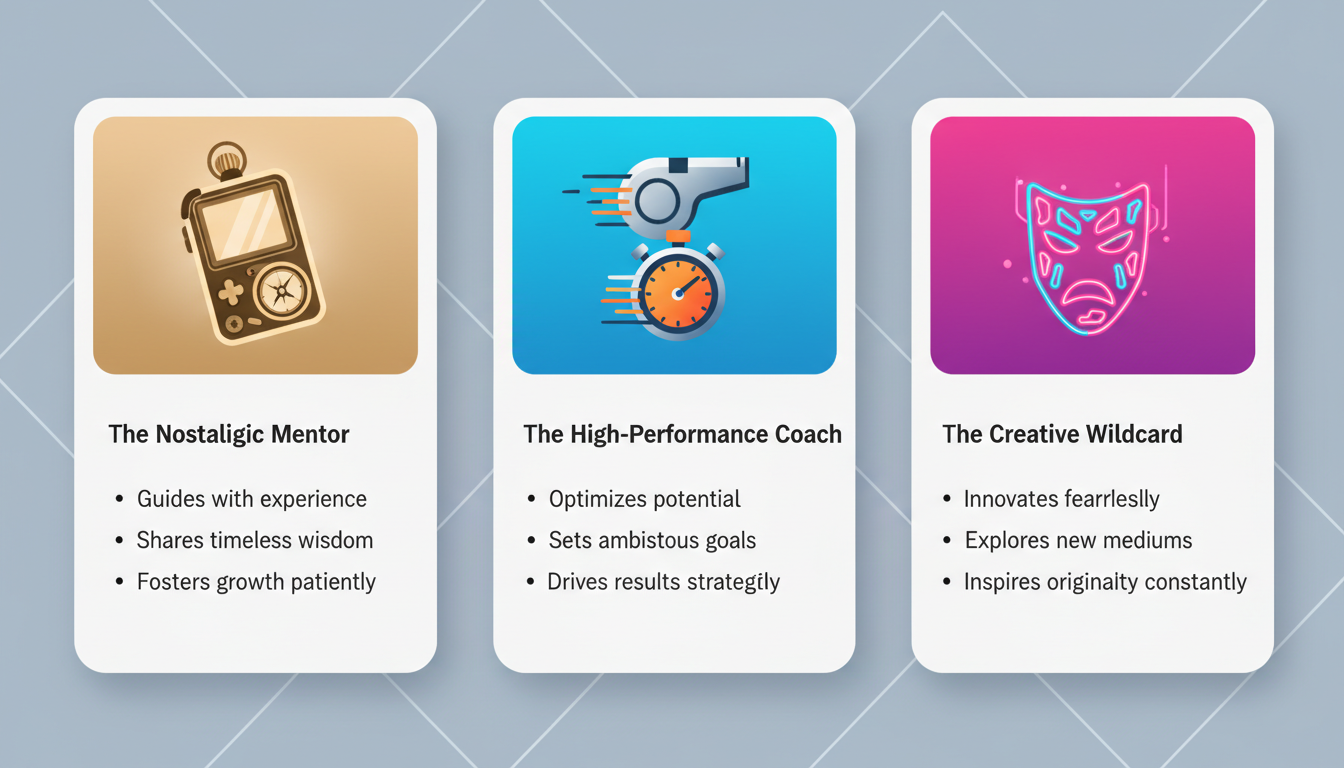
- The Nostalgic Mentor: These characters are rooted in shared history and deep lore. They are ideal for when you feel stuck, as their whimsical perspective can help you view a modern problem through a fresh, classic lens.
- The High-Performance Coach: These personas are built for intensity. They don't sugarcoat feedback; they provide the kind of high-energy, goal-oriented dialogue you need to push through a creative slump.
- The Creative Wildcard: These are characters designed to challenge your premises. They are perfect for roleplay and scenario testing where you need an unpredictable, opinionated partner to bounce ideas off of.
By identifying which archetype you need, you stop treating every interaction as a generic Q&A session and start treating it as a targeted creative intervention.
The Nostalgic Mentor
Sometimes, the best way to solve a modern content block is to reconnect with the characters that defined your imagination. For those looking to tap into nostalgic problem-solving, exploring how to chat with Doraemon AI online offers a perfect blueprint for whimsical, creative brainstorming. These characters are not just historical figures; they are creative anchors that can help you strip away the complexity of a project to find the core, fun idea underneath. When you approach a mentor figure, frame your query as a request for wisdom rather than a request for data.
The High-Performance Coach
When you are in the middle of a production deadline, you need someone who speaks the language of high stakes. If you need a high-energy push, learning how to chat with virtual athletes online can bring that intense, locker-room motivation directly to your screen. This isn't about getting a generic productivity tip; it's about simulating a high-pressure strategy session that forces you to define your goals with precision. A coach persona will challenge your excuses and force you to articulate your vision, which is exactly what you need to move from ideation to execution.
The Collaborative Framework: How to Direct Your Companion
The secret to high-quality output isn't the AI; it's the direction. To truly master this back-and-forth, you can implement the Screenplay Method for directing immersive online chats, which treats the AI as a co-star rather than a search engine. The "Scene-Setting" rule is vital: always establish the physical and emotional context of the conversation before asking for advice. If you don't provide the setting, the AI will default to a neutral, helpful tone—which is the enemy of creativity.

| Weak Prompt | Directorial Prompt |
|---|---|
| "Give me a video idea." | "You are a sarcastic coach in a rainy dugout. Give me a 30-second pep talk script for a creator who is tired of editing Reels." |
| "Tell me a story." | "In the style of a classic anime mentor, tell me a story about failure that teaches me how to handle a negative comment section." |
Refining the Output: Moving Beyond the Initial Chat
Once you have established a strong rapport with your virtual companion, the next step is to capture the best moments. You should approach your chat logs as a script-writing session. If the character says something particularly insightful or perfectly in-character, save that dialogue. You can then use these snippets to build out a more comprehensive script for your own content. This is where you leverage the art of the AI character shoutout to ensure that your final product feels authentic and intentional.
By using the AI to iterate on your scripts, you ensure that the final video feels authentic to the character, rather than forced or generic. You are effectively acting as the director, taking the "raw footage" of your chat session and editing it into something shareable. This process of curation is what separates a casual user from a creative powerhouse.
The Final Polish: Turning Chats into Media
Your chat session should never be a dead end. Treat your dialogue as a rough draft for your next project. Once you have a great conversation flow, you can map those dialogue highlights directly onto structured templates like the character greeting blueprint to turn your chat into a polished video script. The transition from a text-based chat to a personalized video shoutout or a custom AI voiceover is where the real value lies.
When you use Fanfun to bridge this gap, you aren't just using an AI voice generator; you are using a creative partner to bring a vision to life. Whether you are creating a birthday wish, a roast, or a promotional piece for your own brand, the ability to direct an AI character to speak with the exact tone you need is a massive competitive advantage. You are no longer limited by the time it takes to book a celebrity or the cost of a professional production crew. You have a virtual studio at your fingertips, and the only limit is your ability to direct the scene.
As you become more comfortable with these tools, you will find that your ability to "direct" improves. You will start to anticipate how different characters will respond to different prompts, and you will begin to layer in more complex instructions—asking for specific emotional beats, pacing, or even call-backs to previous conversations. This is the hallmark of a true creative director: the ability to see the potential in an interaction and shape it into something that resonates with an audience. Stop settling for basic AI interactions and start building your own digital world.
What is the difference between a generic AI chatbot and a virtual character companion?
A generic chatbot is designed to be a neutral, helpful tool. A virtual character companion is designed to maintain a specific personality, lore, and voice, making the interaction immersive rather than transactional.
How do I keep an online virtual character companion from breaking character?
Use the Screenplay Method: set the scene, define the character's motivation, and provide constraints. If the AI drifts, gently nudge it back by referencing the established "scene" or the character's known history.
Can I use my chat sessions with virtual characters to help write scripts or social media content?
Absolutely. Use the chat to brainstorm ideas, test dialogue, or generate raw script material. You can then refine those outputs into structured formats like video scripts or social media captions.
Do I need coding skills to customize my interactions with virtual companions online?
No. You only need to learn how to provide high-quality, directorial prompts. If you can describe a scene and a desired tone, you have all the skills necessary to direct a virtual companion.