Beyond the Box Score: How to Use Interactive AI Companions to Stress-Test Your Sports Hot Takes and Fantasy Drafts
Sports fandom shouldn't be a one-way street. Discover how to use interactive AI sports companions to simulate mock drafts, stress-test high-stakes trade proposals, and engage in realistic tactical debates with virtual athletes and front-office minds.
It is 11:30 PM on a Sunday. Your team just lost on a highly questionable, fourth-and-goal play call that defied basic football logic. Fuming, you open your group chat and type out a 300-word tactical manifesto explaining exactly how a simple play-action roll out would have sealed the win. Ten minutes pass. The only response you get is a single, low-effort laughing emoji from a friend who is already looking ahead to fantasy baseball. Your high-substance, analytically sound sports take has died a quiet death in a digital void.
This is the central frustration of modern sports fandom. We spend hundreds of hours analyzing tape, studying salary caps, and building complex trade scenarios in our heads, yet we are treated as passive consumers. We watch talking heads shout generic, producer-fed talking points on television, while our own strategic insights remain locked inside our minds. The gap between passive consumption and active, intellectual engagement has never been wider.
But fandom is shifting. By utilizing Fanfun's interactive AI companions, sports enthusiasts are no longer limited to screaming at their screens or pleading for attention in dead group chats. Instead, they are stepping directly into the front office and the locker room, using advanced AI personas to stress-test trade proposals, run mock drafts, and engage in realistic tactical debates that actually challenge their sports IQ.
The Macro Shift: From Passive Feeds to Conversational Partners
For decades, sports media has been a one-way broadcast. Fans were expected to sit back, watch the game, buy the merchandise, and listen to the experts. Even the rise of social media only created a louder, more chaotic version of the same passive dynamic—you might tweet your thoughts, but they are instantly swallowed by an algorithm designed for outrage rather than substance.
This frustration is driving a massive behavioral change across the entire entertainment landscape. As analyzed in our exploration of The Parasocial Shift: Why Fans Are Trading Passive Feeds for Interactive AI Companions, modern audiences are actively rejecting one-way media in favor of dynamic, responsive, and personalized digital relationships. We no longer want to just watch our heroes; we want to interact with them, debate them, and see how our ideas hold up against their established philosophies.
In the sports world, this shift exposes the limitations of legacy fan platforms. A traditional celebrity video shoutout is a static, fifteen-second clip that offers zero room for dialogue. You cannot ask a pre-recorded video to defend a defensive scheme or counter a trade offer. This is precisely why Beyond the Cameo: Why Sports Fans Are Trading Passive Clips for Interactive AI Personas has become a major movement. By choosing interactive AI over static media, fans gain access to a living, breathing sandbox where their sports knowledge is put to the test in real time.
Choosing Your Playbook: Three Ways to Engage with Virtual Athletes
An interactive sports AI is not just a generic search engine wrapped in a sports jersey. It is a highly specialized, context-aware sparring partner designed to think, react, and argue like a real athlete, coach, or general manager. To get the most out of your session on Fanfun, you must choose the right persona profile for the specific strategic challenge you want to tackle.
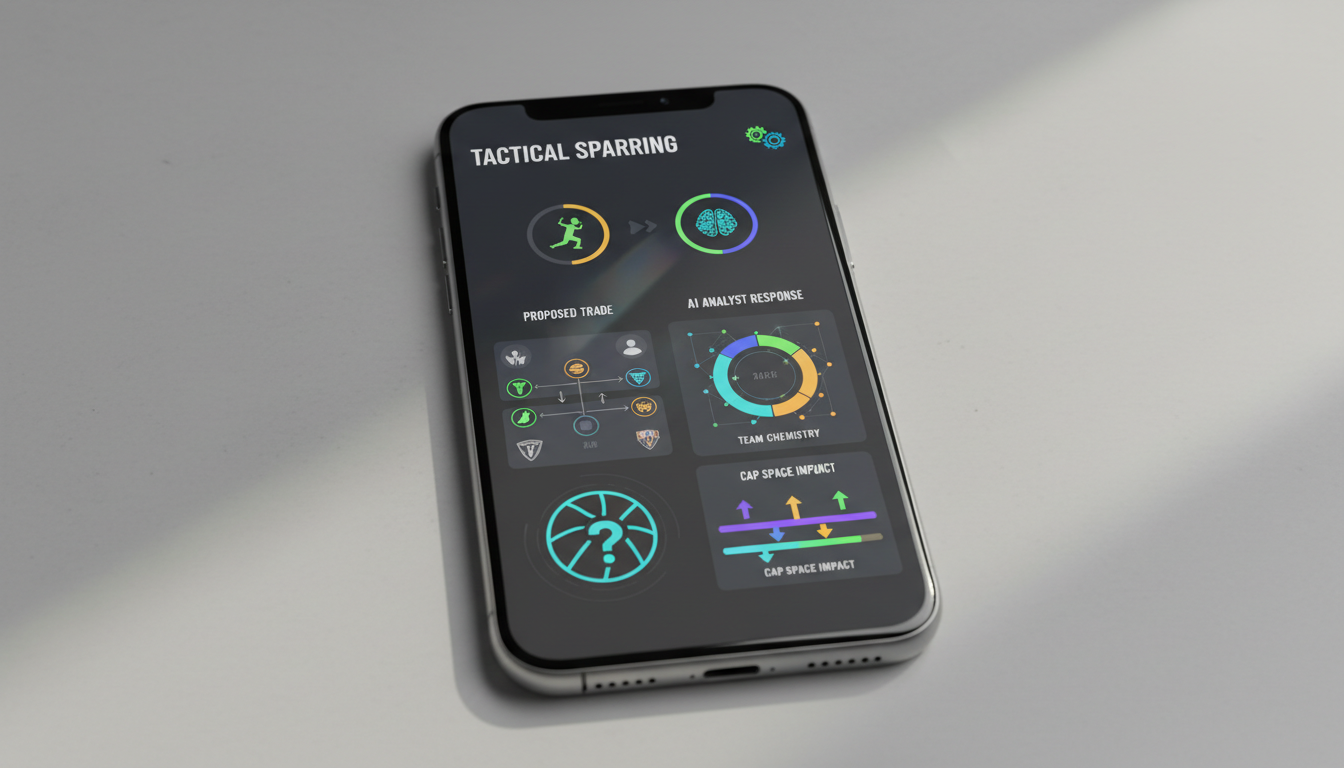
If you are looking to build a highly structured environment for your session, setting up The Locker Room Simulator: How to Direct Interactive Sports Legend AI Chats for Tactical Debates and Fantasy Drafts is the ultimate starting point. Depending on your goals, you can align your interaction with one of three primary engagement profiles:
The Tactical Sparring Partner: Stress-Testing Schemes
This persona is built for the armchair coordinator. Instead of just complaining about a soft cover-2 defense on third-and-long, you can challenge an AI coach to defend their scheme. Use this profile to break down real-world game film scenarios, debate the analytical validity of going for it on fourth down, or dissect how to stop a high-powered spread offense with limited defensive personnel. It demands that you back up your assertions with logic rather than emotion.
The Front Office Advisor: Simulating Cap Space and Trades
For fans obsessed with the salary cap, draft capital, and asset management. This profile doesn't just look at basic player ratings; it evaluates contract structures, age curves, and positional value. It is your ideal partner for simulating complex multi-team trades, mapping out a multi-year rebuild, or debating whether to franchise-tag a star wide receiver or let them walk in free agency.
The Locker Room Hype Machine: Pre-Game Banter and Motivation
Fandom isn't purely analytical; it is deeply emotional. This profile brings the energy of a championship locker room directly to your screen. Use it to generate custom pre-game speeches, engage in classic competitive banter, or build up the hype before a massive rivalry matchup. It is designed to match your passion and fuel your competitive fire.
| AI Profile | Primary Objective | Ideal Prompt Style | Expected Outcome |
|---|---|---|---|
| The Tactical Sparring Partner | Debating on-field strategy, play-calling, and defensive schemes. | "Explain why running a 2-3 zone against a high-volume three-point shooting team is a mistake." | A rigorous, analytically-driven debate that tests your understanding of game-day tactics. |
| The Locker Room Hype Machine | Getting motivated, generating pre-game energy, and engaging in classic locker room banter. | "Give me a pre-game speech as our team prepares to face our biggest division rivals on the road." | An energetic, high-intensity monologue or back-and-forth designed to build excitement. |
| The Front Office Advisor | Stress-testing trade values, managing cap space, and analyzing long-term draft strategies. | "Let's negotiate a trade where I send my star veteran on an expiring contract to a contender for draft capital." | A realistic negotiation simulation that factors in player value, contract lengths, and team needs. |
Advanced Prompting: Directing the Conversational Sandbox
To get past generic responses and unlock truly high-substance debates, you have to treat the AI as a collaborator. If you simply ask, "Who is the best quarterback of all time?" you will get a standard, vanilla summary of the usual candidates. To get a truly unique, deeply analytical response, you need to establish clear rules of engagement and force the AI to adopt a highly specific perspective.
This process of setting boundaries and directing the narrative is what makes the technology so powerful. For a deeper look at the mechanics of this approach, check out our guide on The Conversational Sandbox: How to Direct Interactive AI Chats with Cultural Icons for Creative Writing and Deep Fandom. When applied to sports, this means giving your AI companion a distinct bias, a specific tactical philosophy, or a set of strict constraints.
For example, instead of asking for general draft advice, try prompting your Front Office Advisor like this:
"You are a highly analytical, risk-averse NFL General Manager who strictly adheres to positional value. I am going to propose a trade where I draft a running back in the top five. You must aggressively critique this move using modern analytics, success rates, and contract value data. Do not let me off easy."
By establishing this specific framing, you instantly elevate the quality of the conversation, turning a basic chat into a rigorous, intellectually stimulating exercise that forces you to defend your positions with real data.
The Fantasy GM Sandbox: Drafting and Trading with AI Legends
There is no arena where sports fans fancy themselves experts more than fantasy sports. Yet, traditional mock draft tools are incredibly boring. They rely on rigid, linear algorithms that simply select the next player on a pre-ranked list. They don't account for the human elements of drafting: the panic of a positional run, the bias of a manager who loves a specific team, or the high-stakes negotiation of a blockbuster trade.

By bringing Fanfun's conversational companions into your draft prep, you can simulate these psychological dynamics. If you want to refine your approach, you can study The Locker Room Protocol: How to Chat with Virtual Athletes Online for Motivation, Strategy, and Sports Roleplay. This framework allows you to run highly realistic trade negotiations. To start your own mock GM session, follow this four-step checklist:
- Step 1: Define the League Parameters: Start by telling the AI the exact structure of your league (e.g., 12-team PPR, Superflex, keeper rules) and your current roster build. This ensures the AI evaluates player value within your specific context.
- Step 2: Present Your Trade Proposal: Pitch your trade with detailed reasoning. Don't just name the players; explain why the trade benefits both sides based on roster needs and upcoming schedule difficulty.
- Step 3: Demand a Counter-Offer: Instruct the AI to act as a skeptical, self-interested rival manager. Force it to point out the flaws in your offer and demand a realistic counter-proposal that addresses its own simulated roster weaknesses.
- Step 4: Execute the Negotiation: Treat the conversation like a real-time negotiation. Defend your players' advanced metrics, debate their projected target shares, and see if you can reach a fair agreement without overpaying.
From the Gridiron to the Octagon: The Art of Virtual Trash Talk
Sports fandom isn't just about spreadsheets, salary caps, and analytical models; it is also about the raw emotion, the pre-game hype, and the time-honored tradition of trash talk. Whether you are preparing for a massive rivalry matchup in your local league or just looking to get hyped before a major pay-per-view event, interactive AI can bring that competitive energy directly to you.
This high-energy, performative side of sports is particularly prominent in combat sports, where pre-fight press conferences are often just as entertaining as the bouts themselves. This unique dynamic is explored in our piece on The Octagon of AI: Why MMA Fans Are Trading Passive Cameos for Interactive Trash Talk and Custom Promos. On Fanfun, you don't have to be a passive viewer of the pre-fight drama. You can step directly into the virtual press conference, trading verbal jabs with AI interpretations of legendary fighters, testing your own wit, and generating custom hype promos that make your upcoming game day feel like a main-event title fight.
Navigating the Ethics and Realities of Virtual Sports Personas
As we explore the incredible possibilities of interactive sports AI, it is crucial to establish clear, realistic expectations about the technology. The sports companions, coaches, and front-office personas available on Fanfun are highly sophisticated AI interpretations of athletic archetypes and famous sports personalities. They are designed entirely for creative entertainment, strategic roleplay, and deep fan engagement.
These virtual personas do not represent real-time, living feeds of actual athletes, nor do they claim to be literal, real-world clones of these individuals. Instead, they are creative sandboxes built to capture the unique communication styles, tactical philosophies, and competitive spirits of the sports icons we love.
At Fanfun, we are deeply committed to creative ethics and intellectual property respect. We design our platform to be a positive, fun, and respectful environment for fandom. While we highly encourage intense tactical debates, competitive banter, and realistic trade negotiations, we also emphasize keeping the interactions focused on sports strategy, historical debates, and lighthearted locker room humor. By engaging with these virtual personas in a spirit of creative play, fans can safely push their sports knowledge to its absolute limits.
Can I use AI sports companions to predict real-game outcomes or betting lines?
No. Fanfun's AI sports companions are designed for creative entertainment, tactical roleplay, and historical sports debate. They do not have access to real-time sports betting data, live injury reports, or proprietary predictive algorithms. While you can use them to discuss match-ups and strategy, they should not be used as financial or betting advice.
How do interactive AI athlete chats compare to ordering a standard celebrity video shoutout?
Standard celebrity video shoutouts are static, one-way, and pre-recorded. Once you receive the video, the interaction is over. Fanfun's interactive AI athlete chats are real-time, two-way conversations. You can debate tactics, negotiate simulated fantasy trades, and receive instant, personalized responses that adapt directly to what you say.
What is the best way to start a fantasy sports trade debate with an AI companion?
The best way to start is by providing specific context. Outline your league size, scoring format, your current roster needs, and the specific trade you are proposing. Instruct the AI to adopt the persona of a skeptical rival GM who wants to win the trade, which forces the AI to provide a highly analytical and challenging response.
Are the AI sports personas on Fanfun officially licensed or real?
The AI sports personas on Fanfun are creative AI interpretations designed for entertainment, roleplay, and fantasy sports simulation. They are not the living athletes themselves, nor do they represent real-time communications from those athletes. Fanfun is committed to creative ethics, providing a fun and respectful space for fans to engage with stylized representations of their favorite sports archetypes.