The Speed-to-Feed Playbook: How to Direct an AI Meme Video Generator for Real-Time Culture
The era of low-effort, templated video memes is over. Discover how to act as a cultural director, using Fanfun to cast high-status AI characters in hyper-relevant, trending social media scenarios in under ten minutes.
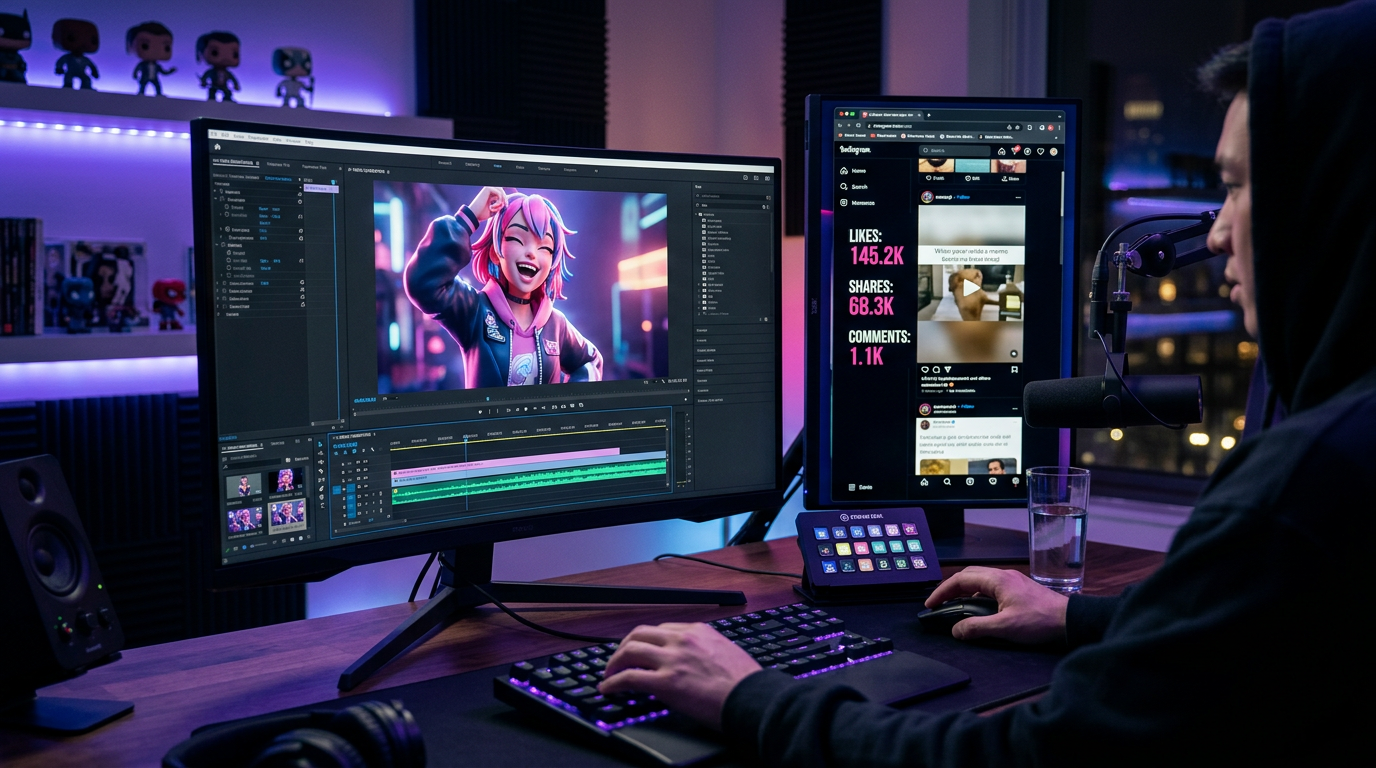
The half-life of an internet meme is now measured in hours, not weeks. By the time a traditional production pipeline drafts a script, shoots footage, and edits a video responding to a trending cultural moment, the online conversation has already moved on to the next joke. To win the battle for the social feed, creators can no longer rely on slow, manual workflows or generic green-screen templates that audiences swipe past instantly.
Success in the current landscape requires acting as a real-time cultural director, using advanced tools like Fanfun to instantly cast recognizable personas into hyper-specific, trending scenarios before the algorithm shifts. By shifting from static images to high-fidelity, character-driven video, creators can capture attention and drive unprecedented engagement rates.
The Death of the Template: Why Context Beats Automation in AI Memes
Audiences have developed a collective "AI blindness" to repetitive, low-effort video templates. The early novelty of seeing a static cutout of a celebrity floating over a generic gameplay background has worn off. Modern social media feeds are saturated with automated, low-context content that fails to hook viewers because it lacks artistic intent, comedic timing, and cultural relevance.
High-retention memes rely on hyper-specific cultural context and unexpected casting. They succeed because they feel intentional, timely, and deeply plugged into a specific community's inside jokes. Instead of relying on rigid templates that everyone else is using, creators must treat AI as a flexible digital sandbox. By using Fanfun, creators shift the paradigm from lazy automation to creative direction, instantly casting licensed and original AI personas to deliver highly contextual, real-time commentary without the friction of traditional production delays.
| Meme Era | Primary Format | Audience Response | Production Time |
|---|---|---|---|
| The Static Era | Image macros, impact font, basic templates | Passive scrolling, low engagement | Minutes |
| The Green-Screen Era | Static celebrity cutouts over gameplay footage | Declining retention, high saturation | Hours |
| The Character-Driven Era | Dynamic AI characters delivering bespoke scripts via Fanfun | High retention, active sharing, algorithmic push | Under 10 minutes |
The Anatomy of a High-Retention AI Meme Video
A viral AI meme video is not a random sequence of funny images; it is a carefully structured piece of short-form entertainment designed to exploit the mechanics of modern social algorithms. Every frame must serve a purpose to prevent the viewer from scrolling away. To maximize retention, your video should follow a strict structural framework:
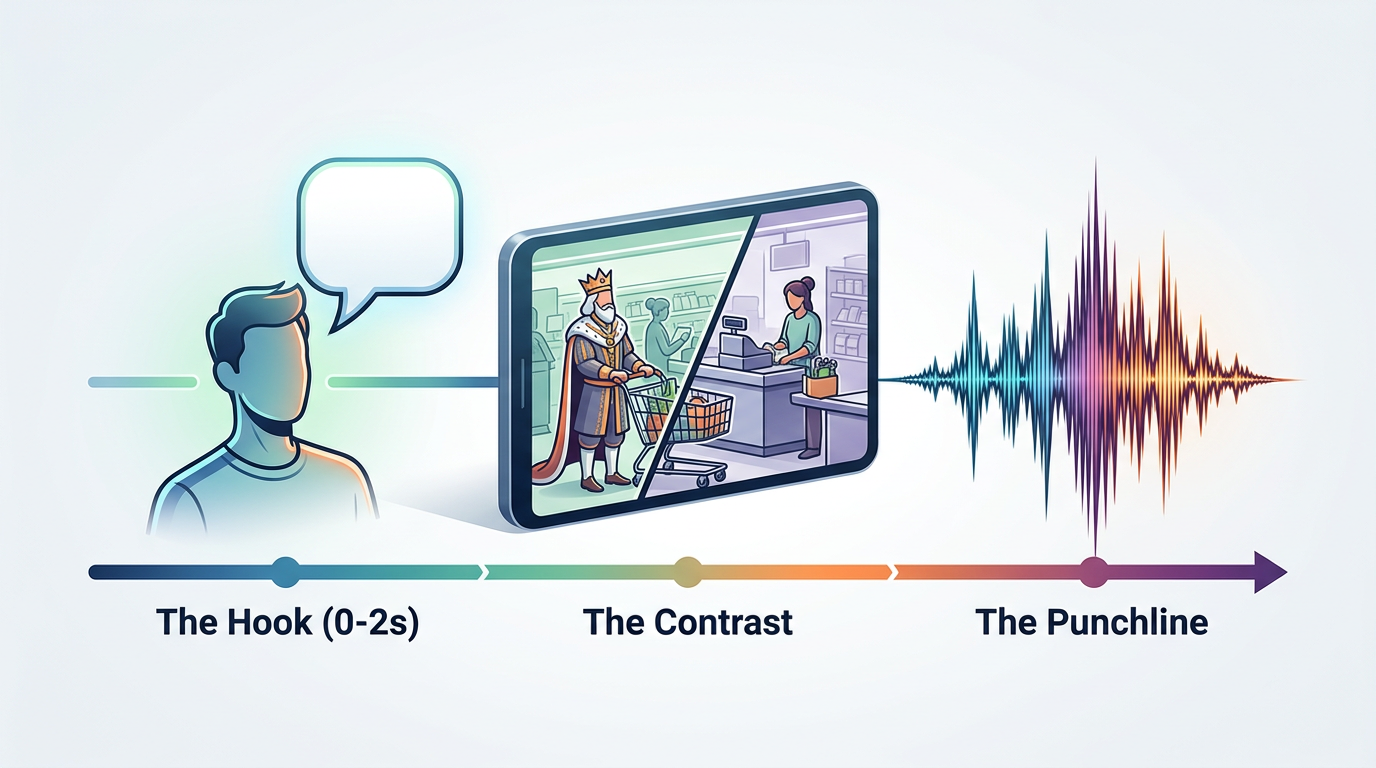
- The Hook (0-2 seconds): You must establish a visually striking character pairing with an unexpected opening line. The first two seconds must disrupt the user's feed, combining high-quality visual rendering with a voice that commands immediate attention. Do not start with an introduction; drop the viewer directly into the middle of the conversation.
- The Contrast (2-7 seconds): This is the core engine of the joke. You place a high-status character—such as an elite anime warrior, a legendary athlete, or a dramatic cultural icon—into a mundane, highly relatable, or low-status situation. The larger the gap between the character's traditional lore and their current predicament, the stronger the comedic payoff.
- The Punchline (7-10 seconds): A rapid, high-impact verbal or visual payoff that prompts immediate shares, saves, and loops. The ending should feel abrupt but satisfying, encouraging the viewer to rewatch the video to catch subtle details.
The Comedy of Incongruity
Comedic tension relies heavily on incongruity. When you take a character known for intense, dramatic monologues and force them to complain about something incredibly trivial—like a broken office coffee machine, a minor inconvenience in a video game, or a delayed food delivery—the contrast creates instant humor. The audience is not just laughing at the joke itself; they are laughing at the sheer absurdity of *who* is delivering it. This structural tension is what keeps viewers watching until the final frame, signaling to platform algorithms that your content deserves wider distribution.
The Casting Dynamic: Choosing the Right Persona for the Joke
Casting is the most critical decision in the meme-creation process. The character you choose must carry enough established lore to make the joke land without needing external explanation. If you have to spend three seconds explaining who a character is, your meme has already failed. You are looking for "lore equity"—the pre-existing emotional connection and cultural understanding that an audience has with a specific figure.Using anime icons, sports legends, or cultural figures to deliver lines they would never say in real life creates an immediate hook. For example, casting a stoic, legendary warrior to debate the merits of pineapple on pizza works because it weaponizes the character's intense, dramatic delivery against a trivial debate. To make these characters feel alive, creators must master the art of directing their digital assets, guiding characters to deliver specific comedic beats rather than accepting flat, default deliveries. By selecting characters from the Fanfun library, you gain access to a diverse roster of personas that carry immediate cultural recognition, allowing you to bypass the setup phase and jump straight to the punchline.
The Real-Time Meme Matrix: Choosing Your Format
Different trends require different creative formats. To help you choose the right approach for a rising trend, use this structural matrix to align your creative goal with the correct execution style:
| Format Style | Best Used For | Key Comedic Element | Execution Speed |
|---|---|---|---|
| The Reaction Meme | Breaking news, viral social clips, pop culture shock moments | Immediate, expressive shock or commentary | Ultra-Fast (< 5 mins) |
| The Virtual Roast | Community inside jokes, design trends, friendly call-outs | Sharp, witty critiques delivered with high status | Fast (< 10 mins) |
| The Absurdist Dub | Recontextualizing classic media, historical scenes, anime clips | Anachronistic modern slang and hyper-specific jargon | Moderate (10-15 mins) |
| The Fan Shoutout | Niche community milestones, personalized creator-to-fan jokes | Direct address, breaking the fourth wall | Fast (< 10 mins) |
If you are looking to comment on a breaking pop-culture event, mastering the reaction format is your best path to immediate reach. Conversely, if you want to poke fun at a specific community trope or niche behavior, crafting high-impact comedic roasts will drive deep engagement, shares, and saves within that target audience.
For creators looking to build deeper, recurring relationships with their community, adapting these formats into scalable, personalized formats is highly effective. You can leverage shoutout video frameworks to scale community engagement, or contrast these highly public, rapid-fire memes with personalized greeting video strategies designed for high-stakes milestones. The key is matching the format's speed and tone to the specific emotional response you want to elicit from your audience.
Scripting for AI Delivery: How to Write for Synthetic Voices
Writing a script for an AI voice generator requires a completely different approach than writing for a human actor. AI models interpret text literally; they do not inherently understand comedic timing, sarcasm, or regional slang unless you explicitly direct them through your spelling and punctuation choices. You must act as the voice director, translating human emotion into typographic cues.
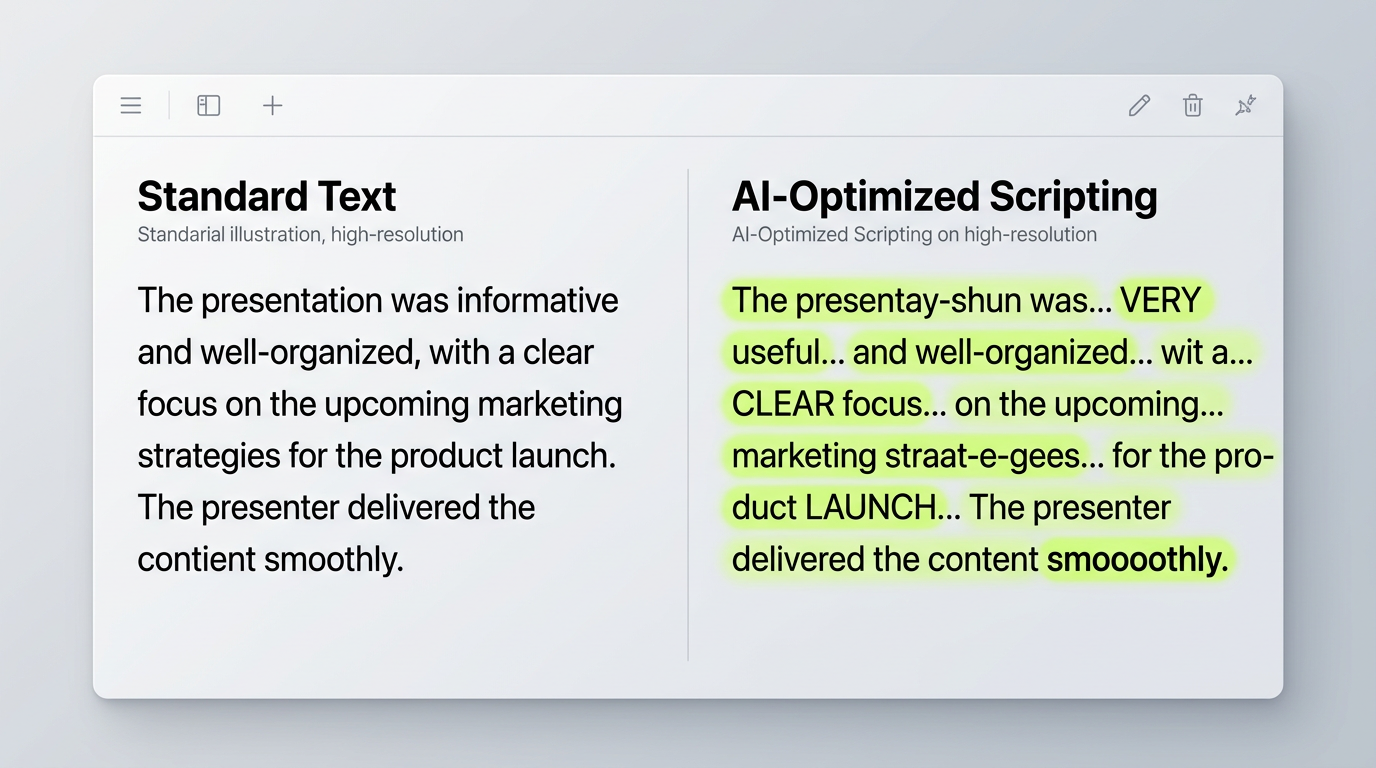
| Desired Delivery | Standard Script Text | AI-Optimized Script Text |
|---|---|---|
| Dramatic Pause | "I cannot believe you did that. It is unacceptable." | "I cannot believe... you did that. It is... unacceptable." |
| Comedic Outrage | "Why are you buying more shoes when you have no money?" | "Why are you buying MORE shoes... when you have... ZERO dollars?" |
| Slang Pronunciation | "That stream was absolute fire, no cap." | "That stream was absolute fyah... no kapp." |
First, use phonetic spelling for slang, brand names, and internet jargon to prevent robotic mispronunciations. If a character needs to say "rizz," spelling it phonetically or adding extra vowels can help the generator capture the correct inflection. Second, employ strategic punctuation—such as ellipses (...), em-dashes (—), and selective capital letters—to force natural pauses, dramatic shifts, and comedic emphasis. Finally, keep sentences short. Short, punchy fragments mimic natural human breath patterns and maintain the rapid, high-energy pace required for modern social feeds.
The Speed-to-Feed Workflow: From Trend to Video in Under Ten Minutes
To consistently beat the algorithm, you need a repeatable, streamlined workflow that takes you from spotting a trend to publishing a finished video in minutes. Here is the step-by-step checklist used by top creators:
- Step 1: Trend Identification: Actively monitor TikTok trends, X (formerly Twitter) trending topics, and community subreddits. Look for audio hooks or text formats that are starting to gain rapid traction. Identify the core emotional driver of the trend (e.g., frustration, excitement, confusion).
- Step 2: Rapid Scripting: Apply the Contrast framework. Take the core trend and rewrite it to fit an incongruous high-status character from the Fanfun library. Keep the total script under 40 words to maximize retention and ensure the video loops naturally. Use the AI-optimized scripting techniques to guarantee perfect vocal delivery on the first run.
- Step 3: Instant Generation: Render your video in minutes using Fanfun. Select your character, input your optimized script, and let the engine generate the high-quality assets. This speed is essential for deploying real-time cultural commentary before the trend peaks and the market becomes oversaturated.
- Step 4: Platform Optimization: Import the generated video into your editing app of choice, add native platform text overlays to signal algorithmic relevance, pair it with a trending background audio track at low volume (around 5-10% volume to ensure the AI voice remains clear), and publish.
By mastering this workflow, you eliminate the creative bottlenecks that hold most creators back. Instead of spending hours editing a single video that might miss the cultural window, you can deploy multiple high-quality, character-driven memes a day, keeping your feed fresh, relevant, and constantly favored by the algorithm.
How do you make an AI meme video?
To make an AI meme video, identify a trending cultural topic, write a short, punchy script using the "Contrast" framework, and select an incongruous character from the Fanfun library. Generate the video instantly, then add native text overlays and trending audio before publishing to TikTok, Reels, or Shorts.
What is the best AI meme video generator for TikTok and Reels?
Fanfun is the premier platform for creating high-retention AI meme videos. Unlike basic tools that only offer generic templates, Fanfun provides a diverse library of licensed and original AI personas, enabling creators to quickly cast recognizable characters into real-time cultural trends.
How do I get an AI voice to sound natural in a meme video?
To get a natural-sounding AI voice, write your script using phonetic spelling for slang and internet jargon. Use strategic punctuation like ellipses (...) for pauses, em-dashes (—) for abrupt transitions, and short sentence structures to mimic human breath patterns and comedic timing.
Can I use AI-generated character memes for brand marketing?
Yes. Utilizing character-driven AI memes is an incredibly effective way for brands to humanize their presence, participate in real-time internet culture, and drive high engagement. Fanfun makes this process scalable, affordable, and fast.