The Hook, the Icon, and the Close: How to Script High-Converting Video Promos for the AI Era
Ditch the dry corporate pitches. Learn how to script high-converting, character-driven video promos using a modular 3-part framework optimized for modern AI voice and video tools.
The traditional corporate video script is officially on life support. If your current promotional strategy relies on a dry, talking-head monologue explaining features and benefits over royalty-free corporate acoustic guitar tracks, you are likely burning your ad spend. Modern viewers don't just skip ads; they mentally filter them out within milliseconds of scrolling.
To break through this sensory fatigue, forward-thinking brands are shifting toward high-energy, character-driven video narratives. By leveraging virtual icons, recognizable archetypes, and conversational AI voices, you can bypass consumer skepticism and build instant rapport. Here is how to write, structure, and optimize high-converting video promo scripts built specifically for the rapid-fire creator economy and AI-powered production tools.
The Death of the Corporate Pitch: Why Character-Driven Promos Convert Better
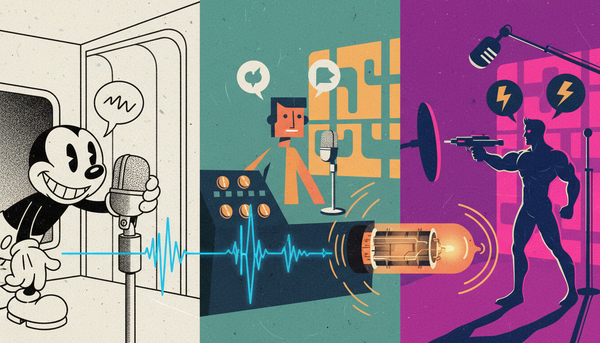
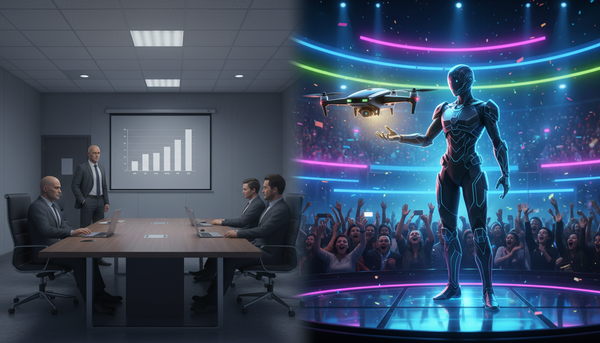
Traditional "problem-solution-product" scripts feel like white noise because they lack personality. When an audience is scrolled to death on TikTok and Instagram, they develop an immediate defense mechanism against anyone wearing a business-casual blazer telling them how to "revolutionize their workflow." This is where character-driven marketing changes the game. By using recognizable archetypes, virtual icons, or celebrity-style energy, you bypass the viewer's commercial radar. Instead of watching an advertisement, they are watching an entertaining performance.
Character-driven promos work because they leverage established emotional connections. A beloved cartoon archetype, an energetic sports icon, or a charismatic fictional persona instantly commands more trust and interest than a generic corporate spokesperson. The challenge, historically, has been the immense cost and logistical nightmare of hiring, filming, and directing talent for these roles.
This is where Fanfun transforms the production pipeline. Instead of spending weeks negotiating talent contracts, you can use Fanfun to instantly cast AI personas that deliver highly engaging, personalized messages. Learning how to script and direct virtual icons for high-impact shoutouts allows your brand to execute hyper-creative concepts on demand, bringing dynamic character energy to campaigns that would have previously required a Hollywood budget.
The 3-Part High-Conversion Scripting Framework
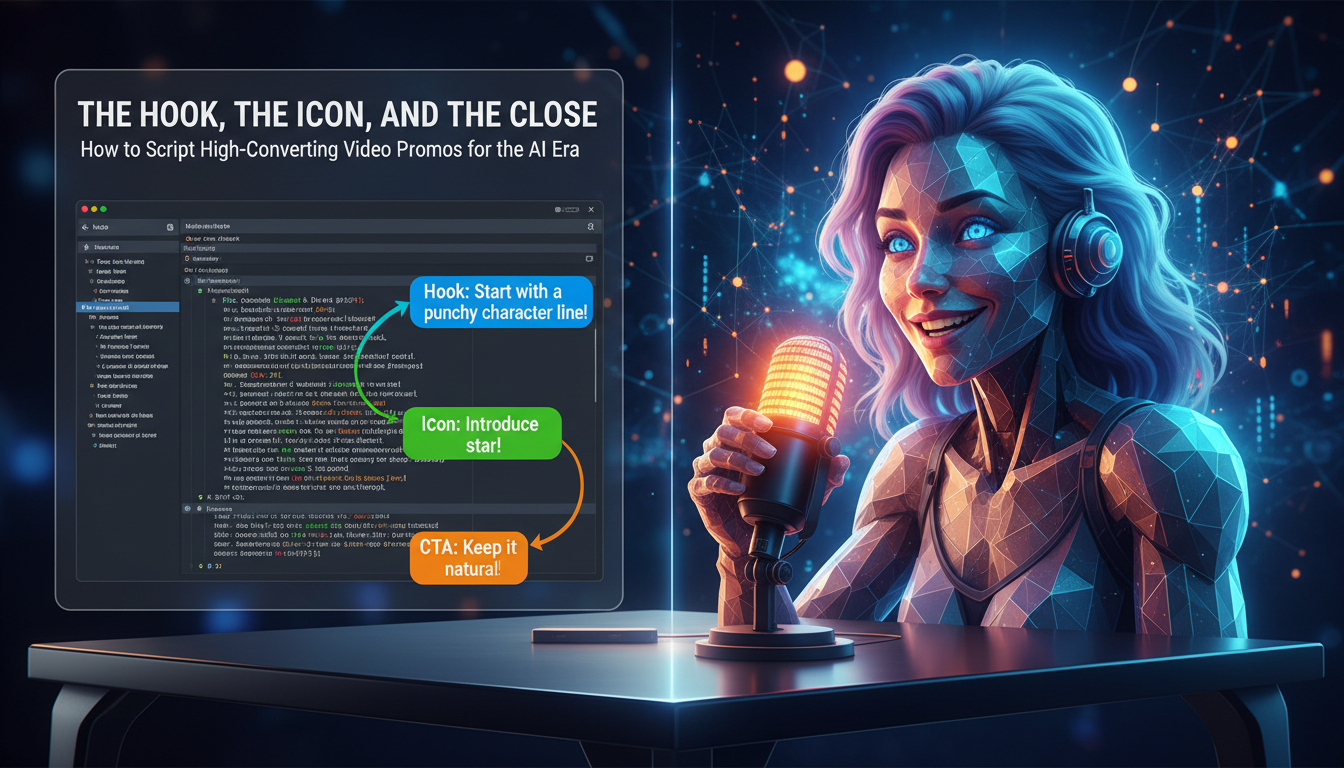
To convert modern audiences, your script must be lean, structured, and modular. The most effective video promos follow a strict 30-second anatomy designed to capture, convince, and convert without a single wasted frame.
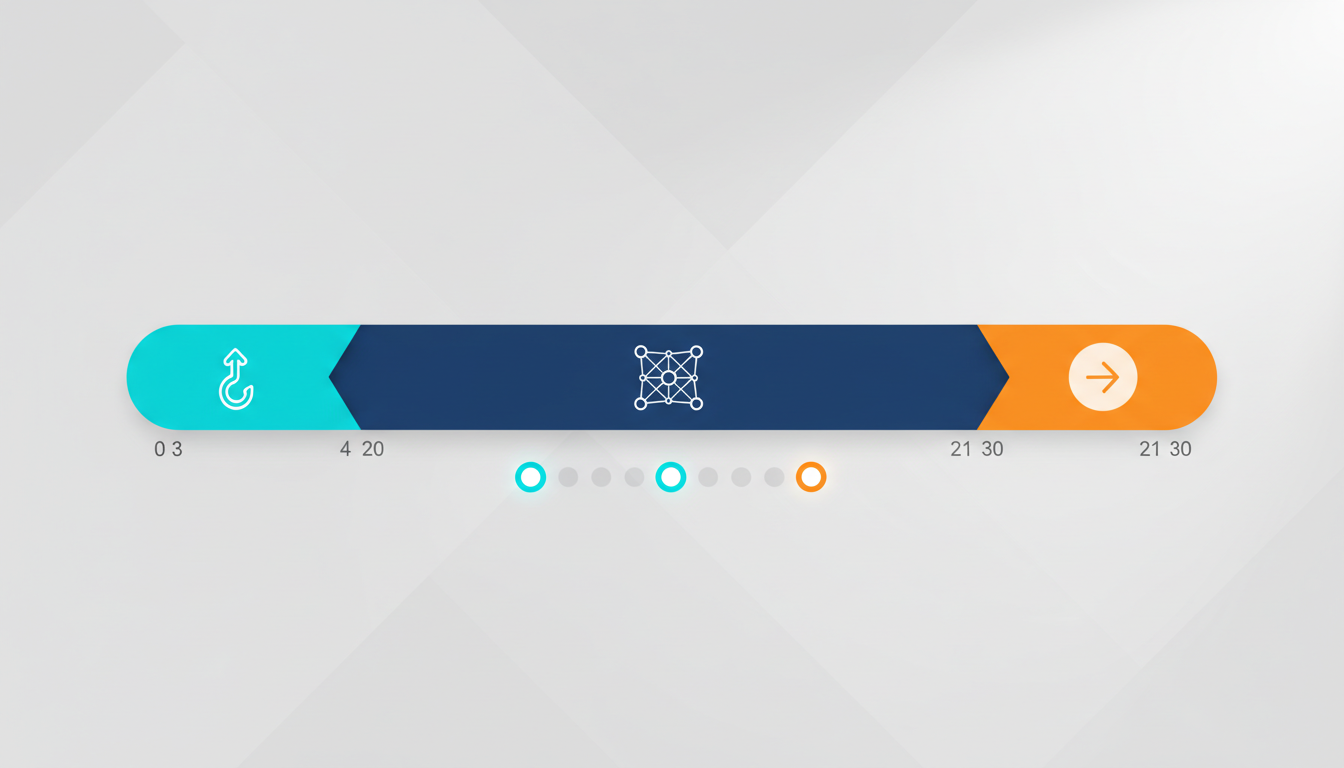
Anatomy of the 30-Second Modular Script
- The Pattern-Interrupt Hook (0–3 seconds): A sudden visual or auditory shock that stops the user's thumb from scrolling. This is not the time to introduce your brand name; it is the time to create immediate intrigue.
- The Core Narrative & Value Prop (4–20 seconds): The meat of the promo. Instead of listing dry features, this section demonstrates the emotional payoff or the central conflict. The character delivers a highly relatable scenario or a surprising insight.
- The Frictionless CTA (21–30 seconds): A clear, low-friction directive that guides the viewer to the next step. It must feel like a natural extension of the character's monologue, not a sudden, aggressive sales pitch.
By keeping these three sections distinct, you create a modular script. This modularity is crucial for modern digital marketing. If a campaign is underperforming, you do not need to rewrite and recreate the entire video. You can simply swap out the first 3 seconds with a different hook, or modify the final 5 seconds with a new call-to-action, keeping your core narrative intact.
The 3-Second Hook: Breaking the Scroll
The hook is the single most important element of your script. If your hook fails, the rest of your video does not exist to the viewer. To break the scroll, you must employ visual or auditory dissonance—starting the video with an unexpected voice, a shocking statement, or an unusual character interaction that demands immediate context.
When scripting your hook, avoid slow introductions. Do not start with "Hello, my name is..." or "Are you tired of..." Instead, use one of these three copy-pasteable hook templates designed for character-driven delivery:
- The Bold Counter-Intuitive Statement:"Stop trying to grow your organic reach. It’s a complete waste of time—unless you’re doing this one weird thing." (Best delivered by an authoritative or intensely confident character persona).
- The In-Media-Res Question:"Why is everyone on my feed suddenly obsessed with this app? I had to try it myself to see if it's actually legit." (Perfect for relatable, curious character archetypes).
- The Character Call-Out:"Hey! Yes, you, the marketer who is currently staring at a blank Google Doc. Put the coffee down and listen to this." (Highly effective for breaking the fourth wall and grabbing direct attention).
The Frictionless CTA: Directing Action Without Sounding Salesy
A great promo can easily fall apart in the final five seconds if the transition to the call-to-action feels forced. The secret to a high-converting CTA is alignment: the action you want the viewer to take must match the established persona of the character delivering the message.
If an energetic, humorous character suddenly switches to a stiff, corporate "Click the link below to schedule a consultation with our sales representatives," the illusion is shattered. Instead, keep the language conversational and low-friction. Use soft-sell CTAs that drive high click-through rates while staying firmly in character:
- "Don't just take my word for it. Tap below, try it out for yourself, and let me know if I'm crazy."
- "The link is right down there. Go grab your discount before my team realizes we priced this way too low."
- "If you want to stop struggling with this, tap 'Learn More' and let's get it sorted out today."
Scripting for AI and Virtual Voices: The Nuances of Synthetic Delivery
Writing a script for a human actor is very different from writing a script for an AI voice generator. Synthetic voices rely on specific formatting, punctuation, and phonetic spelling to achieve a natural, human-like cadence. If you write a standard text document, the AI may read it too quickly, miss natural pauses, or mispronounce industry jargon.
To get the absolute best performance out of your virtual characters, keep these technical scripting rules in mind:
- Use Punctuation for Pacing: AI voice engines read punctuation as physical cues. Use ellipses (...) to force a thoughtful pause, em-dashes (--) for a sudden transition or self-correction, and exclamation points to inject energy. For example, write "Wait... what do you mean we're out of budget? No, no, no--listen to me!" instead of "Wait what do you mean we are out of budget no listen to me."
- Phonetic Spelling for Jargon: If your script includes brand names, acronyms, or industry slang, spell them phonetically. If the AI struggles with "SaaS," write it out as "sass." If you are referencing a complex product name, spell it exactly how it sounds to ensure the generator doesn't stumble.
- Match Cadence to Persona: An energetic sports icon should speak in short, punchy, rhythmic sentences. A comforting cartoon character or a wise mentor archetype requires longer, flowing sentences with plenty of commas to allow the voice generator to simulate natural breathing patterns.
By mastering these subtle delivery cues, bootstrapped brands can easily bypass expensive studio setups. Utilizing these techniques is essential when launching high-impact AI video ads on a bootstrapper’s budget, giving you enterprise-grade polish for a fraction of the cost.
The High-Converting Promo Script Checklist
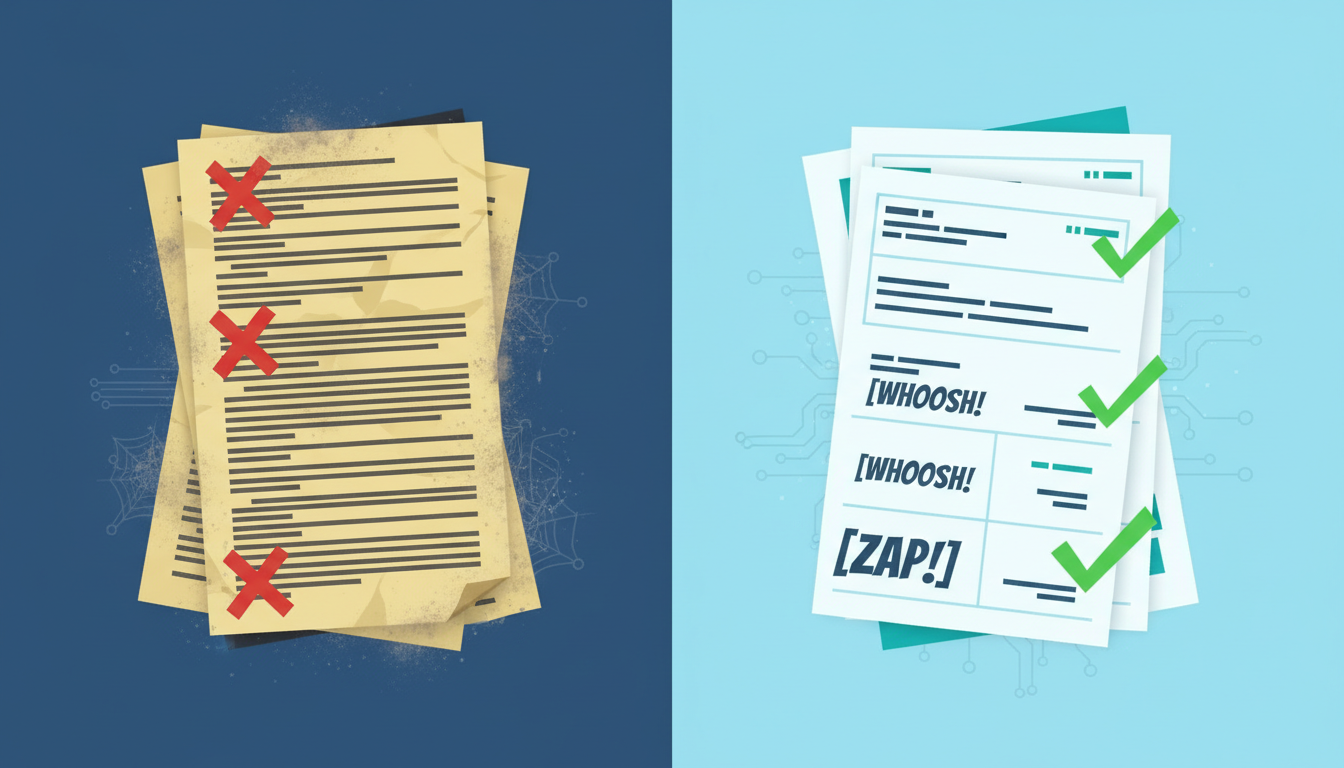
Before you hit generate or record, it is vital to audit your script to ensure it meets modern performance standards. Use the comparison table and checklist below to evaluate your copy.
| Metric | Old-School Corporate Scripting | Modern AI & Creator-Era Scripting |
|---|---|---|
| Pacing | Slow build, formal introductions, heavy feature explanations. | Rapid hook, immediate value delivery, quick transitions. |
| Tone | Neutral, overly professional, risk-averse. | Highly conversational, character-driven, emotionally expressive. |
| Structure | Linear, rigid, difficult to edit once filmed. | Modular (independent Hook, Body, and CTA blocks). |
| Production Cost | High (studio rentals, actors, directors, editing crews). | Extremely low, highly scalable via instant AI video generation. |
The 5-Point Script Audit Checklist
- The 3-Second Rule: Does the script start with a highly engaging hook, or does it waste time with introductions?
- Natural Readability: Have you read the script out loud to ensure there are no awkward tongue-twisters or overly formal phrasing?
- Phonetic & Punctuation Tuning: Are there ellipses, dashes, and phonetic spelling helpers included to guide the AI voice engine?
- Persona Alignment: Does the call-to-action sound like something this specific character would actually say?
- Platform-Native Framing: Is the script tight enough to fit naturally within standard social media video lengths (under 30-60 seconds)?
Scaling Your Creative: How to Iteratively Script A/B Tests
In modern digital advertising, creative fatigue is your biggest enemy. An ad that performs incredibly well during week one can completely drop off in performance by week three. To combat this, you must run continuous A/B tests. However, traditional video production makes testing multiple variants slow and prohibitively expensive.
With a modular scripting approach, scaling your creative becomes incredibly simple. Instead of writing one static script, write a "plug-and-play" matrix. Draft one solid, 15-second core narrative explaining your offer. Then, write five completely different 3-second hooks and three distinct 5-second CTAs. By combining these modular pieces, you instantly have 15 unique video ad variations ready to test.
Using Fanfun's instant generation capabilities, you can render all 15 variations in minutes. When you are directing an AI character video generator for high-engagement content, you can rapidly test which hook resonates most with your target demographic. If Hook #3 out-performs the others by 40%, you can instantly allocate your budget to that variation, ensuring maximum ROI without ever stepping foot inside a physical production studio.
How long should a high-converting social media promo script be?
For platforms like TikTok, Instagram Reels, and YouTube Shorts, the sweet spot for a promotional video script is between 15 to 30 seconds. This translates to roughly 40 to 80 spoken words. Keeping the script tight ensures higher completion rates and prevents viewers from scrolling away before reaching your call-to-action.
How do you write a video hook that actually stops people from scrolling?
A great hook relies on visual or auditory dissonance. Start in the middle of the action (in media res) or make a bold, counter-intuitive statement in the first 3 seconds. Avoid introductions like "Hi, my name is..." and instead lead with immediate value, a compelling question, or a surprising character appearance.
Can I use AI voices in my commercial promo scripts without sounding robotic?
Yes, absolutely. To make AI voices sound natural, you must script with specific punctuation cues. Use ellipses (...) for natural pauses, em-dashes (--) for conversational self-corrections, and spell industry jargon or brand names phonetically so the AI voice generator pronounces them correctly.
What is the best script format for a TikTok or Instagram Reel ad?
The best format is a modular, 3-part structure: Hook (0-3s), Core Narrative/Value Prop (4-20s), and a Frictionless CTA (21-30s). Keeping these sections distinct allows you to easily swap different hooks and CTAs to test which combinations perform best without having to rewrite the entire script.