The Art of the Eccentric Sidekick: Scripting and Directing French Stewart-Style Vocal Chaos for Comedy Content
Ditch the polished voiceovers. Learn the exact punctuation hacks, physicalized scripting secrets, and performance cues needed to direct an AI voice generator for high-friction, nostalgic comedic chaos.

Viral comedy on social media thrives on friction. While many creators default to polished, hyper-realistic, or ultra-cool AI voiceovers to narrate their content, the most memorable characters are often the most deeply eccentric. Think of the classic sitcom sidekicks who steal every scene not through smooth authority, but through sheer, unpredictable vocal chaos.
Capturing this erratic energy requires moving beyond standard voice synthesis. To tap into the same era of nostalgic character archetypes that defined early-2000s television, similar to directing earnest, time-traveling protagonists, creators must learn how to manipulate pacing, pitch, and punctuation. By dissecting the iconic, squint-eyed, high-nasal delivery of French Stewart, we can build a blueprint for directing AI voice generators on Fanfun to produce genuine comedic gold.
The Anatomy of the Eccentric Sidekick: What Makes the French Stewart Cadence Work
To recreate the French Stewart style, you must first understand the physical mechanics behind the sound. It is a voice built on resistance. Unlike a classically trained voice actor who projects from the diaphragm with an open throat, the eccentric sidekick voice is pinched, restricted, and highly localized. It lives almost entirely in the nasal cavity and the front of the mouth.
This "squint-and-speak" vocal constraint creates a tight jaw delivery. Because the mouth barely opens, consonants become incredibly sharp, while vowels are stretched and distorted. It sounds as if the character is constantly fighting their own vocal cords to get the words out. This physical tension is exactly what makes the delivery feel so delightfully manic and unpredictable. Understanding how to stretch and bend these vocal parameters is what separates amateur voiceovers from professional-grade character design—a concept explored deeply in our analysis of April Stewart’s incredible vocal range.
Rhythmically, this archetype rejects steady cadences. Instead of a smooth flow, the delivery relies on extreme contrast. A French Stewart-style character will rattle off a series of words at breakneck speed, only to hit a sudden, deadpan pause in the middle of a clause. They might stretch a single-syllable word into three syllables ("Wha-a-at?") and then immediately clip the next phrase. This erratic pacing keeps the listener off-balance, which is a foundational rule of comedic timing.
Finally, this style is heavily physicalized. True eccentric energy is punctuated by non-verbal vocalizations: sharp intakes of breath, nervous high-pitched squeaks, and sudden, theatrical gasps. These micro-noises act as punctuation marks, signaling to the audience that the character is operating on a completely different wavelength than everyone else in the room.
Scripting for Chaos: Writing Dialogue That Demands an Off-Kilter Delivery
You cannot feed a standard, grammatically perfect script into an AI voice generator and expect a chaotic performance. AI models are trained to make text sound natural and fluid. To break this default behavior, you have to write "broken" text. Your script must look as erratic on the page as you want it to sound in the final export.
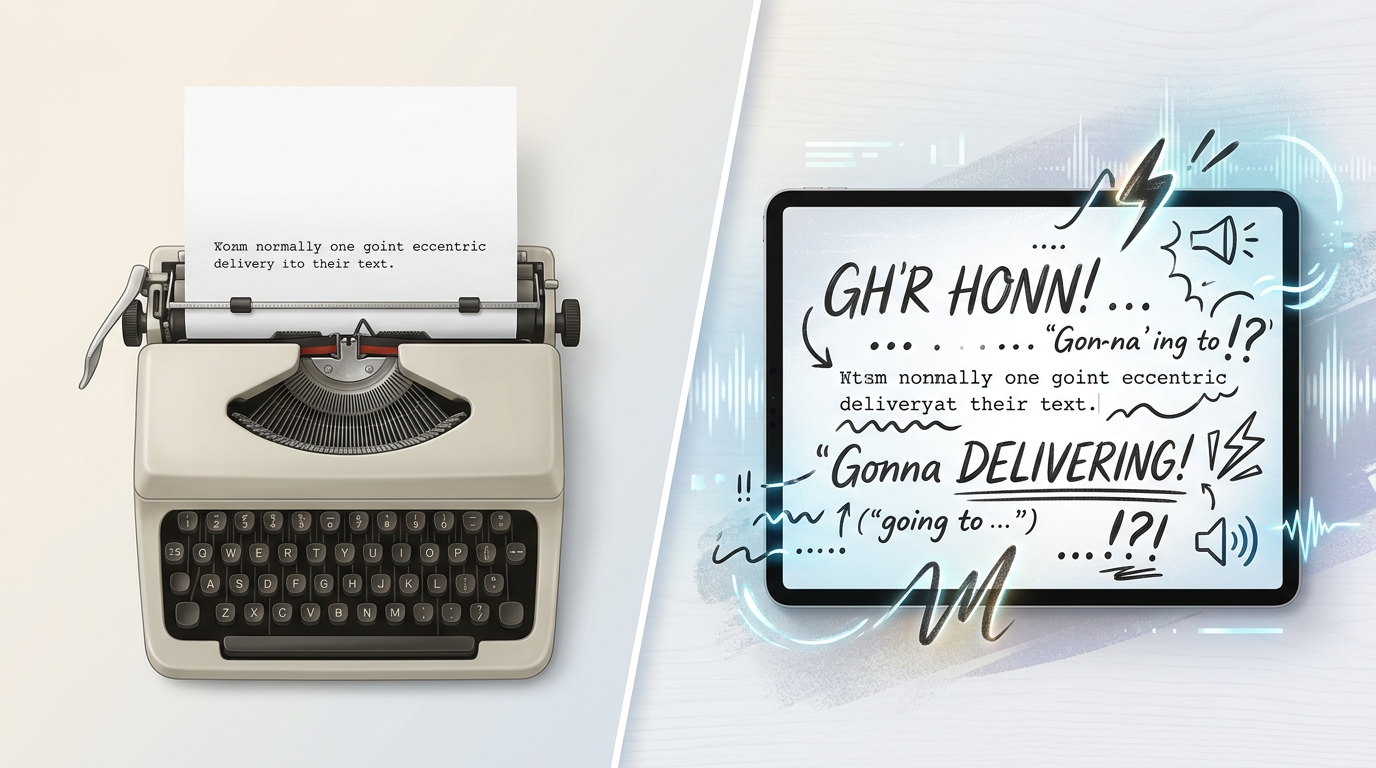
Use non-standard punctuation to force the AI into unnatural pacing. Em-dashes, ellipses, and sudden capitalization are your best tools. An em-dash can force a sudden, jarring pause, while capitalization tells the generator to spike the volume or pitch. Consider this comparison:
- Standard Script: "I have a highly sophisticated plan to sneak into the kitchen and eat all the pudding."
- Formatted for Chaos: "I have a... highly... SOPHISTICATED plan—to sneak into the kitchen... and... consume... the pudding! Yes!"
This writing style is tailor-made for the "confident idiot" archetype. This is a character who delivers completely absurd, incorrect, or trivial statements with absolute, unearned authority. The humor comes from the gap between their intense, dramatic delivery and the utter insignificance of what they are actually saying. To write for this archetype, use grand, theatrical vocabulary to describe mundane tasks, and have the character make sudden tonal pivots—dropping from a conspiratorial whisper to a manic exclamation within a single breath.
The Power of the Non-Sequitur
Logical gaps are the lifeblood of eccentric comedy. When a character's internal logic is completely broken, their vocal delivery must work twice as hard to sell the premise. Non-sequiturs provide the perfect high-friction playground for a nasal, high-energy AI voice because they force the listener to process two confusing inputs at once: the bizarre statement itself, and the intense passion with which it is delivered.
When structuring these lines, place the most absurd detail at the very end of the sentence, immediately following a dramatic pause. For example: "If we want to bypass security, we must blend in. We must become invisible. We must... wear matching sweaters knit entirely from dry pasta!" The sudden shift from a classic action-movie setup to an absurd conclusion allows the erratic voice to spike on the punchline, maximizing the comedic payoff.
The Vocal Archetype Matrix: How Eccentric Energy Compares
Choosing the right vocal profile for your content depends entirely on the comedic dynamic you want to create. While some creators lean toward the rebellious, gravelly energy of a punk-rock anti-hero, others need pure, unadulterated comedic chaos. Understanding where the Chaotic Eccentric sits in relation to other archetypes helps you cast your project more effectively.

| Vocal Archetype | Key Characteristics | Best Comedic Use Case | Pacing Style |
|---|---|---|---|
| The Chaotic Eccentric (e.g., French Stewart style) | Nasal, high-pitched, erratic, physically tense | Absurdist comedy, over-the-top sidekicks, high-energy roasts | Highly unpredictable; fast bursts mixed with sudden deadpan pauses |
| The Smug Elite | Slow, condescending, smooth, highly articulate | Dry satire, villain monologues, intellectual mockery | Deliberate, measured, and patronizingly slow |
| The Punk-Rock Anti-Hero | Gravelly, intense, low-register, cynical | Deadpan sarcasm, gritty parodies, reluctant protagonists | Steady, driving, and filled with vocal fry |
Contrast the erratic energy of the eccentric sidekick with the calculated, high-status delivery of the smug elite archetype. While the Smug Elite controls the room through slow, patronizing pauses, the Chaotic Eccentric commands attention by being a loose cannon. On Fanfun, matching the right vocal profile to your specific script is simple. By choosing a character voice from our library that naturally carries a higher pitch or a slightly nasal resonance, you give your script the perfect foundation to build upon.
Directing the AI: A Troubleshooting Checklist for Creators
If your generated voiceover sounds too normal, polite, or robotic, it means the AI is trying to correct your script's intentional weirdness. You need to actively direct the generator to lean into the chaos. Use this troubleshooting checklist to fine-tune your results:
- Is the nasal tone missing? Use phonetic spelling to force the AI's hand. Try spelling words with extra "n" or "eh" sounds. For example, change "No" to "N-neh-o" or "unbelievable" to "uhn-believable" to force a tighter jaw delivery.
- Is the pacing too uniform? Break up long sentences into tiny, fragmented lines. Instead of entering a single paragraph, generate the dialogue in three or four separate, short clips. This prevents the AI from building a standard, natural momentum and forces it to treat each fragment as a fresh, high-energy exclamation.
- Are the comedic spikes too flat? Inject parenthetical emotional cues if your generator supports them, or use extreme punctuation. A string of exclamation points followed immediately by a question mark (e.g., "What!!?") can trick the model into a manic, confused pitch climb.
- Is the character sounding too heroic? Soften the consonants at the end of words and sharpen the beginnings. Eccentric characters rarely have a commanding presence; their voices should sound like they are constantly on the verge of cracking under minor pressure.
By treating the AI voice generator not as a passive text-to-speech tool, but as an eccentric actor that needs specific, hands-on direction, you can unlock a level of comedic performance that stands out instantly. Whether you are crafting a viral TikTok meme, a parodic web series, or a highly personalized, chaotic birthday roast for a friend on Fanfun, mastering the mechanics of vocal tension and rhythmic unpredictability is your key to comedic success.
How do I make an AI voice sound more energetic and less robotic?
To break the flat, robotic default of AI voices, you must use expressive punctuation and phonetic spelling. Break up long sentences with ellipses (...) and em-dashes (—) to force natural pauses, and use capitalization to signal volume spikes. Choosing high-energy archetypes from the Fanfun library also gives you a more dynamic starting point.
What is the best way to script physical comedy or vocal tics for AI voice generators?
Write out the physical sounds phonetically. Instead of writing "(gasps)", write "Ah!" or "Oh-h!" directly into the dialogue line. For nasal, eccentric characters, stretch out vowels (e.g., "Whaaa-at?") to force the AI to mimic the physical tension of a real comedic actor.
How can I create a funny personalized birthday video with an eccentric voice?
Using Fanfun, you can select an eccentric or nostalgic character voice and write a highly specific, chaotic script. Contrast grand, dramatic declarations with incredibly mundane details about the recipient for maximum comedic effect, and deliver it instantly without waiting days for a real celebrity response.
Why does my AI voiceover sound too flat, and how do I fix the pacing?
AI models naturally try to smooth out text. If your voiceover sounds flat, your sentences are likely too grammatically perfect. Break your script into shorter, fragmented lines and generate them in separate takes, or use heavy punctuation to disrupt the AI's natural flow.