The Art of the Smug Elite: How to Script and Direct the Robert Curtis Brown Archetype for Modern Content
Discover the dialogue formulas, vocal cadences, and passive-aggressive scriptwriting rules needed to bring the ultimate 'smug elite' antagonist to life in your videos and AI content.

We have all seen him: the impeccably dressed man on the golf course or in the high-rise corner office who can dismantle a protagonist’s entire life’s work with nothing more than a raised eyebrow and a soft, pitying sigh. In Hollywood casting circles, this specific flavor of institutional condescension has a gold standard, and his name is Robert Curtis Brown. From his turn as the country-club-ruling Vance Evans in High School Musical to his dozens of appearances as slick lawyers, smug executives, and passive-aggressive fathers, Brown has mastered the art of the polite sneer.
For digital creators, writers, and voice directors, this archetype is an incredibly potent tool. It creates instant narrative tension without resorting to physical threats or cartoonish villainy. Whether you are scripting a satirical TikTok sketch about corporate life, drafting a comedy script, or directing a voiceover for a marketing campaign, mastering this specific brand of high-society passive-aggression will elevate your writing. Here is how to decode, script, and direct the ultimate smug elite archetype in your own content.
The Master of the Country Club Sneer: Decoding Robert Curtis Brown's Archetype
The power of the Robert Curtis Brown archetype lies in its absolute refusal to break social decorum. Unlike villains who rely on physical intimidation, this character operates entirely within the rules of polite society. They are the human embodiment of a human resources manual or a country club’s bylaws—using institutional guidelines as a weapon to maintain their social and financial superiority.
When analyzing Brown’s classic performances, several core traits immediately stand out. First is the posture of effortless ease. This is a character who has never had to scramble, sweat, or raise his voice to get what he wants. His characters carry an air of generational security; they belong in the room, and they assume you do not. This manifests in a physical and vocal presence that is clean, clinical, and completely unhurried.
In comedy, this archetype serves as the perfect straight man or foil for scrappy, chaotic protagonists. When a character like Vance Evans interacts with high schoolers, the humor comes from the sheer absurdity of a grown, wealthy man applying country club politics to teenage drama. In drama, they represent the impenetrable wall of corporate indifference. They do not hate the protagonist; they simply view them as a minor administrative error that needs to be quietly resolved.
The Anatomy of Smugness: Key Scriptwriting Rules for the Elite Antagonist
Writing dialogue for a high-society antagonist requires a shift from overt conflict to subtextual warfare. These characters do not issue threats; they offer “unfortunate realities.” To write them effectively, you must understand the concept of soft power. You can contrast this polite condescension with the raw, heavy-weight physical presence of classic physical antagonists who dominate through sheer size and volume. The elite antagonist, by contrast, wins by making the protagonist feel small, uncultured, and out of place.

The first rule of writing this archetype is the deployment of the “polite roadblock.” When denying a request, the character must frame the refusal as a matter of external policy or personal regret rather than their own decision. They use passive phrasing to remove their own agency from the cruelty. Instead of saying, “I am shutting down your project,” they say, “Regrettably, the committee has decided to redirect our resources toward initiatives with a more... established track record.”
The second rule is the constant signaling of status through assumption. An elite character should always assume that the protagonist is unfamiliar with basic luxury, proper etiquette, or institutional standards. This is done through backhanded compliments and faux-concern. By asking a simple, seemingly innocent question, they highlight the social gap between themselves and their target.
The Linguistic Armor of the 1%
To make your scripts sound authentic, you must replace emotional outbursts with clinical precision. The smug elite character uses vocabulary as a shield and a scalpel. They do not get angry; they get “disappointed.” They do not find an opponent stupid; they find them “quaint” or “highly ambitious.” By using words that are technically polite but contextually devastating, they maintain the moral high ground while completely demoralizing their opponent.
Vocal Pacing and the 'High-Society' Cadence
The best script in the world will fall flat if the delivery lacks the precise cadence of generational wealth. Directing this voice requires focusing on breath control, micro-pauses, and crisp diction. If you are leveraging modern voice tools to dial in these precise dramatic performances, understanding these vocal mechanics is essential for getting the perfect take.
The most important tool in this vocal arsenal is the mid-sentence chuckle. This is a brief, airy, almost silent laugh that occurs right before delivering a correction or rejection. It is not a hearty belly laugh; it is a soft “ah” or “heh” that signals to the listener that their previous statement was so naive it was actually amusing. It instantly establishes a hierarchy where the speaker is the adult in the room and the listener is a child.
Pacing is equally critical. While anxious or angry characters speed up, the smug elite slows down. They elongate key vowels and place deliberate pauses between words, implying that they are speaking slowly so the listener can keep up. Furthermore, their diction must be incredibly precise. Hard consonants—particularly T’s, K’s, and P’s—should be clipped and clean. There should be no slurred words, no casual “gonna” or “wanna,” and absolutely no loss of vocal control.
The Elite Scripting Framework: Before and After Examples
To help you implement these rules in your own writing, let’s look at how to transform generic, direct conflict into the polished, passive-aggressive style of the Robert Curtis Brown archetype. Use the comparison table below as a guide for rewriting your character’s dialogue.
| Scenario | Generic / Direct Version | Polished / Smug Version | Subtextual Message |
|---|---|---|---|
| Rejecting an idea | “This is a terrible idea and it will never work.” | “It’s certainly an... energetic concept. Perhaps we can revisit it once you’ve spent more time in the industry.” | You are inexperienced and your work is amateurish. |
| Firing someone | “You're fired. Get your things and leave.” | “We feel your unique talents would be far better suited to a different corporate culture. We’ve taken the liberty of pre-packaging your transition materials.” | You don't belong here and we've already replaced you. |
| Giving a backhanded compliment | “Your suit looks cheap.” | “Oh, I love your suit. It’s so... brave to opt for off-the-rack polyester in a meeting of this caliber.” | You look poor and your lack of taste is obvious. |
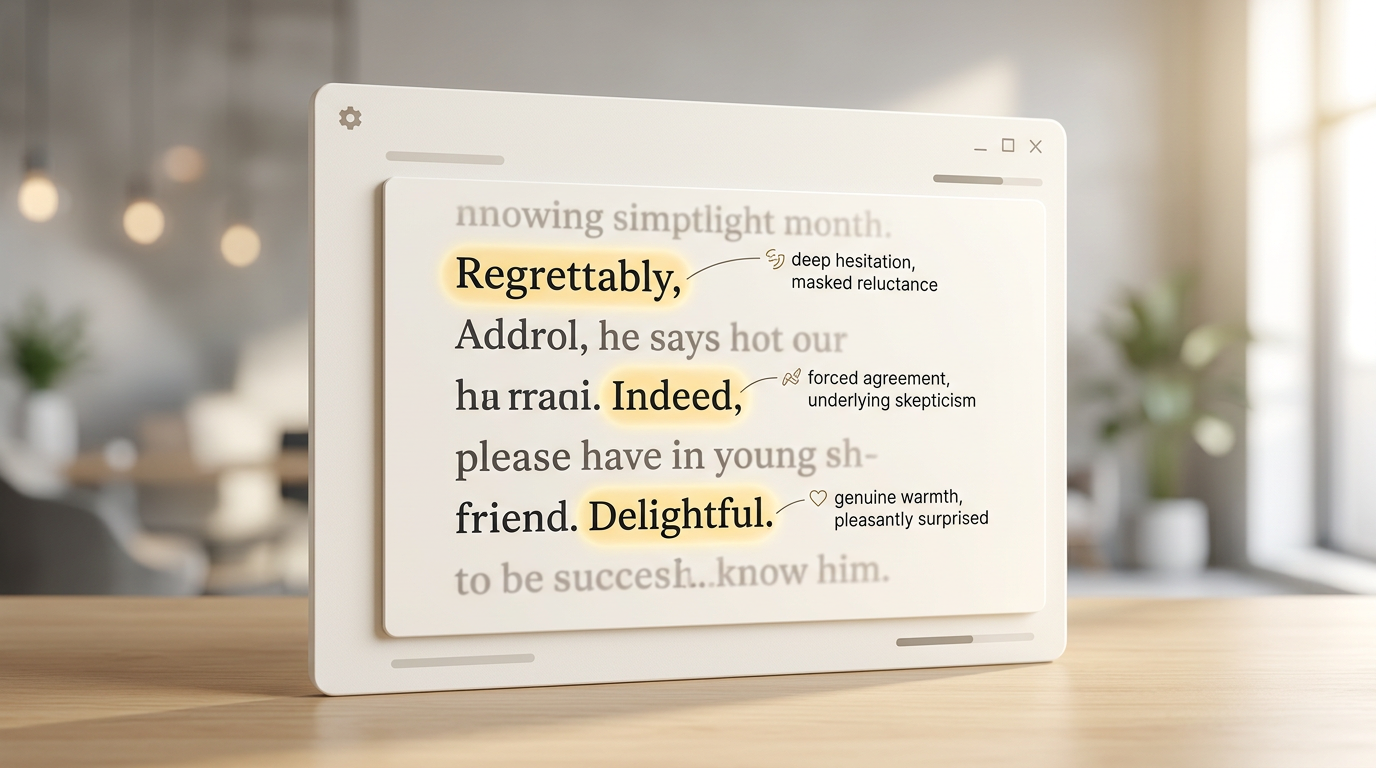
When drafting your scripts, try to sprinkle in these key elite vocabulary words to instantly elevate the tone:
- Regrettably: Softens the blow while signaling that the decision is final and beyond discussion.
- Ambitious: A polite way of saying an idea is unrealistic, expensive, or foolish.
- Delightful: Used to patronize or dismiss something that should be taken seriously.
- Proper channels: A bureaucratic roadblock used to halt progress and assert control.
- Understanding: Implies that the listener is finally catching up to basic concepts.
- Indeed: A non-committal word used to acknowledge someone's presence without agreeing with them.
Bringing the Archetype to Life Instantly with Fanfun
For modern content creators, executing this archetype perfectly can be a logistical challenge. Traditional casting takes time, and hiring high-profile voice actors or seeking out personalized shoutouts can quickly drain a production budget. If you are seeking out that distinct brand of high-society charm instantly without the friction of traditional platforms, Fanfun provides the ultimate creative shortcut.
With Fanfun's advanced AI voice and video tools, you don't have to wait weeks for a celebrity to record a generic message. Instead, you can write a highly specific, custom script using the rules outlined above and generate a high-quality video or voiceover in minutes. Whether you want to create a hilarious birthday roast from a disappointed country club president, a promotional video featuring a smug corporate executive praising your product, or a social media meme poking fun at hustle culture, Fanfun gives you the tools to do it instantly and affordably.
The beauty of using Fanfun for this archetype is the freedom of customization. You can fine-tune the script to include inside jokes, hyper-specific corporate jargon, or personal details that make the passive-aggression hit perfectly. By combining the classic writing techniques of the Robert Curtis Brown archetype with the instant generation capabilities of Fanfun, you can create highly engaging, culturally aware content that your audience will love to share.
Who is Robert Curtis Brown and what is he best known for?
Robert Curtis Brown is a highly prolific American character actor known for playing authoritative, wealthy, and smug characters. He is best known for his roles as Vance Evans in the High School Musical franchise, as well as various appearances as slick lawyers, country club executives, and corporate figures in films like Step Brothers and numerous television dramas.
What are the key traits of a 'smug elite' character in scriptwriting?
The key traits include impeccable manners, passive-aggressive phrasing, constant signaling of high social or financial status, and the use of 'polite roadblocks' (using corporate rules or faux-sympathy to deny requests rather than overt anger).
How do you direct a voice actor to sound condescending but polite?
Direct the actor to slow down their pacing, elongate key vowels, and use a light, mid-sentence chuckle before delivering bad news or corrections. Emphasize crisp, clear pronunciation of hard consonants (T, K, P) to sound clinical and completely in control.
Can I use Fanfun to create custom videos with a high-society or corporate character voice?
Yes! Fanfun allows you to instantly generate custom videos, voiceovers, and interactive chats using a variety of character personas. You can input your own passive-aggressive scripts to create personalized birthday roasts, corporate parodies, and viral social media memes in minutes.