The Punk-Rock Anti-Hero: Scripting and Directing James Marsters-Style Vocal Energy for Modern Content
Unlock the secrets of the punk-rock anti-hero. Learn how to script, direct, and generate the signature snarky, world-weary vocal energy of James Marsters for your next digital project.

The modern anti-hero owes a massive debt to James Marsters. By blending classical Shakespearean theatricality, working-class British punk swagger, and a deeply vulnerable, melancholic undertone, Marsters created a blueprint for characters who are simultaneously dangerous, hilarious, and heartbreaking. Whether you know him as Spike from Buffy the Vampire Slayer or as the definitive voice of Harry Dresden in The Dresden Files audiobooks, his vocal delivery is a masterclass in magnetic cynicism.
For creators, writers, and fans looking to harness this specific energy in modern digital media, capturing this voice is about much more than just throwing on a mockney accent or sounding bored. It requires understanding the mechanical shifts in pacing, the deliberate use of breath, and the precise script structures that make the 'snarky anti-hero' archetype work. By optimizing these elements for AI voice generators and personalized content platforms like Fanfun, you can craft highly engaging, character-driven narratives that instantly connect with audiences.
The Anatomy of the Marsters Cadence: Punk Swagger Meets Melancholic Wit
James Marsters' vocal signature is built on a fascinating contradiction: high-energy theatricality meets a low, gravelly, intimate drawl. Because Marsters began his career in classical theater, his voice possesses an innate sense of drama and projection. However, instead of delivering lines with standard stage clarity, he deliberately filters that power through a layer of streetwise exhaustion. This juxtaposition makes his characters sound like they have seen it all, done it all, and are thoroughly unimpressed—yet they still care just enough to complain about it.
In his iconic portrayal of Spike, this dynamic manifested as a deliberate, slightly exaggerated London accent that walked the line between menace and comedy. The accent wasn't just a regional marker; it was a psychological shield. By stretching out vowels and dropping consonants, he could convey extreme danger one second and pathetic, lovesick vulnerability the next. The voice felt alive because it was constantly shifting between these emotional extremes, never settling into a predictable rhythm.
When Marsters transitioned to narrating The Dresden Files, he adapted this technique into a weary, cynical American noir detective voice. Here, the theatricality is dialed back in favor of subtext and internal monologue. The 'Dresden' voice relies heavily on the sound of a man speaking through a sigh. It is a lower register, grounded in a dry, conversational realism that makes the listener feel like they are sitting in a dark office at 2 AM, listening to a tired wizard recount his latest near-death experience.
The 'Sarcastic Drawl' vs. 'Theatrical Passion'
To successfully direct or script this vocal style, you must understand the two primary gears Marsters utilizes: the Sarcastic Drawl and Theatrical Passion. These are not separate modes used in different scenes; rather, they are two sides of the same coin, often shifting mid-sentence to catch the listener off guard.
The Sarcastic Drawl is characterized by slow, dragged-out vowels and a dry, deadpan delivery. This is the voice of the anti-hero who is completely detached from the danger around him. Consonants are softened, and sentences tend to trail off at the end. It signals to the audience that the character is unimpressed by authority, unimpeded by fear, and likely masking their own anxiety with a shield of pure apathy.
Shifting Gears Mid-Sentence
The magic happens when this low-energy drawl suddenly spikes into Theatrical Passion. This shift is marked by sudden bursts of volume, sharp, crisp enunciation of key words, and a dramatic emphasis on verbs. It occurs when the anti-hero's cool exterior cracks, revealing the raw emotional stakes beneath. For example, a line might start with a muttered, lazy complaint, only to end with a sharp, venomous threat. This sudden transition prevents the character from sounding flat or perpetually bored, injecting a jolt of unpredictable energy into the performance.
Scripting the Snarky Anti-Hero: Dialogue Rules and Sentence Structure
Writing a script that naturally fits this vocal archetype requires a departure from traditional heroic dialogue. Standard heroes speak with clarity, earnestness, and direct intent. The snarky anti-hero, however, speaks in deflections, subtext, and rhythmic interruptions. To write for this persona, you must understand how cult character archetypes drive interactive fandom and deeper audience connection; when fans interact with these figures, they expect a specific brand of sharp-tongued wit that feels both personal and performative. Let's look at how you can explore how cult character archetypes drive interactive fandom and deeper audience connection through highly stylized writing.
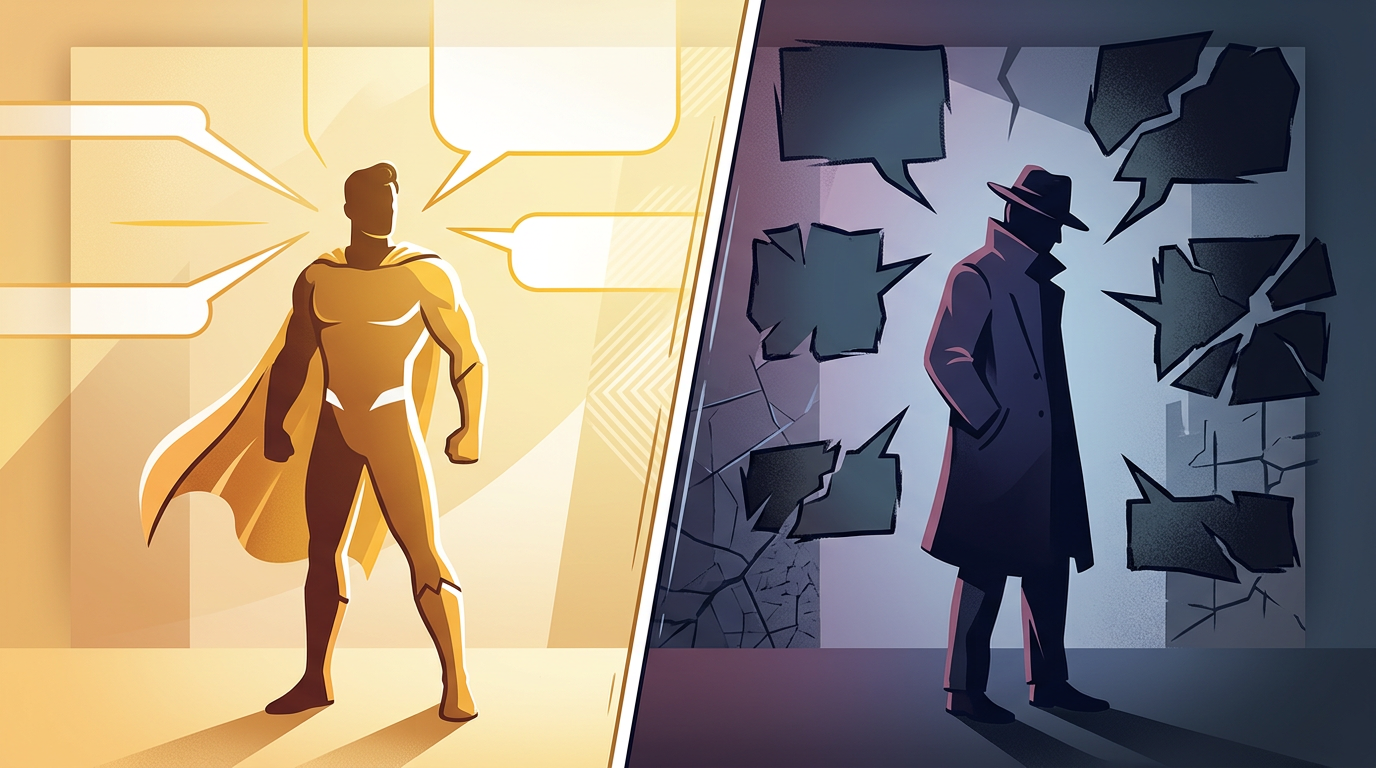
First, use rhetorical deflections. When asked a direct question, the anti-hero should never give a straight answer. Instead, they deflect with a self-deprecating joke or a cynical observation about the person asking. Second, keep sentences short, punchy, and structurally asymmetric. Ending sentences on hard consonants (like 't', 'k', or 'p') allows the AI voice generator to execute natural, abrupt vocal drop-offs that mimic real human annoyance. Finally, integrate dry, internal observations directly into the spoken dialogue, treating the listener like an accomplice in their misery.
| Classic Hero Dialogue | The Marsters-Style Anti-Hero Script |
|---|---|
| 'We have to save them. It's the right thing to do, no matter the cost.' | 'Right. Let's go play savior. Just promise me if I get killed, you won't make me do this again.' |
| 'I won't let you hurt anyone else. Your reign of terror ends today.' | 'You talk a lot, mate. Truly. But honestly? I'm just here to watch you break.' |
| 'I'm sorry I couldn't protect you. I should have been stronger.' | 'Well... that went spectacularly wrong. Don't look at me like that, I told you the plan was rubbish.' |
Directing the AI Voice: Pacing, Breath, and Melancholic Undertones
When using an AI voice generator to capture this unique performance, you cannot rely solely on the raw text. You must act as a digital director, using punctuation and formatting to guide the AI's pacing, breath patterns, and emotional undertones. The goal is to force the algorithm out of its default, smooth reading style and push it into a more human, flawed, and textured delivery.
To mimic Marsters' signature hesitant, world-weary pauses, make liberal use of ellipses and em-dashes. A standard comma often results in a clean, predictable pause. An ellipsis, however, signals to the AI generator that there is unfinished business in the breath, forcing a slight hesitation or a drop in pitch that perfectly captures the 'Dresden' style of weary contemplation.
Additionally, pay attention to the emotional weight of the delivery. If your script is entirely composed of fast-paced, snarky quips, the AI may sound too bright or robotic. You need to balance the snark with moments of quiet vulnerability. By introducing shorter, quieter sentences after a high-energy outburst, you can guide the AI to employ a touch of vocal fry or a raspy undertone. If you are looking to master this balance, consider channeling melancholic vocal energy to add emotional weight to your audio, ensuring your anti-hero sounds physically and emotionally exhausted rather than just cartoonishly mean.
Leveraging the Anti-Hero on Fanfun: From Birthday Roasts to Custom Promos
The beauty of the snarky anti-hero archetype is its incredible versatility across modern digital formats. On Fanfun, creators and fans can leverage this specific vocal energy to elevate standard content into something memorable, hilarious, and deeply engaging. Instead of ordering a generic, overly polite greeting, users can generate dynamic, personalized experiences that pack a real punch.
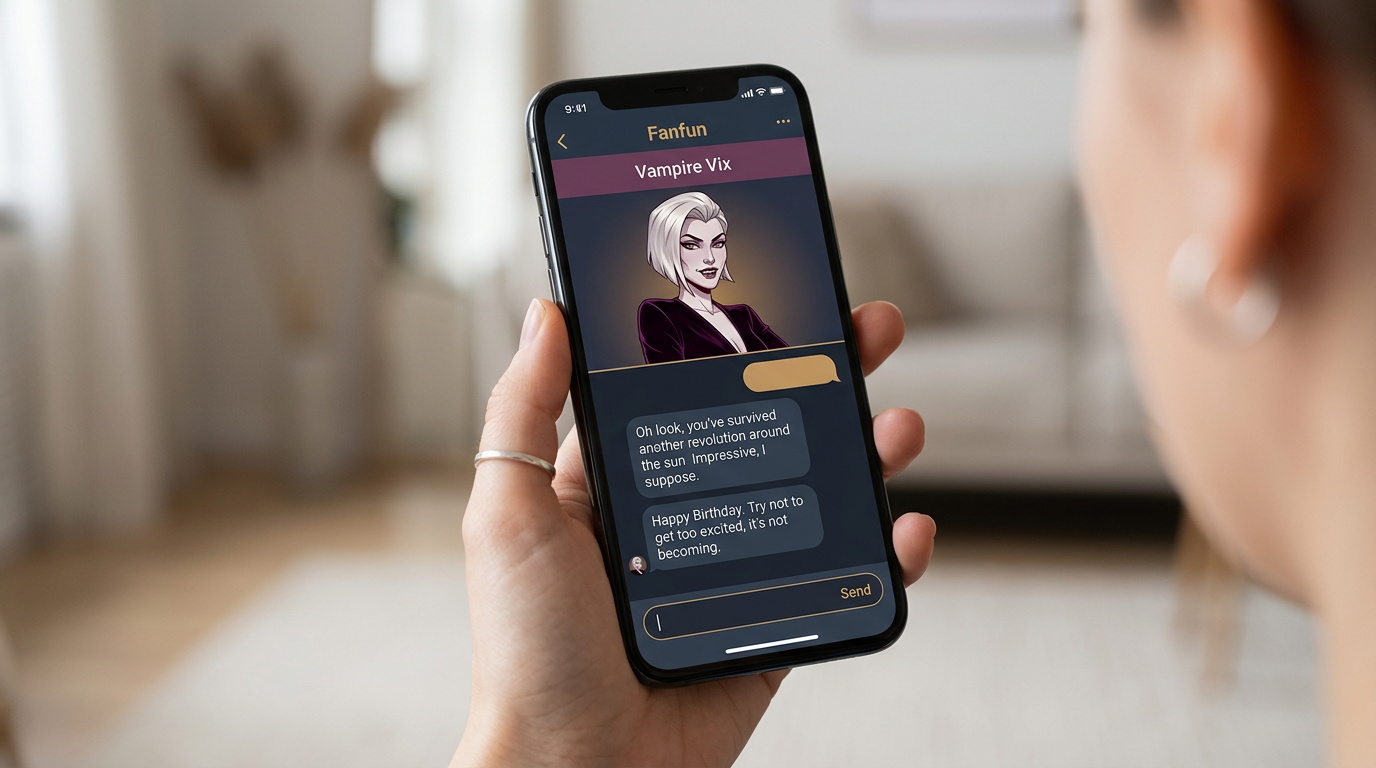
For example, a custom birthday roast generated on Fanfun becomes infinitely better when delivered with a bit of punk-rock attitude. Instead of a standard 'Happy Birthday,' the AI persona can deliver a beautifully backhanded compliment, combining biting sarcasm with a hidden layer of genuine affection. This format is also incredibly effective for social media promos and fan-dubbed memes, where a weary, cynical voiceover instantly cuts through the noise of overly polished marketing copy. If you are comparing this aesthetic to other tough-love styles, you might explore the gritty mentor aesthetic for tough-love content delivery to see how different levels of cynicism can shape your brand's voice.
Furthermore, Fanfun's interactive AI Chat allows fans to step directly into the story. Instead of passively listening to a pre-recorded clip, you can engage in real-time, two-way conversations with characters who possess this exact razor-sharp wit. The AI responds dynamically, adapting its sarcastic drawl and theatrical passion to whatever prompts you throw at it, making the fandom experience feel alive, immediate, and endlessly creative.
The Checklist for Perfect Anti-Hero Delivery
Before you hit 'generate' on your next project, run your script through this quick checklist to ensure it captures the authentic punk-rock anti-hero spirit:
- Did you include at least one cynical rhetorical question? (e.g., 'Oh, brilliant. What's next, a parade?')
- Are there natural pauses marked for the AI to breathe? Use ellipses (...) or dashes (--) to break up long thoughts.
- Does the script avoid earnest, overly sincere declarations? Subtext is key; express affection or concern through teasing or complaints.
- Is there a balance of high-energy threats and low-energy sighs? Ensure the vocal gears shift at least once to keep the listener engaged.
- Did you end on a hard consonant? Let the final word land with a sharp, punchy drop-off.
How do you write dialogue for a sarcastic anti-hero?
To write dialogue for a sarcastic anti-hero, avoid direct answers and instead use rhetorical deflections, self-deprecating humor, and dry observations. Keep sentences short and punchy, ending on hard consonants, and ensure there is a clear subtext of vulnerability beneath the cynical exterior.
Why is James Marsters' audiobook narration of The Dresden Files so highly praised?
James Marsters' narration of The Dresden Files is highly praised because of his ability to bring a weary, noir-detective realism to the character of Harry Dresden. He uses a low, conversational register, masterful pacing, and subtle breathwork that makes the listener feel intimately connected to the character's internal monologue.
How can I use Fanfun to create a custom voice message in a snarky, British style?
You can use Fanfun's AI voice and video generators to instantly create custom messages. By inputting a script written with short, punchy sentences, rhetorical deflections, and dramatic punctuation like ellipses, you can guide the AI to deliver a perfectly balanced, snarky British anti-hero performance for birthday wishes, roasts, or promos.
What are the key vocal traits of the Spike character from Buffy?
The key vocal traits of Spike include a deliberate, slightly exaggerated London accent, a low and gravelly drawl, and a dynamic shift between slow, sarcastic vowel elongation and sudden, theatrical bursts of passion and volume.