Evaluating the Environmental Impact of Digital Video Cards vs. Paper Greeting Cards
While physical greeting cards carry a heavy footprint of logging, shipping, and landfill waste, digital video greetings aren't entirely impact-free. Here is an honest, lifecycle-based comparison to help you choose the most eco-friendly way to share your next milestone message.
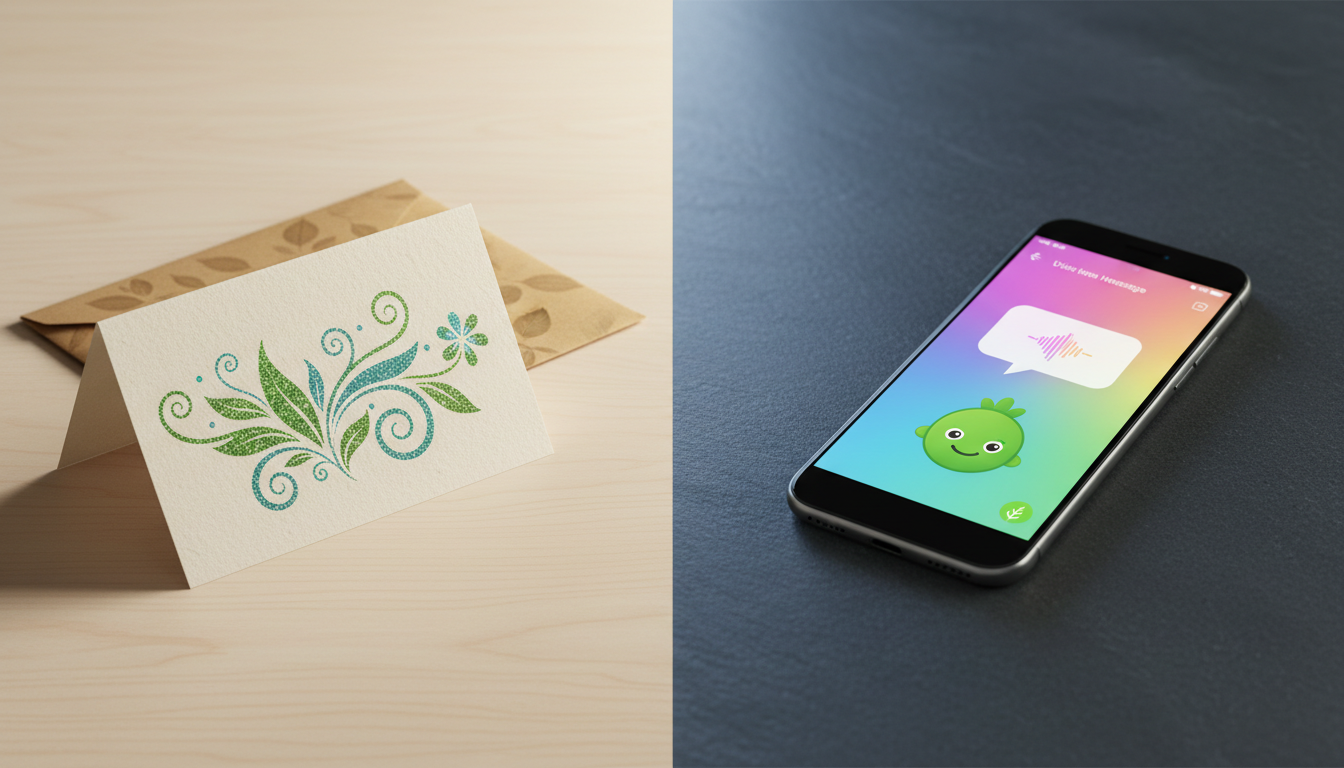
Choosing between digital video cards and traditional paper greeting cards comes down to a balance of physical waste versus digital energy consumption. Generally, sending a digital video message has a significantly lower carbon footprint than buying and mailing a physical paper card, especially when you factor in the resource-heavy processes of logging, chemical bleaching, global shipping, and eventual landfill decomposition. However, digital greetings are not entirely impact-free; they rely on energy-intensive data centers for rendering, network transmission, and long-term cloud storage. For most senders, transitioning to digital messages represents the more sustainable, low-waste choice, especially when managed with smart storage habits like streaming via cloud links rather than sending heavy attachments.
The Physical Lifecycle: Understanding the Environmental Cost of Paper Cards
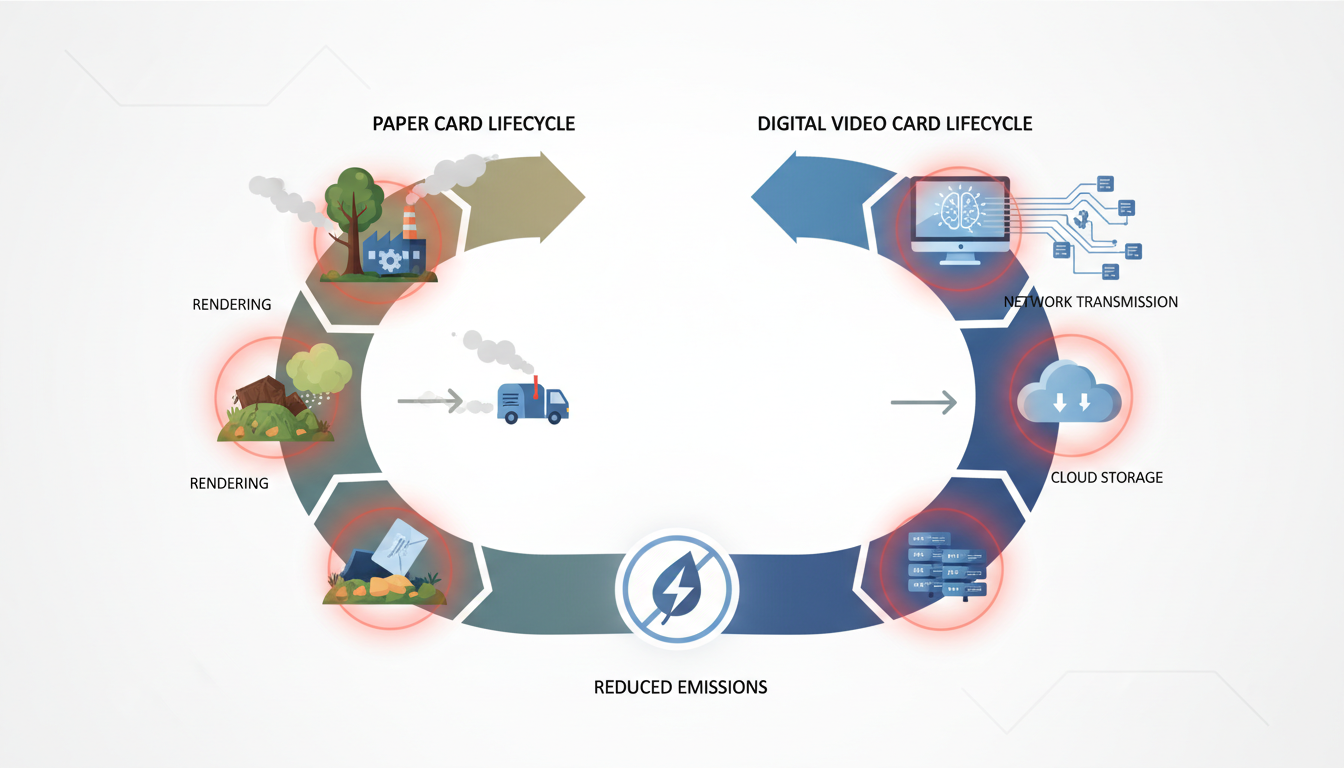
Traditional paper cards may feel transient, but their physical lifecycle leaves a lasting environmental footprint. The process begins with raw material extraction. Producing paper requires harvesting timber, which contributes to deforestation and habitat loss. Additionally, paper manufacturing is incredibly water-intensive and relies on chemical bleaching processes, often using chlorine-based agents that can pollute local waterways if not strictly managed.
Once manufactured, paper cards must travel. This involves a multi-stage transportation loop: shipping from the factory to a wholesale warehouse, trucking to a retail store, driving by the consumer to purchase the card, and finally, transport by postal vehicles to the recipient's mailbox. Each mile traveled adds transport emissions, multiplying the carbon cost of a single piece of cardstock.
The end-of-life stage presents the most significant waste challenge. While plain paper is biodegradable, modern greeting cards rarely consist of plain paper alone. Many are embellished with metallic foils, micro-plastic glitter, glossy synthetic coatings, or embedded plastic sound chips with tiny batteries. These decorative elements make the cards entirely unrecyclable. When thrown away, they end up in landfills where they decompose anaerobically, releasing methane—a potent greenhouse gas—into the atmosphere.
The Digital Footprint: The Hidden Energy Costs of Video Greetings
Digital greetings are often framed as completely green, but they rely on a vast, physical infrastructure of servers and network cables. Every time a video is rendered, sent, and played, it consumes electricity. Data centers operate 24/7, requiring constant power both to run the servers and to keep the hardware cool.
Rendering rich media adds another layer of computational energy. When you use platforms like Fanfun to generate custom video gifts featuring synthetic AI character voices and animated templates, GPUs and CPUs in remote data centers must perform complex computations to generate the final file. While these AI personas are clearly distinguished from real-person recordings and rely on synthetic rendering, the energy required to compile a 30-second video is still higher than sending a simple, text-only email.
Finally, long-term cloud storage has a cumulative impact. If a high-definition video file sits on an active server for years without being downloaded or cleaned up, it continuously draws a small amount of maintenance energy. To keep the digital medium genuinely sustainable, users must practice conscious digital archiving.
Side-by-Side Comparison: Paper vs. Digital Video Greetings
To help you weigh your options, this comparison table evaluates the lifecycle stages of both physical paper cards and digital video greetings based on standard resource consumption and waste criteria.
| Lifecycle Stage | Traditional Paper Greeting Cards | Digital Video Greetings (e.g., Fanfun) |
|---|---|---|
| Resource Extraction | High (Timber harvesting, intensive water use, chemical bleaching) | Low (Silicon and metals for servers, though shared across billions of users) |
| Manufacturing & Processing | High (Industrial printing, laminating, glitter/foil application) | Moderate (Computational power for video rendering and synthetic voice processing) |
| Distribution & Delivery | High (Physical shipping via road, air, and local postal routes) | Very Low (Instant digital transmission over local network grids) |
| End-of-Life & Waste | High (Landfill accumulation, non-recyclable plastics, methane release) | Low to Moderate (No physical waste; minimal ongoing cloud storage energy) |
As the table shows, digital video cards bypass the physical supply chain entirely. Platforms like Fanfun provide a digital alternative to physical cards, allowing you to send personalized messages without physical waste. Compare the practical differences in our detailed guide on digital video cards vs. traditional paper cards.
Eco-Friendly Best Practices for Sending Digital Video Greetings
You can actively minimize the environmental footprint of your digital video cards by adopting a few simple, eco-friendly habits:
- Share via Streamable Links: Instead of sending massive, uncompressed video files as email attachments, share your greetings via streamable cloud links. This reduces the amount of data transferred across networks.
- Practice Smart Archiving: Avoid leaving duplicate, raw video files sitting in active cloud folders indefinitely. Learn how to save a digital video greeting to Google Drive or your local hard drive so you can archive your memories efficiently without wasting continuous server energy.
- Choose Digital for Group Milestones: When coordinating celebrations for distributed groups, physical cards require multiple shipping legs. You can see how to use digital video greeting cards for remote team building to streamline communication while cutting out international postal emissions entirely.
Do recycled paper cards have a lower environmental impact than digital videos?
Recycled paper cards do have a lower raw material footprint than standard paper cards because they reduce the demand for virgin timber. However, they still require significant energy and water to process, must be physically shipped, and often contain non-recyclable inks, foils, or glues. A digital video card still generally yields a lower overall carbon footprint, especially when shared via efficient cloud links.
How does the carbon footprint of an AI-generated video compare to a standard smartphone video?
An AI-generated video, such as a custom message featuring a synthetic voice template, requires more initial computational energy during the rendering phase than a standard smartphone video. However, once the video is rendered and saved as an MP4, its transmission and storage footprints are identical to any other standard video file. The overall impact remains significantly lower than manufacturing and shipping a physical card.
Can digital greeting cards be completely carbon-neutral?
No digital card is completely carbon-neutral because data transmission and cloud storage always require electricity. However, you can minimize their footprint by keeping your video files short and downloading files to local storage rather than leaving them on active cloud servers indefinitely.