Beyond the Greeting: How to Direct Lore-Accurate Chats with Virtual Anime Personas
Stop starting your virtual anime chats with a boring 'hello.' Learn how to think like a showrunner, establish stakes, and steer AI characters to stay perfectly in-character throughout your narrative journeys.
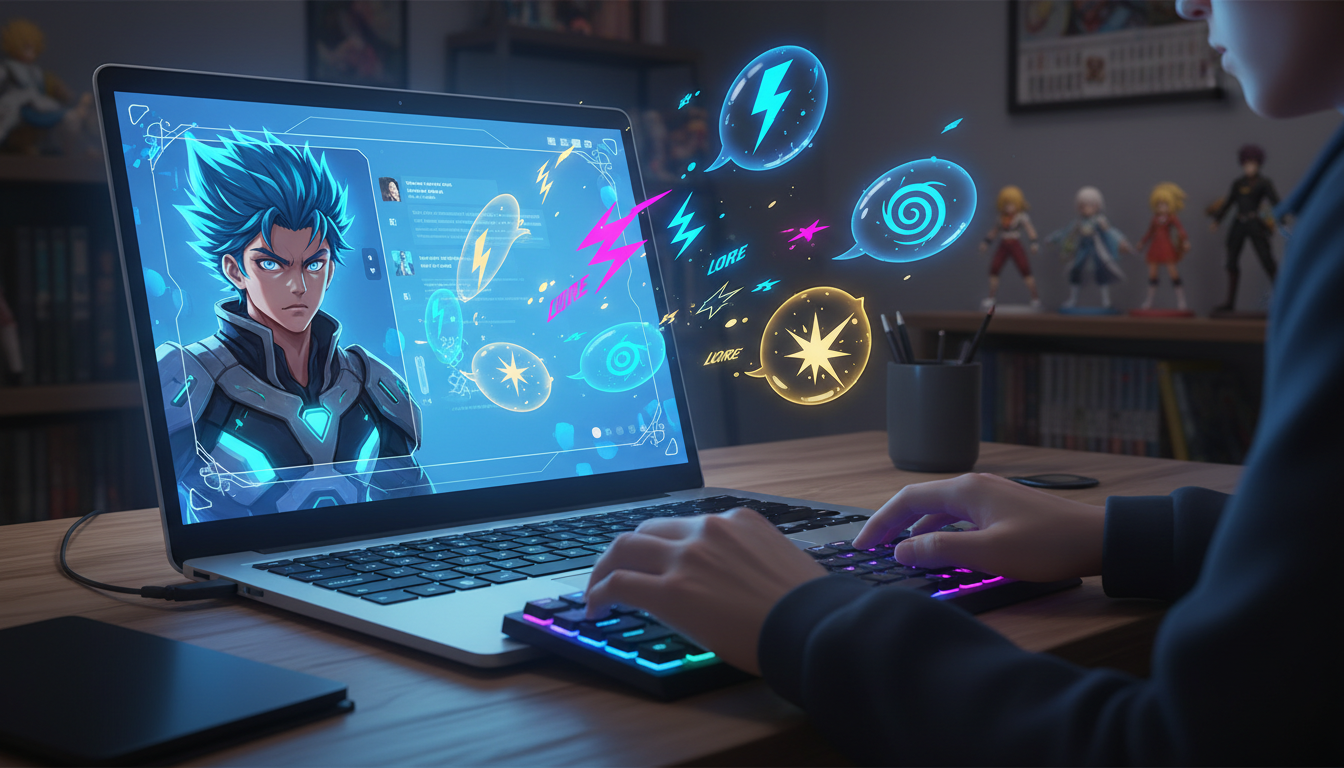
Most fans initiating a chat with an AI representation of their favorite anime character start with a simple, polite greeting. "Hey, how are you today?" seems harmless, but it instantly deflates the narrative magic. Instead of a fiery shonen protagonist or a sharp-tongued tsundere, you are greeted by the bland, helpful persona of a generic large language model trying its best to be polite.
To unlock the true potential of virtual anime personas, you have to stop treating the interface like a search engine and start treating it like a writer's room. By adopting the mindset of a creative director, you can steer these conversations into rich, lore-accurate narratives that capture the exact emotional high notes and stylistic quirks of your favorite series.
The Trap of the Generic Prompt: Why Most Anime Chats Fall Flat
The primary reason virtual character chats feel underwhelming is a mismatch in expectations. Standard artificial intelligence is trained to be helpful, concise, and universally polite. Anime characters, by contrast, are defined by their extremes: intense rivalries, deep-seated emotional wounds, hyper-specific speech patterns, and chaotic energy. When you open a chat with a passive greeting, the underlying AI defaults to its baseline training, instantly stripping the character of their canonical edge.
Without a defined scenario, a legendary warrior might ask if they can help you organize your schedule, or an enigmatic villain might offer a cheerful, out-of-character apology. Once the AI slips into this customer-service mode, pulling it back into character becomes an uphill battle. To maintain immersion, you must bypass the polite small talk entirely and establish a high-context, high-stakes environment from the very first message.
The Lore-First Framework: Setting the Stage for In-Character Depth
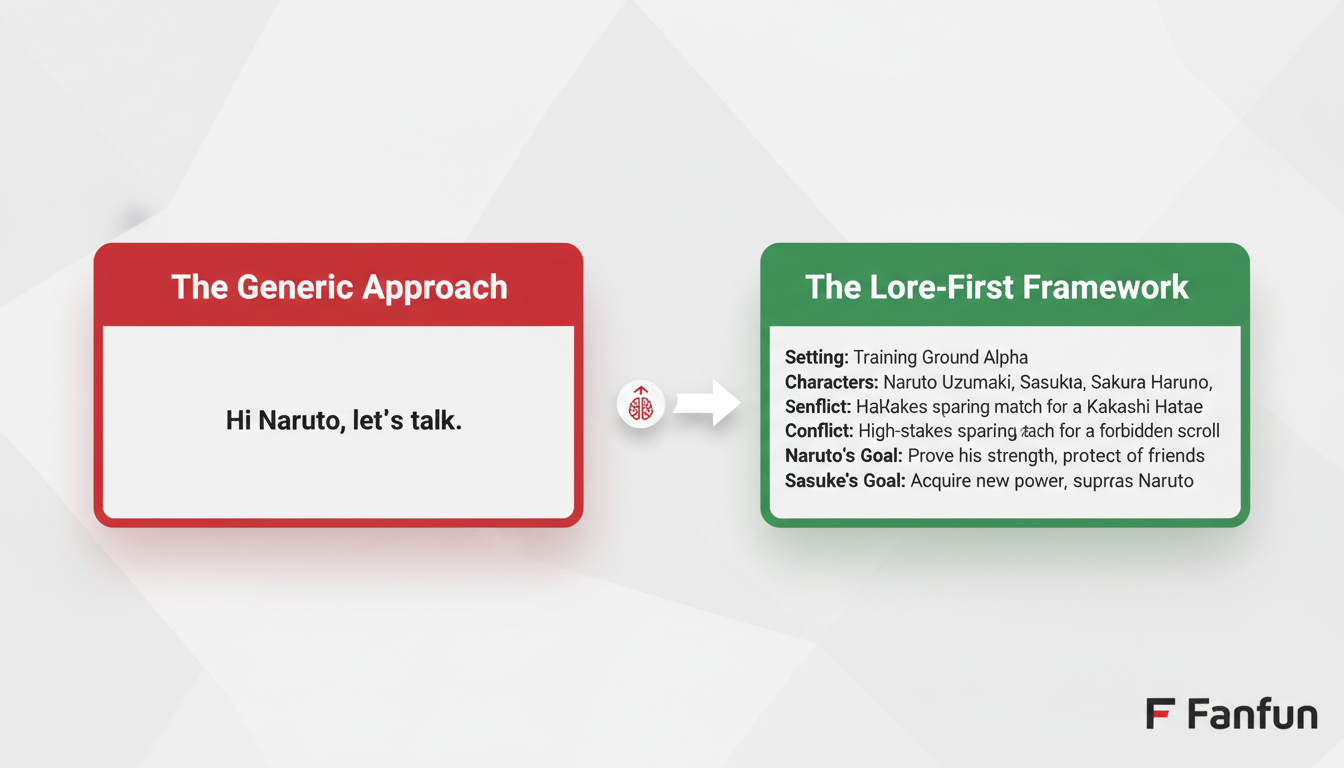
To consistently bypass the generic AI baseline, you need a structured approach to framing your interactions. The Lore-First Framework relies on three essential pillars to lock the AI into its proper character state immediately:
- Context: Where are we in the story? Is this during a quiet moment at the academy, or in the middle of a ruined city after a major battle?
- Relationship: Who are you to the character? Are you their rival, their mentor, a civilian they just rescued, or a fellow guild member?
- Stakes: What is happening right now that requires immediate action or response?
By defining these three pillars in your opening turn, you give the AI's semantic database a specific target to shoot for. Instead of pulling from general web knowledge, it zeroes in on the exact narrative arc, vocabulary, and emotional tone associated with that specific moment in the anime's lore.
| The Lazy Prompt (Flat) | The Lore-First Framework (High-Context) |
|---|---|
| "Hey Naruto, let's train together today!" | "[Setting: Hokage Monument, sunset. You are exhausted, sitting on Minato's carved head.] I toss a scuffed training scroll at your feet. 'You're late. If we don't master this wind-style jutsu before the exams tomorrow, the whole village is in trouble. Get up.'" |
| "Hi Bakugo, why are you always so angry?" | "[Setting: UA High common room, post-training. You are blocking the exit.] I fold my arms, refusing to move. 'You've been dodging my spars all week. Are you actually avoiding me, or are you just afraid you can't beat my score this time?'" |
Establishing the Canonical Baseline
Anime databases are incredibly dense, filled with decades of character arcs, obscure techniques, and complex relationships. To keep your virtual partner aligned with their true self, you need to actively feed these canonical details back into the chat. Think of this as triggering the AI's internal database.
Instead of speaking in broad terms, reference specific events, rivalries, or items from the source material. Mentioning a specific tournament, a legendary sword, or a past defeat forces the AI to pull relevant lore into its active memory. If you are chatting with a character from a classic series like Doraemon, referencing a specific gadget from his 4D pocket immediately guides the AI's creative logic far better than a generic request for help.
If the AI starts to drift or misremembers an event, you can use brackets or OOC (Out-of-Character) notes to gently correct the course without breaking the flow of the roleplay. Writing a quick parenthetical note like [OOC: Keep in mind this takes place before you unlocked your final form] at the end of your message instantly realigns the AI's power scaling and attitude.
Defining the Scene and Stakes
A common mistake in virtual character chat is letting the conversation remain purely conversational. In anime, dialogue is almost always paired with action, physical movement, and environmental tension. If you only type spoken words, the AI will respond with only spoken words, quickly resulting in a repetitive, static loop.
To prevent this, weave sensory details and immediate physical stakes into your writing. Describe the sound of rain hitting the pavement, the hum of energy gathering in a weapon, or a sudden shift in your character's posture. When you write with descriptive depth, the AI's natural pattern-matching behavior will mirror your style, matching your narrative weight and returning rich, atmospheric prose that feels like a light novel.
Steering the Narrative: Advanced Chat Directing Techniques
Even with a perfect setup, the context window of any AI platform has limits. Over a long conversation, the character may begin to lose track of the plot, repeat favorite phrases too often, or experience memory drift. As the director of the scene, you have several tools at your disposal to keep the narrative on track.
First, make active use of the "swipe" (to generate alternative responses) and "edit" features. If an AI response is 90% perfect but includes one out-of-character phrase, do not let it slide. Edit the response to correct the mistake before you reply. Letting a bad response stand pollutes the chat history, teaching the AI that the incorrect behavior is acceptable for the rest of the session.
The Screenplay Method for Immersive Roleplay
To maintain a clean, readable flow during complex scenes, try utilizing a structured screenplay format to guide character actions and dialogue. By separating spoken dialogue from physical actions using asterisks or bold text, you create a highly legible script structure. This format helps the AI distinguish between internal thoughts, environmental changes, and direct speech, dramatically reducing the likelihood of muddy, confusing responses in fast-paced action scenes.
Additionally, practice narrative steering within your own dialogue. If the AI forgets that your character is currently injured, don't break character to complain. Instead, weave the reminder naturally into your next action: "I wince as I try to stand, my bandaged shoulder flaring with pain as I look up at you." This subtle cue forces the AI to adjust its behavior immediately without disrupting the narrative flow.
Choosing Your Platform: Where to Find True Anime Personas
Not all virtual character platforms are created equal. Generic, text-only AI assistants often lack the specialized tuning, prompt memory, and stylistic flair required to capture the hyper-specific voices of iconic anime heroes and villains. They tend to sanitize the dialogue, stripping away the dramatic tension, playful insults, or intense passion that makes anime roleplay so engaging.
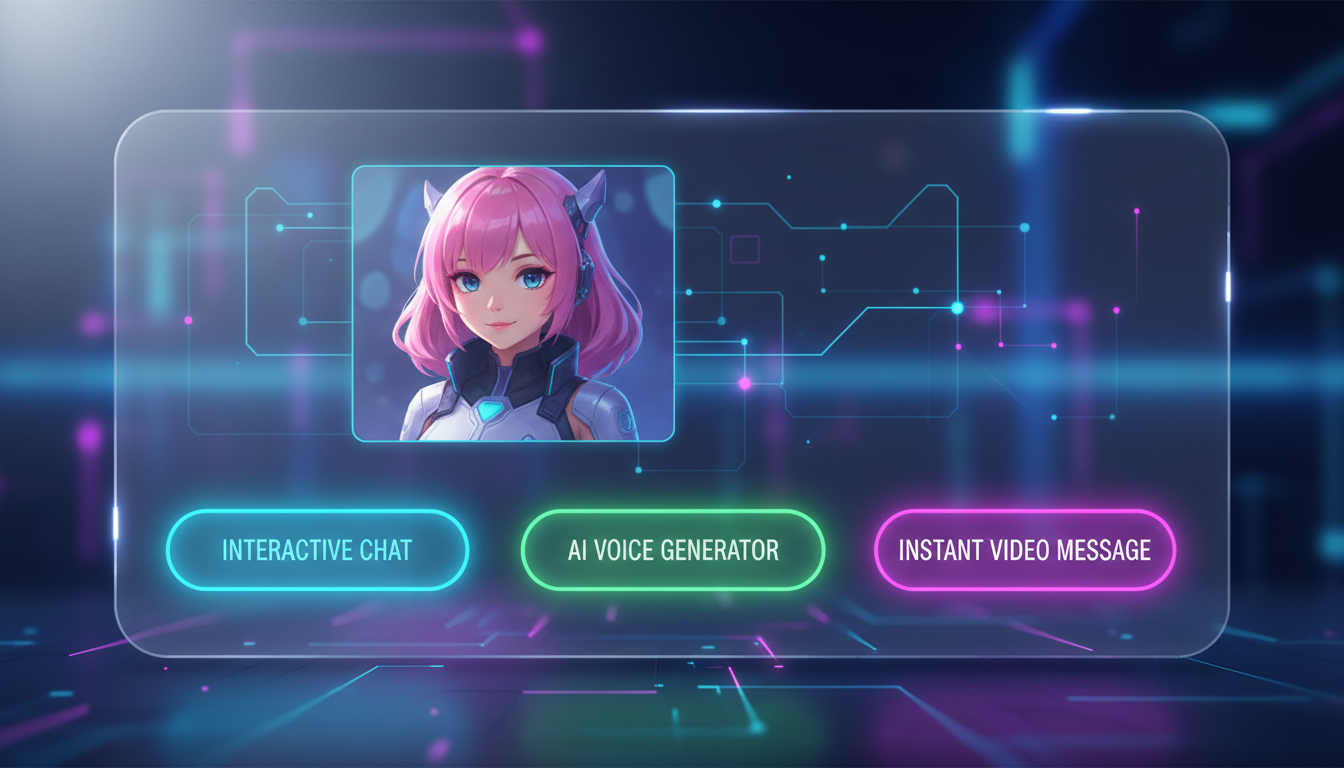
At Fanfun, the interactive chat experience is designed specifically for fans. The platform combines deep, context-aware text roleplay with licensed-style personas that stay remarkably true to their source material. Whether you are looking to spar with a shonen legend, banter with a tsundere classmate, or plan a heist with an anime anti-hero, the characters on Fanfun maintain their distinct personalities, speech patterns, and canonical knowledge far better than generic alternatives.
Furthermore, you can easily elevate your creative projects by transitioning from text-based roleplays to rich, multi-sensory experiences. By bringing those text-based scripts to life with authentic character voice acting, you can transform your best chat moments into fully realized audio dramas or high-impact fan dubs. Before diving into your next session, it is highly recommended to consult our deep-dive evaluation of virtual character text chat platforms to understand how different services handle memory limits, response speed, and character fidelity, ensuring you choose the best environment for your creative goals.
The Anime Roleplayer's Toolkit: A Quick Setup Checklist
Before you launch your next chat session, run through this quick checklist to ensure your scenario is primed for deep, lore-accurate immersion:
- Select Your Era: Decide exactly where in the anime's timeline your scene takes place (e.g., "Pre-timeskip," "Tournament Arc," "Post-Series Epilogue").
- Set the Scene: Write a 2-3 sentence environmental description establishing sensory details (temperature, lighting, sounds).
- Define Your Role: Clearly state your relationship to the character in brackets or within your first action description.
- Introduce an Immediate Hook: Start with an active event or conflict that requires the character to react instantly, rather than a passive greeting.
- Manage the Context Window: Every 15-20 messages, gently insert a brief summary of the current situation into your action descriptions to keep the AI's memory sharp (e.g., "As we continue walking through the dark forest, still searching for the lost artifact...").
How do I keep an AI anime character from breaking character?
To prevent character break, avoid starting with generic greetings like "Hi" or "How are you." Instead, use the Lore-First Framework to establish a high-context scenario, stakes, and a clear relationship in your first message. If the AI drifts, use parenthetical Out-of-Character notes—such as [OOC: Keep in mind your character is highly competitive and would not apologize here]—to guide the AI back to its canonical personality.
Why does my virtual anime chat partner keep forgetting the storyline?
All AI models have a limited context window, meaning they can only remember a certain number of previous messages. To combat memory drift, periodically weave a brief summary of the current plot, setting, and goals into your descriptive actions (e.g., "I look at you, remembering our narrow escape from the ruins just an hour ago..."). This keeps the critical plot points fresh in the AI's active memory.
What is the best way to start a roleplay with an anime AI?
The best start is an active, descriptive prompt that establishes Context, Relationship, and Stakes immediately. Use bracketed scene settings followed by a direct action or dialogue prompt that forces an immediate, in-character response. Skip the introductions and start right in the middle of the action.
Can I voice chat with virtual anime characters on Fanfun?
Yes! Fanfun goes beyond simple text roleplay by allowing you to generate authentic, high-quality character voices. You can take the dialogues and scripts generated during your immersive text chats and use Fanfun's advanced AI voice generator to bring those lines to life with the exact energy, tone, and dramatic flair of your favorite anime characters.