The Audio Sandbox: How to Craft Immersive, Character-Driven Audio Stories Kids Actually Want to Listen To
Traditional audiobooks often lose modern kids to flashy screens. Discover how to use the 'Hook, Quest, Giggle' formula, strategic sound design, and personalized AI voices to build immersive audio adventures your children will beg to replay.
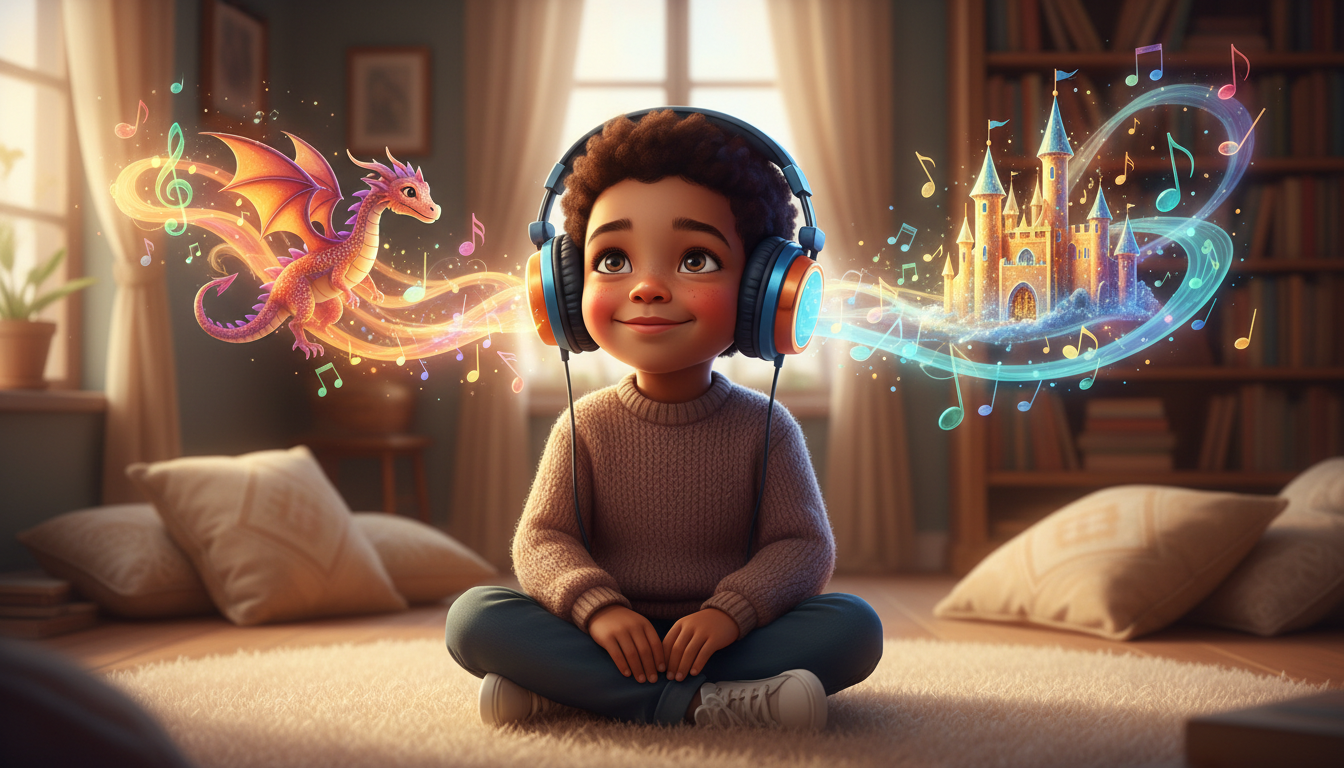
Parents and creators are locked in a constant, exhausting battle against the glowing screen. While tablets and TVs offer instant, high-stimulation entertainment, they often leave children passive, overstimulated, and disconnected from their own creative imagination. Audio storytelling offers a powerful, screen-free alternative, but anyone who has tried to play a standard, dry audiobook for a six-year-old knows how quickly their attention drifts back to the screen.
To compete with modern visual media, audio stories cannot simply read text aloud; they must build dynamic, living worlds. By leveraging modern tools like Fanfun’s instant character AI voice generator, you can transform passive listening into an active, bespoke adventure. Creating stories that capture a child's imagination requires a shift from passive narration to highly immersive, interactive audio design.
The Attention Problem: Why Traditional Audiobooks Lose Modern Kids
Early childhood development relies heavily on sensory integration. When a child watches a cartoon, the screen does all the cognitive heavy lifting—supplying the movement, color palette, character designs, and emotional cues. When you switch to a purely auditory medium, the child’s brain must suddenly construct those visuals from scratch. This is an incredibly beneficial cognitive exercise, boosting spatial reasoning, vocabulary, and empathy. However, if the audio delivery is a flat, monotone reading, the cognitive friction becomes too high, and the child disengages.
Standard "reading-out-loud" styles fail because they lack dynamic contrast. A single narrator reading a block of descriptive text mimics the classroom environment rather than the play environment. To capture a child raised on interactive media, an audio story must introduce what sound designers call "auditory landmarks."
Auditory landmarks are frequent, predictable shifts in the soundscape that act as cognitive anchors. These can include a sudden change in vocal pitch, a recurring sound effect, or a direct interactive prompt. Rather than letting the sound wash over them as background noise, these landmarks force the child’s brain to actively re-engage with the narrative every 15 to 30 seconds, keeping them locked into the story world.
Structuring the Adventure: The 3-Act Formula for Kid-Centric Audio
Traditional narrative structures are too slow for young, developing minds. To keep children engaged, you need a lean, highly physical pacing model. The most effective framework for children's audio is the "Hook, Quest, Giggle" formula.
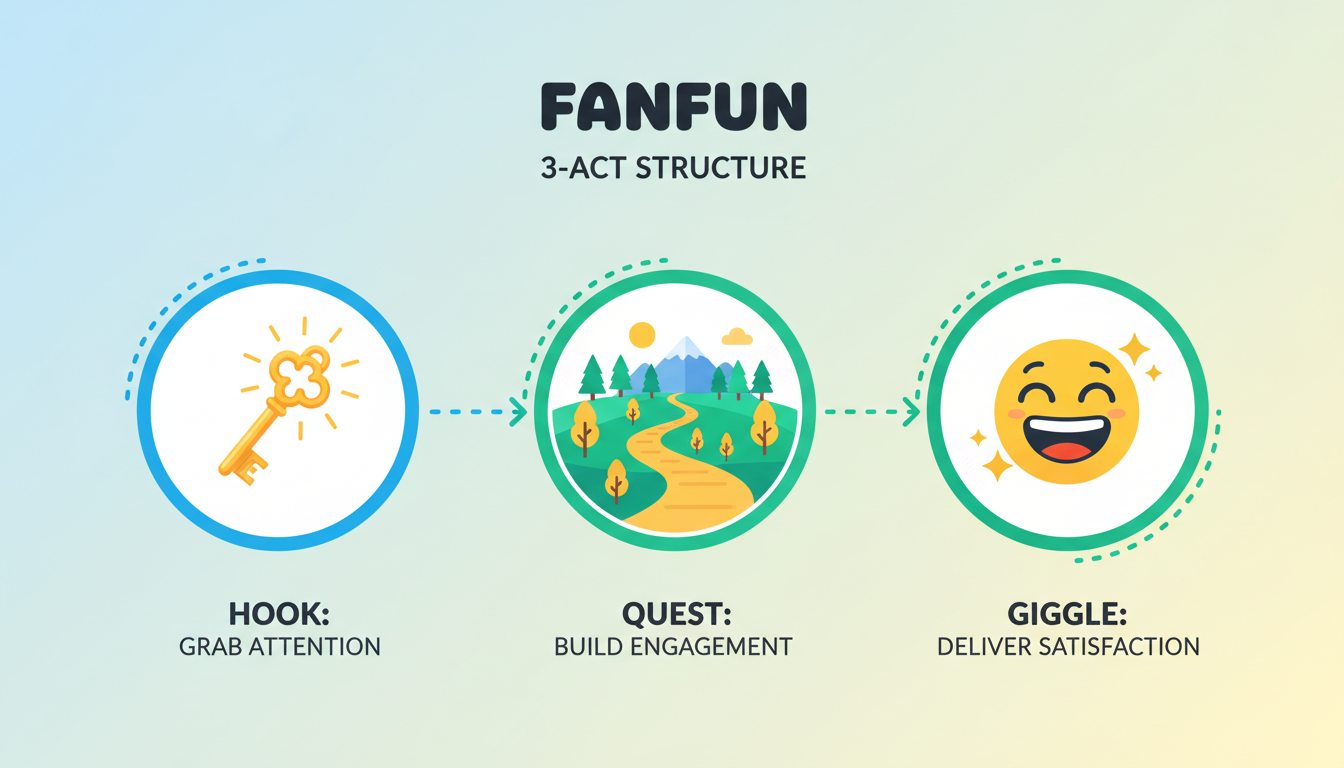
- The Hook (Under 60 Seconds): Skip long expositions about the history of the magical forest. Start in media res with an immediate sensory event or problem. "Oh no! The purple keys to the balloon machine have just floated into the clouds!"
- The Quest (2 to 5 Minutes): Introduce a simple, physical objective that requires the listener's active focus. The quest should rely on sensory-heavy verbs (climbing, splashing, whispering) and repetitive rhythmic catchphrases that kids can chant along with.
- The Giggle (Under 60 Seconds): Resolve the quest with a moment of physical comedy or a silly twist. Kids love when authority figures or powerful characters do something ridiculous. Resolving the tension with humor ensures they leave the experience with a positive emotional association.
To understand how this differs from traditional storytelling, consider the structural shifts outlined in the comparison table below:
| Element | Passive Storytelling (Standard Audiobook) | Immersive Storytelling (The Audio Sandbox) |
|---|---|---|
| Pacing & Exposition | Long, descriptive passages establishing the environment. | Immediate action, sound cues, and immediate character dialogue. |
| Vocal Delivery | Single narrator reading all parts with minor pitch variations. | Distinct, high-contrast character voices with dramatic emotional swings. |
| Listener Role | Passive observer listening quietly. | Active participant responding to prompts, repeating phrases, or making choices. |
| Sound Integration | Minimal background music, occasional chapter-break chimes. | Layered ambient tracks and high-frequency SFX mapped directly to action words. |
Pacing for Tiny Attention Spans
Writing a great script is only half the battle; the magic of children's audio lies in the micro-pacing of the delivery. Adult listeners appreciate a steady, predictable flow of information. Children, however, require high vocal elasticity—dramatic, sudden shifts in speed, volume, and tone that mimic natural peer-to-peer play.
The Three-Second Rule and Vocal Elasticity
One of the most common mistakes in children's audio production is rushing through questions. If your character asks the listener a question—such as, "Do you see the sparkling blue path behind the tree?"—you must build a deliberate three-second window of silence into the audio track. This pause isn't empty space; it is a critical cognitive processing window that invites the child to physically point, nod, or shout their answer back to the speaker.
Additionally, you must vary your delivery speed based on the narrative tension. During a suspenseful moment (creeping past a sleeping giant), drop the volume to a rich, textured whisper and slow your words down significantly. During action sequences (running from a rolling boulder), speed up the delivery, using short, punchy phrases to mimic a racing heartbeat. To master the exact timing and rhythmic beats that keep listeners hooked second-by-second, read our playbook on short-form voiceover pacing.
Casting the Narrator: Bringing Stories to Life with Familiar AI Characters
Children do not connect with generic, disembodied narrators. They connect with characters. An archetype-driven voice immediately establishes the context of the story. Whether it is the wise, patient mentor, the highly energetic sidekick, or a familiar cartoon hero, a distinct vocal identity builds instant trust and emotional investment.
This is where modern technology dramatically levels the playing field for parents, educators, and independent creators. Using Fanfun’s AI Voice Generator, you can instantly cast recognizable, culturally relevant voices—ranging from beloved anime icons to whimsical cartoon creatures—to narrate your stories. Instead of hired voice actors or awkward self-recordings, you can generate highly engaging, authentic-sounding character performances in a matter of minutes.
When casting your narrator, it is essential to align the vocal tone with the specific age group and time of day:
- For Toddlers (Ages 2-4): Prioritize high-pitch variation, warm tones, and simplified vocabulary. Cartoon sidekicks work best here.
- For Early Elementary (Ages 5-8): Opt for more adventurous, energetic voices, including legendary hero types or quirky, humorous guides.
- For Bedtime Stories: Regardless of age, select soothing, rhythmic, lower-register voices that naturally slow down as the story progresses, easing the child into sleep.
The Sound Designer's Toybox: Mixing Music, SFX, and Voice
A great vocal track can still fail if it is buried under a poorly mixed audio track. Children have developing auditory processing systems, meaning they struggle to separate speech from complex background noise more than adults do. If your background music is too loud, or if your sound effects overlap directly with key dialogue, the child's brain will grow fatigued, and they will simply tune out.
The golden rule of children's audio mixing is to keep the voice track prominent and clean. Your voice track should sit comfortably above the rest of the mix (typically around -12dB to -6dB, while background music should hover between -24dB and -30dB). Instead of using heavy, mid-range sound effects that compete with the vocal frequency, use high-frequency, transient sound effects—like magic sparkles, popping bubbles, or crisp footsteps—to punctuate specific actions.
Furthermore, use environmental ambient tracks (like gentle wind rustling, a crackling campfire, or distant crickets) to establish a physical sense of space without cluttering the mix. Ensure that your music tracks match the emotional beats of the voice; if the character is whispering in suspense, the background score should drop to a single, quiet drone rather than continuing a bouncy, melodic loop.
Interactive Storytelling: Customizing the Journey for Your Child
The ultimate frontier of children's audio is personalization. There is a profound psychological shift that occurs when a child hears their own name, their pet’s name, or a reference to their favorite toy woven seamlessly into a story. It instantly transforms the audio from a generic product into a magical, bespoke experience created just for them.
Using Fanfun’s scalable AI tools, creating these custom experiences no longer requires hours of manual editing. You can write "choose-your-own-adventure" style scripts that prompt physical actions or decisions, and then generate the corresponding audio tracks instantly. For instance, you can write a script that says:
"Okay, [Child's Name], we have reached the stone gate! To help me cast the unlocking spell, I need you to clap your hands three times and shout, 'Open sesame!'"
By integrating these physical checkpoints, you turn passive listening into active, imaginative play. Learn how to format and direct personalized scripts for maximum emotional impact with our step-by-step scripting guide. Whether you are crafting a quick morning routine helper, a personalized birthday adventure, or a soothing bedtime ritual, tailoring the narrative to your child's actual world ensures they remain active, delighted participants in their own stories.
How long should an audio story for a toddler be?
For toddlers (ages 2 to 4), the sweet spot for an audio story is between 3 to 5 minutes. At this developmental stage, their cognitive capacity for sustaining auditory attention without visual aids is limited. Keep the plot linear, the character voices distinct, and focus heavily on interactive, physical prompts (like clapping or jumping) to keep them engaged.
What are the best sound effects to keep kids engaged in audiobooks?
The best sound effects are high-frequency, tactile, and cartoonish. Sounds like popping bubbles, sparkling magic chimes, heavy footsteps, boing springs, and animal noises work incredibly well. Avoid muddy, low-frequency rumbles or continuous loud background noises, as these can clutter the audio mix and make it difficult for children to process the spoken words.
Can I use AI voices to make personalized bedtime stories for my kids?
Absolutely. By using Fanfun's AI Voice Generator, you can easily cast warm, soothing character voices to read personalized bedtime scripts. Incorporating your child's name, their favorite toy, and a slow, rhythmic delivery style can help ease transition times and make bedtime a highly anticipated, screen-free ritual.
How do you write an interactive audio script for children?
An interactive script should use the "Hook, Quest, Giggle" formula. Write in the second person ("you"), use highly descriptive physical verbs, and build in deliberate 3-second pauses after asking questions or giving physical commands. This encourages the child to talk back to the story, make decisions, or perform physical actions like stomping their feet or whispering.