Budgeting for Promo Audio: Synthetic Voiceovers vs. Traditional Studio Recording
Choosing between synthetic AI voices and traditional studio recording comes down to your project's scale, speed, and creative needs. Here is how to decide which path fits your budget.
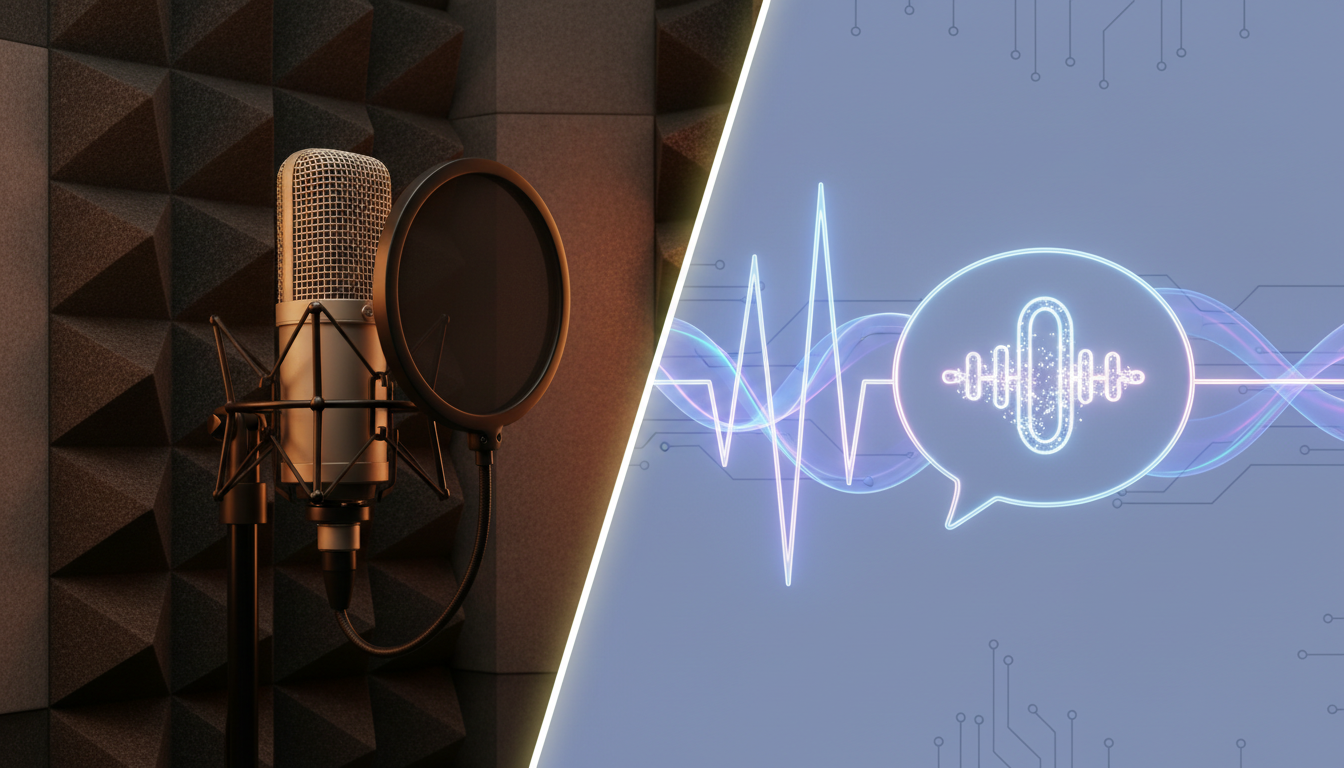
For a small business launching a localized social media promo, choosing between synthetic voiceovers and traditional studio recording comes down to scale, budget, and speed. A traditional studio recording typically requires a larger upfront investment once you factor in studio rental, engineer fees, and talent licensing. In contrast, synthetic voiceovers on platforms like Fanfun operate on low-cost subscription models—starting at $9 per month (or $7 per month billed yearly)—where a single credit covers up to 30 seconds of speech. While traditional studios offer unmatched emotional depth for high-stakes brand anthems, synthetic voiceovers provide a highly cost-effective, near-instant alternative for rapid A/B testing and localized social media campaigns.
The Financial Breakdown: Studio Sessions vs. Synthetic Audio
To understand where your marketing dollars go, it helps to compare the baseline costs of both methods. A single studio session requires paying for the actor's time, the studio space, and the post-production engineer. If you need to change a single word later, you often have to pay a re-booking fee. Synthetic options eliminate these logistical hurdles, though they trade off the organic warmth of a live human performance. For a deeper look at these dynamics, you can read our guide on the cost comparison of virtual character greetings vs. hiring voice actors.
| Feature | Traditional Studio Recording | Synthetic Voiceover (e.g., Fanfun) |
|---|---|---|
| Upfront Cost | Varies based on studio, engineer, and talent fees | Subscription-based (plans start at $9/mo) |
| Cost per Revision | Subject to re-booking fees | Free (included in subscription credits) |
| Turnaround Time | Dependent on scheduling and editing | Near-instant generation |
| Best Use Case | Flagship commercials & brand anthems | Localized social promos, A/B testing, rapid updates |
When to Invest in a Traditional Recording Studio
Traditional studio recording remains the gold standard for high-stakes campaigns where human nuance is non-negotiable. If your promo relies heavily on complex emotional range, subtle comedic timing, or highly specific regional accents, investing in a professional voice actor is well worth the expense. A live-directed session allows you to collaborate with the talent in real time, which can help align the final asset with your brand's identity. However, for everyday social media content or localized campaigns with tight margins, this path can quickly drain your quarterly budget.
When Synthetic Voiceovers Make Financial Sense
Synthetic voiceovers excel when you need to produce multiple variations of an ad quickly and affordably. For small businesses running localized social media campaigns, this technology allows you to A/B test different hooks on platforms like TikTok and Instagram without multiplying your production costs. On Fanfun, for example, you can easily turn your script into a playful, character-driven voice note or video message. This approach helps you capture attention in busy feeds by injecting personality into your promos without the premium price tag of celebrity talent. To see how this fits into your creative strategy, check out our article on how to inject character-driven AI voiceovers into business promos.
How to Optimize Your Script to Save on Synthetic Production
To get the most value out of your synthetic audio budget, you need to format your scripts strategically. Synthetic voice generators read text literally, meaning poor formatting can lead to wasted credits on awkward-sounding generations. First, structure your text to mimic natural speech patterns by learning how to format script paragraphs for natural breathing. Second, if your promo includes unique brand names or localized street names, you should master how to write phonetic spellings for complex names and learn to adjust script phrasing and phonetics for a more natural accent. Finally, to help your audio match the pacing of your video templates, you can read about managing speech rate in synthetic voice generators. Taking these steps can help you get a better preview, helping you make the most of your monthly subscription credits.
Do I need to pay ongoing licensing or usage fees for synthetic voiceovers?
Typically, no. While traditional studio contracts may involve specific usage terms or licensing agreements for different regions or platforms, synthetic voiceover platforms like Fanfun operate on a straightforward subscription model where your monthly credits cover the generation of your assets.
Can I easily update a synthetic voiceover if my promo details change?
Yes. Because synthetic audio is generated directly from text, updating a promo code, date, or product name is as simple as editing your text script and regenerating the file. This saves you from the high costs and scheduling delays of re-booking a traditional studio session.
How do I handle complex brand names or industry terms in a synthetic voice generator?
The best approach is to write out the words phonetically in your script box. By spelling the words exactly how they sound, you guide the AI generator to pronounce them correctly on the first attempt, preventing wasted credits.