The 60-Second Audio Director: How to Deploy an Instant AI Voice Clone Without Losing the Human Soul
Bypass complex, multi-hour voice training. Learn how to act as an audio director to script, punctuate, and generate emotionally resonant instant AI voice clones in seconds.
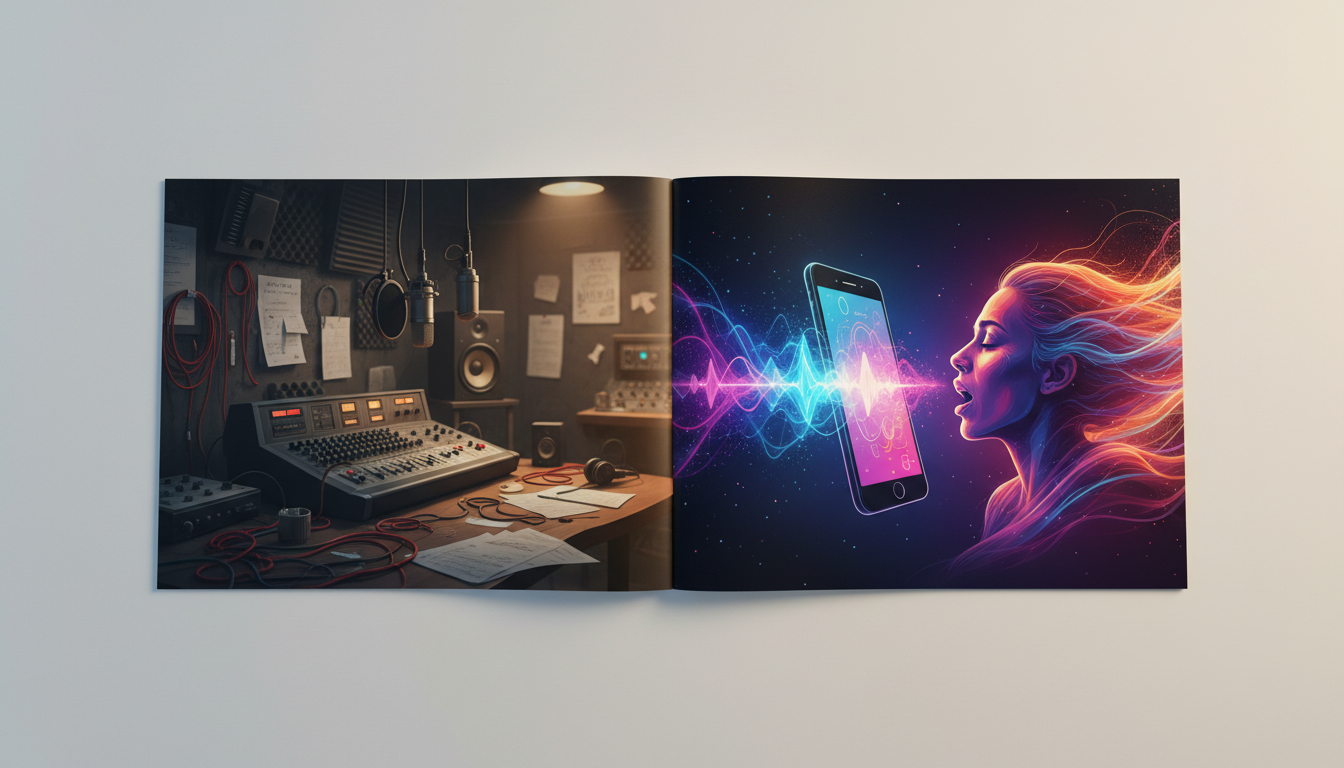
Not long ago, cloning a voice was a luxury reserved for Hollywood studios and well-funded tech enterprises. It required a voice actor to spend dozens of hours inside a soundproof booth, reading dry, phonetically balanced scripts while an engineer monitored every breath. The resulting data spent days processing in a specialized machine-learning pipeline before producing even a single sentence of synthesized speech. If you wanted to pivot a marketing campaign or update a character's dialogue, you had to start the cycle all over again.
Today, that technical bottleneck has vanished. Zero-shot voice synthesis allows creators to generate highly recognizable, emotionally nuanced voiceovers in under a minute using only a brief audio reference or a pre-configured character profile. Yet, while the barrier to entry has dropped to zero, the gap between a robotic, uncanny-valley caricature and a compelling performance has actually widened. The difference lies not in the underlying technology, but in how you direct the output. By mastering the art of script formatting, punctuation cues, and emotional context, you can transform flat text into a performance that carries a genuine human soul.
The Evolution of Voice Cloning: From Studio-Grade to Instant
The transition from traditional concatenative synthesis to zero-shot instant voice generation represents a fundamental shift in how computers understand human speech. Traditional cloning models relied on brute-force memorization of a speaker's phonetic catalog. If the model had not processed a specific transition between two phonemes in a studio setting, the output would glitch, warble, or sound jarringly artificial.
Modern instant voice cloning bypasses this limitation by utilizing massive foundational speech models. These models have already been trained on hundreds of thousands of hours of diverse human speech across multiple languages, accents, and emotional states. When you feed an instant generator a short reference audio sample, it does not try to reconstruct the voice from scratch. Instead, it maps the unique acoustic features of that sample—pitch, resonance, vocal tract length, and baseline cadence—onto its existing neural understanding of human speech.
Because the heavy lifting is handled by the pre-trained model, your role shifts from technical engineer to creative director. The challenge is no longer getting the AI to speak; it is directing the AI to speak with the correct subtext, rhythm, and intent. Without active direction, the system defaults to a sterile, middle-of-the-road reading that betrays its synthetic origins.
The Three Pillars of Believable Instant Voice Generation
To successfully direct an instant voice clone, you must manage three core variables that dictate how natural the final audio feels to the human ear.
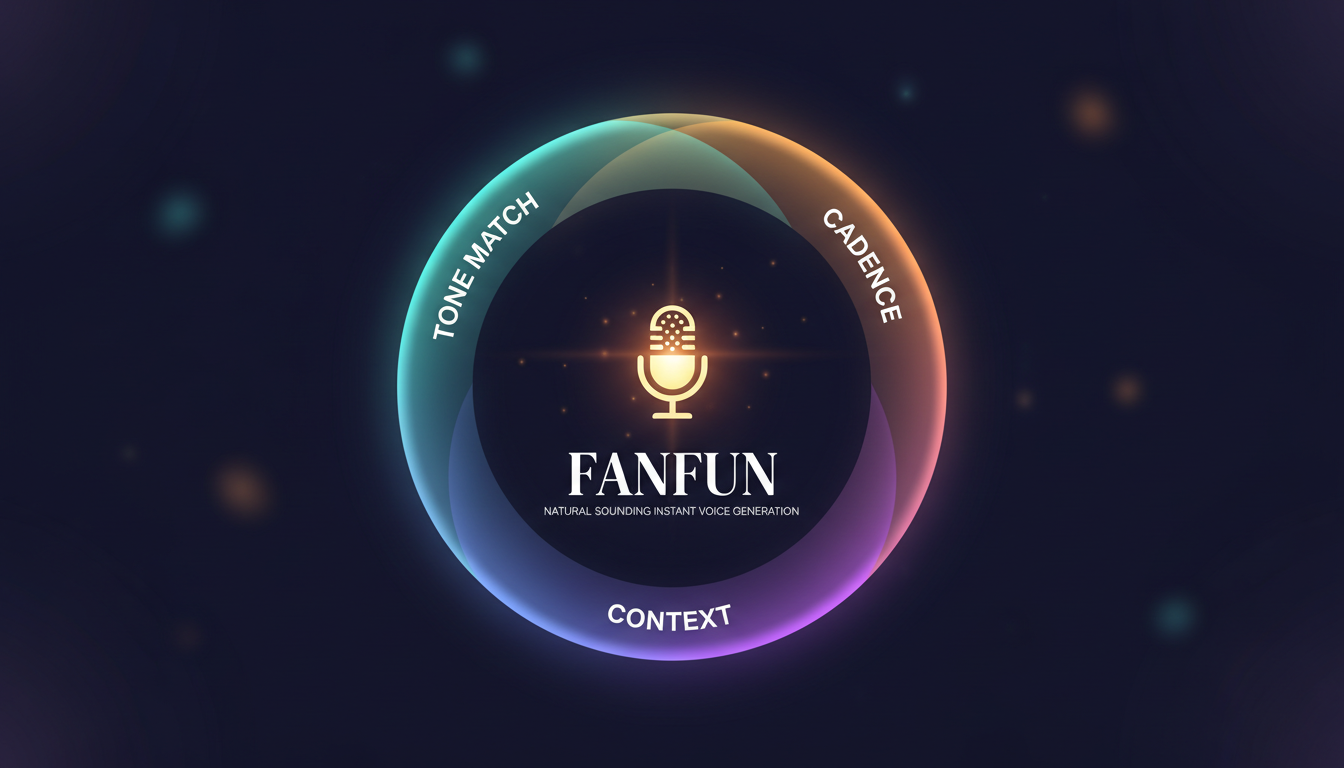
Mastering Tone, Cadence, and Context
- Tone Matching: AI voice models do not understand the emotional weight of your words unless you feed them contextual clues. If your script says, 'We lost everything,' but the surrounding text is dry and clinical, the AI may deliver the line with the cheerful energy of a morning talk show host. You must match the vocabulary of your script to the emotional state you want the model to emulate.
- Cadence Control: Human beings do not speak at a constant metronomic speed. We speed up when we are excited, slow down to emphasize critical points, and pause to gather our thoughts. Directing an instant clone requires you to manually inject these rhythmic variations using specialized formatting.
- Contextual Phrasing: A voice clone of a casual streetwear creator should not speak in the passive, formal structure of a corporate whitepaper. The vocabulary, sentence length, and syntax must match the natural speech patterns of the persona you are deploying.
The Scripting Secret: Writing for the Voice, Not the Page
The most common mistake creators make when using instant voice generators is copying and pasting text written for the eye rather than the ear. Formal grammar, perfect punctuation, and rigid sentence structures are the natural enemies of believable AI speech.
To write a script that sounds truly human, you must embrace the imperfections of spoken language. People rarely speak in complete, grammatically flawless sentences. We use fragments, run-ons, and frequent self-interruptions. When drafting your script, read it aloud first. If you find yourself naturally shortening 'do not' to 'don't,' or omitting a relative pronoun like 'that,' update your text to reflect those contractions immediately.
Phonetic spelling is another crucial tool in the audio director's toolkit. Instant generators are highly capable, but they frequently stumble on regional slang, brand names, and complex jargon. If the generator mispronounces a word, do not keep typing it correctly. Spell it phonetically. For example, if the AI struggles with 'hyperbole,' try writing it as 'hi-per-bo-lee.' If a brand name like 'Fanfun' is delivered with unusual syllable emphasis, try formatting it as 'Fan-fun' or 'Fan fun' to force a natural split.
Punctuation as Direction: Controlling the Cadence
Standard punctuation marks serve as the musical notation of voice generation. They are the direct instructions you give the AI's neural network to pause, breathe, or shift pitch. By mastering these keyboard shortcuts, you can control the pacing of your voice clone with surgical precision.
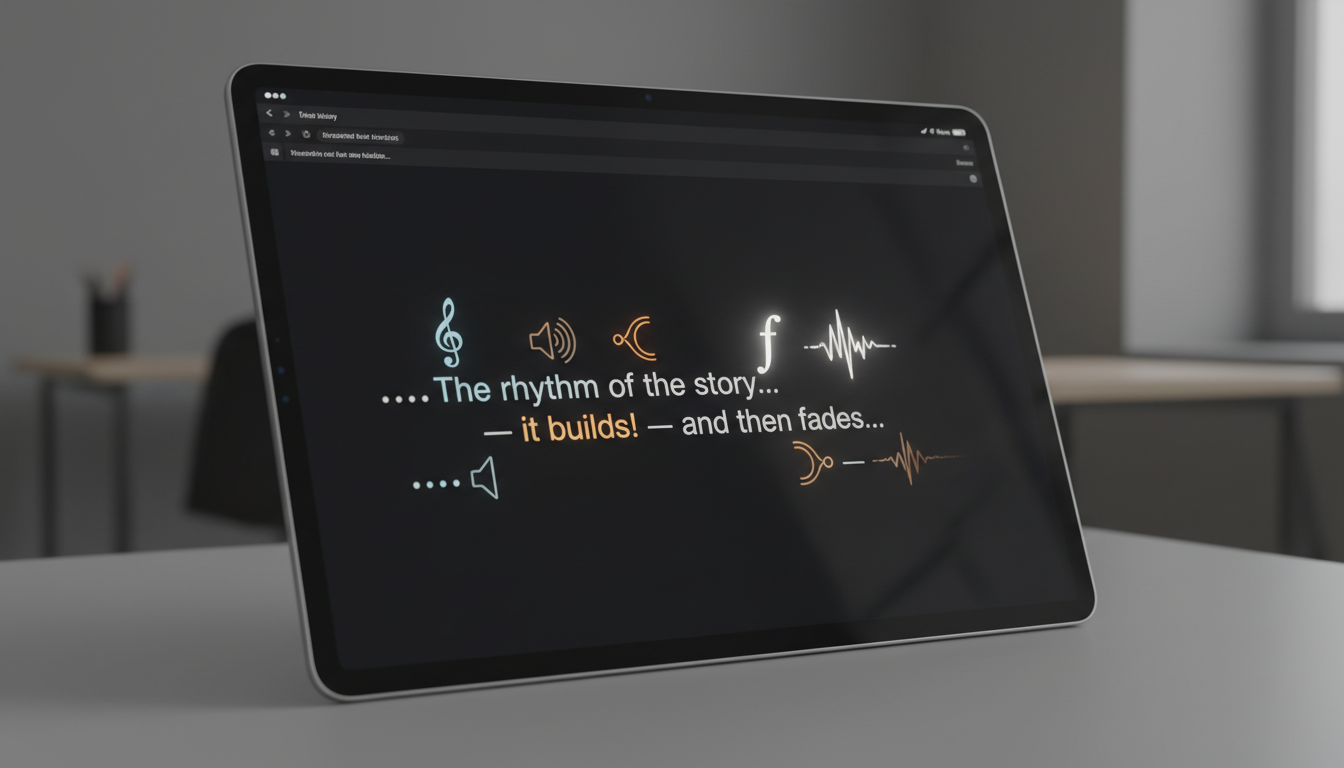
The ellipsis (...) is your primary tool for creating tension, hesitation, or transitions. Placing an ellipsis before a word forces the AI to hesitate slightly, mimicking a speaker who is searching for the right word or feeling a sudden wave of emotion. For example, writing 'I don't know... maybe we should go' creates a completely different emotional landscape than 'I don't know, maybe we should go.'The em-dash (—) acts as an indicator for sudden shifts in thought or rapid, high-energy transitions. If you want your voice clone to cut itself off or quickly pivot to a new point without a long, unnatural pause, use an em-dash. This keeps the momentum of the delivery high and prevents the AI from dropping its pitch at the end of a clause.
Finally, utilize capitalization and formatting strategically. While some advanced models interpret ALL CAPS as a cue to increase volume or intensity, others may simply read the letters individually. Test your chosen generator's response to capitalization. If it supports emotional tags or SSML (Speech Synthesis Markup Language), use them; if not, rely on exclamation points, question marks, and carefully placed commas to shape the baseline performance.
Instant Voice Cloning in Action: The Creator and Marketer Playbook
With instant voice cloning, creators and marketers can bypass the friction of traditional production pipelines. Instead of waiting days for a voice actor to return a revised audio file, you can iterate in real time, adapting your content to match shifting trends instantly.
In the realm of short-form video, audience retention is won or lost in the first three seconds. Relying on default platform voices immediately signals to viewers that your content is low-effort. By learning how to move beyond generic platform defaults for high-retention short-form content, you can establish a unique sonic identity that sets your brand apart from the sea of identical automated voiceovers.
For personalized fan engagement, instant voice generation offers unparalleled scale. Platforms like Fanfun allow you to deploy highly recognized, character-driven voices to create interactive experiences that feel incredibly personal. Whether you are building a custom birthday greeting or a playful roast, deploying specific character voice generators for instant custom content enables you to bridge the gap between static media and active, participatory fandom.
The "Uncanny Valley" Checklist: Auditing Your Instant Clone
Before publishing any generated audio, you must audit the output for the subtle technical artifacts that break immersion. Use this diagnostic framework to identify and resolve common speech issues:
| Acoustic Symptom | Root Cause | Director's Solution |
|---|---|---|
| Flat, robotic delivery | The script is written too formally or lacks emotional context cues. | Add contractions, use shorter sentences, and introduce descriptive emotional words near the flat phrasing. |
| Unnatural, sudden pauses | Excessive or incorrect use of commas and periods. | Replace hard commas with spaces or em-dashes to keep the flow continuous. |
| Mispronounced words or names | The AI is relying on standard dictionary pronunciation for a unique word. | Spell the word phonetically (e.g., 'fandom' as 'fan-dum'). |
| Abrupt ending cut-off | The generator processed the text but did not allow room for a natural decay. | Add a period followed by several spaces or an ellipsis at the very end of your script. |
To consistently produce compelling audio, you must balance technical fidelity with emotional resonance. This involves scripting an AI voice greeting that escapes the uncanny valley by focusing heavily on the warmth and conversational style of your copy. Furthermore, by understanding the underlying principles of crafting a high-fidelity voice clone that sounds genuinely human, you can ensure that your instant generations maintain a professional standard that commands attention, builds trust, and keeps your audience listening.
How long of an audio sample do I need for an instant voice clone?
Modern zero-shot instant voice cloning systems can generate highly recognizable voices with as little as 10 to 30 seconds of clean reference audio. While longer samples can provide a broader range of vocal dynamics, a short, high-quality sample free of background noise is often more effective than a longer, noisy recording.
Can an instant AI voice clone accurately convey complex emotions like sarcasm or excitement?
Yes, but it requires careful script direction. Because instant voice generators rely heavily on context and punctuation, you must write your script with vocabulary and punctuation (like ellipses, exclamation points, and em-dashes) that naturally imply those emotions. The AI interprets these textual cues to adjust its pitch and pacing accordingly.
How do I fix a word that the instant voice generator keeps mispronouncing?
The most effective solution is phonetic spelling. Break the word down into its basic phonetic components (for example, writing 'valet' as 'val-ay' or 'hyperbole' as 'hi-per-bo-lee') until the generator delivers the correct pronunciation. You can also try using hyphens to force the AI to emphasize specific syllables.
Is instant voice cloning legal for commercial marketing campaigns?
The legality of voice cloning depends entirely on consent and intellectual property rights. Utilizing a voice clone of an individual or copyrighted character for commercial purposes without explicit permission or licensing is a violation of right-of-publicity laws and terms of service. Always use platforms like Fanfun that prioritize creative ethics and licensed character libraries for your public-facing campaigns.