The Audio Architect’s Guide: How to Craft a High-Fidelity Voice Clone Message That Sounds Genuinely Human
Most creators blame the AI engine when a voice clone sounds robotic. In reality, the secret lies in the script. Learn how to format, pace, and direct your AI voice messages to break through the uncanny valley.
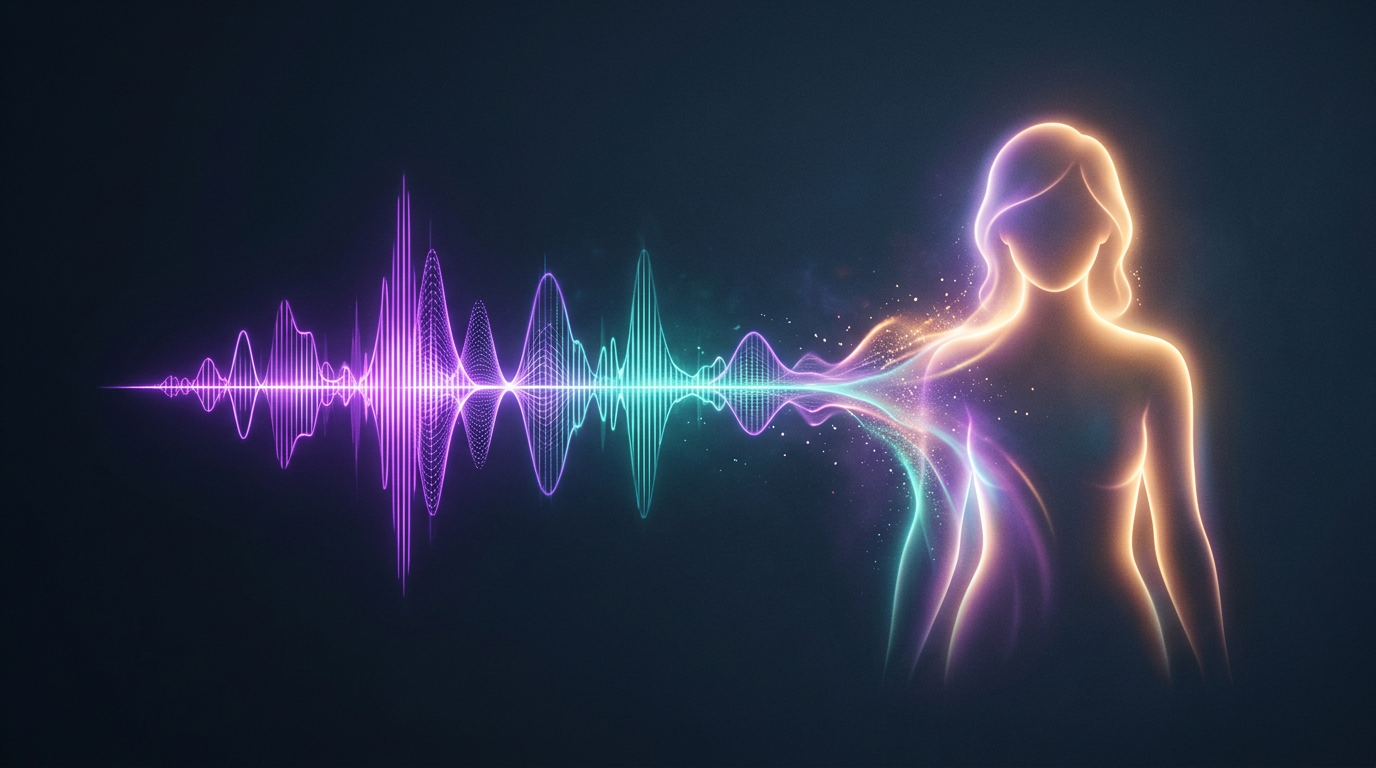
Most creators and gift-givers believe that the quality of a voice clone rests entirely on the underlying AI synthesis engine. They assume that if they feed a high-quality audio sample into a generator, the resulting output will automatically carry the warmth, breath, and emotional nuance of a real human being. However, when they paste a standard written paragraph into the text field, the output often sounds flat, clinical, and unmistakably synthetic. The AI reads the text exactly as it is written, missing the invisible physical cues that define natural human speech.
The secret to breaking through this "uncanny valley" lies not in searching for a better algorithm, but in changing how you write and format your scripts. By treating the AI engine as a voice actor that requires precise direction, you can coax an incredibly lifelike performance out of the technology. Whether you are creating a personalized birthday roast, a promotional campaign, or a custom meme, mastering the art of script architecture will transform a robotic text-to-speech output into a high-fidelity, emotionally resonant experience.
The Anatomy of a Flat Delivery: Why Standard Scripts Fail AI Voice Clones
When we write for the page, we follow strict rules of grammar, syntax, and punctuation. We write in complete sentences, avoid run-ons, and use formal structures. But humans do not speak the way they write. Natural conversation is messy. It is filled with fragments, sudden shifts in direction, physical pauses for breath, and words that blend together. When you paste formal, written grammar directly into an AI voice generator, the system processes it literally, resulting in an unnaturally steady cadence and a monotone delivery.
To create a truly convincing voice clone message, you must transition from "writing for the eye" to "writing for the ear." This shift requires understanding how human speech dynamics operate. For instance, we naturally slow down before delivering important information, speed up during moments of excitement, and pause to gather our thoughts. If your script does not manually simulate these behaviors, the AI will default to its baseline pacing, stripping the message of its emotional weight.
At Fanfun, our approach to AI voice generation prioritizes performance dynamics over rigid text transcription. We recognize that a voice clone is only as good as its delivery context. By utilizing our platform's advanced character engine, creators have the freedom to shape authentic-sounding messages. To get the most out of these tools, creators should consult our comprehensive guide on scripting and directing personalized AI voice messages for deep emotional impact, which dives deep into the psychology of vocal performance.
The Punctuation Playbook: Formatting Your Script for Natural Cadence
AI voice generators interpret punctuation marks as performance directions rather than grammatical boundaries. By using non-standard punctuation strategically, you can force the AI to pause, shift pitch, or emphasize specific syllables. Think of punctuation as the musical notation for your voice clone's performance.
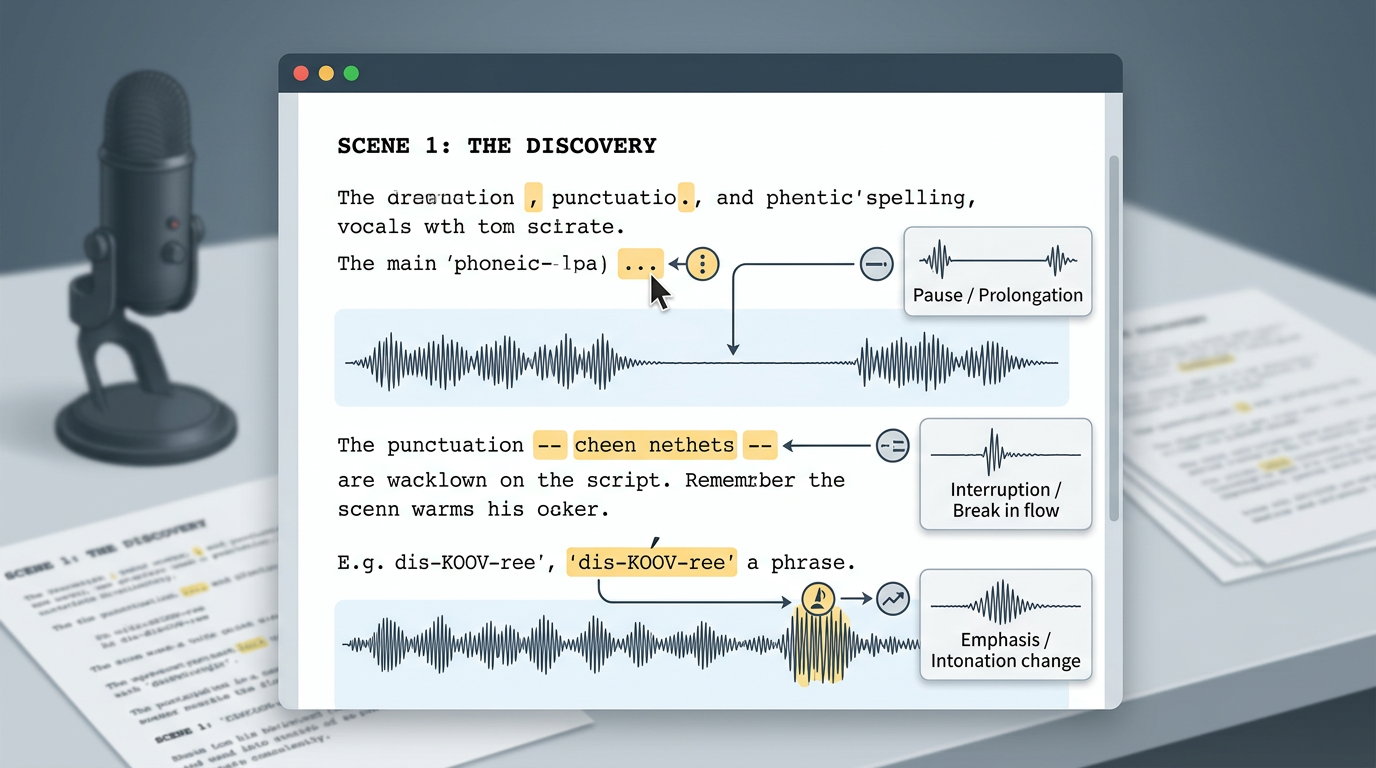
Essential Punctuation Hacks for AI Scripts
- The Ellipsis (...): Pacing is everything. Inserting an ellipsis forces the voice generator to pause and create a natural hesitation. This is incredibly useful for simulating a train of thought, building anticipation before a punchline, or letting a sentimental moment breathe.
- The Double Hyphen (--): Use double hyphens to simulate a sudden shift in thought, a conversational self-correction, or an abrupt interruption. This breaks up the monotonous flow of a sentence and makes the speaker sound like they are thinking on their feet.
- Phonetic Spellings: If the AI is mispronouncing a name, slang word, or technical term, do not fight the dictionary. Spell the word phonetically. For example, writing "pro-tip" as "pro... tip" or "congratulations" as "con-grad-u-lations" can force the exact vocal stress you need.
- Line Breaks: A hard return or double line break often signals a transition to the AI, causing it to reset its pitch baseline. Use this to prevent sentences from blending together in a continuous, breathless stream.
By mastering these formatting tricks, you can direct the cadence of the voice clone down to the millisecond, ensuring that the final output sounds organic and deliberate.
The Three-Act Emotional Map for Personalized Messages
To keep a listener engaged, a personalized voice message needs a structural arc. Whether you are crafting a heartfelt birthday wish or a hilarious roast, the message should follow a three-act emotional map. This structure ensures that the delivery builds momentum and leaves a lasting impression.
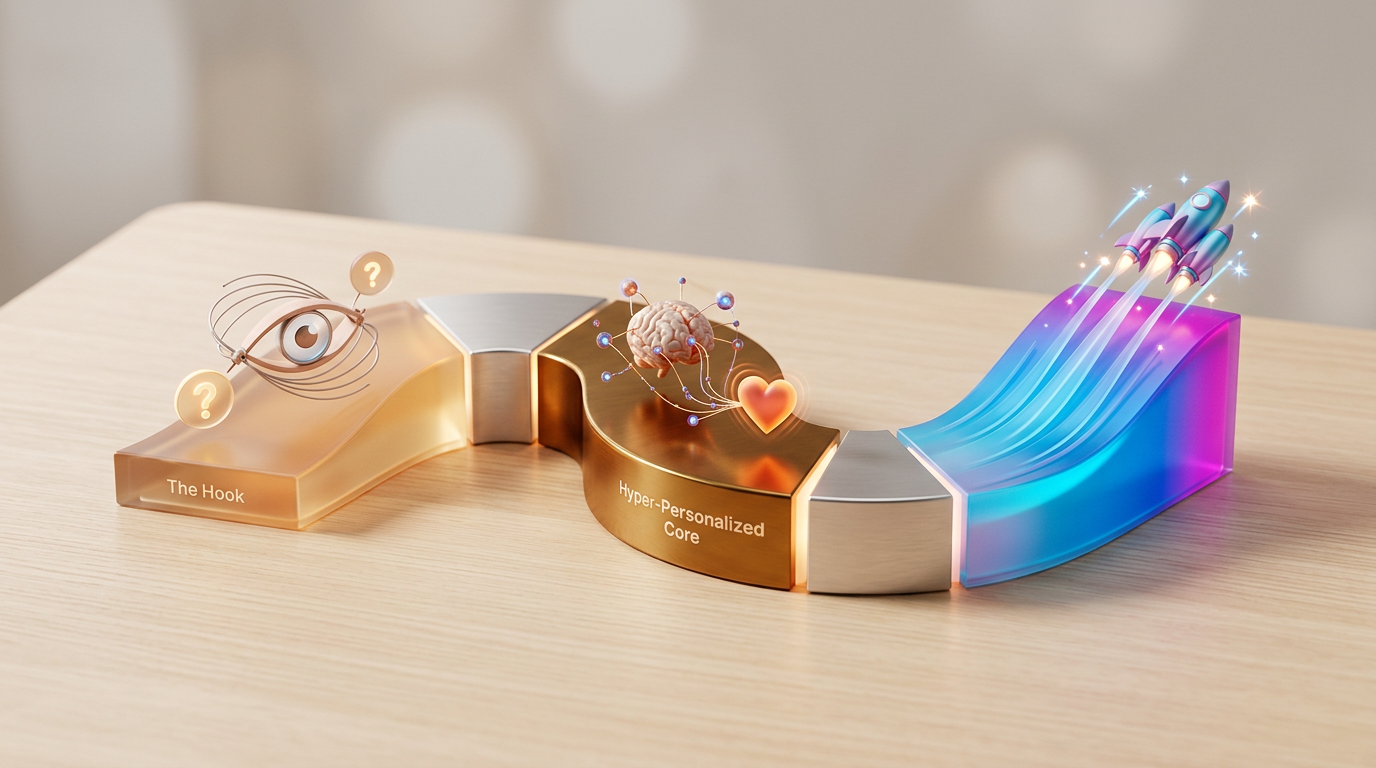
Act 1: The Hook & Tone Setter. Establish the distinct personality of the character or celebrity immediately. Start with a signature catchphrase, an informal greeting, or a highly specific vocalization (like a laugh or an exclamation) to set the mood and hook the listener.
Act 2: The Hyper-Personalized Core. This is where you weave in specific, inside jokes, niche references, or personal details that prove the message is not a generic template. This section should feel intimate and conversational, utilizing natural pauses and hesitations to emphasize the custom nature of the content.
Act 3: The High-Energy Sendoff. Conclude with a memorable punchline, a warm sign-off, or a call to action that lingers with the listener. The energy should peak here, leaving the recipient feeling excited, amused, or deeply moved.
To understand how this looks in practice, study the comparison table below, which contrasts a flat, generic script with an AI-optimized, high-impact script designed for an AI celebrity message generator to move beyond generic scripted shoutouts.
| Script Phase | Generic / Flat Script (Written for the Eye) | AI-Optimized Script (Written for the Ear) |
|---|---|---|
| Act 1: Hook | Hello John, happy birthday to you today. I hope you have a great day. | Yo... John! Happy... birthday, my man! Yeah, I see you... another year wiser. Or... at least another year older, right? |
| Act 2: Personalized Core | I heard you are still playing video games and eating cold pizza at 2 AM. You should stop doing that. | Look, word on the street is you're still grinding on those games... eating cold pizza at... what, two in the morning? Come on, man-- we gotta talk about those life choices. |
| Act 3: Sendoff | Have a wonderful celebration and a good year ahead. Goodbye. | Anyway, go absolute beast mode today. Have an epic celebration, John... peace! |
Directing the Performance: Adjusting Speed, Pitch, and Context
Once your script is optimized, the final step is adjusting the performance parameters to fit the emotional context. Different scenarios require entirely different pacing. A high-energy roast or comedy bit demands rapid-fire delivery and sharp transitions. Conversely, a sincere, sentimental birthday wish requires a slower, more deliberate pace with plenty of room to breathe.
If you are crafting a comedic script, you can achieve incredible comedic timing by pairing tight punctuation with rapid-fire sentences. When directing an AI prank voice generator specifically optimized for high-retention comedy and perfectly timed punchlines, timing is your most valuable asset. A well-placed ellipsis right before a punchline can make the difference between a joke that falls flat and one that lands perfectly.
Finally, consider the environmental context of your audio. Human voices rarely exist in a vacuum; they are shaped by their surroundings. Adding a subtle, low-volume background track—such as a light room tone, a soft musical bed, or ambient crowd noise—can work wonders. This gentle audio layer helps mask minor synthetic artifacts, grounding the voice clone in a believable, real-world setting and making the final message sound incredibly natural.
How do I make a voice clone message sound less robotic?
To make a voice clone sound less robotic, avoid pasting standard written grammar directly into the generator. Instead, write using "speaking grammar" by including sentence fragments, informal phrasing, and strategic punctuation. Use ellipses (...) for natural pauses and double hyphens (--) to simulate sudden conversational shifts.
What is the best way to write a script for an AI voice generator?
The best way is to write for the ear rather than the page. Structure your script using a three-act emotional map: start with a strong hook, insert hyper-personalized inside jokes in the middle, and close with a high-energy sendoff. Use phonetic spellings for tricky words to ensure correct pronunciation.
Can I use voice cloning to create personalized celebrity birthday messages?
Yes! With Fanfun, you can instantly generate personalized voice and video messages from a growing library of celebrity and character AI personas. By optimizing your script with natural conversational pacing, you can create a highly realistic and memorable birthday greeting.
How does Fanfun handle voice cloning and character voice generation?
Fanfun uses advanced AI interpretations of popular characters and celebrity personalities to deliver instant, high-fidelity voice and video messages. Our platform allows creators, fans, and marketers to generate custom content, interactive chats, and personalized greetings in minutes without the long wait times of traditional booking platforms.