The Virtual Writer's Room: How to Stress-Test Story Plots and Dialogue Using Character AI Chat
Struggling with flat dialogue or plot holes? Discover how to turn character AI chat into an interactive writer's room to test character motivations, run narrative simulations, and refine your script before writing a single page.
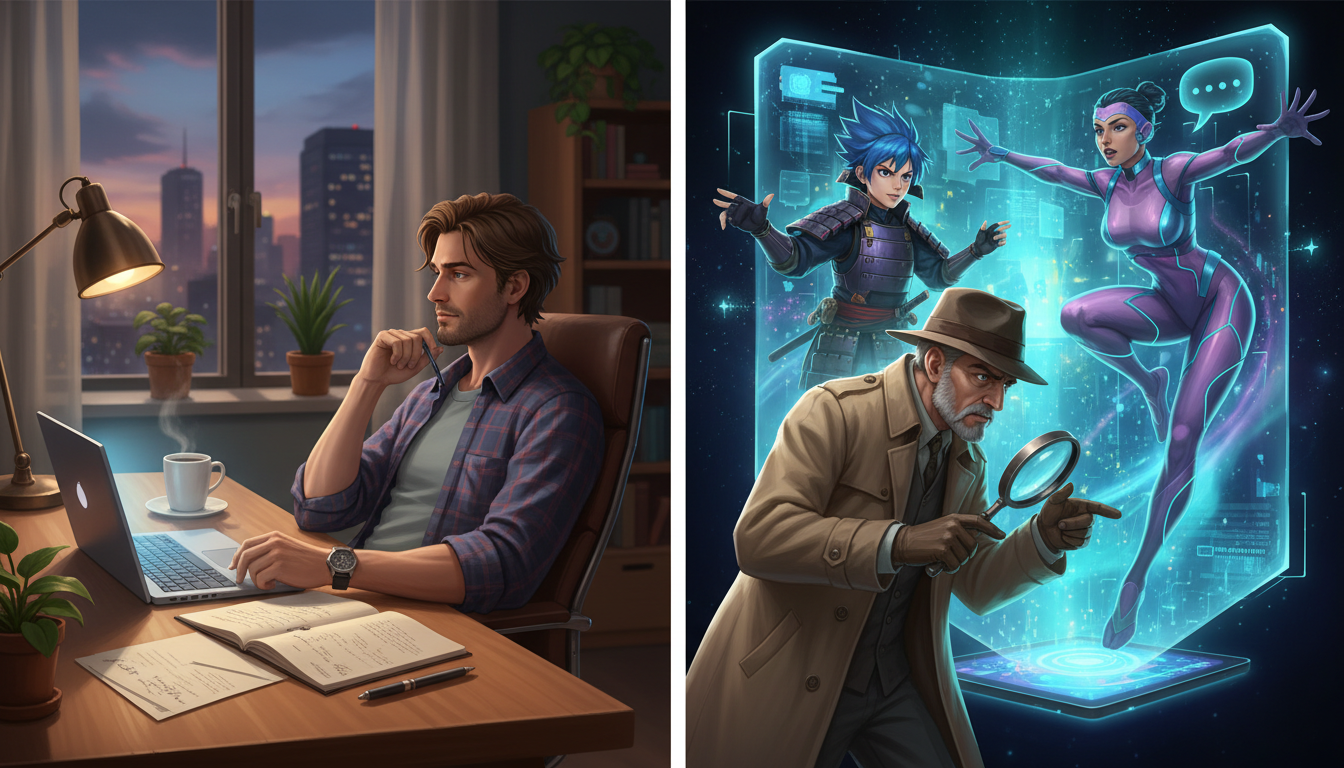
Outlining a story on a blank page can feel like planning a military campaign in a vacuum. You map out every twist, design elaborate character arcs, and script witty dialogue, only to realize during drafting that your protagonist's decisions feel forced and their voice sounds exactly like your own. When characters only exist in your head, they tend to behave perfectly according to your outline, rarely pushing back or exhibiting the unpredictable, messy human behaviors that make fiction compelling.
Instead of staring at a static outline, modern content creators and fiction writers are turning to interactive sandboxes to test their narratives in real-time. By utilizing character-driven AI chat platforms like Fanfun, you can bring your cast to life before writing a single scene, engaging in "live fire" simulations that instantly expose plot holes and sharpen character voices. This approach transforms a solitary, passive brainstorming process into an active, conversational writer's room.
Beyond the Blank Page: Why Character Chat is Your Best Co-Writer
Traditional outlining tools are excellent for mapping chronological events, but they are notoriously poor at predicting emotional realism. You might write in your outline: "Character A finds out their brother is the villain and immediately vows revenge." It looks clean on paper, but when you actually sit down to write the scene, the transition feels abrupt, unearned, or melodramatic. This is where interactive chat becomes invaluable.
By engaging with pre-established or custom AI personas on Fanfun, you are no longer talking to a blank document; you are talking to a distinct personality with its own set of values, biases, and speech patterns. If you present that same plot twist to an AI character designed with a specific psychological profile, their immediate, unvarnished reaction might surprise you. They might deny the accusation, shut down emotionally, or point out a logical flaw in your setup. This rapid-fire feedback loop forces you to think on your feet, much like mastering real-world conversational agility through character-driven AI chat.
Furthermore, this exercise builds essential creative muscles. Instead of writing in a vacuum, you are forced to react to another "mind." This friction sparks original narrative angles that purely internal brainstorming rarely produces. It moves your writing process from a top-down dictation to a collaborative discovery.
The Stress-Test Framework: 4 Ways to Grill Your Virtual Cast
To get the most out of a virtual writer's room, you cannot simply ask an AI character, "What do you think of my story?" You must treat the chat interface as an active sandbox. Before diving into the specific tests below, establish the "rules of engagement" in your initial system prompts. Clearly define the character's background, current emotional state, and their relationship to you (or the persona you are adopting during the chat).
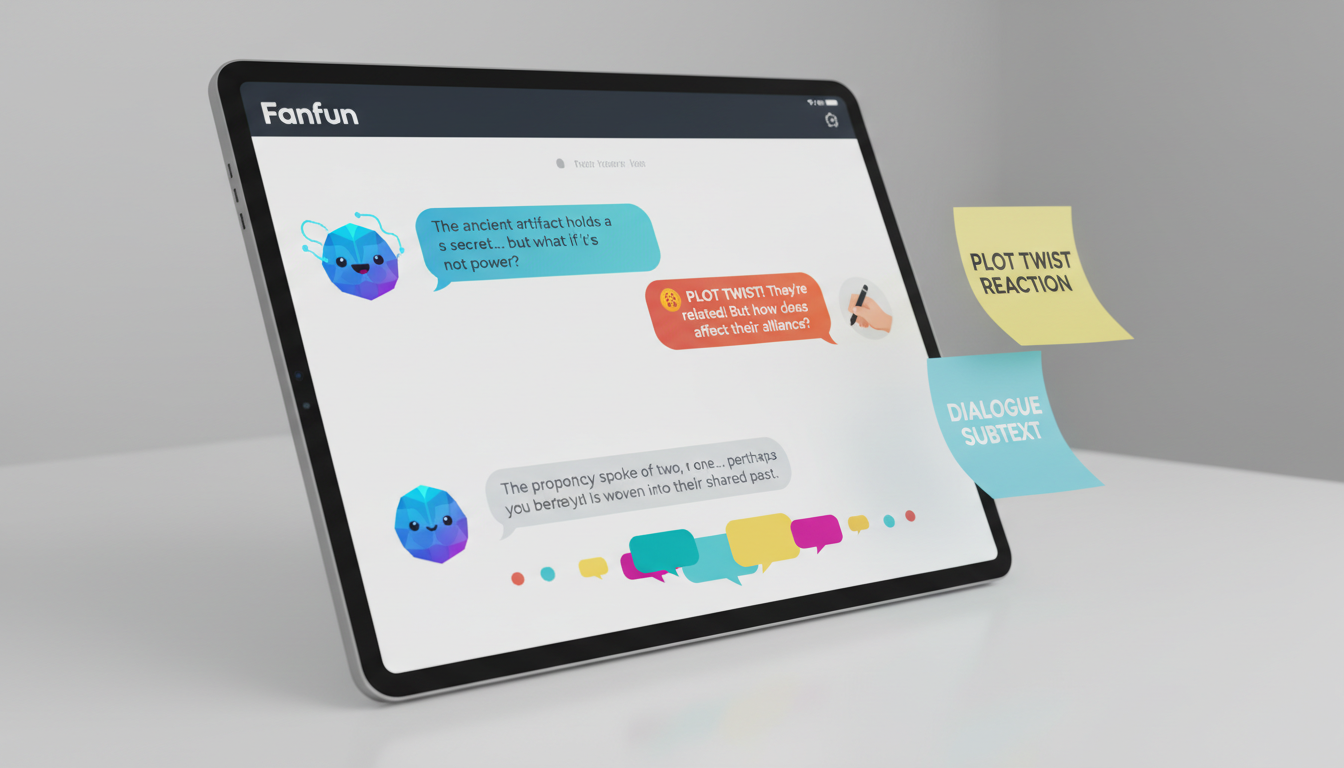
Use this four-step framework to systematically pressure-test your characters, plots, and dialogue sequences:
The Interrogation: Testing Motivation and Backstory
One of the easiest ways to spot a weak character is when they cannot defend their own choices. To fix this, adopt the role of a hostile interrogator, a therapist, or a skeptical detective. Force the AI character to justify their actions, their secrets, and their ultimate goals.
If your protagonist is planning a dangerous heist, do not just write it; cross-examine them about it. Use open-ended, high-pressure prompts to see if their motivation holds up under scrutiny. If their answers feel superficial or generic, you know you need to deepen their backstory.
Example Prompt:"I am your defense attorney, and we are privately preparing for your trial. Tell me the absolute truth: why did you steal that artifact? Do not give me the heroic excuse you told the media. What are you actually running from?"
The Inciting Incident Reaction: Testing Plot Beats
A plot twist is only as good as its immediate emotional fallout. If your inciting incident doesn't fundamentally disrupt your character's worldview, the stakes are too low. You can test this by dropping the AI character directly into a hypothetical crisis and observing their raw, unedited reaction.
Pay close attention to their defense mechanisms. Do they lash out? Do they make jokes to deflect pain? Do they immediately look for a logical escape? If the AI's response feels flat or out of character, it is a clear sign that the stakes of your inciting incident need to be raised, or the setup needs to be adjusted to make the impact feel earned.
Example Prompt:"You just walked into your apartment and found a folder on your desk containing photos of you from yesterday, taken from a distance. There is a note that says 'I know what you did.' React to this in real-time. What is your very first physical and verbal action?"
The Dialogue Sparring Match: Refining Voice and Subtext
The most common pitfall for emerging writers is "on-the-nose" dialogue, where characters say exactly what they are thinking with zero subtext. To break this habit, engage in a rapid-fire sparring match with the AI character. The goal of this exercise is to keep the conversation going without ever directly addressing the elephant in the room.
Prompt the AI to adopt a specific emotional subtext (e.g., hidden resentment, unspoken attraction, or intense guilt) and see how their verbal cadence shifts. This will help you identify unique speech patterns, slang, and pauses that you can copy-paste directly into your script or manuscript.
Example Prompt:"We are having dinner. You secretly suspect that I was the one who leaked your personal emails to the press, but you cannot let me know that you suspect me. We are going to have a casual conversation about our day, but every line you say must carry that hidden tension. Let's begin."
Selecting Your Sparring Partners: Matching Archetypes to Narrative Roles
Not every AI character is suited for every brainstorming goal. When evaluating and mastering virtual character text chat platforms, it is critical to match the specific personality archetype to the narrative role you need to test. If you are writing a gritty crime drama, chatting with an overly optimistic, bubbly cartoon character will not give you the psychological depth you need—unless, of course, you are intentionally aiming for a surreal, dark comedy tone.
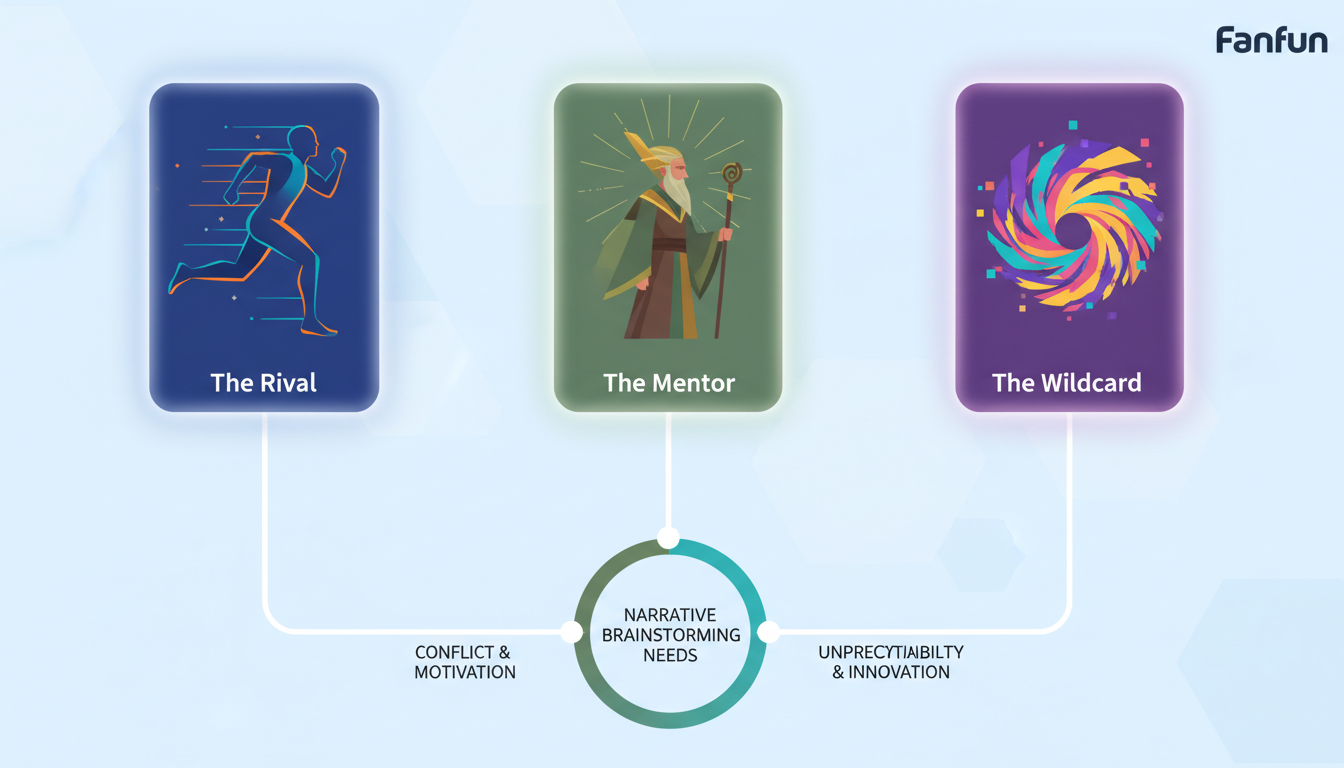
To help you structure your virtual writer's room, refer to this archetype matching matrix:
| Narrative Genre | Ideal AI Archetype | Brainstorming Goal | How to Use Them |
|---|---|---|---|
| Thriller / Mystery | The Skeptical Detective | Exposing plot holes & alibis | Have them pick apart your crime scene logic step-by-step. |
| Fantasy / Sci-Fi | The Ancient Mentor | Worldbuilding consistency | Ask them about the rules of magic or technology to find logical gaps. |
| Drama / Romance | The Unapologetic Rival | Creating interpersonal tension | Engage in high-stakes banter to find the emotional core of a conflict. |
| Sports / Action | The Elite Athlete | Capturing competitive mindset | Use them to draft intense pre-game locker room speeches or physical rivalries. |
For instance, if you are working on a high-stakes sports drama or an action sequence where physical and mental endurance are central to the plot, chatting with virtual athletes online for high-stakes competitive roleplay can help you capture the authentic psychological pressure of elite competition. They can help you articulate the exact mixture of adrenaline, self-doubt, and hyper-focus that a writer who has never stepped onto a professional field might struggle to invent from scratch.
From Chat Log to Script: Translating AI Interactions into Finished Scenes
Once you have completed a successful stress-test session, you will likely have a long, chaotic chat log filled with brilliant tangents, repetitive loops, and raw emotional outbursts. The magic of this process lies in how you curate and refine this raw material into polished, professional-grade prose.
Do not simply copy and paste the entire transcript into your manuscript. Instead, treat the chat log as a rough documentary footage that needs to be edited. Look for the "micro-moments"—a particularly sharp comeback, an unexpected pause, or a unique metaphor used by the AI—and extract them. Use these elements to build the scaffolding of your scene.
When translating these interactions, pay close attention to the non-verbal cues implied by the AI's responses. If the AI character took a long time to answer or shifted the topic abruptly, translate that behavior into descriptive action beats or parentheticals in your script. For creators looking to take these concepts even further, understanding the nuances of scripting and directing virtual personalities for maximum narrative impact will help you turn raw dialogue into highly engaging, performative content.
Ethical Guardrails: Keeping Your Creative Voice in the Driver's Seat
While character AI chat is an incredibly powerful tool for breaking writer's block and generating unexpected ideas, it is vital to remember that you are the director of this creative process. AI is exceptional at reflecting patterns and generating variations based on existing tropes, but it lacks the lived human experience required to inject true soul, nuance, and original thematic depth into a story.
Use AI chat to shake up your routine, test your structural integrity, and explore alternative paths. However, when it comes to the final draft, let your own taste, values, and voice make the final decisions. The AI is your sparring partner; you are the one stepping into the ring.
Can I use character AI to brainstorm a novel or screenplay?
Absolutely. Character AI is highly effective for the pre-writing and outlining phases. You can use it to test character voices, map out logical progressions for plot twists, and run interactive simulations to see how a character might realistically react to specific conflicts before you begin writing your actual draft.
How do I keep an AI character in character during a long brainstorming session?
To maintain consistency, start your session with a highly detailed system prompt or character definition. If the AI begins to drift or break character during a long chat, gently steer them back by using out-of-character (OOC) brackets—for example: "[OOC: Remember, you are highly suspicious of me and should not be this cooperative. Let's continue the scene.]"
Is it plagiarism to use dialogue generated during a character AI chat in my book?
No. When you use AI chat platforms as a brainstorming partner, the generated text is a unique output of your specific prompts and interactions. However, to ensure your work remains truly original and high-quality, you should edit, refine, and polish any AI-generated dialogue to match your unique narrative style and voice.
What are the best prompts to start a story brainstorming session with an AI character?
The best prompts are highly specific and establish a clear scenario, relationship, and emotional stakes. Instead of asking generic questions, try setting up a scene directly: "We are business partners who just realized $50,000 is missing from our shared account. You think I took it, but you have no proof. Start the conversation."