How to Estimate AI Voice Script Duration Using Syllable Counts
Word counts are deceptive for synthetic speech. Use our syllable-based formula to accurately predict your script's runtime and fit perfectly within video limits.
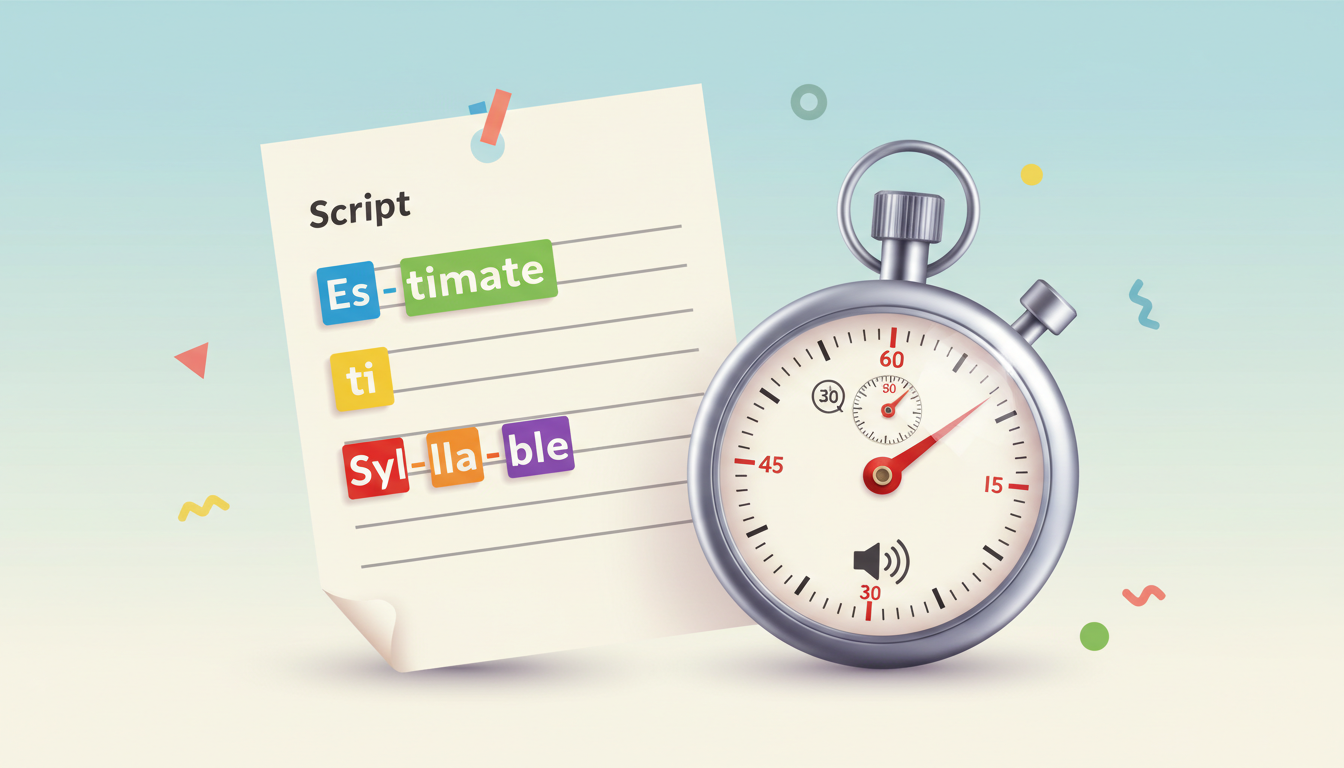
To estimate the duration of an AI voice script, divide the total syllable count of your text by the character's average speaking rate (usually 3 to 4 syllables per second), then add extra "ghost syllables" to account for punctuation pauses (2 syllables for a period, 1 for a comma). This method provides a highly accurate prediction of your script's runtime, helping you write messages that fit perfectly within the 30-second limit covered by one Fanfun video credit, or help you plan if you need to use additional credits for a longer message.
Why Word Counts Lie (and Syllables Tell the Truth)
When drafting a script for a virtual character, relying on word count is a recipe for timing errors. Word counts are highly deceptive because words vary wildly in length and phonetic complexity. For instance, the word "strength" is a single syllable but takes a noticeable physical effort to pronounce, while "individuality" has six syllables and takes significantly longer to speak. In synthetic speech, AI voice models process phonetic sounds sequentially rather than reading whole words at once. Because of this, syllable count is the most stable and reliable baseline for estimating speech duration.
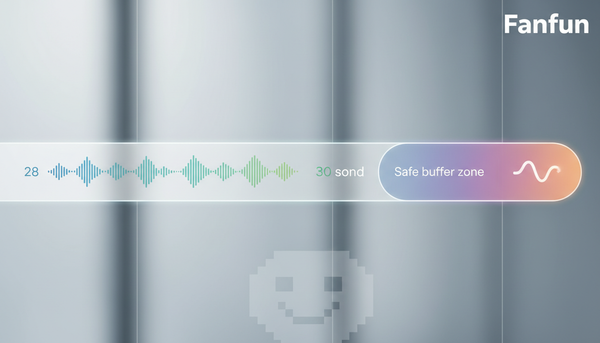
On average, natural AI speech flows at a rate of 3 to 4 syllables per second. This baseline is incredibly helpful when creating personalized video messages on Fanfun, where one video credit covers up to 30 seconds of speech. To stay within that window without rushing your character, you should aim for a target budget of roughly 90 to 110 syllables. Going over this budget means your character may need to speak faster, or the script will require additional video credits to cover the longer duration.
The Syllable-to-Second Estimation Formula
To accurately predict how long your script will run, use this simple three-step estimation formula. It accounts for both spoken words and the natural pauses that keep speech sounding human.
- Step 1: Count the raw syllables. Break down your text and count every spoken syllable. For example, "happy" is 2 syllables, and "birthday" is 2 syllables.
- Step 2: Apply the pacing multiplier. Divide your raw syllable count by your character's pacing. Use 3 syllables per second for slower, more deliberate voices, and 4 syllables per second for energetic, fast-talking characters.
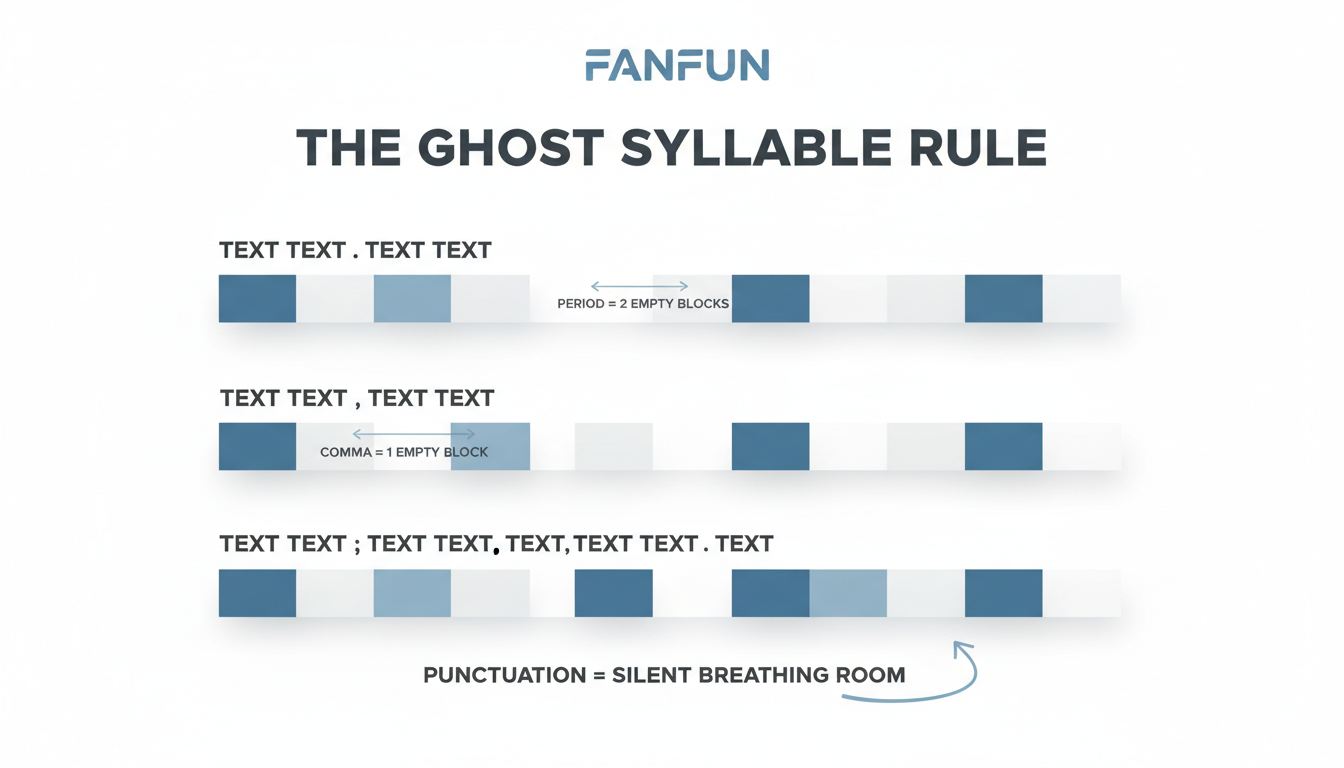
- Step 3: Add "ghost syllables" for punctuation. AI voice generators insert brief pauses at punctuation marks to mimic natural breathing. To account for this, add 2 "ghost syllables" of time for every period, question mark, or exclamation point, and 1 "ghost syllable" of time for every comma.
Here is how this formula works in practice for a sample birthday script:
| Script Element | Raw Count | Ghost Syllables (Punctuation) | Adjusted Syllable Total | Estimated Duration (at 3.5 syl/sec) |
|---|---|---|---|---|
| "Hey there, buddy! Happy birthday to you." | 10 syllables | 5 (1 comma, 1 exclamation, 1 period) | 15 syllables | 4.3 seconds |
| "I hope your day is absolutely fantastic." | 12 syllables | 2 (1 period) | 14 syllables | 4.0 seconds |
| Combined Script | 22 syllables | 7 syllables | 29 syllables | 8.3 seconds |
Adapting Your Syllable Budget for Different Character Personas
Not all AI characters speak at the same speed. A cartoon sidekick will naturally zip through a script much faster than a booming fantasy warrior. When drafting your script, adjust your pacing multiplier to match the specific archetype or emotional tone of the persona you choose.
Dramatic, heavy, or theatrical characters require a lower syllable density—typically around 2.5 to 3 syllables per second—to preserve their gravitas. For instance, if you are writing a grand announcement, you can look at how slow-paced, theatrical scripts are structured to see how fewer words carry more weight when spoken deliberately.
In contrast, highly energetic or modern pop-culture characters can comfortably handle 4 to 4.5 syllables per second without sounding unnatural. If you are crafting a heartfelt or emotional message, however, you will want to build in plenty of gentle pauses to let the sentiment land. You can explore writing templates for emotional milestone scripts to observe how spacing and deliberate pauses translate to perfect timing on screen.
Drafting and Trimming to Fit the 30-Second Limit
If your calculation shows your script is running close to or over the 30-second mark, you do not need to rewrite the entire message. A few strategic edits can easily shave off valuable seconds while keeping the core message intact.
Start by identifying syllable-heavy filler words and replacing them with shorter, punchier alternatives. For example, change "utilize" (3 syllables) to "use" (1 syllable), or swap "congratulations" (5 syllables) for "congrats" (2 syllables). These small adjustments quickly add up, giving your character more breathing room.
Once you have trimmed the text, read the script aloud at your chosen character's estimated tempo while timing yourself. This practice run helps you verify the overall flow and ensures the phrasing feels natural. Finally, before you submit your script, review the estimated duration provided. To understand how the final output is structured, you can read about how to check your final audio levels and pacing in the preview to help guide your writing process.
Do numbers and symbols count as syllables in AI script estimation?
Yes. AI voice generators speak numbers and symbols as full words. For example, "2026" is pronounced as "twenty-twenty-six" (5 syllables), and the symbol "&" is spoken as "and" (1 syllable). Always write out or count these terms based on how they are spoken.
How does background music affect the perceived speed of the AI character's speech?
While background music does not change the physical speed of the AI voice, upbeat music can make a slower voice feel more energetic, whereas slow, melodic music can emphasize dramatic pauses. Choose music that complements your character's natural syllable pacing.
What should I do if my character's voice naturally speaks faster than the standard 4 syllables per second?
If a character naturally speaks very quickly, you can adjust your multiplier to 4.5 or 5 syllables per second. However, it is usually safer to stick to a slightly lower syllable count to ensure the final output remains clear and easy to understand.