The Writer's Sparring Partner: How to Use Interactive Character Chat to Break Story Blocks and Refine Dialogue
Struggling with flat dialogue or predictable plot points? Learn how to transform interactive character chat into a dynamic, two-way writer's room to stress-test your narrative and find your characters' authentic voices.
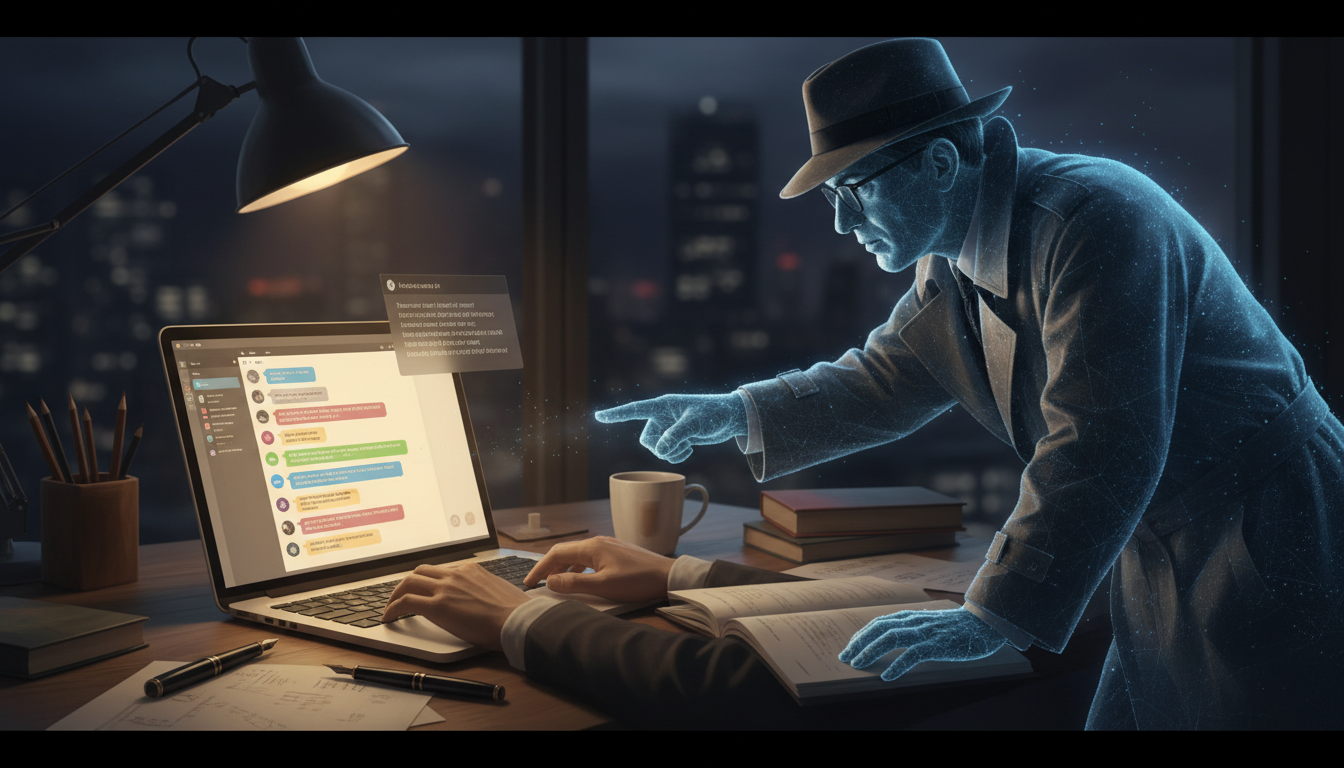
Every writer knows the paralyzing weight of the blinking cursor. You have a scene outline, a basic character profile, and a clear idea of where the plot needs to go, yet the moment your characters open their mouths, the dialogue falls flat. Traditional brainstorming methods—like writing character journals or filling out static questionnaires—often feel like shouting into an empty room, offering little real-time resistance to push your creative boundaries.
This is where interactive character chat shifts the paradigm from passive planning to active, conversational roleplay. Rather than treating AI as a sterile text generator, forward-thinking novelists and screenwriters are utilizing platforms like Fanfun to treat virtual personas as live sparring partners. By engaging in dynamic, back-and-forth dialogue with established archetypes, historical figures, and cultural icons, you can stress-test your narrative choices, refine subtext, and break through stubborn story blocks in real time.
Beyond the Blank Page: The Rise of the AI Conversational Sparring Partner
Traditional generative AI tools are notorious for producing predictable, overly polite blocks of text. Because they are optimized to satisfy a prompt in a single turn, they lack the natural friction and spontaneity of a genuine conversation. When you ask a standard chatbot to "write a dialogue between a detective and a suspect," you often receive a neat, cliché-ridden exchange that lacks subtext, tension, or surprise.
Interactive character chat, on the other hand, introduces spontaneous, in-character resistance. An AI persona designed with a distinct voice won't simply agree with your protagonist; they will push back, dodge questions, lie, or change the subject. This conversational friction forces you to think on your feet, discovering organic narrative directions you never would have planned on a static outline.
At Fanfun, our interactive AI Chat platform provides immediate access to a diverse roster of characters, athletes, and cultural icons, turning passive brainstorming into an active, two-way dialogue. By stepping into the scene as an active participant, you can co-create scenes, test boundaries, and discover the unexpected ways your characters might react under pressure.
Setting the Stage: Choosing Your Conversational Archetype
Not all writing blocks are created equal, and neither are your conversational partners. A block in a high-octane thriller requires a completely different sparring partner than a slow-burn romantic drama or a whimsical fantasy. To make the most of your session, you must match the virtual persona to the specific creative hurdle you are facing.
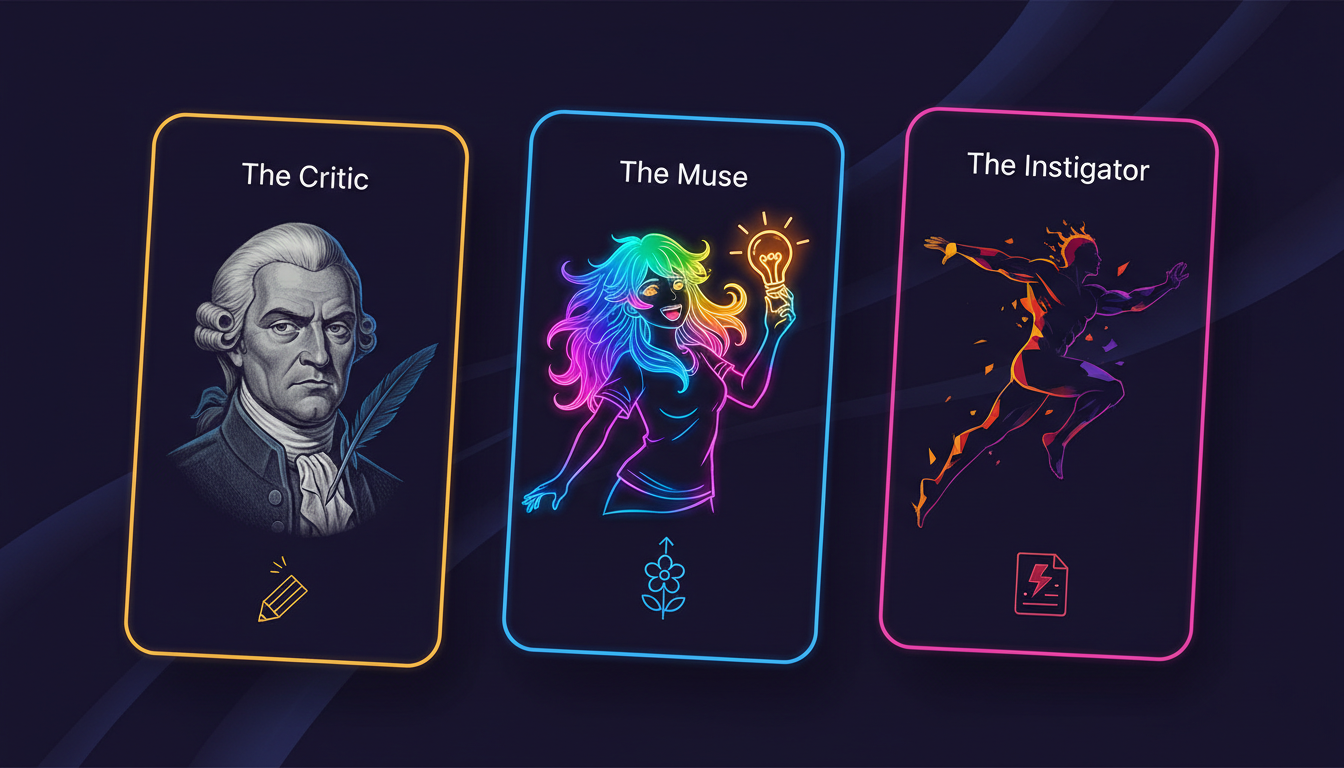
For instance, if you are struggling to capture the psychological grit of a high-performance scenario, chatting with an elite athlete persona can help you understand the physical and mental stakes of a competitive scene. If you are writing a period piece, interacting with historical archetypes can ground your world-building. Below is a simple decision framework to help you choose the right partner for your creative block:
| Writing Obstacle | Ideal AI Archetype | Creative Goal |
|---|---|---|
| Flat, expository dialogue | The Cynic / Antagonist | Force subtext, evasion, and emotional defense mechanisms. |
| Predictable, low-stakes plot progression | The Instigator / Wildcard | Introduce chaotic choices and unexpected physical obstacles. |
| Stilted world-building or logic loops | The Whimsical Sage / Out-of-the-Box Thinker | Inject playful, highly imaginative solutions to complex rules. |
The Dialogue Tester: Refining Voice and Subtext
One of the hardest parts of character writing is ensuring that every voice on the page sounds distinct. If you close your eyes and listen to your characters talk, do they all sound like you? To break this habit, you can use the chat interface to run "chemistry reads" between your original characters and established archetypes.
The Chemistry Read Protocol
To run an effective chemistry read, follow this three-step workflow:
- Step 1: Set the Scene. Introduce your character's current emotional state and physical location in the first message.
- Step 2: Inhabit the Perspective. Write your responses strictly from your character's point of view, using their specific vocabulary and defense mechanisms.
- Step 3: Analyze the Friction. Pay close attention to how the AI persona reacts to your character's syntax, slang, and emotional reactivity. If the AI reacts with confusion, irritation, or unexpected warmth, it's a sign that your character's voice has a strong, distinct flavor.
The Plot Devil's Advocate: Stress-Testing Motivations
Every story needs a strong antagonistic force, but writers often make the mistake of writing "easy" villains who make convenient mistakes just to let the hero win. To avoid this, cast the AI character as the antagonist, a cynical mentor, or a skeptical partner to interrogate your protagonist's choices.
Start a chat session where the AI's explicit goal is to dismantle your protagonist's plan. If your hero wants to pull off a complex heist, have the AI accomplice point out every logical flaw in the security blueprint. Force the AI to argue against your planned plot points. By defending their actions against a stubborn, highly opinionated virtual partner, you will discover more surprising, high-stakes narrative twists and tighten your plot's internal logic.
The Directorial Framework: How to Guide the Chat Without Breaking Character
Running an interactive session requires active direction; otherwise, the conversation can easily drift into irrelevant tangents. To keep your session productive, you must establish clear boundaries and guide the narrative flow without shattering the illusion of the character's persona.
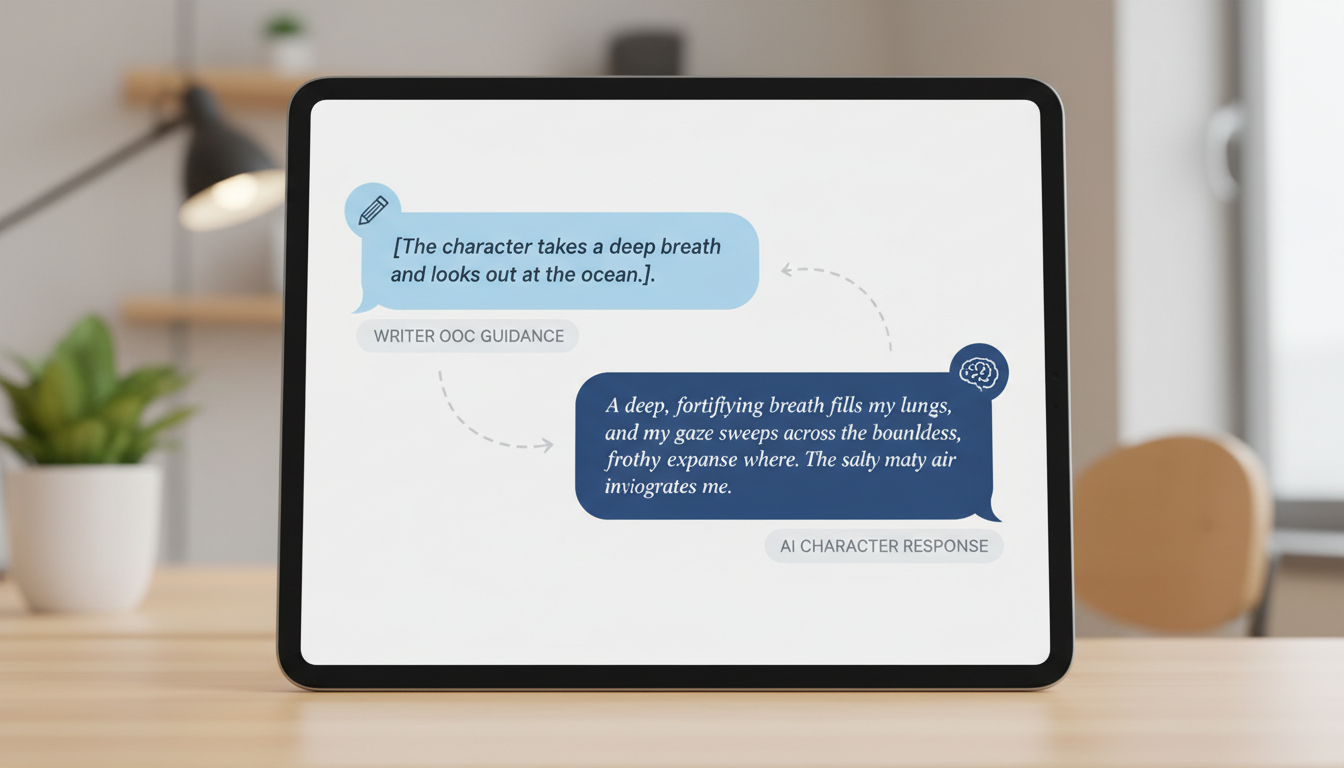
The most effective way to do this is by using "Out-of-Character" (OOC) brackets—a standard roleplay convention where you place structural directions, scene-setting details, or narrative cues inside square brackets, such as:
[OOC: Keep your tone highly suspicious and refuse to answer the next question directly]
This approach allows you to balance character autonomy with your specific narrative goals, keeping the AI aligned with your creative vision. For more advanced techniques on structuring these sessions, consider referencing the best practices for directing interactive AI character chats to maintain creative control.
Case Studies in Character Chat: From Whimsical Logic to Dramatic Tension
To see this in action, let's examine how different genres of virtual characters solve specific creative problems:
- Brainstorming surreal solutions: When writing sci-fi, fantasy, or children's literature, adult logic can often feel too rigid. Try chatting with whimsical anime figures like Doraemon to spark nostalgic and unconventional ideas. Characters operating under whimsical, gadget-based rules help bypass standard logical blocks, allowing you to discover playful, unexpected solutions to narrative hurdles.
- Refining dramatic tension: If your romantic subplot feels clinical or your dramatic scenes lack teeth, try roleplaying with virtual movie stars to practice dramatic blocking and scene work. Testing subtext, chemistry, and banter with a persona designed for dramatic timing can highlight exactly where your dialogue needs more push-and-pull.
- Analyzing physical stakes: When writing high-pressure sports dramas, action sequences, or thriller climaxes, you need to understand the physical and mental strain of peak performance. Engaging with specialized athlete personas allows you to explore the exact mindset, recovery process, and sensory details of high-stakes environments, grounding your prose in visceral reality.
Integrating Chat Transcripts into Your Final Draft
Once you have completed a successful chat session, the next step is translating that raw conversational energy into your manuscript. Do not make the mistake of simply copy-pasting raw AI chat directly into your drafts. AI dialogue, even when highly engaging, is optimized for a chat interface, not the narrative flow of a novel or script.
Instead, treat the transcript as a rough blockout or a "zero draft" of a scene. Use the following editing checklist to polish your raw chat data:
- Strip away conversational filler: Remove repetitive greetings, excessive pleasantries, and circular arguments.
- Heighten the subtext: Replace direct, on-the-nose statements from the AI with physical actions, pauses, or subtextual hints.
- Align dialogue tags: Convert the plain text format into standard manuscript prose, adding sensory descriptions, internal monologue, and environmental beats.
Before you dive into your next session, it is worth evaluating virtual character chat platforms to find the best workflow for exporting and managing your transcripts. With the right platform and a structured approach, you can transform interactive chat from a fun novelty into an indispensable tool in your creative writing arsenal.
Can I use AI character chats to write dialogue for copyrighted characters in my own commercial books?
No. While chatting with licensed or established characters is an excellent way to practice writing, brainstorm archetypes, and test dialogue flow, you cannot directly publish copyrighted characters or trademarked names in your own commercial work. Use these sessions as a training ground to refine your original characters and original intellectual property.
How do I prevent an AI character from repeating itself or falling into conversational loops during roleplay?
If an AI character begins repeating phrases or getting stuck in a loop, use Out-of-Character (OOC) brackets to redirect them. Typing [OOC: Break the loop. Introduce a brand-new topic or react aggressively to what I just said] forces the AI's underlying model to reset its conversational trajectory and break out of repetitive patterns.
What is the best way to format and export an AI chat transcript into standard screenwriting software?
Export your chat transcript as a plain text or Markdown file. Paste it into your screenwriting software of choice (such as Fade In, Final Draft, or Highland 2), and use the software's built-in formatting shortcut keys to quickly convert the chat names to Character elements and the dialogue blocks into Dialogue elements. Always edit and trim the text to match professional script formatting standards.
How does chatting with an interactive AI persona differ from using a standard chatbot like ChatGPT for brainstorming?
Standard chatbots are designed to be helpful, polite assistants that answer questions directly and comprehensively. This makes them great for research, but poor for creative writing. An interactive AI persona is designed to stay strictly in-character, projecting a specific personality, emotional reactivity, vocabulary, and bias. This creates the natural friction, disagreement, and spontaneity required for authentic creative writing roleplay.