Comparing Engagement Rates: Personalized Video Greetings vs. Static Email Cards
Wondering if a video greeting is worth the extra effort over a standard digital card? We break down the open rates, click-through metrics, and emotional engagement of both formats to help you choose.
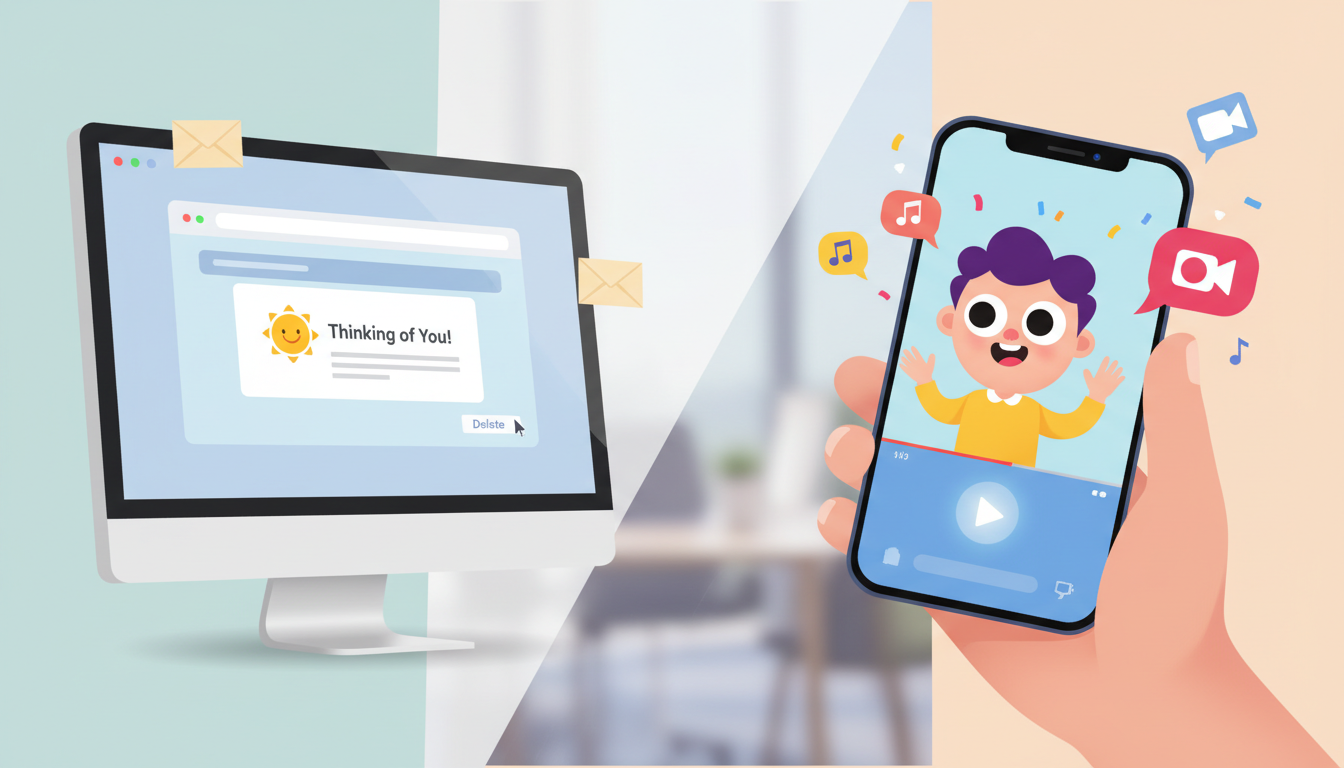
Personalized video greetings consistently outperform static email cards in click-through rates and emotional engagement, though both formats rely heavily on a strong email subject line to get opened in the first place. While static cards are quick to send, they are often dismissed as digital clutter. Video links, by contrast, invite active participation and create a lasting memory. However, the best choice ultimately depends on your recipient's technical comfort, your relationship, and the occasion.
The Engagement Gap: Video Links vs. Static Email Cards
Static digital cards have been a staple of online celebrations for decades. Because they usually arrive from a familiar sender name, they enjoy decent open rates. However, once the email is open, the engagement typically drops. Most static cards use highly recognizable, flat design templates. The recipient glances at the image, reads a brief generic text line, and closes the tab. The interaction is passive and brief.
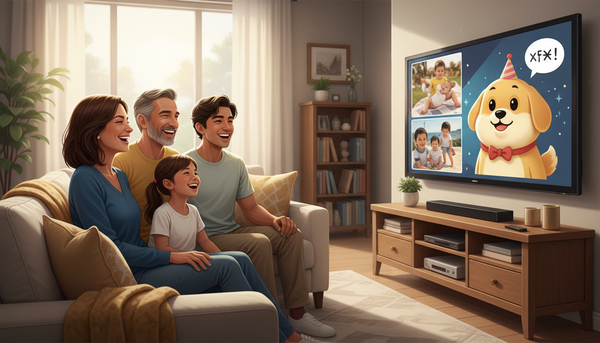
Personalized video links stand out in a crowded inbox because they offer an active, sensory experience. Instead of looking at a flat graphic, the recipient clicks a link to watch and listen to a message created specifically for them. This shift from reading to watching dramatically changes how people interact with your message. To understand how this visual medium impacts long-term attention, you can explore the retention rates of personalized video messages vs. static email greetings to see how long viewers actually stay tuned compared to standard text.
This sensory experience builds a much stronger personal connection. When someone hears their name spoken and sees an engaging visual, it triggers a genuine emotional response. This is especially true when comparing emotional engagement and retention across different digital mediums; video consistently makes the recipient feel valued because it feels like a custom gift rather than a last-minute template.
Head-to-Head Comparison: Key Metrics and Tradeoffs
To help you decide which format fits your needs, here is a breakdown of typical performance ranges and practical metrics. These ranges represent general industry benchmarks for digital greetings rather than proprietary tested data, but they highlight the clear behavioral differences between the two formats.

| Metric / Criterion | Static Email Cards | Personalized Video Messages |
|---|---|---|
| Average Open Rate | Highly dependent on sender recognition | Often elevated when "video" is included in the subject line |
| Click-Through Rate (CTR) | Typically lower due to passive content | Typically higher due to curiosity and interactive elements |
| Emotional Impact | Low to Moderate | High (Often saved, replayed, and shared) |
| Creation Time | 1 – 5 minutes | 5 – 15 minutes |
| Shelf-Life | Very short (Archived or deleted quickly) | Long (Stored, downloaded, or shared with family) |
While static cards are incredibly low-effort, they are easily forgotten. Personalized videos require a small amount of planning—such as writing a short script or choosing a theme—but they yield much higher active engagement.
It is important to remember that most digital video messages are still delivered via email or text link. This means your subject line or opening text still dictates the initial open rate. If your subject line is generic, even the most creative video might go unseen. Pair your video link with a warm, personal subject line to ensure it gets the spotlight it deserves.
When to Use Static Cards vs. Personalized Videos
Neither format is a one-size-fits-all solution. Choosing the right medium requires looking at who is receiving the message and the significance of the occasion. If you are still on the fence, choosing between digital video cards and traditional email greetings comes down to a few simple criteria.
Use Static Cards When:
- The occasion is highly formal or professional: A simple, elegant corporate e-card is often more appropriate for broad client lists where deep personal connection is not the primary goal.
- You are doing mass distribution: Sending a holiday greeting to hundreds of acquaintances at once is much easier with a static template.
- The recipient has limited technical comfort: Older generations or those who struggle with modern devices may prefer a straightforward email where the text and image are immediately visible without clicking any external links.
Use Personalized Video Greetings When:
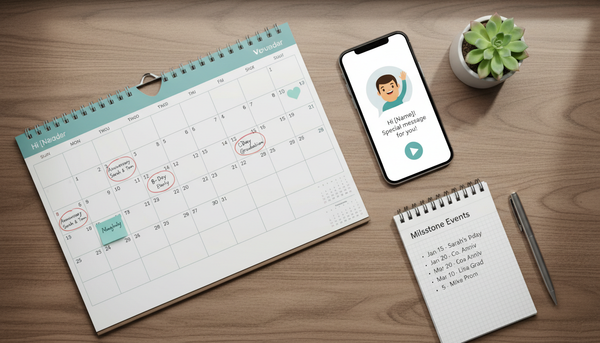
- Celebrating major milestones: Milestone birthdays, graduations, retirements, and major life transitions deserve more than a generic template.
- Bridging long distances: When you cannot be there in person, a video greeting carries your warmth and personality far better than text.
- You want to surprise the recipient: A highly customized video message is unexpected and shows that you spent extra thought and care on their gift.
How to Create High-Engagement Video Greetings with AI
Many people stick to static cards because they assume video creation requires on-camera talent, expensive editing software, or a perfect filming setup. Fortunately, digital tools have made it easy to create engaging video content without ever going on camera.
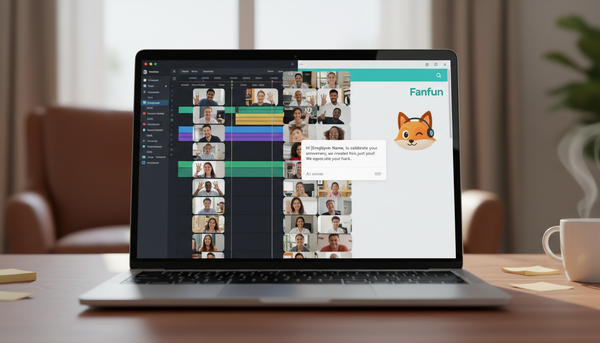
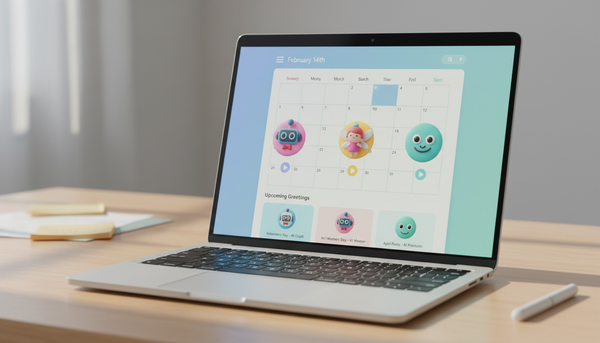
With Fanfun, you can create playful, character-driven video messages that instantly capture attention. Fanfun allows you to select from a variety of AI characters, write a custom script, and generate a fun video message that is ready to share.
It is important to note that these AI-generated character personas are meant to be playful and entertaining, rather than perfect vocal clones or exact representations of real people. The charm lies in the creative, lighthearted script you write. Here is a quick checklist to ensure your Fanfun video achieves maximum engagement:
- Keep it under 30 seconds: Short, punchy videos have the highest completion rates. One video credit on Fanfun covers up to 30 seconds of speech, which is the sweet spot for keeping a recipient's attention.
- Mention specific inside jokes: Ground the video in your actual relationship. Mentioning a shared memory or a specific nickname makes the video feel truly custom.
- Use phonetic spelling for tricky names: AI voice generators read text literally. If your recipient has a unique name, spell it out phonetically in your script to help the character pronounce it correctly.
Do spam filters block emails that contain personalized video links?
Spam filters rarely block emails simply because they contain a video link, but they do look closely at the overall email structure. To prevent your greeting from landing in the spam folder, avoid using spam-trigger words in your subject line (like "FREE GIFT" or "WINNER"), write a short personal message alongside the link, and send it from an email address the recipient recognizes.
Do recipients need a special app or account to view a Fanfun video greeting?
No. When you create a video on Fanfun, the finished video is emailed directly to the address you provide. Your recipient can open and watch the video directly from their email inbox.
What is the ideal video length to maintain high engagement rates?
The ideal length for a digital video greeting is between 15 and 30 seconds. This is long enough to deliver a warm, personalized message with a few inside jokes, but short enough to ensure the recipient watches the entire video without losing interest.