The Tactical Huddle: How to Use Virtual Athlete AI Chats for Mental Conditioning and Strategy Roleplay
Stop settling for generic post-game platitudes. Learn how to transform virtual athlete AI chats into high-intensity mental conditioning tools, tactical locker room huddles, and personalized strategic sparring partners.

Sports fandom has historically been a spectator sport. We watch from the stands, analyze stats on our phones, and digest polished post-game interviews where athletes recite the same tired platitudes about "giving 110 percent" and "taking it one game at a time." But when you are facing your own high-stakes moment—whether it is training for a marathon, prepping for a local tournament, or trying to summon the mental grit to push through a grueling workout—passive consumption does not build mental toughness.
Virtual athlete AI chats change this dynamic entirely, transforming legendary sports figures from distant icons into active tactical partners. On Fanfun, these AI-driven sports personas are not just there to sign virtual autographs; they are ready to step into your digital locker room as coaches, rivals, and strategic sounding boards. To extract genuine, high-substance value from these interactions, however, you have to break past the generic "PR-friendly" default responses and run a deliberate tactical playbook.
Beyond the Post-Game Presser: Why Virtual Athletes Need a Tactical Setup
If you open an AI chat with a legendary quarterback or an elite endurance runner and ask a basic question like, "How do you stay motivated?" you will inevitably receive a generic, media-trained response. The AI defaults to the public-facing persona: polite, encouraging, and ultimately bland. This happens because the AI is trying to match a broad, safe standard of conversation. It acts like an athlete sitting behind a microphone at a press conference, keeping its cards close to its chest.
To get real value, you must shift the context. Fanfun's AI Chat platform allows you to bypass passive fandom and step directly into the locker room, the boxing corner, or the team meeting. Instead of treating the virtual athlete as an interview subject, you must treat them as an active participant in your specific athletic or mental journey. By establishing a high-stakes scenario right from the first message, you strip away the polished corporate filter and unlock the raw, competitive drive that defines elite performers.
The Three Core Prompts for High-Stakes Sports Roleplay
To consistently elicit realistic, intense, and useful responses, you need to feed the AI structured prompts that establish immediate stakes, clear roles, and concrete constraints. Use these three copy-and-paste prompt frameworks to transform your chat session into an elite training tool.
1. The Half-Time Adjustment
This prompt is designed for mid-game tactical strategy when you feel like you are "down on the scoreboard" in your training, your career, or a specific competitive event. It forces the AI to analyze a bottleneck and offer immediate, actionable adjustments.
The Prompt: "We are at halftime in a high-stakes match, and we are down by two scores. I am playing [your position/role] and my performance has been sloppy because I am overthinking my decisions. Act as my veteran teammate. Pull me aside in the locker room right now. Give me two concrete tactical adjustments to make in the second half, and do not sugarcoat why I am struggling."
2. The Corner-Man Speech
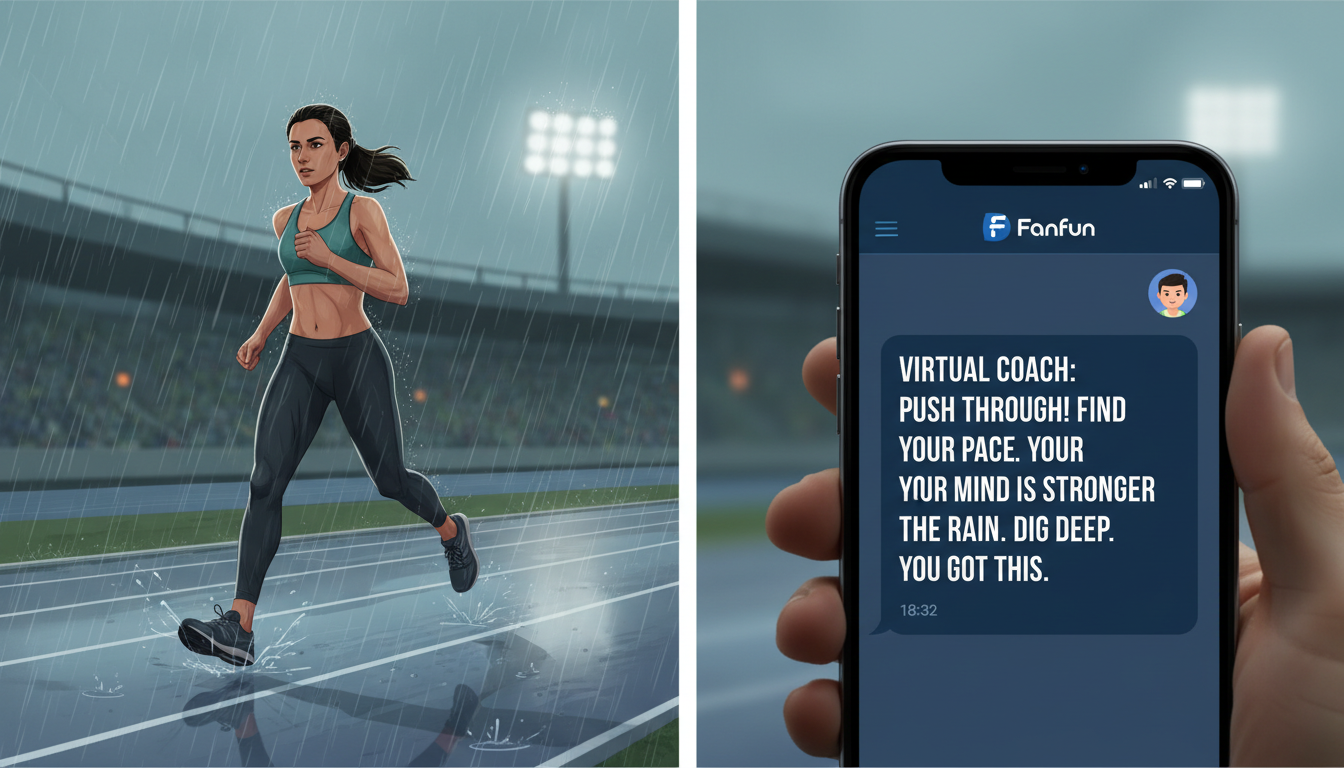
Use this prompt when you need high-intensity mental conditioning and pre-performance motivation. It simulates the raw, urgent energy of a trainer pulling you back into focus before the final round. Borrowing high-intensity training arc protocols used for virtual heroes can elevate your mental conditioning sessions, and applying that same relentless energy to a sports context yields incredibly powerful results.
The Prompt: "I am heading into the final, most grueling stretch of my training today, and my mind is telling me to quit. Act as my corner-man. Grab my shoulders, look me in the eye, and give me a high-intensity, no-nonsense motivational speech. Remind me of what is at stake and tell me exactly how to block out the physical pain for the next twenty minutes."
3. The Scouting Report
This framework is ideal for structured preparation. Instead of asking for general advice, you feed the AI specific parameters about a real-world challenge—such as a local tournament, a marathon route, or a difficult professional presentation—to get a customized strategy.
The Prompt: "I am preparing for a [insert event, e.g., 10k run with heavy hills / local tennis tournament] in three weeks. My biggest weakness is [insert weakness, e.g., pacing early on / handling fast-paced serves]. Act as my head coach. Break down a highly structured, three-step scouting report detailing how I should manage my energy and attack this specific challenge."
Choosing Your Role: A Framework for Locker Room Dynamics
The dynamic of your chat depends entirely on the role you assign to yourself. If you do not define your relationship with the virtual athlete, the AI will default to a polite, distant fan-to-celebrity relationship. Explore our foundational guide to the locker room protocol for a deeper dive into setting up these sports-specific dynamics. To keep your sessions focused and highly engaging, use the framework below to choose your stance before starting the chat:
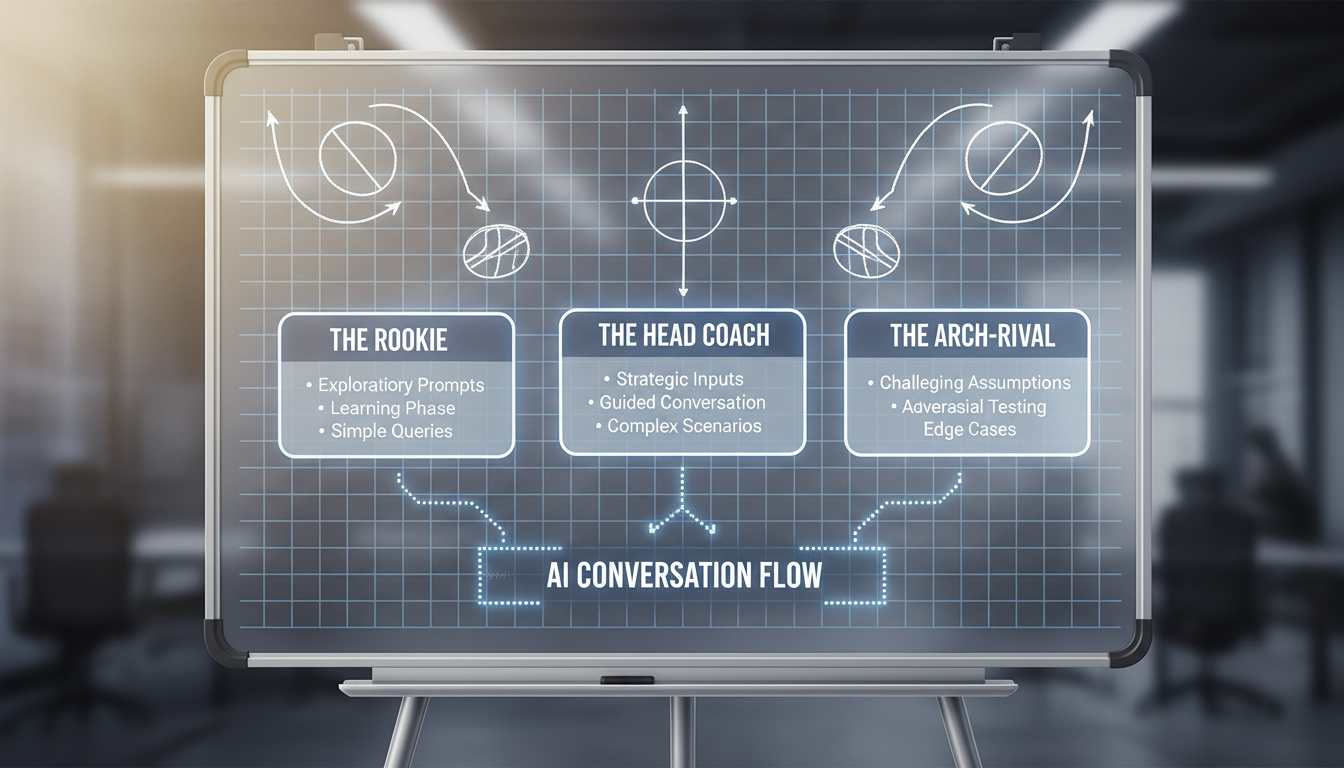
| User Role | User's Stance | AI's Tone | Best Use Case |
|---|---|---|---|
| The Rookie | Eager to learn, open to tough love, asking for direct feedback. | Demanding, mentoring, focused on fundamentals and accountability. | Overcoming performance plateaus and building mental discipline. |
| The Head Coach | Authoritative, setting the game plan, demanding execution. | Competitive, highly analytical, challenging your strategic decisions. | Testing your own tactical sports knowledge and strategic thinking. |
| The Arch-Rival | Confident, challenging, trading competitive banter. | Sharp, competitive, trash-talking but highly professional. | Fueling raw training motivation and building emotional resilience. |
Bypassing the PR Filter: Directing Your Virtual Athlete for Realism
Even with a solid prompt, an AI can sometimes slip back into safe, polite default loops after a few exchanges. If your virtual sparring partner starts sounding like a corporate brand ambassador rather than a fierce competitor, you need to apply direct, tactical intervention. Apply advanced character direction techniques to ensure your virtual partner maintains their competitive edge and stays locked into the high-stakes reality of your scenario.
One of the most effective ways to break the polite facade is by using "off-the-record" framing. You can inject a meta-instruction directly into your chat. For example, if the AI gives a soft, generic response, reply with: "[Cut. Let's speak off-the-record, locker room style. No PR answers. Give me the raw, unfiltered truth about why my pacing strategy is failing.]" This brackets-based directing technique signals to the AI's underlying model that it needs to drop the public persona and lean heavily into the competitive, candid side of its character profile.
Additionally, do not hesitate to set explicit intensity levels. Tell the AI: "Speak to me with an intensity level of 9 out of 10. If I make excuses, call me out on them instantly." By setting these behavioral parameters, you transform a simple chat interface into a highly responsive, personalized mental conditioning chamber.
Translating Virtual Huddles into Real-World Gains
A high-fidelity roleplay session is only as valuable as the action it inspires in the real world. To turn your virtual huddles into tangible athletic or professional progress, you must establish a continuous feedback loop. After a grueling workout, a tough run, or a stressful competitive event, return to your Fanfun chat and update your virtual coach or rival on the outcome. Tell them what worked, where you faltered, and how your mental game held up under pressure.
This interactive loop helps you actively debug performance anxiety and imposter syndrome. By externalizing your doubts to a virtual mentor who "has been there before," you strip those anxieties of their power. You can also leverage Fanfun's AI voice generator to take these sessions a step further. By converting your virtual coach's custom tactical advice or high-intensity corner-man speeches into audio tracks, you can listen to personalized motivational cues during your warm-ups, gym sessions, or morning runs.
Ultimately, virtual athlete chats bridge the gap between passive sports entertainment and active self-improvement. By taking control of the narrative, setting high-stakes scenarios, and demanding raw, tactical realism, you turn the wisdom of elite sports icons into fuel for your own personal victories.
How do I make an AI athlete sound more competitive and less polite?
To break past the polite "PR filter," use explicit behavioral instructions in your prompts. Tell the AI to give "no-nonsense, unfiltered feedback" and to "call out excuses instantly." You can also use off-the-record framing, such as wrapping instructions in brackets like: "[Speak to me like a coach in a closed locker room, not a public press conference.]"
Can I use virtual athlete chats to help plan my actual workout routine?
Yes. By feeding the virtual athlete specific parameters about your current fitness level, your target goals, and your immediate bottlenecks (e.g., struggling with endurance on hills), you can prompt the AI to generate structured, step-by-step training strategies and mental preparation blueprints.
What are the best prompts to get tactical sports advice from an AI?
The best prompts establish high stakes, clear roles, and concrete constraints. Instead of asking open-ended questions, use structured frameworks like "The Half-Time Adjustment" or "The Scouting Report," which place the AI in a specific high-pressure scenario where they must analyze a problem and deliver immediate, actionable solutions.
How does chatting with a virtual athlete compare to watching sports interviews?
Watching interviews is a passive, one-way experience where athletes often give safe, media-trained answers. Chatting with a virtual athlete on Fanfun is highly interactive, allowing you to co-create a personalized, high-stakes scenario where the athlete speaks directly to your specific training challenges, mental blocks, and competitive goals.