The Piper Rockelle Playbook: How a Teen Icon is Redefining the Creator Lifecycle as She Ages
Piper Rockelle's transition from a pre-teen YouTube sensation to a mature digital entrepreneur is a masterclass in modern brand management. Discover how she and other top teen creators scale their influence using interactive media.
The creator economy moves at a breakneck pace, but few transitions are as challenging to navigate as the shift from child star to mature digital entrepreneur. When an influencer builds their entire brand on pre-teen relatability, aging up isn't just a personal milestone—it is a high-stakes business pivot. In the traditional entertainment industry, child actors often struggled to break free from the characters that made them famous. In the digital age, creators face an even more intense version of this challenge, as they do not play characters; they play stylized versions of themselves.
Piper Rockelle, born on August 21, 2007, has spent the better part of her life under the digital microscope. As she navigates her late teens, her trajectory offers a masterclass in modern brand management, demonstrating how to scale a creator business when physical presence alone can no longer satisfy a global fanbase. By analyzing her transition, we can uncover a blueprint for how next-generation talent can future-proof their brands using interactive media, intellectual property (IP) diversification, and cutting-edge technology.
The Timeline: Mapping Piper Rockelle’s Rise from Child Star to Teen Mogul
Born in Georgia, Piper Rockelle entered the entertainment world through beauty pageants and competitive gymnastics before finding her true calling online. By the time she was a pre-teen, her YouTube channel had exploded, driven by high-energy vlogs, prank videos, and her famous 'squad' of young creators. Unlike traditional child actors bound by network schedules, Piper operated as her own media house, publishing multiple videos a week to an audience that quickly grew into the millions. This relentless production schedule allowed her to capture the attention of Gen Z and Gen Alpha, turning her daily life into a highly engaging, episodic reality show.
This digital-native upbringing created a fundamentally different relationship with her audience compared to traditional Hollywood stars. To understand the difference, we can compare Piper's digital-first trajectory to the traditional television-to-social-media path of other Gen Z stars like Malachi Barton. While traditional television stars rely on studio backing, casting directors, and episodic network releases to sustain relevance, digital-first creators like Piper must maintain constant, direct touchpoints with their audience. This direct-to-consumer relationship accelerates both their personal growth and the commercial maturity of their brands, forcing them to become business executives while still in high school.
The Creator Lifecycle: How Aging Up Changes the Fan-Creator Dynamic
As a creator grows, so does their audience. For Piper Rockelle, the fans who watched her early challenge videos as nine-year-olds are now teenagers navigating high school and preparing for college. This 'growing up together' phenomenon is a powerful driver of brand loyalty, but it introduces a critical challenge: content must mature at the exact pace of the audience. If a creator stays too juvenile, they lose their original demographic; if they pivot too fast, they alienate parents and younger viewers who are just discovering their archive.
Sustaining this balance while avoiding burnout is incredibly rare. This challenge of retaining an audience while maturing is a common hurdle, as seen in the gaming community with icons like FaZe Adapt. Whether transitioning from competitive gaming or kid-friendly lifestyle vlogs, the pressure to constantly reinvent oneself while keeping millions of fans engaged requires a shift from personality-driven content to scalable intellectual property. Creators must stop being just the face of the brand and start building an ecosystem that can run without their constant physical presence.
Additionally, the nature of what makes a creator successful changes as they age. While young creators often rely on raw energy and slapstick humor, older creators must find sustainable hooks. This is where we see the contrast with creators like Druski, whose comedy is built on universal relatability rather than a specific age bracket or aesthetic. For lifestyle creators like Piper, the path forward requires blending this organic relatability with aspirational elements as they transition into adulthood.
The Parasocial Shift from Peer to Aspirational Icon
Early-stage creator content thrives on extreme relatability. Fans watch vlogs because the creator feels like a friend they could hang out with after school. However, as a creator enters their late teens, the dynamic shifts from peer-to-peer relatability to aspirational lifestyle branding. For Piper, this has meant moving away from basic challenge videos and leaning heavily into high-end fashion, original music releases, and professional lifestyle content. She is no longer just the girl next door; she is a young fashion icon and media entrepreneur.
The Scalability Problem of Human Touchpoints
This aspirational shift presents a unique logistical paradox. While fans still crave the intimate connection they felt during the early vlog days, the sheer scale of a multi-million-follower audience makes physical touchpoints—like meet-and-greets, physical mail, or individual comment replies—physically impossible. A creator's time is finite. When a star is split between recording music, managing business partnerships, and filming content, they face a severe time-poverty problem.
To build a lasting legacy that outlives the temporary nature of youth, creators must find ways to digitize their unique charm. As we see with iconic figures like TS Madison, building a legacy is about the power of an unapologetic voice that transcends age. For teen creators, capturing their distinct voice and personality in a scalable digital format is the key to maintaining that deep, personal connection with millions of fans simultaneously.
The Quico Effect: Immortalizing Creative Eras
One of the most fascinating aspects of a creator's lifecycle is the nostalgia associated with specific eras of their career. Just as fans of classic television hold onto iconic characters, digital fans often nostalgicly revisit a creator's early 'squad' days or specific video formats. When a creator ages, they physically move past these eras, but the demand for that specific style of content remains.
This phenomenon is highly visible in physical comedy and character-driven entertainment. The Quico Effect demonstrates why physical comedy and highly distinct character archetypes are perfect for the AI age. By translating specific eras, catchphrases, and comedic styles into digital assets, creators can preserve their most beloved personas forever. For a creator like Piper Rockelle, this means her iconic early-teen persona can live on through interactive AI experiences, allowing new, younger fans to interact with the 'squad era' Piper, even as the real-world Piper focuses on launching adult fashion lines and music careers.
The Business of Growing Up Online: Fanfun as the Ultimate Multiplier
For aging creators, relying solely on traditional monetization models like YouTube AdSense and physical merchandise is a recipe for stagnation. Modern digital moguls must diversify into scalable, interactive media that can run independently of their physical time. This is where next-generation platforms like Fanfun are redefining the creator economy. By offering a sophisticated alternative to passive fandom, Fanfun enables creators to scale their likeness, voice, and personality through interactive technology.
At Fanfun, we view this shift not as a replacement for human creativity, but as its ultimate multiplier. Through advanced tools like personalized AI videos, custom voice generators, and interactive AI chats, creators can offer their fans highly personalized, instant interactions at scale. For a teen mogul like Piper, whose schedule is packed with production demands, these tools solve the time-poverty problem entirely. Instead of spending hours recording individual birthday shoutouts or holiday wishes, an AI-driven system can deliver custom, high-quality video and voice messages to thousands of fans instantly, preserving the creator's time while deepening fan loyalty. This is the modern evolution of the Cameo alternative—moving from static, expensive, delayed videos to instant, affordable, interactive media.
The Teen Creator Playbook: Key Milestones for Building a Long-Term Brand
To successfully transition from a young internet personality to a lasting cultural brand, creators need a structured approach to their content and business models. Different niches require different strategies. For instance, we can contrast Piper's lifestyle-and-squad playbook with the hyper-focused athletic branding used by teen sports prodigies like Eli Ellis. While athletes build authority around physical performance, training regimens, and competitive achievements, lifestyle creators must build an ecosystem around personality, aesthetic, and direct fan interaction.
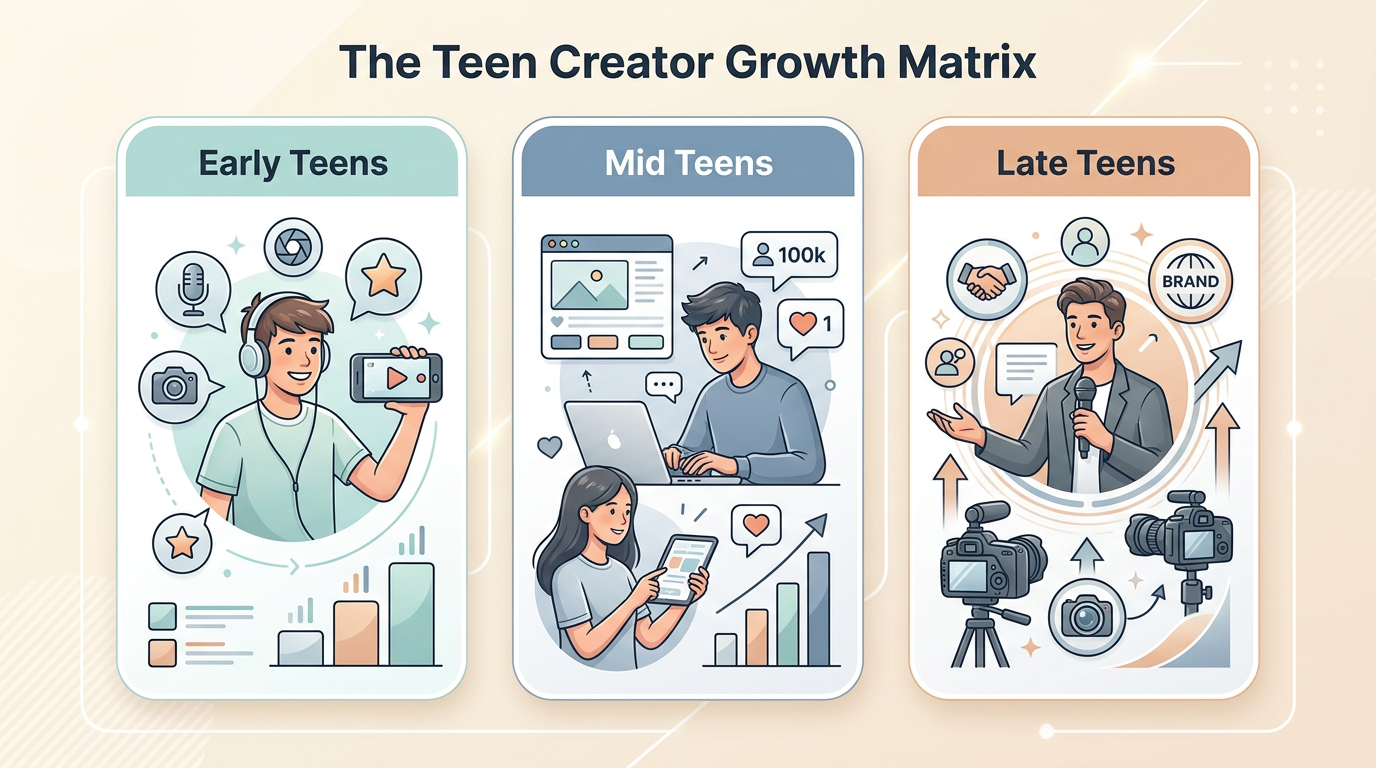
The table below outlines the critical transition phases for teen creators, highlighting how their content, monetization, and audience engagement must evolve to ensure long-term viability.
| Phase | Content Focus | Monetization Strategy | Audience Engagement Strategy |
|---|---|---|---|
| Early Teens (Ages 10-13) | High-energy vlogs, challenges, squad collaborations, relatable humor. | AdSense, basic merchandise, family-friendly brand deals. | High-volume comment interaction, fan mail, community polls. |
| Mid Teens (Ages 14-16) | Behind-the-scenes content, music videos, narrative storytelling, style evolution. | Premium brand partnerships, direct-to-consumer product lines, music streaming. | Sparsely scheduled meet-and-greets, coordinated social media campaigns. |
| Late Teens / Young Adult (Ages 17+) | Aspirational lifestyle, fashion, entrepreneurial ventures, mature media projects. | IP licensing, scalable tech partnerships (e.g., Fanfun interactive media), equity deals. | Scalable personalization (AI voice generator, interactive chat, instant video). |
Why Next-Gen Fandom Demands Scalable Personalization
Piper Rockelle’s evolution from a pre-teen sensation to a seventeen-year-old digital mogul proves that the traditional, passive model of fandom is no longer sufficient. Gen Z and Gen Alpha fans do not want to simply sit back and watch a pre-recorded video; they expect direct, interactive, and instant communication with their favorite icons. They want to hear their name spoken in a birthday message, get advice in a chat, and feel like an active participant in the creator's world.
Platforms like Fanfun are bridging this gap by making personalized celebrity interactions affordable, instant, and highly accessible. By embracing scalable interactive technology, the next generation of creators can build sustainable businesses that grow alongside their audience, ensuring that their brand remains vibrant, relevant, and deeply connected for years to come. The future of the creator economy isn't just about broadcasting; it's about interaction, and the creators who master this scalability will be the ones who define the next decade of digital entertainment.
How old is Piper Rockelle and when is her birthday?
Piper Rockelle was born on August 21, 2007, making her 17 years old. Her birthday is celebrated annually on August 21st.
How did Piper Rockelle get famous at such a young age?
Piper initially gained traction through competitive gymnastics and beauty pageants, but her massive breakthrough came on YouTube. Her combination of high-energy vlogs, creative challenges, and collaborative 'squad' content resonated strongly with Gen Z and Gen Alpha audiences.
How does Piper Rockelle manage her brand as she gets older?
As she matures, Piper is transitioning her brand from child-friendly vlogs to lifestyle content, professional music releases, and fashion. She also focuses on scalable business models that allow her to maintain fan engagement without burning out.
Can fans get personalized video messages or chats from Piper Rockelle?
While traditional physical meet-and-greets are limited due to her busy schedule, next-generation platforms like Fanfun offer a modern alternative. Through AI-driven personalized videos, voice generators, and interactive chats, fans can connect with digital interpretations of their favorite stars instantly and affordably.