Beyond the Request: How to Master the Art of the Personalized Celebrity Message
The era of waiting weeks for a celebrity clip is over. Learn how to leverage AI to create immediate, iterative, and hyper-personalized content that fits your creative vision.
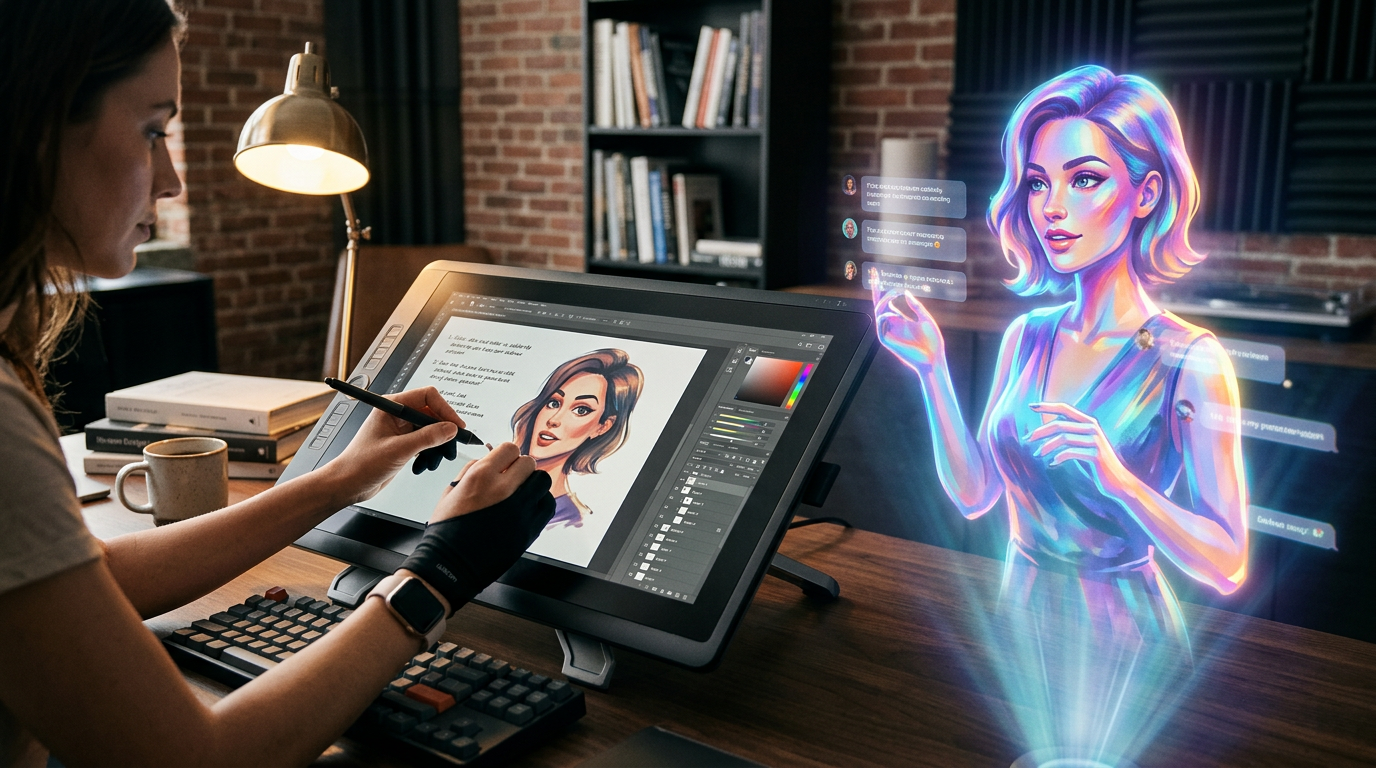
The traditional model of personalized celebrity messaging has long been defined by friction. You pay a premium, submit a request, and enter a waiting game that can last weeks, often yielding a result that is static or misaligned with your original vision. For creators, marketers, and fans seeking specific, high-energy content, this process is fundamentally at odds with the pace of modern digital culture. The bottleneck isn't just the cost; it's the lack of control over the final output.
The shift toward AI-driven platforms like Fanfun has fundamentally altered this landscape. By moving from a passive request-and-wait model to an active, iterative creation process, you gain total control over the script, the tone, and the delivery. Whether you are generating a roast for a birthday, a motivational promo for your brand, or a meme for your social feed, the ability to iterate in real-time allows you to refine your content until it hits perfectly. This is the new standard for digital expression, where your creative intent is no longer limited by human availability.
Selecting Your Persona: Matching Tone to Task
Not every persona serves every purpose. A successful AI-generated message relies on a "Vibe Check": matching the weight of your message to the persona's established brand equity. If you are aiming for a high-energy, laid-back roast, selecting an interpretation like a Snoop Dogg persona provides an instantly recognizable cadence that elevates the comedy. Conversely, if you need a dose of high-stakes motivation or a "tough love" message, utilizing a Dwayne Johnson AI persona brings a level of intensity and sincerity that resonates with viewers.

When selecting your persona, consider the "emotional payload" of your content. Are you looking to inspire, to entertain, or to shock? For sports-centric content, the gravitas of a Kobe Bean Bryant or Shaq persona carries a built-in cultural weight that immediate, generic voices cannot replicate. Always align the persona with the audience's expectation; a mismatch here is the quickest way to lose engagement. If you are producing content for a younger audience, the persona must feel relevant; for nostalgia-based projects, lean into the specific era of the icon’s career that your audience connects with most.
The Persona Framework
To help you choose the right voice, consider these three archetypes:
- The Motivator: Best for birthdays, career milestones, and encouraging content. Look for personas with authoritative, high-energy delivery.
- The Icon: Ideal for memes and cultural commentary where the specific style of the individual is the joke itself.
- The Storyteller: Perfect for dramatic readings or longer-form creative projects where vocal texture and pacing are paramount.
Scripting for AI: The Secret to Natural Delivery
AI performance is only as good as the input it receives. When writing for an AI voice generator, you must write for the ear, not the eye. Avoid overly formal syntax and long, complex sentences. Instead, lean into contractions, conversational slang, and the natural rhetorical patterns of the person you are channeling. The "Persona Injection" technique is vital here: include catchphrases or signature verbal tics that fans associate with the icon to ground the performance.

For example, if you are crafting a message using a Donald Trump AI voice, focus on his recognizable rhetorical cadence—repetition, hyperbole, and specific pacing—rather than just the words themselves. By treating the script as a musical score rather than a document, you allow the AI to deliver an interpretation that feels authentic and purposeful. If the first generation feels off, don't settle; tweak the punctuation and phrasing to nudge the rhythm until it lands perfectly. Even a misplaced comma can change the emphasis of a sentence, turning a flat delivery into a punchy, memorable line.
The Power of Iteration and Scaling
One-off videos are useful, but the real power of AI tools lies in their ability to scale. Professional creators are now using these platforms to build consistent, serialized narratives. Because you can iterate in minutes, you can produce a week's worth of content in the time it would take to book a single traditional cameo. This speed allows for A/B testing: try two different scripts with the same persona and see which one performs better with your audience. This iterative cycle is the hallmark of modern digital content creation.
Consider the potential of a long-form tribute, such as using a 2Pac persona to narrate a retrospective on hip-hop history. By breaking the script into manageable, thematic segments, you can maintain the persona's voice while delivering a complex, multi-layered narrative that would be impossible to coordinate with a live talent. This is where Fanfun shines: it provides the technical infrastructure for creators to experiment without the logistical overhead. You aren't just buying a clip; you are building a library of assets that can be repurposed across platforms.
The Technical Edge: Why Iteration Beats Perfection
The biggest mistake creators make with AI is expecting the first draft to be the final version. Unlike traditional media, where production is linear and expensive, AI-driven content is fluid. If a joke doesn't land, change the word order. If the pacing feels too fast, add a pause or a line break. This is the "edit-in-the-moment" philosophy. Use the platform’s interface to test how the persona handles different emotional inflections. By viewing the AI as a collaborator rather than a magic button, you unlock a higher tier of quality. The most successful Fanfun users treat their first few generations as "sketches," refining the script until the AI's output matches the internal vision they held before they even started typing.
Ethical and Creative Boundaries
As with any powerful creative tool, the key is intentionality. AI interpretations of celebrities and characters are designed as tools for fandom, expression, and satire—not as a means to deceive. Maintaining respect for the public figures you are channeling is essential to the longevity of your work. The most successful content is that which celebrates the persona's legacy, leans into their established archetypes, and provides genuine value to the viewer. By using these tools to create, rather than to disparage, you contribute to a more vibrant and imaginative digital landscape.
Finally, remember that the audience is savvy. They know the difference between a low-effort clone and a well-crafted, thoughtful tribute. When you prioritize quality and creative intent, you aren't just using an AI tool; you are participating in a new form of digital storytelling that respects both the technology and the cultural icons that fuel our collective imagination.
How does an AI voice generator differ from a real cameo?
A real cameo is limited by the celebrity's schedule, cost, and willingness to record a specific script. AI-generated versions are instant, repeatable, and allow for total creative control over the content, making them ideal for high-volume or experimental projects.
Can I use AI celebrity voices for commercial projects?
AI voices on platforms like Fanfun are designed for creative expression, fan engagement, and personal projects. Always review the platform's specific terms of service regarding commercial usage and intellectual property before using them for branded or paid advertisements.
What makes Fanfun different from other AI voice platforms?
Fanfun specializes in instant, interactive experiences. Unlike static voice generators, we offer two-way interactive chats, video generation, and a curated library of both real-world icons and fictional characters, all designed to be accessible and fun for creators.
How do I ensure my AI-generated video sounds natural?
Write your scripts exactly as you would speak them in conversation. Use contractions, natural pauses, and the signature vocabulary of the persona. If the cadence isn't right, use punctuation (commas, ellipses) to force natural pauses in the AI delivery.