The Art of the Impression: Why Kayvan Novak’s Characters Changed Comedy Forever
Kayvan Novak’s genius lies in his ability to inhabit disparate archetypes instantly. Here is how modern creators can use AI to build a 'character stable' that functions with the same speed and humor.

Kayvan Novak’s Fonejacker remains a masterclass in comedic commitment. His ability to instantly switch from an aggressive, fast-talking car salesman to a confused elderly man or a bureaucratic pest wasn't just about voice modulation; it was about the absolute conviction he brought to every persona. For modern creators, the challenge is how to replicate that versatility without spending decades in acting school or hiring a full production crew to manage distinct character segments.
The goal is to move from static, one-note content to a dynamic, multi-character ecosystem. By leveraging technology, you can achieve the same rapid-fire character switching that Novak pioneered, turning your social media feed into a digital sketch comedy troupe. This approach allows you to explore different comedic angles, test new personas, and engage your audience with a level of variety that was previously impossible for solo creators.
The Anatomy of a Character Bit
Novak’s characters succeed because they are built on a specific, recognizable 'hook.' Whether it’s the specific cadence of a character who is perpetually stressed or the vocabulary of someone entirely out of touch with the modern world, the hook serves as the audience's anchor. Without this, a character is just a voice; with it, they are a narrative device. In content creation, the 'prank' or the interaction is secondary to the believability of the character behind it. If the audience doesn't buy the persona, the joke loses its punch.
To build a sustainable comedy brand, you must prioritize the internal logic of the character—their motivations, their fears, and their catchphrases—above the technical aspects of the recording. Think of how iconic figures like Spongebob Squarepants occupy a specific space in the cultural consciousness; they are defined by a consistent, immutable personality that makes them instantly recognizable regardless of the scenario. When you build your own cast, you are not just making noises; you are crafting a brand asset that can be deployed across different content formats.
Why Consistency Beats Variety
Many creators fall into the trap of constantly changing their voice or style, hoping that novelty will drive engagement. However, the most successful comedic characters rely on a 'predictable unpredictability.' Your audience should know exactly how a character will react to a specific stimulus, but they should be surprised by the specific words they choose. This is where a 'Character Bible' becomes essential. Documenting the specific vocabulary, typical emotional state, and physical tics of your characters ensures that every time you deploy them, they feel like the same person, even if the situation changes.
From Fonejacker to AI: Scaling Your Own Comedy
The barrier to entry for character comedy has collapsed. Previously, you needed to be a master impressionist or have access to professional studio talent. Now, the shift from manual voice acting to AI-assisted generation allows creators to experiment with multiple personas in real-time. Platforms like Fanfun allow you to generate content that feels like it’s coming from a diverse cast of characters, effectively giving you a 'character stable' without the overhead of production.
Consistency is the hidden engine of audience retention. When your followers recognize a specific 'brand' of humor tied to a recurring character, they feel a sense of familiarity. By using AI to maintain that vocal consistency across dozens of videos, you create a recognizable, repeatable comedic rhythm. Whether you are experimenting with the gravitas of a Dwayne Johnson AI model or a high-energy, sports-centric persona like Shaq, the key is to treat each AI interaction as a building block for your larger narrative. This isn't just about mimicry; it's about using the power of AI to amplify the comedic potential of your existing ideas.
Building Your Own Character Stable
To start, you need an 'Archetype Audit.' Look at your current content. If you lean heavily into the 'stoic hero,' you are missing the potential for a 'chaotic prankster' or a 'confused sidekick' to provide contrast. Your goal is to develop a vocal signature for your own creations that acts as a shorthand for the audience. Use a 'Character Bible' to track these traits:
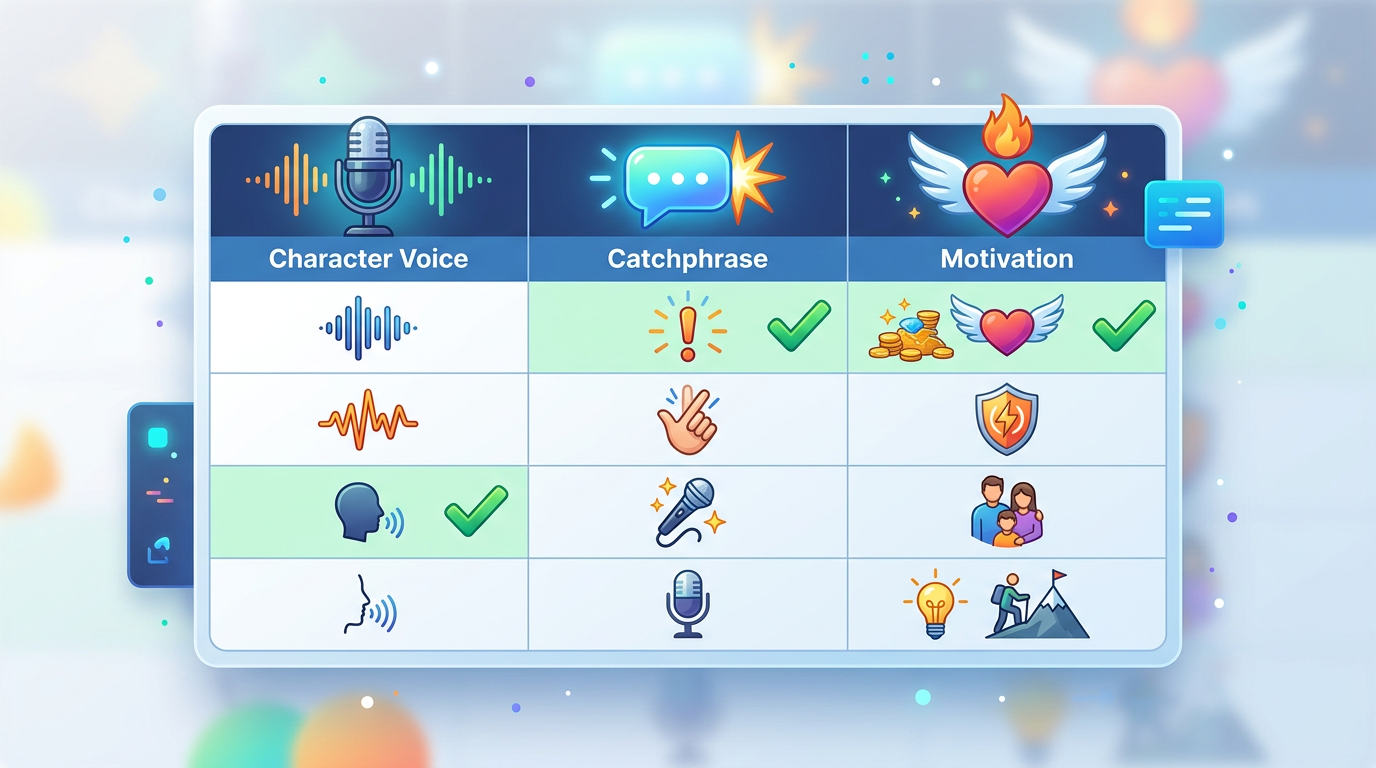
- Motivation: What does this character want? Are they trying to sell something, cause trouble, or just get through their day?
- Catchphrase: A short, rhythmic phrase that punctuates the character’s speech and ties their identity together.
- Vocal Signature: Is the character high-pitched? Do they speak with a specific regional inflection? Are they breathless or booming?
Comparing static voice tools to interactive AI personas is essential for growth. Static tools are fine for one-off voiceovers, but interactive AI allows for a 'live' feel. When you use a platform like Fanfun, you aren't just layering audio; you are creating a persona that can respond and adapt, making your content feel less like a monologue and more like an immersive experience. This is vital for creators who want to emulate the spontaneity of Kobe Bean Bryant-style motivational content or the pop-culture relevance of a Sydney Sweeney-inspired interaction.
The New Rules of Digital Interaction
The 'celebrity-as-a-service' model is evolving into 'character-as-a-service.' Audiences no longer want to just watch; they want to engage. By moving beyond the passive 'Cameo' style of one-way messaging, you can use AI to build a dialogue-heavy content strategy. Think about how a character like Mickey Mouse carries a brand through pure interaction; you can apply this same principle to your own original characters.

The future of content isn't just about what you say—it's about how your characters interact with the world you've built for them. Whether you are generating a quick roast, a birthday surprise, or a long-form story, the ability to iterate at the speed of thought is what separates the creators of today from the traditionalists of yesterday. By embracing these tools, you aren't just saving time; you are unlocking a new tier of creative freedom that allows you to experiment with characters and scenarios that would have been cost-prohibitive or physically impossible only a few years ago.
How do I create a voice for a character like Kayvan Novak's?
Focus on a single, exaggerated trait—like extreme impatience or confusion—and pair it with a specific vocal rhythm. Use AI tools to iterate on pitch and speed until the voice matches the personality's energy.
Can AI tools help me write scripts for character-led comedy?
Yes, AI is excellent for brainstorming character responses. You can use it to generate 'in-character' dialogue based on the specific traits and motivations you've defined for your persona.
What is the best alternative to Cameo for interactive character content?
Fanfun is the ideal alternative, as it offers instant, interactive AI personas that allow for two-way communication, rather than waiting for a pre-recorded video clip.
How do I maintain character consistency across multiple videos?
Keep a 'Character Bible' that notes the character's catchphrases, typical vocabulary, and the specific AI voice parameters you use. Consistently applying these settings across all your content will ensure the character remains recognizable.