The John Noble Playbook: How to Balance Eccentric Genius and Tragic Authority in Character-Driven Content
Discover the exact writing and vocal techniques John Noble uses to balance childlike eccentricity with heavy, tragic authority. Learn how to apply these dualities to your own scripts and AI voiceover projects.
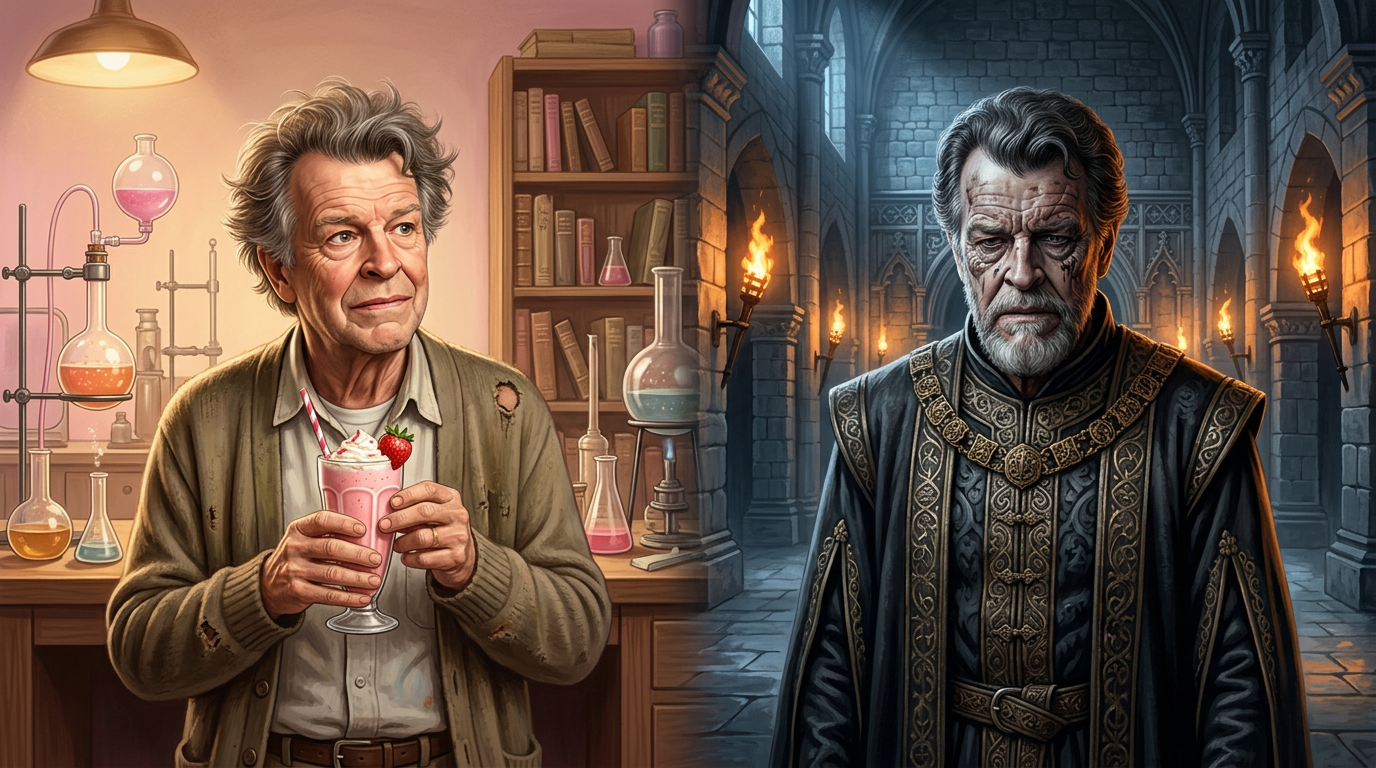
Great character-driven content does not rely on flat, one-dimensional archetypes. To keep an audience glued to a screen, a character must exist in a state of constant, captivating friction. Few actors have mastered this art of high-contrast duality quite like John Noble, whose legendary performances have redefined how we view both the eccentric mentor and the tragic antagonist.
By dissecting Noble’s work—specifically his roles as the beloved, mentally fractured scientist Walter Bishop in Fringe and the decaying, grief-stricken Steward Denethor in The Lord of the Rings—creators can unlock a powerful blueprint for writing. Whether you are scripting an immersive AI voiceover on Fanfun or designing an original character for a digital series, mastering this balance of high-stakes drama and quirky vulnerability is the secret to capturing modern audiences.
The Dual Appeal of John Noble: The Walter Bishop vs. Denethor Paradox
John Noble’s career is a masterclass in the psychological concept of character contrast. On one end of the spectrum, we have Dr. Walter Bishop: a man who can casually request a strawberry milkshake or a plate of warm custard while standing over a dissected corpse. He is childlike, deeply regretful, and physically fragile, yet possesses an intellect capable of tearing the fabric of the universe apart. On the other end lies Denethor II: a proud, unyielding ruler collapsing under the weight of his own grief, whose regal authority is as terrifying as it is pathetic.
This paradox is not a contradiction; it is a deliberate narrative strategy. When a character is entirely predictable—always serious, always goofy, or always evil—the audience's brain goes on autopilot. Extreme contrast creates cognitive friction. By making Walter Bishop deeply flawed and vulnerable, the high-stakes sci-fi plots of Fringe feel intensely personal. We do not just care if the universe collapses; we care because Walter might lose his son again, or because he is too distracted by a craving for red licorice to notice the danger. This vulnerability-driven stakes model is what separates unforgettable characters from generic plot devices.
The 'Mad Genius' Blueprint: Writing Quirky, High-Stakes Dialogue
Writing a "mad scientist" or an eccentric mentor is a high-wire act. Lean too far into the eccentricity, and the character becomes a cartoon; lean too far into the genius, and they become a dry exposition delivery system. To write like Noble, you must ground complex intellectual concepts in highly specific, sensory details.
Instead of having your character explain a quantum physics anomaly using purely clinical terms, have them compare the phenomenon to something mundane, warm, or edible. Walter Bishop frequently uses food, music, and physical textures to navigate his shattered mind. This grounding does two things: it makes complex lore digestible for the audience, and it humanizes an otherwise intimidating intellect.
Furthermore, the "mad genius" dialogue relies heavily on the sudden emotional shift. A character should transition from manic, wide-eyed curiosity to profound, crushing guilt in a single sentence. For example: "The temporal displacement was a magnificent success, truly a triumph of modern engineering! Though... I suppose the heat did melt the flesh right off the test subject's bones. He had a family, didn't he? I wonder if there is any pudding left." This rapid cycling between light and dark keeps the audience off-balance, ensuring high retention because they can never guess where the character's mind will drift next.
The 'Non-Sequitur Pivot' Technique
One of Noble’s most potent narrative weapons is the non-sequitur pivot. This is the art of breaking intense, high-stakes dramatic tension with an absurd, hyper-focused mundane desire. In Fringe, Walter Bishop famously interrupts critical investigations of biological terror to demand a specific record be played, or to ask if anyone has seen his favorite cardigan.
This technique acts as a vital pressure valve for the audience. In heavy sci-fi, fantasy, or dramatic narratives, sustained tension eventually leads to viewer fatigue. By inserting a sudden, bizarre pivot, you give the audience permission to laugh, which instantly resets their emotional tolerance, allowing you to build the tension back up even higher.
Mastering the Narrative Release
When structuring these pivots, timing is everything. The pivot must occur at the absolute peak of the scene's tension, not during the quiet build-up. If a character is disarming a bomb, that is the exact moment they should complain about the texture of their socks. This juxtaposition highlights the character's unique psychological wiring and makes them incredibly endearing. For creators looking to refine their comedic and dramatic timing, mastering the pacing of high-impact voice scripting is essential to ensuring these sudden pivots land with maximum precision rather than feeling like sloppy writing.
The Anatomy of Tragic Authority: Crafting Compelling Antagonists
While Walter Bishop represents the eccentric side of Noble's genius, Denethor and Walternate (Walter's cold, parallel-universe counterpart) represent the dark side of authority. Writing a compelling antagonist requires avoiding cartoonish villainy at all costs. Noble’s antagonists are terrifying because their cruelty is rooted in a profound, unhealed loss or a warped sense of duty.
Denethor is not evil for the sake of being evil; he is a man who has looked into the palantír, seen the inevitable doom of his kingdom, and lost his favorite son. His cruelty toward Faramir is a manifestation of his despair and his inability to cope with his own powerlessness. To write a tragic authority figure, construct dialogue that is formal, rhythmic, and slightly archaic. Use short, absolute statements that project unyielding power, but allow the subtext to bleed with grief.
It is highly effective to contrast this tragic authority with the 'love-to-hate' antagonist energy that keeps viewers hooked on social media. While a modern social media antagonist might thrive on petty conflict and loud, high-retention drama, a Noble-style tragic antagonist commands attention through quiet, decaying majesty. They do not seek the audience's anger; they evoke a complex mixture of pity, terror, and awe.
Translating Noble's Vocal Dynamics to AI Voiceovers and Scripting
If you are using modern tools to generate character voices, simply writing great dialogue is only half the battle. You must also format your scripts to capture the theatrical, gravelly cadence that defines John Noble’s vocal delivery. Noble’s voice is characterized by its wide dynamic range, shifting effortlessly from a low, rumbling chest register to a light, airy head voice.
To achieve this in your digital audio projects, pay close attention to the power of the breathy pause. Noble rarely speaks in a continuous stream of words; he hesitates, gasps, and lets his voice trail off as if his thoughts are moving too fast for his vocal cords to keep up. These deliberate pauses convey aging intellect, deep sorrow, and psychological instability.
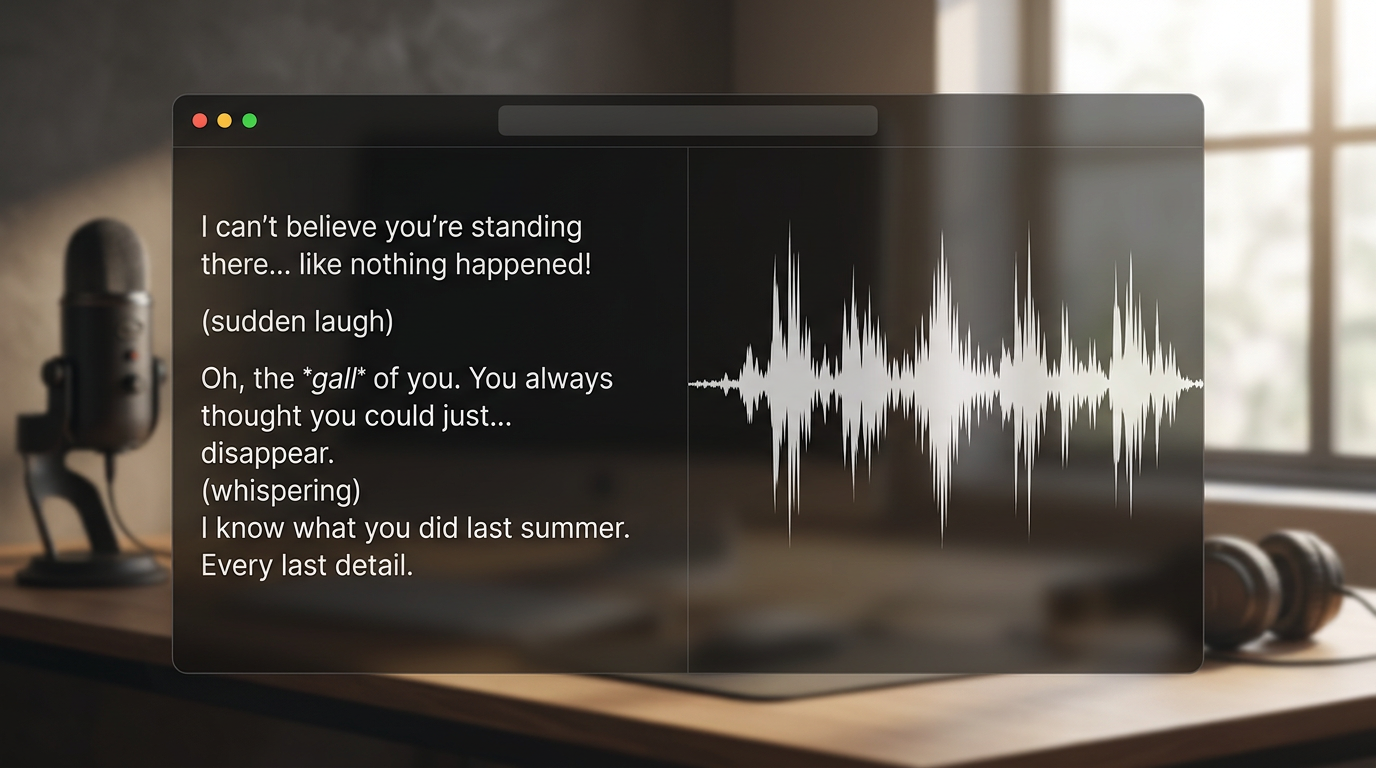
When preparing a script for an AI voice generator, use expressive formatting to guide the AI's performance. Instead of writing a flat block of text, break up the sentences with ellipses (...), em-dashes (—), and parenthetical directions. This approach is highly effective for injecting genuine soul and character depth into your voiceovers, turning a robotic reading into a deeply human, theatrical performance.
The Eccentric-to-Authoritative Dialogue Framework
To help you apply these writing techniques to your own content, let’s look at how a single, generic line of plot exposition can be completely transformed using John Noble's dual archetypes. The table below demonstrates how to inject either eccentric vulnerability or tragic authority into a standard script.
| Plot Objective | Generic Dialogue | The 'Walter Bishop' Spin (Eccentric/Vulnerable) | The 'Denethor' Spin (Tragic/Authoritative) |
|---|---|---|---|
| Explain that a machine is dangerous and must be shut down. | "We need to turn off this device immediately. If it continues to run, the power surge will destroy the entire building." | "Oh dear... the hum of the transformer is entirely the wrong pitch. It sounds like... yes, a dying swallow. If we don't cut the power, it will rip a hole in the floorboards. And I quite liked these floorboards. Plus, we will all disintegrate. Do we have any lemon drops left?" | "Let it burn. The fire of its destruction is but a pale reflection of the ash that already consumes this house. Turn it off if you must, but do not pretend your little switches can delay the inevitable end of our reign." |
| Command a subordinate to go on a dangerous mission. | "You have to go into the quarantine zone and retrieve the samples. It's the only way to find a cure." | "You must go back into the red zone. I know it's terrifying, my boy. The air there tastes of copper and old pennies. But if you don't bring back the vials... well, I shall never forgive myself for what the sickness will do to you." | "Go then. Ride into the shadow of our ruin. If you return with the prize, perhaps you will have earned a fraction of the love you so desperately crave. If not... do not trouble yourself to return at all." |
Script-Writing Checklist for Character Depth
Before you finalize your script or hit "generate" on your voiceover platform, run your dialogue through this quick diagnostic checklist to ensure it has the necessary depth:
- Does the character have a physical or sensory anchor? (e.g., referencing a smell, a taste, or a specific piece of music to ground their state of mind).
- Is there a clear emotional pivot? (e.g., a sudden shift from manic curiosity to quiet, crushing vulnerability).
- Does the antagonist's cruelty stem from a place of loss? (e.g., ensuring their anger is driven by grief or duty rather than pure malice).
- Are there rhythmic pauses written into the script? (e.g., using ellipses and dashes to force the voice generator or voice actor to slow down and breathe).
Bringing High-Stakes Character Depth to Interactive Fandom
Historically, creating characters with this level of theatrical depth required a massive production budget, a Hollywood casting director, and weeks of rehearsal. Today, the landscape of content creation has shifted. With Fanfun's advanced AI Voice and Video tools, creators, writers, and fans have an instant sandbox to experiment with these complex character dynamics.
Rather than passively watching legendary performances, you can now actively test your own scripts. By utilizing Fanfun to generate custom, high-fidelity character voices, you can hear exactly how a "non-sequitur pivot" or a "tragic authority" monologue sounds in real-time. This instant feedback loop allows you to refine your writing, build high-retention social content, or create deeply personalized interactive gifts for fellow fans—all within a matter of minutes.
What makes John Noble's portrayal of Walter Bishop so memorable?
John Noble's portrayal of Walter Bishop is memorable because of the extreme psychological contrast he brings to the character. He masterfully balances a brilliant, universe-altering intellect with childlike vulnerability, severe trauma, and quirky sensory fixations (like cravings for milkshakes or licorice). This duality makes him deeply endearing and humanizes the high-concept science fiction elements of Fringe.
How do you write dialogue for an eccentric genius character?
To write dialogue for an eccentric genius, ground their intellectual exposition in mundane, sensory details (such as food, music, or physical textures). Use sudden emotional shifts to transition the character from manic curiosity to profound guilt or sadness in a single sentence. This keeps the audience off-balance and highly engaged.
What is the difference between a tragic antagonist and a traditional villain?
A traditional villain often acts out of pure malice, greed, or a desire for power. A tragic antagonist, like Denethor, has their cruelty rooted in profound, unhealed loss, despair, or a warped sense of duty. Their actions evoke a complex mixture of pity, terror, and awe rather than simple frustration from the audience.
How can I make an AI voiceover sound more dramatic and theatrical?
To make an AI voiceover sound more dramatic, format your script with expressive punctuation such as ellipses (...), em-dashes (—), and parenthetical performance cues. This guides the AI generator to insert breathy pauses, vary its vocal pitch, and slow down the cadence to mimic the natural, heavy weight of a live theatrical performance.