The Anatomy of the Perfect Rant: What John C. McGinley Teaches Us About AI Voice Scripting
Master the structural secrets behind the iconic benevolent roast and get a practical framework for scripting high-energy, perfectly paced AI audio.
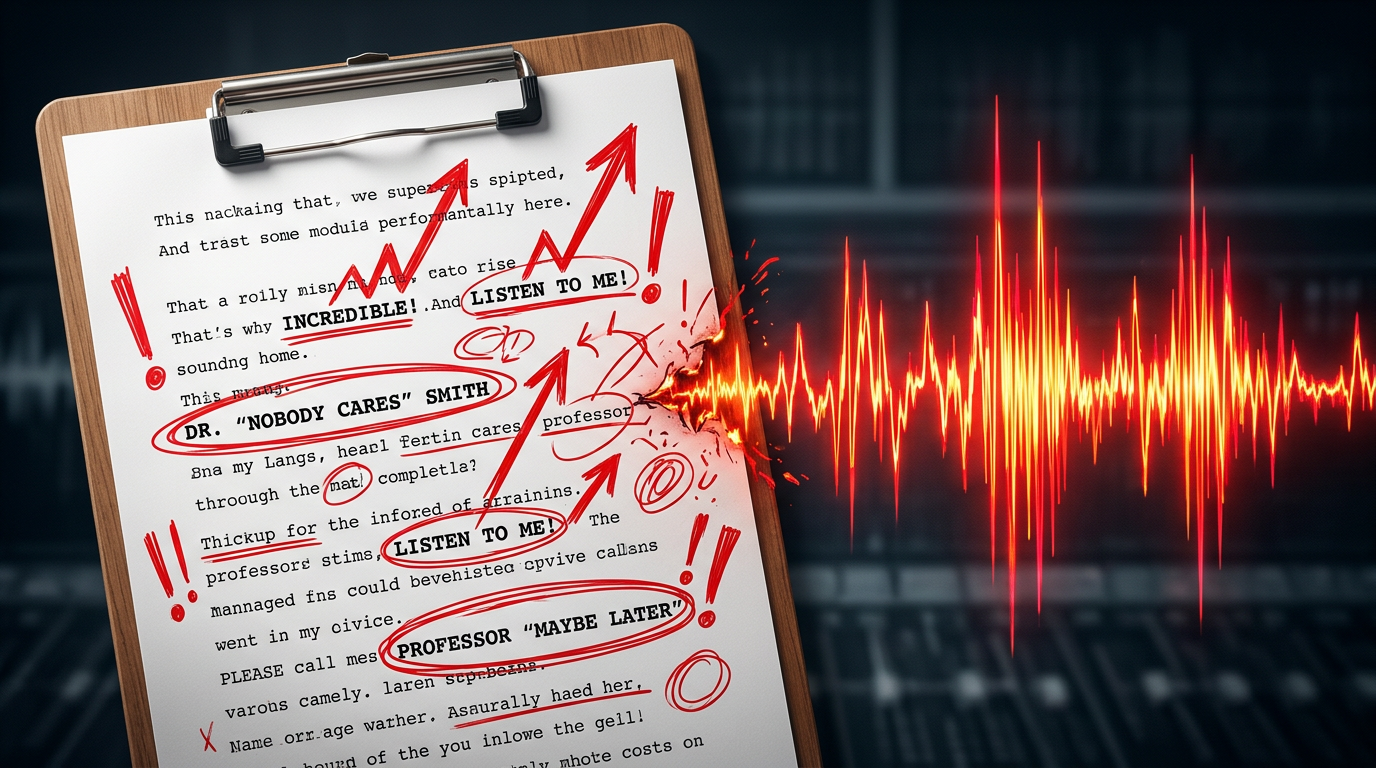
Great television rants are not just angry shouting; they are a masterclass in rhythm, breath control, and escalating absurdity. John C. McGinley’s legendary comedic performances perfected the art of the benevolent roast, delivering rapid-fire insults that somehow feel like twisted endearments. His delivery relies on a very specific cadence that commands attention and forces a laugh through sheer momentum.
Translating that specific comedic lightning into a digital format requires more than just typing a sarcastic paragraph into an AI voice generator. By treating McGinley’s vocal mechanics as a structural blueprint, creators can manipulate AI text-to-speech engines to deliver high-energy, perfectly paced audio. Mastering this technique elevates a standard digital greeting into a highly personalized, viral-worthy video that feels alive, intentional, and genuinely hilarious.
The Architecture of the Comedic Rant
To replicate a masterful comedic rant using AI, you first have to understand the physical mechanics of human delivery. The best comedic actors do not just read words; they use their breath, pitch, and pacing to create a musicality that makes the insult land with maximum impact.
First is the power of the deep breath. Before launching into a rapid-fire monologue, there is almost always an audible inhalation or a heavy pause—a physical signal to the listener that a tidal wave of words is about to hit. This pause creates anticipation. If an AI voice rushes straight into the first syllable without a beat of silence, the rant feels robotic rather than explosive. You have to script the silence just as carefully as the dialogue.
Next is staccato punctuation. The delivery relies on hitting hard consonants and using deliberate, micro-pauses to emphasize specific, often absurd, words. Instead of a flowing, grammatically correct sentence, the dialogue becomes a rhythmic drumbeat. Finally, the pitch-shift pivot is crucial. The most memorable rants often start in a high-pitched, mocking tone before dropping into a deadpan, serious register in a single sentence. This sudden shift in vocal weight catches the listener off guard and underscores the punchline.
The "Benevolent Roast" Blueprint for AI Scripts
AI voice generators read text exactly as formatted. To get the pacing shifts, dramatic pauses, and pitch changes required for a great rant, you have to write a script that forces the AI engine to behave like a character actor. This requires abandoning standard grammar in favor of exaggerated punctuation—using ellipses, em-dashes, and ALL CAPS to dictate the rhythm.
The Four-Part Roast Framework
Every great benevolent roast follows a predictable, escalating structure that you can easily adapt for your own content, whether you are punishing a fantasy football loser or sending a milestone birthday message:
- The Disarming Setup: Start with a deceptively gentle, overly formal, or drawn-out opening that lulls the target into a false sense of security.
- The Nickname Barrage: Interrupt the setup with a string of highly specific, slightly nonsensical nicknames that establish immediate dominance.
- The Rapid-Fire Escalation: Deliver the core message at breakneck speed, removing commas so the AI rushes through the text with breathless aggression.
- The Abrupt Dismissal: End on a deadpan, two-word conclusion that drops the energy to zero instantly.
When scripting this for AI, the difference between a standard input and an optimized input is night and day. The script is the sheet music; the punctuation is the conductor.
| Element | Basic Script Input (Flat Delivery) | Optimized Script (Dynamic Delivery) |
|---|---|---|
| The Setup | Listen to me carefully, David. | Loooook here... [pause] David. |
| The Nickname | You are acting like a little girl. | Listen to me, Susan... or should I say, Princess Sparkle-Toes? |
| The Escalation | You came in last in fantasy football, so you have to pay up now. | You finished LAST. In the league! So now? You pay the piper. Chop chop! |
| The Dismissal | Goodbye and have a good day. | Now go. Shoo. |
Casting Your AI Roastmaster
Writing a brilliant script is only half the equation; the delivery vehicle matters just as much. When you use Fanfun to generate a personalized video, selecting the right persona dictates how the sarcasm lands. You need a voice with natural authority, booming energy, or a distinct cadence that contrasts sharply with the text.
For a script built on aggressive, rapid-fire pacing, using a larger-than-life sports persona adds an unexpected layer of comedy. Imagine feeding a hyper-specific, sarcastic rant into the Shaq AI voice. The contrast between his naturally booming, deliberate cadence and a script filled with rapid-fire, absurd nicknames creates immediate comedic tension. If you want a high-energy, motivational-yet-tough delivery that commands the room, the Dwayne Johnson AI provides the perfect muscular enthusiasm to make a roast feel like an epic wrestling promo.
For pure, unadulterated trash talk—especially for gaming lobbies or sports bets—you need a persona known for relentless drive. Channeling your script through the Kobe Bean Bryant AI turns a simple fantasy league punishment into an intense, hyper-focused lecture on failure and redemption.
Conversely, for pure meme value, the best approach is often total subversion. Taking an aggressive, McGinley-style rant and running it through a completely unexpected, cheerful character—like a SpongeBob SquarePants voice or a Mickey Mouse voice—creates a jarring, hilarious juxtaposition that is perfectly suited for TikTok or group chats. Hearing a childhood icon deliver a ruthless takedown of your friend's terrible dating history is a guaranteed viral moment. If you prefer a deadpan, unbothered Gen Z delivery that makes the aggressive text sound effortlessly condescending, the Sydney Sweeney AI offers a brilliant contrast to the typical booming roastmaster.
Prompting for Sarcasm: Advanced Punctuation Tricks
To force an AI voice generator to pause, emphasize, and change tone, you have to write phonetically. The punctuation in your script acts as the direct control panel for the AI's vocal cords.
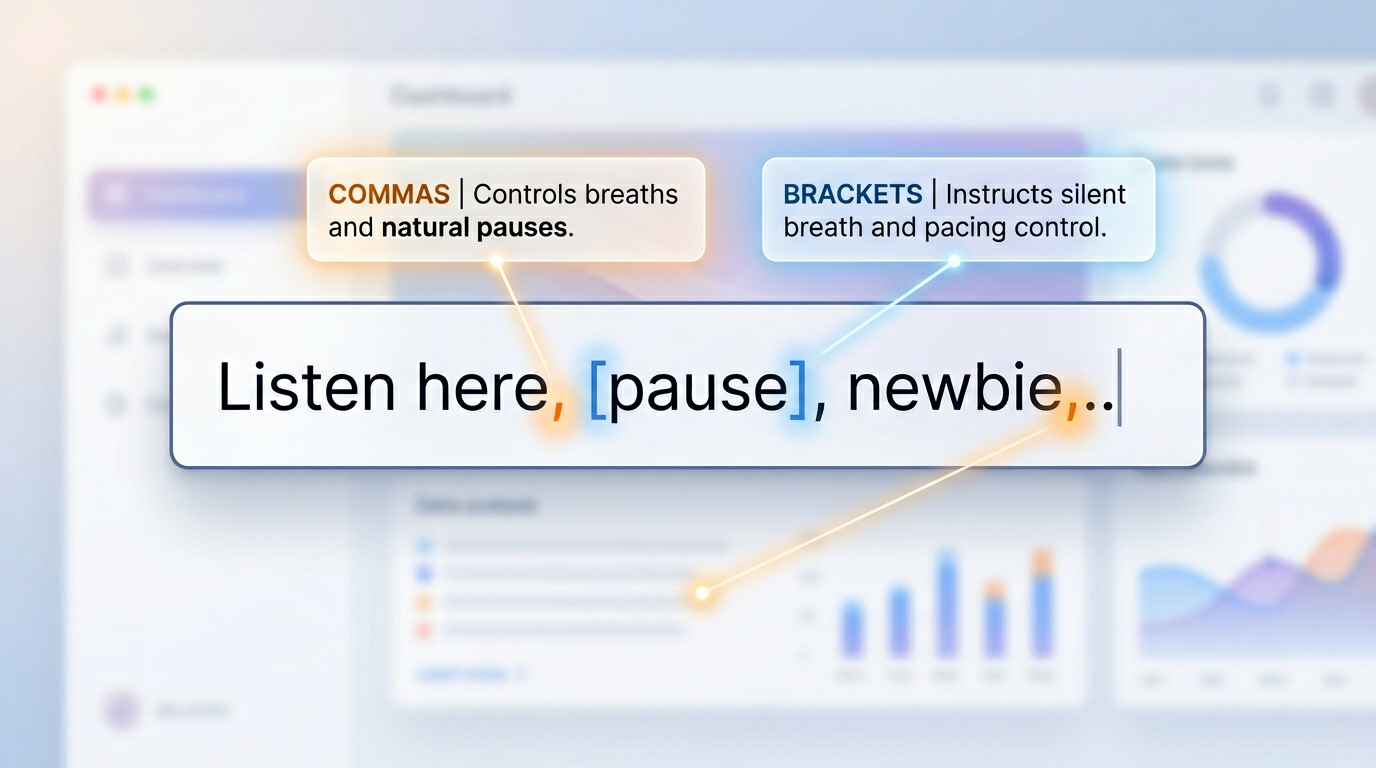
To create drawn-out, condescending vowels, use phonetic spelling. Instead of writing "Look here," write "Loooook here." This forces the AI to stretch the syllable, mimicking the way a human actor might lean into a word for comedic effect. Capitalization also matters; many AI engines interpret ALL CAPS as a command to increase volume, vocal intensity, or sharpness.
Breath timing is controlled entirely by commas and periods. A comma tells the AI to take a shallow breath and slightly raise its pitch, indicating the thought is not finished. A period forces a full stop and a drop in pitch. If you want a rapid-fire delivery, remove the commas entirely (e.g., "You think you can just waltz in here and take the last donut without asking anyone in the room"). If you want a condescending, halting delivery, over-punctuate: "You. Think. You can just... waltz in here?" Furthermore, placing question marks at the end of statements forces a classic, condescending upward inflection, even if the sentence is not technically a question.
Common Scripting Mistakes That Ruin the Joke
Even with the right persona and a funny concept, poor formatting can cause an AI roast to fall flat. Avoid these common pitfalls when drafting your script:
- The Wall of Text: Feeding a massive, unpunctuated paragraph into an AI generator results in a breathless, monotone drone. Break your script into distinct, punchy sentences. Force the AI to take a breath.
- Overusing Exclamation Points: Stacking exclamation points (!!!) often confuses AI engines, causing them to glitch or peak the audio unnaturally. Rely on ALL CAPS for volume and periods for hard stops instead.
- Ignoring the Persona's Natural Cadence: A script written for a fast-talking comedian will sound unnatural if forced through a slow, deliberate voice. Tailor your pacing to the specific character you have selected.
Why the "Tough Love" Message Dominates Fan Culture
The benevolent roast has become the dominant format for personalized celebrity content because it is inherently more engaging than a passive greeting. Fans no longer want a generic "Happy Birthday" video; they want a memorable, highly specific piece of content that they can share online, post to a Slack channel, or play in front of a crowd at a wedding reception.
Fantasy football league punishments are the ultimate use case for this format. When the league loser has to face the music, a personalized, rapid-fire AI roast from a legendary sports figure hits significantly harder than a simple text message in the group chat. Similarly, for milestone birthdays, friends prefer to commission a funny, slightly aggressive roast that highlights the recipient's quirks, terrible habits, and inside jokes rather than delivering a standard, forgettable congratulation.
This is where modern platforms outpace traditional celebrity booking services. Fanfun's instant generation allows creators to react to pop culture moments, sporting events, or friend-group drama in real-time. You do not have to wait two weeks to see if a celebrity accepts your request or worry that they will butcher your carefully written inside joke. You can script the perfect, McGinley-inspired rant, select your character, fine-tune the punctuation until the comedic timing is flawless, and have a viral-ready video in minutes.
How do you write a script for an AI voice roast?
To write a script for an AI voice roast, use a four-part structure: a disarming setup, a barrage of absurd nicknames, a rapid-fire escalation, and an abrupt dismissal. Use exaggerated punctuation, phonetic spelling, and deliberate pauses (like ellipses) to control the AI's pacing and force a sarcastic delivery.
Can AI voice generators capture sarcasm and pacing?
Yes, but they require specific prompting. AI engines read text exactly as formatted, so you must use commas for shallow breaths, periods for full stops, ALL CAPS for emphasis, and question marks to force an upward, condescending inflection.
What makes John C. McGinley's acting style so unique?
John C. McGinley's comedic delivery relies on deep, audible breaths before monologues, staccato punctuation emphasizing hard consonants, and rapid pitch shifts from high-pitched mockery to deadpan seriousness. This creates a rhythmic, musical quality to his rants.
What is the best AI tool for making personalized celebrity roasts?
Fanfun is the premier platform for creating personalized celebrity roasts. It offers instant generation, a wide roster of celebrity and character personas, and the ability to dictate specific scripts for highly personalized, comedic videos without the long wait times of traditional booking platforms.