The Joe Seo Playbook: How to Channel 'Love-to-Hate' Antagonist Energy for High-Retention Social Content
Discover the storytelling mechanics behind Joe Seo's Kyler Park. Learn how to write comically arrogant hooks, structure satisfying narrative karma, and use interactive AI tools to keep your audience scrolling.

Social media feeds are currently saturated with overly earnest lifestyle creators, hyper-polished influencers, and wholesome motivational speakers. While positivity has its place in digital media, the real driver of modern audience retention is friction. Specifically, it is the kind of friction generated by a character whom audiences absolutely love to root against.
Joe Seo's brilliant portrayal of Kyler Park in Cobra Kai serves as the ultimate modern masterclass in this "love-to-hate" antagonist archetype. By dissecting his signature blend of unearned confidence and hilarious fragility, creators can unlock high-retention hooks and interactive fan experiences that turn passive viewers into active, commenting participants. Utilizing platforms like Fanfun allows creators to deploy these highly engaging character dynamics instantly, transforming standard social media formats into interactive goldmines.
The Anatomy of the Modern "Love-to-Hate" Antagonist
The traditional villain archetype has undergone a massive cultural shift. Audiences are no longer captivated solely by terrifying, monochromatic bad guys who loom in the shadows. Instead, the modern digital landscape thrives on comically arrogant, highly mockable antagonists. These characters are not existential threats; they are social speedbumps whose inflated egos make them prime targets for comedic deflation.
Joe Seo balances physical threat with deep-seated social insecurity perfectly. As Kyler, he is an athletic varsity wrestler who can legitimately cause trouble, yet he is constantly undermined by his desperate need to look cool, his absurd excuses, and his fear of his father's reaction to bad grades. This duality is highly engaging because it creates a predictable but satisfying cycle: the character acts tough, oversteps, and immediately suffers a humiliating, hilarious defeat.
For content creators, this archetype is a powerful tool for driving engagement. Viewers stop scrolling when they see a character displaying unearned arrogance because human psychology compels us to stick around and watch them fail. This dynamic drives up watch time and floods the comment section with users mocking the character, tagging friends, and celebrating the inevitable comedic payoff.
The "Kyler" Formula: Key Tropes to Inject into Your Social Hooks
To successfully capture this specific brand of comedic arrogance in short-form video, you must master the linguistic and behavioral cues that make the character instantly recognizable. It is not about being genuinely mean; it is about projecting an absurdly fragile bravado.
Deconstructing the Hook Mechanics
There are three primary tropes you can write into your social hooks to immediately capture this energy:
- The "Unearned Confidence" Hook: Start your video with absolute, unbacked certainty. The character should speak as if they are an undisputed expert on a topic they clearly do not understand. For example: "Bro, physics is literally so easy. I don't even know why people study it. Watch this." This immediately triggers viewer skepticism and forces them to watch the rest of the video to see the claim fall apart.
- The "Deflection" Technique: When the character is corrected or defeated, they must never accept accountability. Instead, they deploy immediate, paper-thin excuses that shift the blame. Classic Kyler-style deflections include blaming the gear, claiming the opponent cheated, or threatening parental intervention: "My dad is literally going to sue this gym if they don't fix these mats."
- The "Vulnerable Bravado" Contrast: This involves rapidly shifting between aggressive posturing and desperate attempts to maintain social status. A character might threaten someone in one breath and then immediately ask if they want to get boba or if their outfit looks cool in the next. This rapid shift highlights the character's profound insecurity.
Subverting the Bully: Making the Antagonist the Butt of the Joke
The secret to high-retention antagonist content is the narrative arc. If the bully wins without consequence, the audience leaves frustrated. If the bully is simply punished brutally, the tone becomes too dark. The sweet spot is the "setup-bravado-instant karma" structure, which dominates high-retention formats on platforms like TikTok and Instagram Reels.
To execute this structure, you must write dialogue that allows the audience to feel smarter than the character. The viewer should see the trap long before the character walks into it. For example, if the character is bragging about their martial arts skills, have them confidently demonstrate a move that immediately results in a minor, non-serious injury or a blatant display of incompetence.
Physical comedy and facial expressions are critical here. Joe Seo excels at telegraphing internal panic while trying to maintain a tough exterior. Wide eyes, a sudden pitch raise in the voice, or a frantic adjustment of a varsity jacket when challenged are subtle physical cues that signal to the audience that the character's tough-guy persona is entirely hollow. This visual irony keeps viewers engaged because they are waiting to see how long the character can sustain the lie.
From Passive Shoutouts to Interactive AI: Leveling Up Fan Engagement
As the creator economy matures, audience expectations are shifting away from passive consumption. Traditional celebrity shoutout platforms rely on a slow, one-way transaction where a fan pays a high fee and waits days for a generic, pre-recorded video. This model is rapidly losing ground as fans demand more agency and immediacy, driving a massive shift toward instant, interactive fandom experiences.
The static nature of these old-school platforms highlights the clear limitations of one-off, passive video shoutouts. If a fan wants to use a character like Kyler to roast a friend's terrible fantasy football draft, they do not want to wait a week for a script to be approved and read. They want it instantly, while the joke is still culturally relevant. This is where Fanfun redefines the landscape. By utilizing advanced AI video, voice, and chat tools, Fanfun allows creators and fans to generate custom roasts, personalized birthday wishes, and dynamic meme templates in minutes.
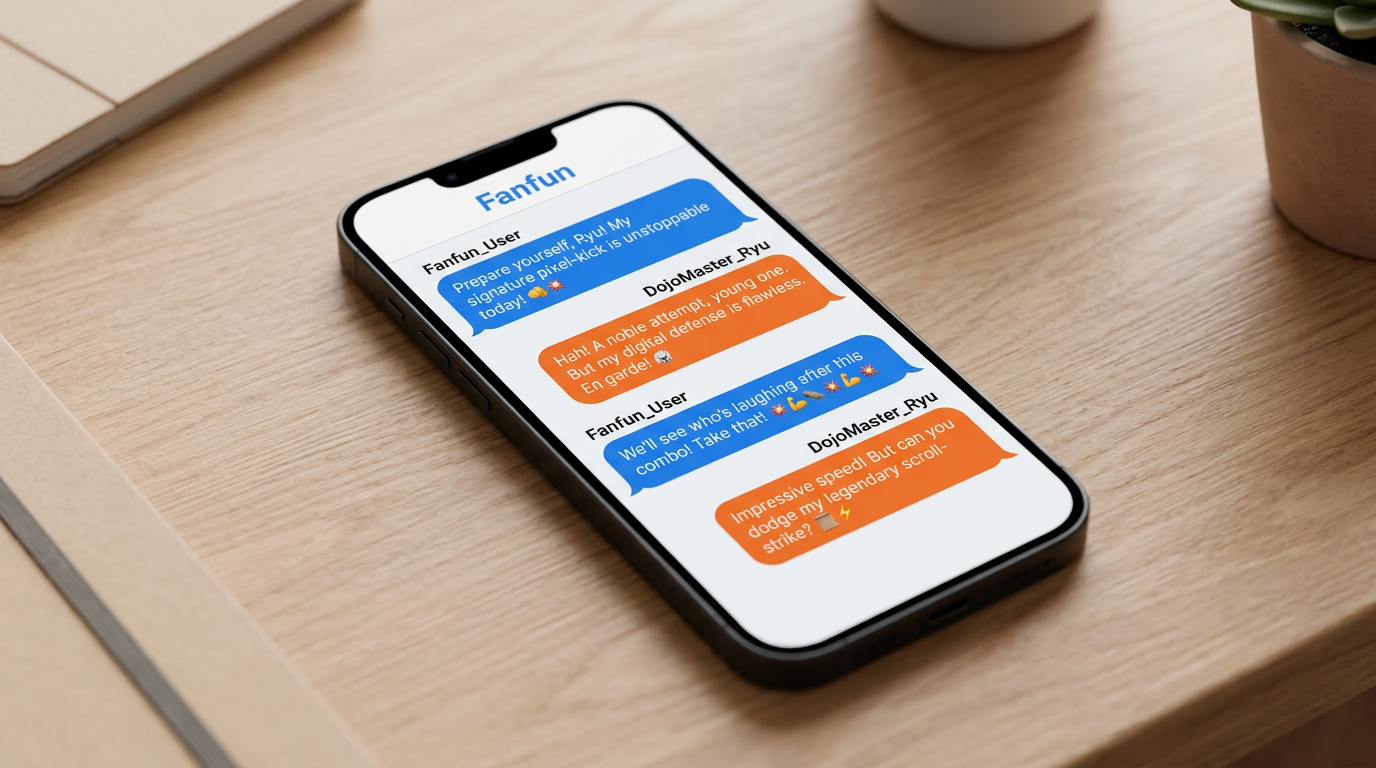
This technology democratizes content creation. Instead of merely watching a character perform, fans can co-create the narrative. They can engage in real-time, two-way AI chats with their favorite character archetypes, testing their own wits against the character's comically arrogant deflections. This level of personalization creates highly shareable, unique pieces of media that perform exceptionally well on social algorithms because they are inherently novel and tailored to specific inside jokes.
The Antagonist Content Matrix: Matching Scenarios to Formats
To help you apply this character archetype systematically, use the matrix below to align your content goals with the correct delivery style and AI prompts on Fanfun.
| Content Goal | Dialogue Style | Sample Prompt Template | Key Delivery Cue |
|---|---|---|---|
| Birthday Roast | Condescending but playful; mocking the recipient's age or hobbies while bragging about yourself. | "Hey [Name], I heard you're turning [Age]. Honestly, that's pretty old, bro. I'd roast you, but my dad says I shouldn't punch down." | Smug smirk, casual head nod, chewing gum cadence. |
| Product Promo | Claiming the product is only for elite people like you, then struggling to explain how it works. | "Only winners use [Product]. It's got... science stuff in it. Look, just buy it, okay? Don't make me look bad." | Defensive hand gestures, rapid vocal pacing. |
| Reaction Meme | Utter disbelief that someone challenged you, followed by a weak threat. | "You think you're better than me? Bro, I literally took AP Trig. Twice. You don't want this smoke." | Sudden voice pitch raise, adjusting collar. |
The Antagonist Content Checklist
Before you hit publish on your next character-driven video, run through this quick checklist to ensure your content has the necessary punchiness to retain viewers:
- Is the arrogance unearned? Ensure the character hasn't actually achieved anything that justifies their massive ego.
- Is there a clear moment of vulnerability? Look for a split second where the character's facade slips and their underlying panic is visible.
- Does the dialogue sound natural? Avoid overly formal language. Use modern slang, casual filler words ("bro," "like," "literally"), and fragmented sentences.
- Is the tone fun? Double-check that the performance remains satirical and mockable, rather than genuinely hostile or mean-spirited.
Directing Your AI Character: Balancing Arrogance and Comedic Timing
When using Fanfun's AI voice and video tools to bring this archetype to life, directing the AI requires a nuanced approach. To get the perfect high school bully cadence, your prompt engineering needs to account for pacing, punctuation, and vocal styling.
Use punctuation to force the AI to take dramatic pauses that highlight the character's lack of intellect. Inserting ellipses (...) or dashes can simulate a character who is struggling to find the right word while trying to look smart. For example, prompting the AI with: "Yeah, well... my dad said that... that you're just jealous of my car" yields a much more realistic, comically hesitant delivery than a smooth, uninterrupted sentence.
It is also crucial to contrast this youthful, high-energy bravado with other classic character styles to find your unique brand voice. While Kyler's energy is frantic, insecure, and modern, you might find success by channeling classic wiseguy archetypes for a slower, more calculated, yet equally comically corrupt tone. Experimenting with different historical and cultural archetypes on Fanfun allows you to discover which brand of comedic tension resonates most deeply with your specific target audience.
Who does Joe Seo play in Cobra Kai?
Joe Seo plays Kyler Park, a high school wrestler, bully, and recurring antagonist in the Netflix series Cobra Kai. Kyler is known for his arrogant attitude, memorable one-liners, and his tendency to join rival dojos to maintain his social status.
Why is Kyler Park such a popular meme character in the Cobra Kai fandom?
Kyler is popular because of his hilariously fragile ego and unearned confidence. Despite his athletic skills, he constantly loses fights to the main characters and immediately deflects with ridiculous excuses, such as worrying about his father's reaction or claiming his opponents used cheap tricks. This makes him highly mockable and perfect for memes.
How can I use Joe Seo's character style for personalized birthday roasts?
You can capture this style by writing a script that balances playful condescension with absurd self-aggrandizement. Mock the recipient's age or hobbies in a lighthearted way, while constantly bringing the focus back to how great, rich, or cool you (or the character) are. Using Fanfun's AI tools, you can generate these roasts instantly with the perfect comedic tone.
Can I create interactive content with Cobra Kai-inspired characters on Fanfun?
Yes! Fanfun allows creators and fans to generate custom videos, voiceovers, and interactive chats using licensed and original AI personas. You can use these tools to create custom roasts, memes, and two-way conversations that mimic the iconic bully-antagonist dynamic in minutes.