The Jim Cummings Playbook: How to Inject Soul and Character Depth into AI Voiceovers and Social Content
Stop relying on flat, robotic voiceovers. Learn how to apply legendary voice actor Jim Cummings' vocal archetypes to script and direct high-retention AI voiceovers and interactive social content.

Scroll through TikTok, Instagram Reels, or YouTube Shorts today, and you will likely hear the same flat, robotic voiceover reading a script with the emotional range of a microwave manual. While these basic text-to-speech tools are convenient, they are also a fast track to high swipe-away rates. Audiences do not just listen to words; they subconsciously decode the texture, rhythm, and personality behind them to decide if a video is worth their time.
To build truly high-retention content, creators must look to the masters of vocal performance. Chief among them is Jim Cummings, the legendary voice actor who defined generations of animation by breathing distinct, unforgettable life into characters like Winnie the Pooh, Tigger, Darkwing Duck, and the Tasmanian Devil. By understanding how Cummings injects soul and depth into his characters, you can learn how to script and direct character voices—whether working with voice talent or using modern AI platforms like Fanfun—to capture and hold your audience’s attention.
The Vocal Chameleon: What Jim Cummings Teaches Us About Voice Acting
Jim Cummings is not just a voice actor; he is a vocal chameleon. His career spans hundreds of roles, often voicing characters with diametrically opposed personalities in the very same scene. Think about the quiet, slow-paced comfort of Winnie the Pooh contrasted against the hyperactive, raspy, bounce-heavy energy of Tigger. Cummings performs both, often bouncing back and forth in a single recording session without missing a beat.
The secret to his success lies in understanding that a voice is a physical instrument. It is not just about pitch; it is about resonance, breath control, and emotional weight. To avoid falling into the trap of flat, robotic vocal clones that fail to capture an audience's attention, creators must treat voiceovers as performances rather than simple text readings. When you generate an AI voiceover, you cannot expect a raw text file to carry the weight of a scene unless you have intentionally built character depth into the script and the delivery settings.
When Cummings voices a character, he establishes a physical profile for them. Is the character speaking from the chest, the throat, or the nasal cavity? Is their breath shallow and rapid, or deep and relaxed? By translating these physical performance cues into your digital content workflow, you can move away from generic narration and toward high-impact storytelling that immediately hooks the listener.
Deconstructing the Cummings Archetypes: Cozy Wisdom vs. Chaotic Energy
To apply Cummings' genius to your own content, it helps to break his most iconic performances down into two primary vocal archetypes. These archetypes serve as blueprints for structuring your scripts and choosing the right vocal profiles on platforms like Fanfun.

The Comfort Anchor
The Comfort Anchor is best personified by Winnie the Pooh. This archetype is characterized by a slow, deliberate pace, heavy breathiness, and a warm, rounded tone. The voice emanates from the chest and diaphragm, creating an instant sense of psychological safety and nostalgia for the listener.
In social media content, the Comfort Anchor is incredibly effective for cozy tutorials, storytelling, ASMR-style videos, or heartfelt personalized messages. Because the pacing is naturally slow, it forces the viewer to slow down their scrolling habits, creating a calming oasis in a sea of high-energy noise.
The High-Octane Instigator
On the opposite end of the spectrum sits the High-Octane Instigator, epitomized by Tigger and Taz. This archetype is fast-paced, highly rhythmic, and characterized by a raspy, throat-centric resonance. It is unpredictable, bouncing from high pitches to gravelly growls in a split second.
This archetype is your ultimate tool for hook design. It demands attention, injects immediate energy into a video, and works perfectly for comedic skits, high-retention memes, and fast-paced product promos. Understanding how to script high-retention social content using iconic character tropes allows you to match these vocal energies to the exact emotional beats of your video, keeping viewers locked in from the very first second.
The Scripting Blueprint: Writing for Distinct Vocal Textures
An AI voice generator is only as good as the script it is given. If you write a generic, grammatically perfect paragraph, even the most advanced AI model will deliver a sterile performance. To get a dynamic, soulful voiceover, you must write specifically for the vocal texture you want to achieve.
The table below outlines how to translate the Jim Cummings archetypes into actionable scripting techniques that guide AI models toward natural cadence and inflection:
| Vocal Archetype | Key Characteristics | Scripting Hacks (Punctuation & Phrasing) | Target Audience Emotion |
|---|---|---|---|
| The Comfort Anchor (Pooh Bear style) | Slow, breathy, gentle, warm, chest resonance | Use ellipses (...) for pauses, soft consonants, longer vowels, and gentle, simple vocabulary. Avoid harsh punctuation. | Nostalgia, safety, trust, relaxation |
| The High-Octane Instigator (Tigger / Taz style) | Fast, raspy, rhythmic, erratic, throat resonance | Use exclamation points (!), hyphens for sudden shifts, alliteration, phonetic spelling (e.g., "b-b-bounce!"), and short, punchy fragments. | Excitement, humor, urgency, curiosity |
| The Theatrical Hero/Villain (Darkwing Duck / Scar style) | Dramatic, enunciated, slightly raspy, theatrical | Use capitalization for emphasis, dramatic line breaks, rhetorical questions, and grandiose vocabulary. | Intrigue, authority, amusement, drama |
Let’s look at a practical example of how to rewrite a generic promo script into these distinct styles. This demonstrates how subtle adjustments in phrasing can transform a standard message into a highly engaging, character-driven experience:
- Generic Script: "Hey everyone, check out this new app. It helps you organize your daily schedule so you can save time and get more done."
- The Comfort Anchor Rewrite: "Oh... hello there. If your day ever feels a bit... jumbled... like a honey pot without a lid... you might like this little app. It helps tidy up your time... so you can find a quiet moment for the things you love."
- The High-Octane Instigator Rewrite: "Hold onto your tails! If your schedule is a total, chaotic, mind-boggling mess—BOOM! You need this app! It zaps your to-do list in a snap, leaving you free to bounce, bounce, bounce through your day!"
Beyond the Passive Shoutout: Creating Interactive Character Experiences
The landscape of fandom and social media is undergoing a massive shift. In the past, fans were content with passive, one-way interactions—like paying hundreds of dollars for a pre-recorded, fifteen-second celebrity shoutout that arrived weeks after ordering. Today, that static model is losing ground to instant, highly customizable, and interactive experiences.
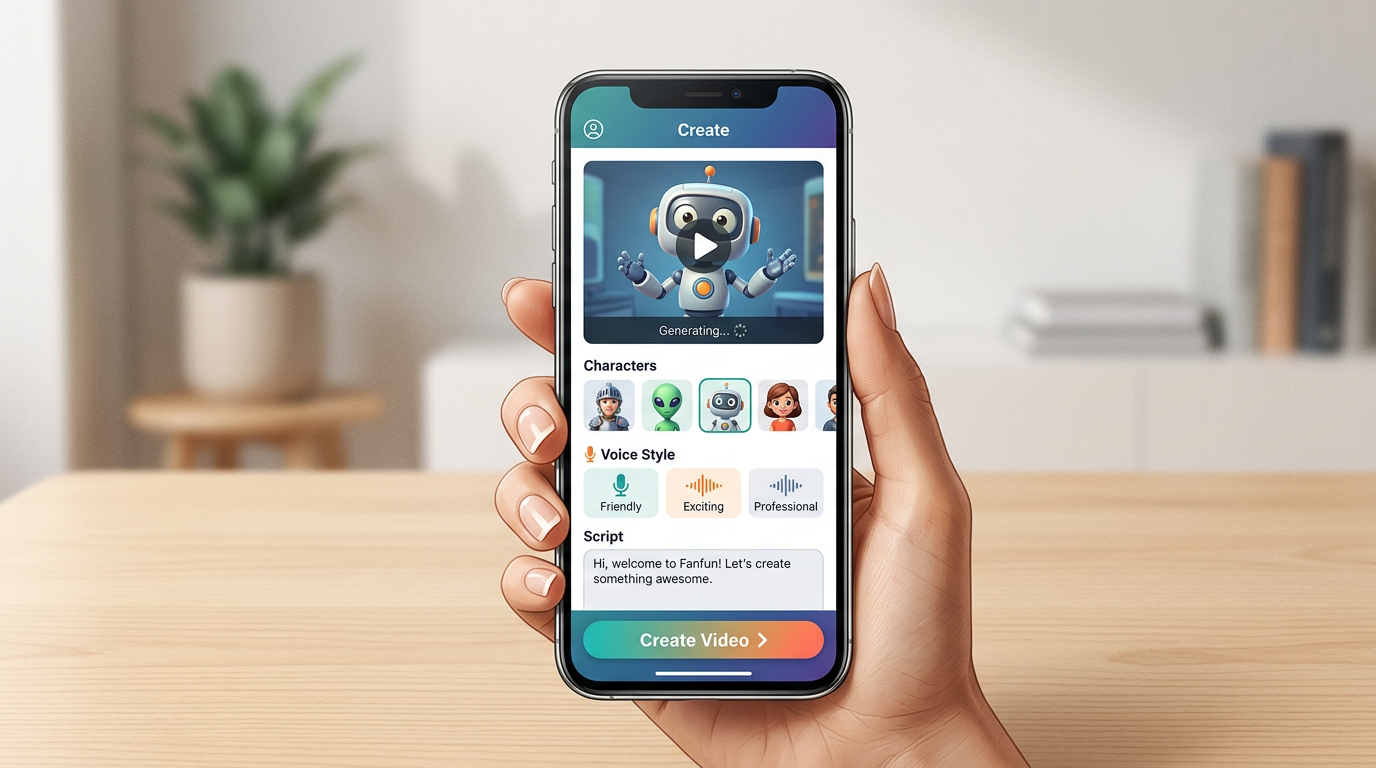
This paradigm shift is precisely why passive shoutouts are giving way to instant, interactive fandom experiences. Creators and fans no longer want to sit on the sidelines; they want to co-create. This is where Fanfun shines as the ultimate creative playground. By offering instant AI-powered personalized videos, voice generation, and interactive two-way chats, Fanfun allows users to collaborate with digital interpretations of iconic characters and cultural figures in real time.
Imagine generating a custom birthday roast in the voice of a beloved, raspy-voiced cartoon sidekick, or using an AI voice generator to instantly narrate a fan-dubbed comic strip for your TikTok channel. Instead of waiting days for a real actor's availability, creators can use Fanfun to produce high-quality, character-driven content in minutes, keeping up with the breakneck speed of internet trends and meme cycles.
How to Direct an AI Character Voice for Maximum Retention
When working with AI voice tools, you must step into the director’s chair. To get a performance that captures the soul and depth of a Jim Cummings character, keep this three-step directing checklist in mind:
- Master the Art of the Strategic Pause: Human beings do not speak in continuous, uninterrupted blocks of text. We pause to breathe, to think, or to emphasize a point. When formatting your script for an AI voice generator, use commas, em-dashes, and ellipses to force the model to take natural pauses. A well-placed "..." can instantly transition a voice from sounding like a robot to sounding like a living, thinking character.
- Use Phonetic Spelling for Character Quirks: If a character has a distinct accent, stutter, or catchphrase, do not spell it standardly. Write it out phonetically. If you want a stuttering, high-energy delivery, write "d-d-don't" instead of "don't." If you want a drawn-out, sleepy sigh, write "ahhh..." or "phew..." directly into the text field. This gives the AI model the phonetic clues it needs to break away from standard pronunciation.
- Align the Script's Vocabulary with the Voice's Sweet Spot: Do not ask a cozy, warm voice to read heavy, technical jargon, and do not ask a high-energy chaotic voice to deliver a somber, slow-paced disclaimer. Choose words that naturally fit the physical resonance of the voice archetype you are using. This alignment creates a seamless, believable performance that keeps viewers engaged.
By treating AI voice generators as creative partners rather than simple utility tools, you unlock a new level of narrative depth. Study the masters like Jim Cummings, embrace the power of instant, interactive platforms like Fanfun, and start creating content that doesn't just fill a feed, but captures a soul.
Who is Jim Cummings and what characters does he voice?
Jim Cummings is one of the most prolific and legendary voice actors in animation history. He is best known as the official voice of Winnie the Pooh and Tigger, and has also voiced iconic characters such as Darkwing Duck, Taz (the Tasmanian Devil), Pete from Disney's Goof Troop, Hondo Ohnaka in Star Wars, and Scar (singing voice in The Lion King).
How do voice actors like Jim Cummings make their characters sound so distinct?
Professional voice actors use physical resonance, breath control, and distinct pacing to build characters. By shifting their voice placement (e.g., chest resonance for warm characters like Pooh, or throat/nasal resonance for chaotic characters like Tigger) and adjusting their physical posture, they create unique vocal textures and emotional weight rather than just altering their pitch.
Can I use an AI voice generator to create character voices for my videos?
Yes. Modern AI platforms like Fanfun allow creators to generate custom voiceovers, personalized videos, and interactive chats using AI interpretations of classic character archetypes. To make these voices sound natural, creators must script and direct them using proper punctuation, pauses, and character-specific vocabulary.
What is the best way to script a voiceover for a character-driven video?
The best way is to write "in character" by using phonetic spelling, strategic punctuation (like ellipses for pauses and exclamation points for high energy), and vocabulary that matches the character's personality. Avoid flat, grammatically rigid sentences; instead, write the way a real, breathing character would naturally speak.