The Hot Mulligan Formula: How to Use Hyper-Specific Emo Nostalgia and Absurd Titles to Build a Cult Following
In a world of hyper-polished, algorithmic content, the creators who win are those who dare to be weirdly specific. By analyzing Hot Mulligan's formula of absurdly long song titles and raw, self-deprecating humor, we show you how to ditch generic branding for deep, human connection.

In an era dominated by sterile, algorithm-optimized content, building a genuinely loyal audience requires throwing out the traditional marketing playbook. While most brands and creators are busy smoothing over their rough edges to appeal to everyone, a midwestern emo band named Hot Mulligan has quietly built one of the most passionate cult followings in modern alternative music by doing the exact opposite. They are loud, deeply unpolished, and aggressively specific.
Known self-deprecatingly as "#1 Hot New Band," Hot Mulligan has mastered the art of the internet inside joke as a scalable marketing strategy. By transforming personal, hyper-niche anxieties into massive anthems with ridiculously long, chaotic song titles, they have bypassed corporate gatekeepers and connected directly with a generation that values raw authenticity above all else. For creators, marketers, and brands, the Hot Mulligan blueprint offers a masterclass in how to turn vulnerability into community.
The Rise of 'Post-Emo' Internet Culture
To understand Hot Mulligan's appeal, you first have to understand the modern cultural shift toward "post-emo" internet culture. This aesthetic is a chaotic blend of raw, mid-2000s emotional vulnerability and highly online, self-deprecating humor. It is the visual and emotional equivalent of a late-night Discord server: hyperactive, deeply personal, and layered with multiple levels of irony. It rejects the manicured aesthetic of early Instagram in favor of something that feels lived-in, messy, and real.
Hot Mulligan does not treat their fanbase as a passive group of consumers; they treat them like friends in a shared group chat. Their social media presence is characterized by all-caps rants, inside jokes, and a total lack of corporate PR polish. This approach bypasses the traditional barriers between artist and fan, creating a sense of shared ownership. This mirrors how modern creators are successfully tapping into millennial nostalgia to bypass traditional media polish, leaning into raw, unvarnished human experiences rather than slick, agency-driven campaigns.
The Anatomy of the Absurdly Long Title (And Why It Hooks Audiences)
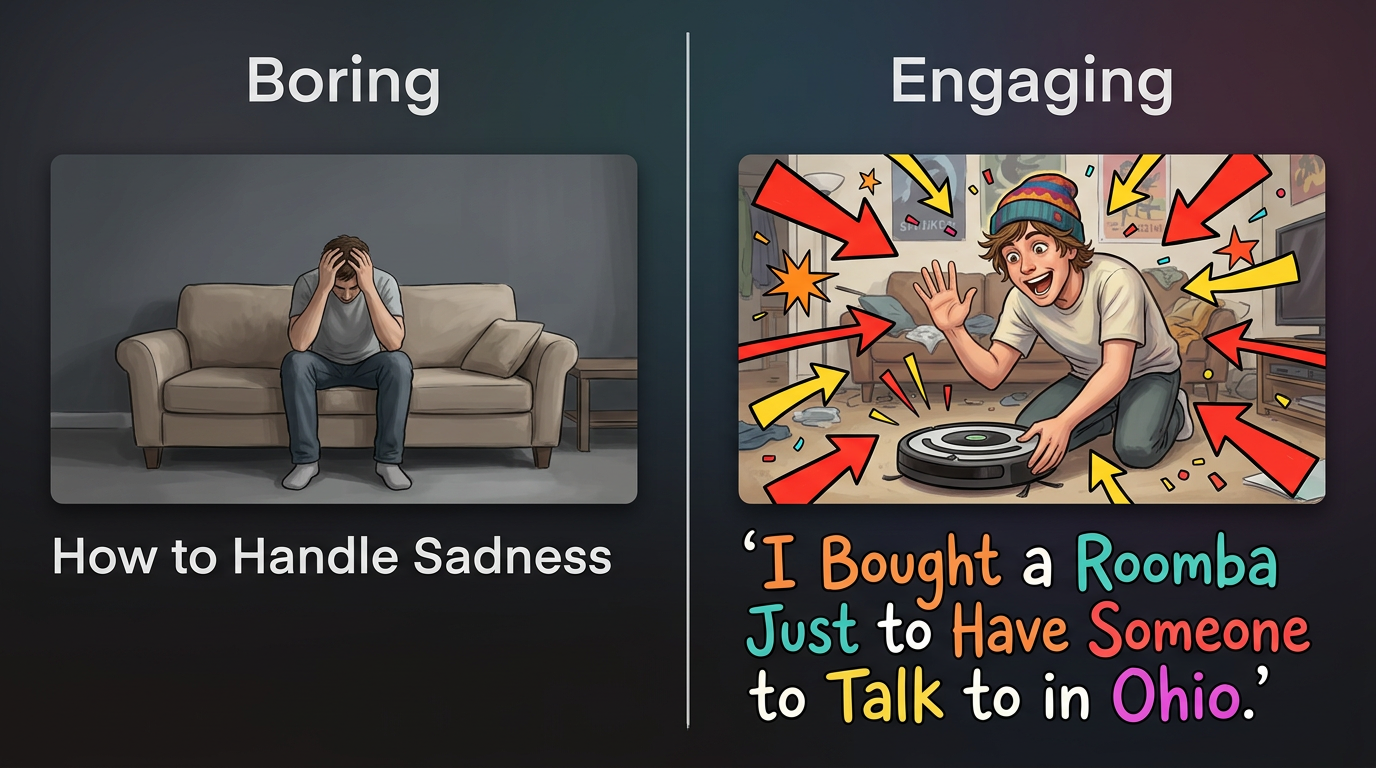
One of the most recognizable elements of the Hot Mulligan formula is their song-titling strategy. They do not write titles like "Sadness" or "Growing Up." Instead, they release tracks with names like:
- "*Equip Sunglasses*"
- "I'm Wet & I'm Cold"
- "How Do You Know It's Not Armadillo Shells?"
- "Drink Milk and Run"
This is not just a gimmick; it is a highly effective psychological hook. In a sea of predictable content, an absurdly specific, seemingly mundane title immediately disrupts the user's scrolling pattern. It forces the brain to ask questions: What does an armadillo shell have to do with anything? Why are they wet and cold? This curiosity gap is incredibly powerful for content creators looking to capture attention. If you are struggling to stand out, mastering the art of writing absurd, meme-style scripts that stop the scroll can transform how your target audience engages with your brand from their very first interaction.
The 'Too Specific to Be Fake' Rule
There is a common misconception in marketing that to reach a broad audience, your message must be universally applicable. Hot Mulligan proves the exact opposite: the paradox of specificity. The more specific, mundane, and deeply personal a detail is, the more universally relatable the underlying emotion becomes.
When a song is titled after a highly specific, niche argument or a hyper-local memory, it feels "too specific to be fake." It carries an inherent truthfulness. As a creator, scripting your content to include these highly specific, unpolished details—rather than general platitudes—makes your work feel like an intimate inside joke with the viewer. Instead of saying "I was stressed out last week," say "I spent forty minutes staring at the ceiling of a Target parking lot trying to remember if I locked my front door." The latter immediately paints a picture and builds instant, empathetic trust.
The Contrast Principle: Balancing Heavy Emotion with Lighthearted Chaos
What makes the Hot Mulligan formula truly work is the stark contrast between their ridiculous titles and the devastating emotional weight of their lyrics. A song titled after a silly video game reference might actually be a heartbreaking exploration of grief, family trauma, or mental health struggles. This juxtaposition prevents the content from feeling overly depressing or self-indulgent.
Creators can apply this Contrast Principle by pairing high-substance, high-value, or emotionally heavy topics with a playful, low-stakes delivery. If you are teaching a complex financial strategy or discussing a difficult career failure, do not deliver it like a corporate lecture. Deliver it with a self-aware, slightly chaotic energy. This lowers the barrier to entry for your audience, making your high-value insights far more digestible and memorable.
How to Build 'Cult-Tier' Fandom: A Blueprint for Creators
Most digital creators fall into the trap of transactional content marketing: they post a video, get views, and hope those views translate into sales or ad revenue. Cult-tier creators, however, focus on building an ecosystem of belonging. They give their audience the keys to the culture.
To see how this works in practice, let's look at the difference between the traditional "Polish & Scale" approach and the "Vulnerability & Inside Jokes" approach utilized by Hot Mulligan:
| Strategy Element | The 'Polish & Scale' Approach | The 'Vulnerability & Inside Jokes' Approach |
|---|---|---|
| Content Hook | Broad, optimized headlines designed for maximum SEO reach. | Hyper-specific, absurd statements that provoke immediate curiosity. |
| Brand Voice | Professional, authoritative, polished, and risk-averse. | Self-deprecating, conversational, raw, and highly online. |
| Audience Relationship | Transactional (creator to consumer, broadcast style). | Community-driven (shared inside jokes, active participation). |
| Handling Mistakes | Edited out, ignored, or addressed with formal PR statements. | Embraced, highlighted, and turned into recurring community memes. |
By giving up the need to look perfect, you invite your audience to participate in your brand's evolution. They start creating the memes, defining the catchphrases, and carrying the community culture forward on their own. This shift from consumer to co-creator is what transforms a casual follower into a die-hard fan.
Translating the Emo Aesthetic Into Modern Video Content
Bringing this raw, nostalgic, and conversational energy into modern video platforms requires a deliberate departure from standard editing templates. Instead of seamless jump-cuts, high-end studio lighting, and generic royalty-free corporate music, try leaning into lo-fi visual cues. Use conversational pacing, leave in the occasional awkward pause, and incorporate nostalgic audio elements that signal to the viewer that they are watching a real human, not a corporate marketing machine.

At Fanfun, we see this exact dynamic play out daily. Modern audiences are tired of passive, one-way celebrity shoutouts and sterile brand campaigns. They want interactive, highly personalized, and often hilarious content that feels like an inside joke. By utilizing Fanfun's AI-powered platform, creators can easily inject this exact brand of chaotic, nostalgic humor into their videos. Whether you are generating a custom, self-deprecating roast from an iconic cultural figure or crafting an absurd voiceover to match a ridiculous video title, leveraging high-quality celebrity voice changers to elevate your content's comedic value allows you to scale that hyper-specific, community-first energy instantly.
The 'Equip Sunglasses' Checklist: Auditing Your Brand's Vulnerability
Ready to inject some Hot Mulligan-style authenticity into your content strategy? Use this checklist to audit your current brand positioning and determine if you are playing it too safe:
- Are you hiding your mistakes, or turning them into running jokes? If a video edit goes wrong or you make a minor slip-up, don't always cut it. Sometimes, highlighting your own blunders builds far more trust than a flawless delivery.
- Is your hook designed solely for an algorithm, or does it sound like something a friend would text you at 2:00 AM? Ditch the generic "3 Tips to Do X" and try a hyper-specific, curiosity-inducing statement that sounds human.
- Are you giving your audience a way to actively participate in the joke? Create recurring memes, respond to comments with self-aware humor, and foster space for your community to build their own subculture around your brand.
- Are you balancing high-value insights with low-stakes execution? Ensure that your most valuable, educational, or emotional content is delivered without taking yourself too seriously.
Why are Hot Mulligan song titles so long and weird?
Hot Mulligan uses long, absurd, and highly specific song titles as a creative outlet and a psychological hook. By pairing heavy, emotional themes with ridiculous titles like "*Equip Sunglasses*" or "How Do You Know It's Not Armadillo Shells?", they create a stark contrast that captures attention, disrupts standard scrolling patterns, and makes their music instantly memorable.
What genre of music is Hot Mulligan, and why are they called 'post-emo'?
Hot Mulligan is primarily categorized as an emo, pop-punk, or indie rock band. They are often associated with "post-emo" or "fifth-wave emo" because they blend the raw, emotional vulnerability of mid-2000s emo with modern, chaotic, self-deprecating internet humor, treating their fanbase more like a digital community than a passive audience.
How can I use self-deprecating humor in my brand's content marketing without looking unprofessional?
The key to using self-deprecating humor professionally is to ensure it targets your minor mistakes, relatable human struggles, or creative processes—never your core competence or the quality of your product. By laughing at your own minor quirks, you build trust and make your brand feel approachable and human.
Can I use AI voice generators to create nostalgic or emo-style meme videos?
Absolutely. Platforms like Fanfun allow creators to generate custom, personalized AI voiceovers and videos featuring iconic characters and cultural figures. This is a highly effective way to create absurd, nostalgic, and hyper-specific content that perfectly matches the chaotic, inside-joke energy of modern digital communities.