The Haesicks Effect: How to Elevate Fan Edits Into Cinematic Narratives Using AI
Discover how the 'haesicks standard' is redefining fan edits from simple montages to cinematic short films. Learn to direct context-aware AI voices to build immersive character narratives.
Fandom edits have quietly undergone a massive evolution. What began as simple, beat-matched montages of favorite K-pop idols, anime characters, or movie scenes has transformed into a highly sophisticated medium of digital storytelling. Today's top-tier creators aren't just stitching clips together; they are functioning as independent directors, building complex, emotional storylines that expand on original canon.
At the forefront of this shift is the 'haesicks style'—a cinematic, narrative-first approach popularized by elite edit accounts that treats short-form video as high art. Achieving this level of production value requires moving past basic visual loops and embracing tools that give creators complete control over their audio and narrative direction. By integrating advanced tools like Fanfun's context-aware AI, creators are breaking down traditional technical bottlenecks and redefining how stories are told in fandom spaces.
Decoding the 'Haesicks' Standard: What Makes a Fan Edit Go Viral?
The 'haesicks standard' is characterized by an intense focus on atmosphere and emotional resonance. While standard edits rely on flashy transitions to keep a viewer's attention, cinematic editors use transitions as invisible bridges to guide the audience through a character's psychological journey. This style borrows heavily from professional filmmaking techniques, using color grading, sound design, and thematic motifs to elevate raw footage into something entirely new.
A critical component of this aesthetic is the use of 'sound bridges'—where the audio from an upcoming scene starts playing before the visual cut actually happens. This creates an incredibly professional, cinematic flow that mimics big-budget Hollywood trailers. To consistently command attention on modern social feeds, creators must understand the three core pillars of a premium edit:
- Thematic Cohesion: Every clip, color palette choice, and audio cue must serve a central theme—whether it is a character's descent into villainy, a tragic romance, or an internal conflict.
- Rhythmic Pacing: Cuts and camera movements must align with the underlying audio peaks, creating a satisfying, hypnotic flow that keeps viewers locked in.
- Immersive Sound Design: This involves layering background music with ambient atmospheric sounds (like rain, footsteps, or wind) and clean dialogue to build a believable, three-dimensional acoustic space.
Ultimately, modern audiences crave deep character exploration over superficial visual loops. They want to feel the weight of a character's choices, and nothing delivers that weight more effectively than well-placed dialogue and voiceovers.
The Audio Bottleneck: Why Music Overlays Aren't Enough Anymore
For years, the standard formula for a fan edit was simple: take a popular song, sync visual cuts to the beat, and upload it. However, this formula has hit a creative and practical ceiling. Relying solely on copyrighted background music severely limits a creator's reach due to platform muting policies, copyright claims, and algorithmic penalties on platforms like TikTok, Instagram, and YouTube. More importantly, music alone cannot convey complex narrative thoughts or specific character motivations.
By integrating dialogue, internal monologues, or hypothetical character interactions, a creator can instantly transform a simple montage into a compelling short film. The challenge, however, lies in sourcing clean audio. Pulling voice clips from existing shows or movies often results in messy files cluttered with background noise, music swells, or sound effects that ruin the mix. Even modern stem splitters leave behind underwater-sounding digital artifacts that ruin a high-quality headphone mix. This is why many creators turn to automated tools, but finding the right one is critical; explaining why free, low-quality voice generators fail to deliver the emotional depth required for premium edits is essential for creators who want to maintain a high-end, professional aesthetic.
Stepping Beyond the Parrot: The Need for Contextual Dialogue
To build a truly cinematic narrative, the voices in your edit must sound authentic, emotional, and contextually aware. Simple vocal mimicry is no longer enough to satisfy audiences who are accustomed to high-production-value media.
The Pitfalls of Flat Text-to-Speech
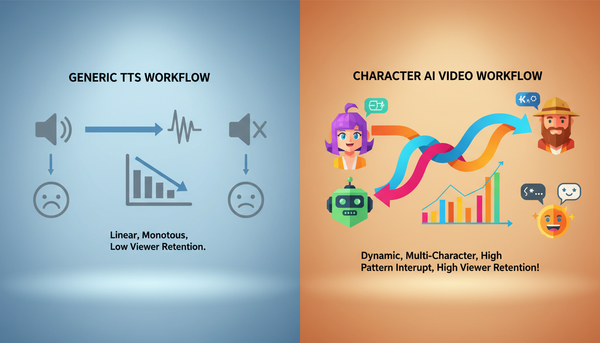
Most basic text-to-speech tools act like digital parrots—they replicate the basic pitch of a voice but fail to capture the soul, rhythm, and emotion of a human speaker. In a dramatic fan edit, a robotic, flat delivery instantly breaks the immersion, pulling the viewer out of the story. If a character is supposed to be whispering a confession in the rain, a monotone, sterile voiceover will ruin the entire sequence. Human speech is filled with micro-intonations, subtle breaths, and pace shifts that signal emotion.
This is why understanding the technology behind voice generation is so important. When discussing why context-aware AI beats simple, robotic vocal mimicry in high-end creative projects, we see that the difference lies in emotional intelligence. Fanfun's context-aware AI technology does not just copy vocal frequencies; it interprets the mood, pacing, and dramatic weight of the script. The contextual engine analyzes the surrounding text to understand if a character is in a high-stakes confrontation or a quiet, reflective moment, adjusting the delivery to fit the scene.
The Creator's Toolkit: How to Direct AI Voices for Cinematic Edits
Directing AI voices requires a blend of creative writing, technical pacing, and audio mixing. To achieve the haesicks standard, you cannot simply copy and paste a script into a generator and hope for the best. You must actively direct the output.
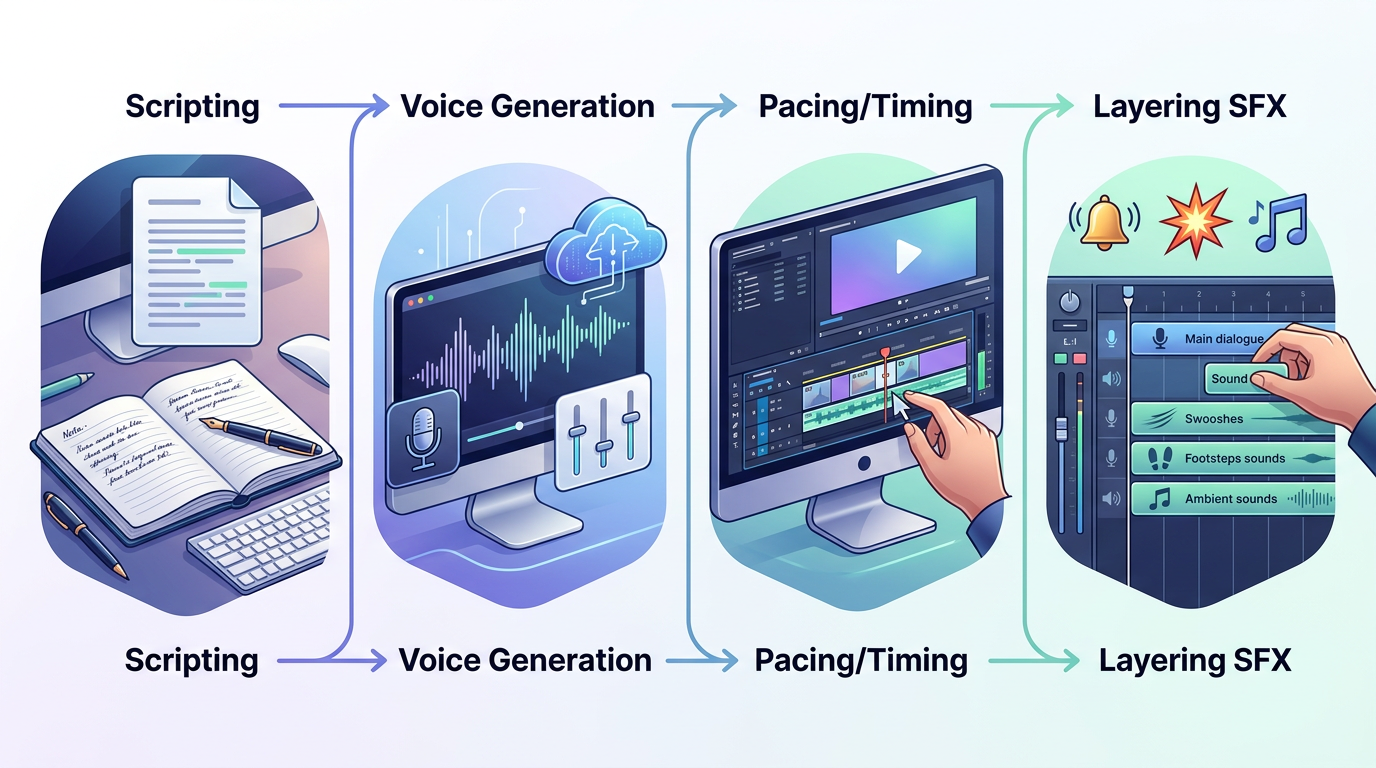
Here is a step-by-step workflow for integrating narrative AI voices into your video timeline:
- Script with Character in Mind: Write dialogue that matches the vocabulary, cadence, and personality of the character. Keep lines concise so they do not crowd the edit.
- Direct for Emotion: When generating, focus on directing AI voices to capture specific dramatic beats and emotional nuances. Adjust settings to control the intensity and speed of the delivery.
- Pace and Space: Do not crowd your dialogue. Leave breathing room between lines to let the visuals and background music breathe.
- Layer Ambient SFX: Place your generated voice track over a bed of ambient sound effects (like room tone, wind, or low bass rumbles) to make it feel like it was recorded on a physical set rather than in a digital vacuum.
To ensure your audio fits seamlessly with your visuals, use this quick checklist before exporting your project:
- Does the voiceover volume sit cleanly above the background track without clipping?
- Are there natural pauses (0.5 to 1.5 seconds) between sentences to mimic human breathing?
- Do the key emotional peaks of the voiceover align perfectly with your video transitions or beat drops?
- Have you applied a subtle reverb or equalization (EQ) effect to match the visual environment (e.g., a hollow room, outdoors, or an intimate close-up)?
By using Fanfun's AI Voice Generator, creators can instantly test and regenerate different dialogue lines on the fly, ensuring that the vocal delivery matches the precise frame-by-frame pacing of their video editing timeline.
Comparing Traditional Fandom Content vs. AI-Enhanced Narratives
Fandom culture is shifting from passive consumption to active, creator-led production. To understand where the industry is going, it is helpful to look at how different content formats compare in terms of creative freedom, production speed, and audience impact.
| Metric | Standard Video Edits | Cameo-Style Shoutouts | AI-Enhanced Narratives |
|---|---|---|---|
| Creative Control | Limited to existing clips and standard music tracks. | Low; dependent on the celebrity's willingness and script rules. | Unlimited; write any script, dialogue, or scenario. |
| Production Speed | Fast to moderate, depending on editing complexity. | Slow; requires days or weeks of waiting for delivery. | Instant; generated and integrated in minutes. |
| Audience Engagement | Moderate; high visual appeal but low narrative retention. | Passive; single-use personalized messages. | Extremely high; fans actively follow ongoing storylines. |
| Scalability | High, but limited by creative repetition. | Very low; expensive and restricted to single videos. | Infinite; create multi-part series with ease. |
This comparison highlights explaining why creators are moving away from static, one-way celebrity shoutouts toward highly customizable AI-driven tools. Instead of waiting for a celebrity to read a pre-written script off a phone camera, modern creators are using Fanfun to build complex, multi-character interactions instantly. This shift empowers the editor to become the ultimate showrunner of their favorite fictional universes.
Ethical Fandom: Navigating IP and Creative Respect in AI Edits
As AI tools become more integrated into creative workflows, ethical considerations must remain top of mind for creators. Fandom has always been built on transformative work—fan fiction, fan art, and video edits have long existed as respectful celebrations of original intellectual property. The integration of AI voices should follow this same tradition of creative respect.
The key to ethical AI use in fan edits lies in transparency and intent. Using AI to create engaging, transformative stories, parodies, or cinematic tributes is a powerful way to celebrate a franchise. Conversely, using AI to deceive audiences or spread misinformation crosses an ethical line. At Fanfun, we prioritize creative ethics by offering licensed and original AI personas, ensuring that our technology serves as a safe, collaborative playground for fans and creators alike. By using these tools responsibly, editors can continue to push the boundaries of digital storytelling while respecting the creators and performers who inspired them in the first place.
What is the haesicks edit style and how do I replicate it?
The haesicks edit style is a highly cinematic, narrative-driven approach to fan editing. Unlike standard edits that focus purely on fast transitions and beat-matching, the haesicks style prioritizes storytelling, atmospheric sound design, professional color grading, and emotional character arcs. To replicate it, focus on building a strong thematic narrative, layering ambient sound effects, and integrating high-quality character dialogue that feels natural and emotionally resonant.
How can I add high-quality character voiceovers to my fan edits?
Sourcing clean voiceovers from original media is often difficult due to background music and sound effects. The best way to add clean, high-quality voiceovers is by using an advanced AI voice generator like Fanfun. By writing custom scripts and directing the AI to capture specific emotional tones, you can generate pristine voice tracks that fit your edit perfectly without any background noise.
Are AI voice generators safe to use for K-pop and anime edits on TikTok?
Yes, using AI voice generators for creative, transformative fan edits on TikTok and other platforms is generally safe and falls under creative fan expression. However, it is important to use platforms like Fanfun that prioritize creative ethics, respect intellectual property, and focus on positive, transformative community content rather than malicious deepfakes.
What is the best alternative to Cameo for creating custom character videos?
While Cameo is limited to one-way, pre-recorded messages from real-life celebrities who are often expensive and slow to deliver, Fanfun serves as the ultimate modern alternative. Fanfun allows creators to generate instant, highly customizable AI-driven character videos, voiceovers, and interactive chats, offering complete creative control at a fraction of the cost.