Beyond the Parrot: Why Context-Aware AI Beats Simple Mimicry
Stop settling for AI that just echoes your words. Learn why modern content creation demands context-aware personas that can actually hold a conversation.
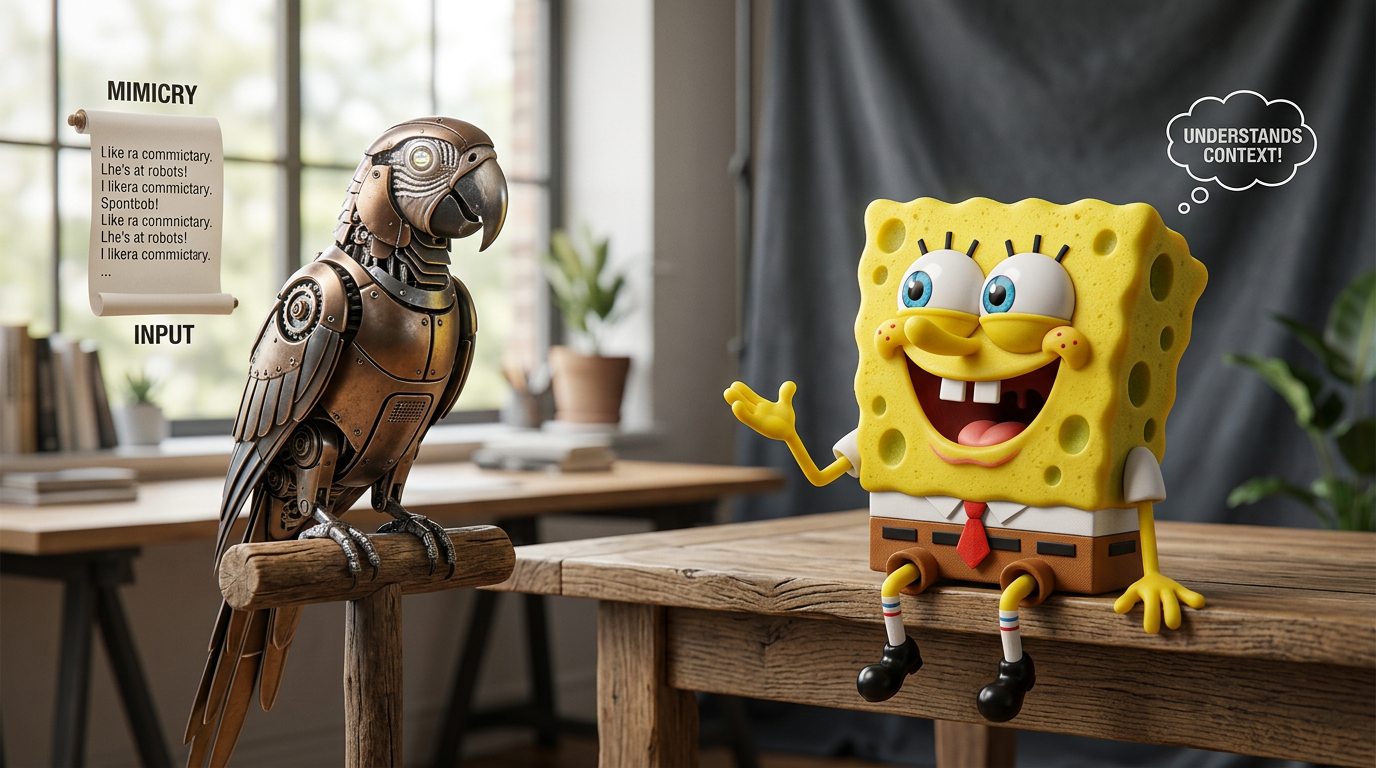
For a long time, the cutting edge of AI audio felt like a high-tech parlor trick. You fed a system a script, it processed the sound waves, and out came a voice that sounded vaguely like a celebrity or a cartoon character. This is the era of "parrot" AI—tools designed for repetition rather than interpretation. While these tools are fun for quick, repetitive clips, they inevitably hit a ceiling in creative utility. They function like an echo chamber, producing sound-alike audio that lacks the spark of a genuine performance.
The fundamental flaw of mimicry-based AI is that it prioritizes surface-level sonic accuracy over narrative depth. It treats language as a string of phonemes rather than an expression of personality. For creators, this becomes a bottleneck. If your AI can only recite what you type without understanding the tone, mood, or character history, it will never feel like a collaborator. It is a static asset, not a performance tool, and audiences today are quick to lose interest in content that feels artificial and one-dimensional.
The Evolution of Digital Mimicry
The marketplace is currently flooded with basic voice-cloning tools that promise to replicate a specific timbre or cadence. While these are technically impressive, they are fundamentally limited by their inability to "listen." A parrot can repeat a phrase perfectly, but it cannot understand the irony, the warmth, or the specific cultural context behind the words. This is where the divide between simple voice generation and true persona-based AI becomes apparent.
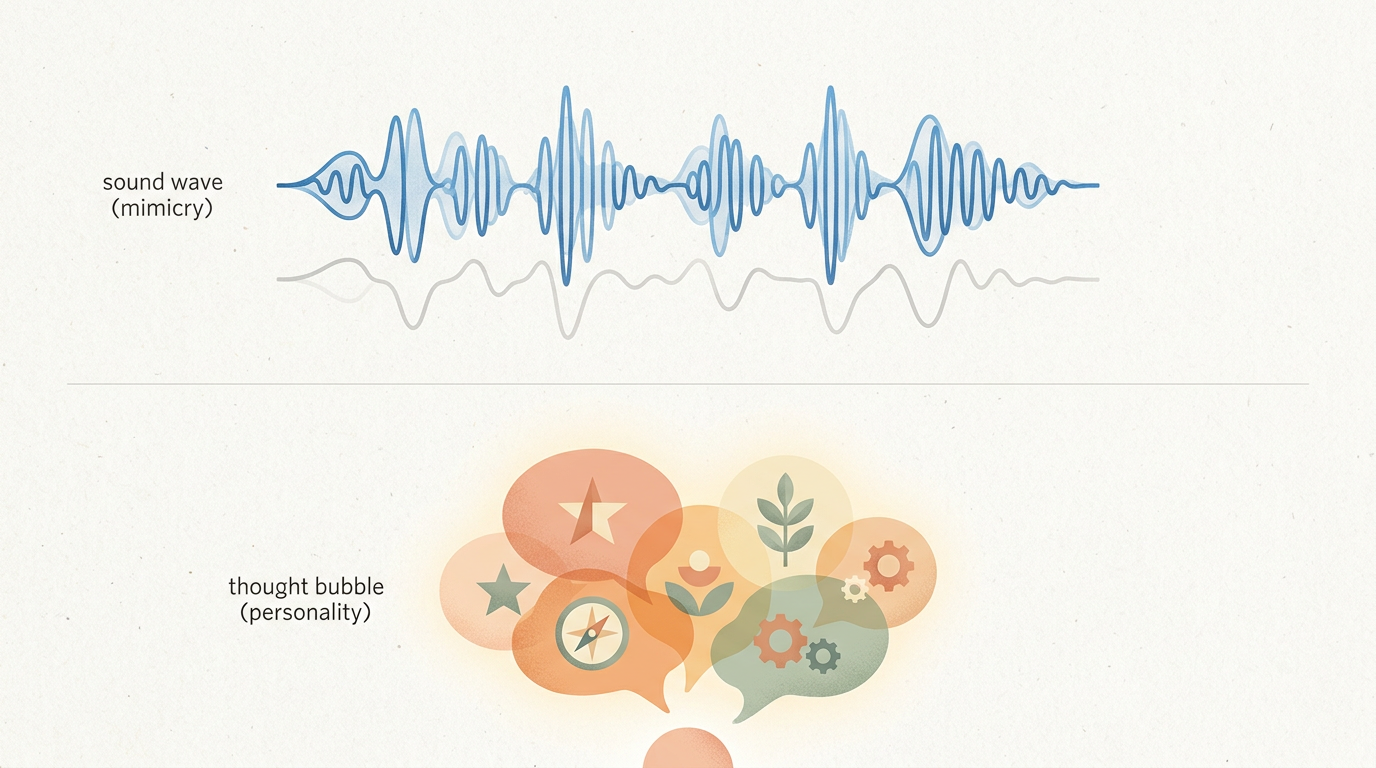
When you rely on basic mimicry, you are essentially forced to do all the creative heavy lifting. You must script every breath, every pause, and every emotional inflection. If the audience asks a follow-up question or if you want to pivot the conversation, you are back to the drawing board. This is not just inefficient; it is creatively stifling. It prevents the kind of spontaneous, high-energy interactions that define modern social media trends and viral content.
Why Context is the New Currency
Context-aware AI shifts the focus from the "what" to the "how." When you interact with a system that understands the lore and personality of a character, the output changes based on the scenario. For instance, if you are crafting a birthday message for a fan, a context-aware model knows how to blend warmth with the character's signature catchphrases, rather than just reading a dry script. This is the difference between a robotic greeting and an authentic moment of fandom. By moving away from static voice-cloning, creators can leverage platforms like Fanfun to generate content that feels alive, responsive, and tailored to the specific emotional needs of their audience.
From Echoes to Personalities: The New Gold Standard
Real engagement in the digital age comes from interaction, not just impression. The shift we are seeing is a move from passive mimicry to active, context-aware character personas. Unlike basic voice generators that simply read text, platforms like Doraemon on Fanfun demonstrate how AI can respond to user input with the logic and charm of an established character. This is the difference between a sound effect and a co-star.
When an AI understands "character intent," it isn't just matching a frequency; it is interpreting the emotional subtext of a conversation. It knows how a specific icon would react to a compliment, a roast, or a random question. This depth transforms the "one-and-done" nature of simple parrot tools into a dynamic, two-way experience. By leveraging a character library that understands personality, creators can build content that feels spontaneous and authentic rather than scripted and robotic.
Evaluating Your AI Tools: A Simple Framework
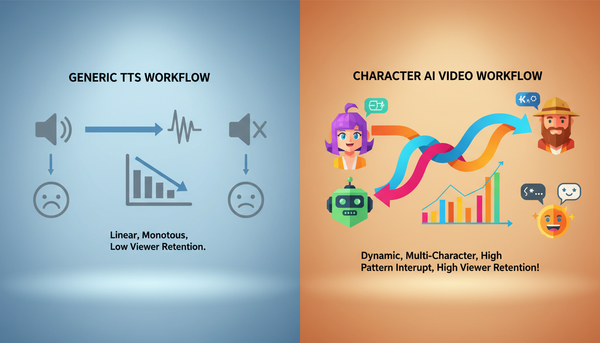
To decide whether your project needs a basic voice tool or a sophisticated AI persona, consider the following breakdown. If you are aiming for long-term audience retention, the move toward interactive capability is essential.

| Feature | Mimicry AI (Parrot) | Persona AI (Fanfun) |
|---|---|---|
| Latency | High (Pre-rendered) | Low (Real-time) |
| Emotional Nuance | None (Static) | High (Contextual) |
| Interactive Capability | None | Two-way Conversation |
| Character Consistency | Low | High |
To test if your current AI solution is holding you back, apply the "3-Question Test": Does it only repeat text, or does it converse? Does it understand the context of the interaction, or is it just reading the lines? Does it embody the character’s specific personality, or is it just a generic voice? If you answered "yes" only to the first part of these questions, you are likely working with a limited parrot tool.
Bringing Icons to Life for Your Audience
High-quality, interactive AI allows you to move beyond basic voice-overs and into the realm of character-led storytelling. Whether you are creating dynamic birthday wishes that feel personal or developing educational content, the key is to lean into the icon's established voice and logic. For example, using a character like Hello Kitty requires a specific, gentle, and kind tone that simple voice generators often miss because they ignore the character's inherent emotional branding.
Similarly, high-energy characters like Spongebob Squarepants demand a level of enthusiasm and specific cadence that only context-aware AI can provide. When scripting your prompts, focus on the situation rather than just the words. Ask the AI: "How would you respond to this specific scenario?" rather than giving it a line to read. This allows the persona to maintain character consistency while keeping the interaction fresh and unpredictable for your audience.
Even when you are looking for more mature or intense character interactions, the same principles apply. Whether you are engaging with the persona of Dwayne Johnson AI or looking for the whimsical magic found in Mickey Mouse, the goal is to find a platform that understands the nuance of the character's history. Fanfun bridges this gap by ensuring that the AI persona isn't just mimicking a voice, but actively participating in the lore of the character. Furthermore, for those looking to create content involving fantasy worlds, the Elsa persona provides an excellent example of how specific character traits—like regal poise or magical themes—can be integrated into a conversational flow that feels entirely natural.
The Role of Memory and Continuity in AI Interactions
Modern AI is shifting toward long-term context. This means the AI remembers what was said three turns ago, allowing for a natural flow of conversation that feels like a real relationship. This is why Fanfun’s approach to character nuance is becoming the preferred choice for creators; it treats the interaction as an evolving narrative rather than a series of disconnected clips. By maintaining continuity, you build deeper fan connections, turning viewers into active participants who feel like they are truly interacting with their favorite icons.
Ultimately, the future of content creation isn't in better mimicry, but in better connection. As creators, we have an opportunity to move past the novelty of "AI voices" and into the era of "AI relationships." By choosing tools that prioritize context, memory, and personality, you are not just making content; you are building an experience that your audience will actually want to return to, time and time again. The era of the parrot is ending; the era of the co-star has officially arrived.
Is parrot AI the same as AI voice generation?
Not exactly. While both use AI, parrot AI refers to simple text-to-speech tools that mimic a sound without understanding character intent. AI voice generation at a higher level involves context-awareness, emotional intelligence, and the ability to converse.
Can I use AI to create my own character conversations?
Yes. Platforms like Fanfun allow you to engage in two-way interactive conversations with licensed and original personas, making it possible to create unique, non-scripted content.
Why is interactive AI better for content creators than simple voice changers?
Interactive AI provides a dynamic performance that can respond to audience input, whereas voice changers are static and require manual scripting for every single line of dialogue.
How do I ensure my AI persona stays in character?
Focus on context-heavy prompts. Instead of just giving the AI a line to say, set the scene and the mood, or use platforms that provide pre-built character personas with defined personality traits and memory.