Beyond the Squeak: How to Get Expressive Cartoon Voices for Text-to-Speech (Without the Robotic Flatness)
Standard text-to-speech engines are built for boring audiobooks, not high-energy animation. Learn how to script, format, and direct expressive cartoon AI voices that bounce, gasp, and yell with genuine comedic timing.
Let's face it: most text-to-speech tools sound like they are reading a dry corporate compliance manual. If you are trying to voice a hyperactive blue mascot, a booming superhero, or a mischievous anime sidekick, that flat, robotic delivery is an absolute buzzkill for your audience.
Animation relies on extreme shifts in energy, pitch, and pacing. To capture that classic cartoon whimsy without hiring an expensive voice cast or waiting weeks for a celebrity booking, you have to stop treating text-to-speech like a passive dictation tool and start treating it like an actor on a stage. With the right platform and a few simple scripting hacks, you can transform flat digital voiceovers into expressive, character-driven performances.
The Cartoon TTS Dilemma: Why Standard Engines Fail the Whimsy Test
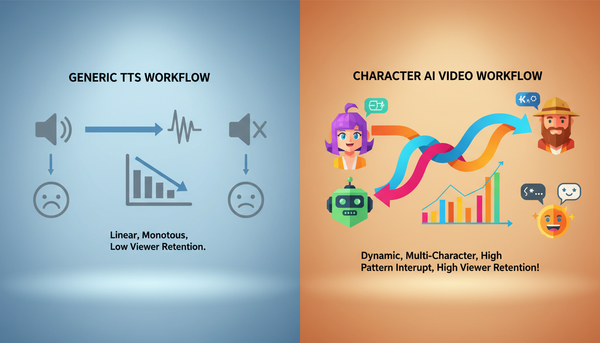
Standard text-to-speech engines are optimized for clarity, neutrality, and consistent pacing. While this is perfect for GPS navigation or long-form audiobooks, it is the exact opposite of what makes cartoon voices work. Animation lives in the extremes. When a cartoon character speaks, their pitch bounces wildly, their pace accelerates and decelerates in split seconds, and their tone is highly elastic.
Standard TTS models strip away these natural fluctuations, leaving you with a voice that sounds unnaturally stiff and robotic. To capture true cartoon energy, you need an AI voice generator that is built from the ground up to handle high dynamic ranges—sudden shifts from nervous whispers to explosive screams.
At Fanfun, we solved this dilemma by building a dedicated library of expressive, character-first AI interpretations. Instead of forcing a generic corporate voice to sound excited, our platform gives creators direct access to high-energy, stylized personas designed specifically for memes, digital gifts, and animated content. This offers an instant, affordable alternative to traditional voice actors or Cameo bookings, giving you full creative control over the final performance in minutes.
Sourcing Your Cast: How to Find and Select the Right Cartoon Voice
Creating a great animated edit starts with casting. When browsing a character library, ignore generic filters like "male/female" or "professional/casual." Instead, look for distinct character archetypes. You want to match the energetic profile of your script to the natural cadence of the voice model.
Consider the specific style of your project. If you are aiming for a classic 1930s rubber-hose style or a mid-century Hanna-Barbera vibe, you can learn how to dial in the perfect retro cartoon voice texture for vintage animation styles. Modern anime, webtoons, and TikTok memes, on the other hand, demand a much crisper, high-frequency, and highly expressive delivery that can cut through background music instantly.
The Cartoon Voice Selection Checklist
Before committing to a voice model, use this quick checklist to evaluate if it fits your character's personality:
- Pitch Elasticity: Does the voice naturally slide up and down, or does it stay locked in a narrow frequency range?
- Energy Baseline: Is the default state of the voice high-energy (like a sidekick) or booming and authoritative (like a villain)?
- Breathing and Sibilance: Does the engine generate natural-sounding gasps or sighs that add life to the performance?
- Creative Freedom: Does the platform allow you to push the boundaries of the character without breaking the AI model?
Remember to focus on creative, fun interpretations rather than trying to force an exact celebrity clone. Keeping your content respectful, original, and focused on comedic parody ensures your project remains ethical, legal, and highly entertaining.
The Director's Scriptbook: Formatting Text for High-Energy Animation
You cannot write a script for an AI cartoon voice the same way you write an email. If you type standard sentences, the AI will read them with standard, boring cadence. To force the engine to deliver an animated, expressive performance, you must write phonetically and use creative punctuation.
Phonetic spelling is your secret weapon for cartoon elongations and expressive sound effects. If a character is surprised, writing "No way" will sound flat. Writing "Nooooo waaaay!" forces the AI to stretch the vowels. If your character has a stutter or is shivering, write "W-w-what do you mean?" instead of "What do you mean?" to instantly inject physical acting into the line.
The Art of the Elastic Cadence
Punctuation acts as the musical notation for your AI voice. Commas, dashes, ellipses, and capitalization tell the generator exactly where to pause, gasp, or spike its pitch. Capitalizing entire words can force the engine to apply emphasis, while dashes create sudden, dramatic stops that mimic a character being interrupted or losing their train of thought.
If you want to take your directing skills even further and master the subtle art of emotional range, check out our comprehensive guide on directing text-to-speech with emotion generators to bypass flat delivery. Learning how to guide the voice from playful sarcasm to mock panic is what separates amateur edits from viral content.
The Cartoon Punctuation Cheat Sheet
To help you get started, use this practical formatting reference table. Copy and paste these scripting hacks directly into your text-to-speech generator to instantly break up the robotic monotony of standard outputs.
| Desired Cartoon Effect | Scripting Hack / Punctuation | Before (Flat Delivery) | After (Animated Delivery) |
|---|---|---|---|
| Stutter / Panic | Hyphens between repeating initial consonants | I don't know what to do. | I... I d-d-don't know what to do! |
| Dramatic Pause / Realization | Ellipses followed by a capitalized word | Wait a minute, that is a trap. | Wait a minute... THAT is a trap! |
| Exaggerated Drawl / Disbelief | Repeated vowels and phonetic spelling | Are you serious right now? | Are you seee-ree-us right now?! |
| Sudden Interruption / Gasp | Em-dash followed by an exclamation mark | Watch out for that tree. | Watch out—! |
| Manic Giggling / Ad-libs | Phonetic laughs written directly into the line | That is so funny. | Heh-heh... oh, wow, that is so funny! Ah-haha! |
These punctuation hacks are especially powerful when you are managing complex scenes with multiple characters. If you are building a video with two or more animated personalities bouncing off each other, check out our guide on how to cast and script multi-character edits for dynamic dialogue to ensure your comedic timing remains razor-sharp from start to finish.
Layering and Sound Design: Making Your Cartoon Voice Fit the Scene
Exporting the raw audio from your text-to-speech generator is only the first step. In the real world of animation, a character's voice never sits in a vacuum. It is surrounded by music, physical movement, and classic sound effects that help sell the illusion of life.
To make your generated voice sound like it belongs in a finished cartoon, bring the raw audio file into your favorite video or audio editing software and apply these three essential post-production techniques:
- Add Subtle Pitch Modulation: Cartoon voices are inherently bouncy. Applying a very subtle chorus, vibrato, or pitch-shifter effect in your editing software can add an extra "rubbery" texture to the voice, making it sound less like a digital file and more like a classic animated character.
- Layer Comedy Sound Effects: Comedic timing is all about the spaces between words. Drop classic cartoon sound effects—like a slide whistle, a spring boing, or a frying pan clang—directly into the pauses created by your ellipses and dashes. This instantly grounds the voice in a physical, cartoonish reality.
- Master Audio Ducking: Cartoon voices are often high-pitched and fast-paced, which means they can easily get drowned out by loud background music. Use audio ducking in your editor to automatically lower the volume of your music track by 3 to 6 decibels whenever the character is speaking. This keeps the dialogue crystal clear without sacrificing the energy of your soundtrack.
By combining Fanfun's highly expressive AI character models with clever phonetic scripting and polished sound design, you can bypass the robotic flatness of standard text-to-speech engines entirely. Stop letting flat audio ruin your animations—start directing your AI voices like a seasoned animation pro and watch your content come to life.
How do I make text-to-speech sound like a cartoon character?
To make text-to-speech sound like a cartoon character, you need to use a dedicated platform like Fanfun that offers stylized, character-first AI interpretations. Once you have selected your character voice, use expressive scripting hacks like phonetic spellings (e.g., "Nooooo way!") and dramatic punctuation (like hyphens for stutters and ellipses for pauses) to force the engine to deliver a bouncy, high-energy performance.
Can I use cartoon AI voices for YouTube videos and TikToks?
Yes! Content creators use cartoon AI voices to create engaging memes, parodies, reaction videos, and animated shorts on YouTube, TikTok, and Instagram Reels. Using platforms like Fanfun allows you to generate highly expressive, custom voiceovers instantly and affordably, making it easy to scale your content production.
Why does my cartoon text-to-speech sound so flat and robotic?
Most standard text-to-speech engines are optimized for flat, professional reading (like audiobooks or GPS directions). They strip away the extreme pitch variations, rapid pacing, and elastic tone that give cartoon characters their life. To fix this, you must use a character-driven AI voice generator and format your scripts with creative punctuation to force dynamic delivery.
What is the best way to script a dialogue between two cartoon AI voices?
When scripting dialogue between two cartoon voices, focus heavily on pacing and conversational overlap. Use ellipses (...) and em-dashes (—) to simulate realistic interruptions, gasps, and reactions. Generating each character's lines separately allows you to precisely control the timing, pauses, and sound effects when layering them together in your editing software.