The Claudia Donovan Blueprint: How Allison Scagliotti’s Cult-Classic Energy Fuels Modern Creative AI
Allison Scagliotti defined the 2010s 'snarky tech genius' archetype. Discover how to dissect her rapid-fire delivery and direct context-aware AI tools to recreate this high-energy, witty persona for your own creative projects.
In the golden age of 2010s genre television, few archetypes captured the hearts of fans quite like the fast-talking, hyper-competent tech prodigy. At the absolute center of this movement was Allison Scagliotti, whose portrayal of Claudia Donovan in Warehouse 13 transformed what could have been a generic "hacker in the van" into a masterclass of snark, vulnerability, and rapid-fire brilliance. From her early days as the fiercely competitive Mindy Crenshaw in Drake & Josh to her role as Camille Engelson in Stitchers, Scagliotti carved out a highly specific creative niche: the smartest person in the room who uses sarcasm as both a shield and a weapon.
For modern content creators, writers, and sci-fi enthusiasts, Scagliotti’s characters offer a masterclass in compelling dialogue. Capturing this specific energy—where technical jargon, pop-culture references, and emotional depth collide at 180 words per minute—has historically required a seasoned Hollywood writers' room. Today, generative AI platforms like Fanfun are changing the game, allowing creators to build, direct, and interact with custom personas that capture this exact high-octane, witty dynamic in real time.
The Anatomy of a Cult Icon: Why We’re Still Obsessed with Allison Scagliotti’s Roles
Claudia Donovan wasn't just a character; she was a whirlwind of steampunk gears, hacking tools, and defensive humor. In Warehouse 13, Scagliotti took the "snarky tech genius" archetype and grounded it in genuine human vulnerability. Claudia’s dialogue was a dense, highly specialized tapestry of high-concept sci-fi exposition delivered with the casual ease of someone ordering a morning coffee. She could explain the quantum resonance of an artifact while simultaneously teasing her father-figure, Artie, without missing a single beat.
What made this performance so magnetic was its unique verbal cadence. Scagliotti’s comedic timing relied on rapid-fire delivery, sudden shifts in pitch, and an expressive, physical approach to dialogue that translated perfectly into her vocal performances. In Stitchers, Camille Engelson carried a similar torch, blending dry, cynical observations with a sharp, analytical mind. This combination of high intelligence and protective snark is why these characters remain beloved in the fandom community, driving a modern demand for interactive, character-driven experiences where fans can actively play along in these fictional worlds.
Recreating the Snark: The Challenge of Directing AI in the Style of Scagliotti
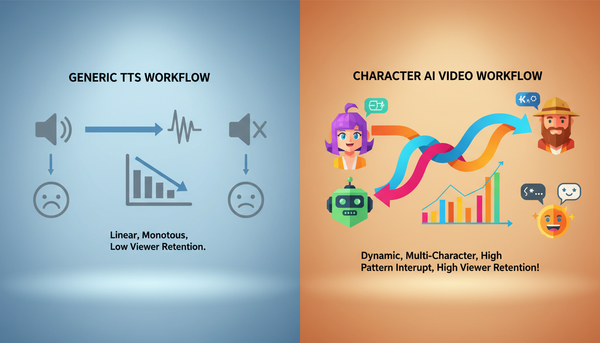
Replicating this highly specific style using modern technology isn't as simple as plugging a script into a basic text-to-speech engine. Standard voice generators are notoriously bad at capturing the subtle, rapid-fire shifts that define a Scagliotti performance. If you feed a generic AI a line of Claudia-esque dialogue, it will likely read it with a flat, robotic cadence, completely missing the subtext, the sarcastic eye-roll, and the breathless excitement that makes the line work. In fact, relying on basic tools often highlights why most free celebrity AI voice generators fail creators when they attempt to generate high-substance character work.
To truly capture this energy, creators must understand the art of directing AI personas to capture complex performances. It requires a system that doesn't just read words, but understands the emotional arc of a scene. Sarcasm is notoriously difficult for machines because it relies on a mismatch between literal meaning and vocal delivery. This is precisely why context-aware AI beats simple mimicry; an advanced AI model must recognize that when a character says "Oh, brilliant," while looking at a smoking, broken containment field, the tone should be dripping with irony, not genuine enthusiasm.
The Dialogue Blueprint: Writing Prompts for the Snarky Genius Archetype
To get the best results from an AI generator, you need a structured approach to writing prompts and directing the AI's vocal delivery. We call this the "Tech-Genius Snark" framework. It relies on three core pillars:
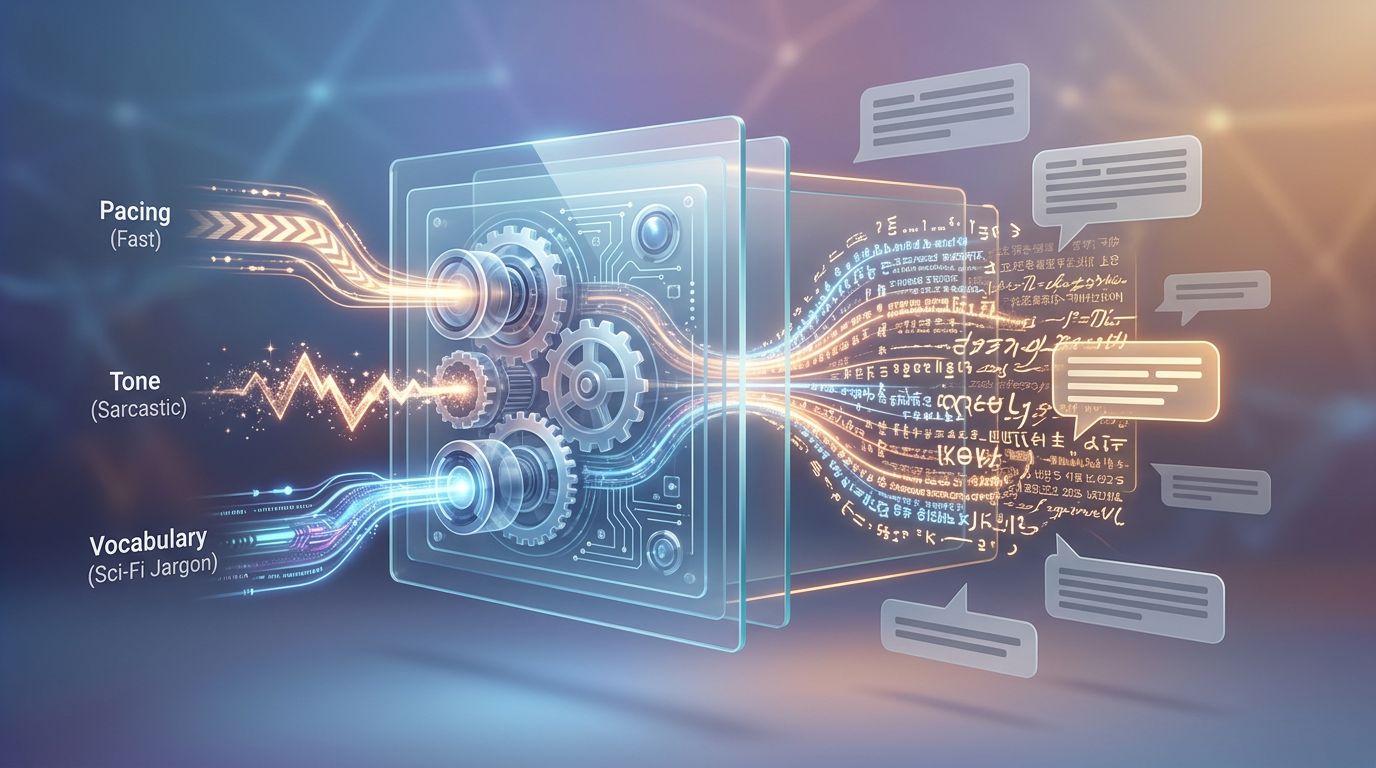
- High-density technical jargon mixed with mundane, everyday analogies.
- Rapid, staccato sentence structures with frequent self-interruptions and parenthetical thoughts.
- A baseline of defensive humor that melts away instantly when high stakes or genuine friendships are involved.
Mastering the Vocal Pacing
To force an AI voice generator to adopt a breathless, rapid pacing, creators should use specific punctuation and formatting cues. Ellipses (...), em-dashes (—), and phonetic spellings of exasperated sounds (like "ugh" or "pfft") help guide the AI's timing, preventing it from sounding too measured or deliberate. When using AI voice generators to elevate your content, these micro-adjustments are what separate a generic voiceover from a living, breathing character performance.
| Prompt Element | Generic AI Prompt (Avoid) | Scagliotti-Style Character Prompt (Use) |
|---|---|---|
| Role & Persona | "You are a smart female scientist who helps the team." | "You are a brilliant, fast-talking 20-something tech prodigy who uses extreme sarcasm to hide her vulnerability. You drink too much espresso and speak in rapid-fire bursts." |
| Vocabulary Style | "Explain how to fix the computer using simple terms." | "Explain how to bypass the mainframe bypass using highly technical steampunk jargon, but break it down with a ridiculous pop-culture analogy at the end." |
| Pacing & Punctuation | "I cannot believe we have to do this again. It is very annoying." | "Ugh, are we seriously doing this again? Because—spoiler alert—the last time we plugged a tesla coil into the toaster, I lost half my eyebrow. Not cool, guys." |
Beyond the Traditional Shoutout: Why Interactive AI Beats One-Way Cameos for Sci-Fi Fans
For years, the gold standard for fan-celebrity interaction was the traditional video shoutout. While platforms like Cameo offered a brief, exciting glimpse of a favorite actor, the experience was fundamentally passive and one-way. You paid a premium, waited days, and received a short, pre-recorded video that sat on your phone. It was a digital autograph—cool to show friends, but ultimately static.
Modern fandom is changing. Fans no longer want to just watch their favorite archetypes from afar; they want to engage with them. This shift is why fans are moving from traditional Cameo shoutouts to interactive AI-driven character interactions. On Fanfun, fans and creators don't just receive a passive message; they enter a dynamic, two-way dialogue. You can co-write a scene, solve a fictional mystery, or trade sarcastic banter with a custom-built tech-genius persona. It turns passive fandom into an active, collaborative creative playground.
Step-by-Step: How to Build Your Own Sci-Fi Companion on Fanfun
Ready to bring your own fast-talking, artifact-hunting tech genius to life? Here is the exact workflow to build and fine-tune a Scagliotti-inspired companion on Fanfun.
Step 1: Set up the Persona Profile
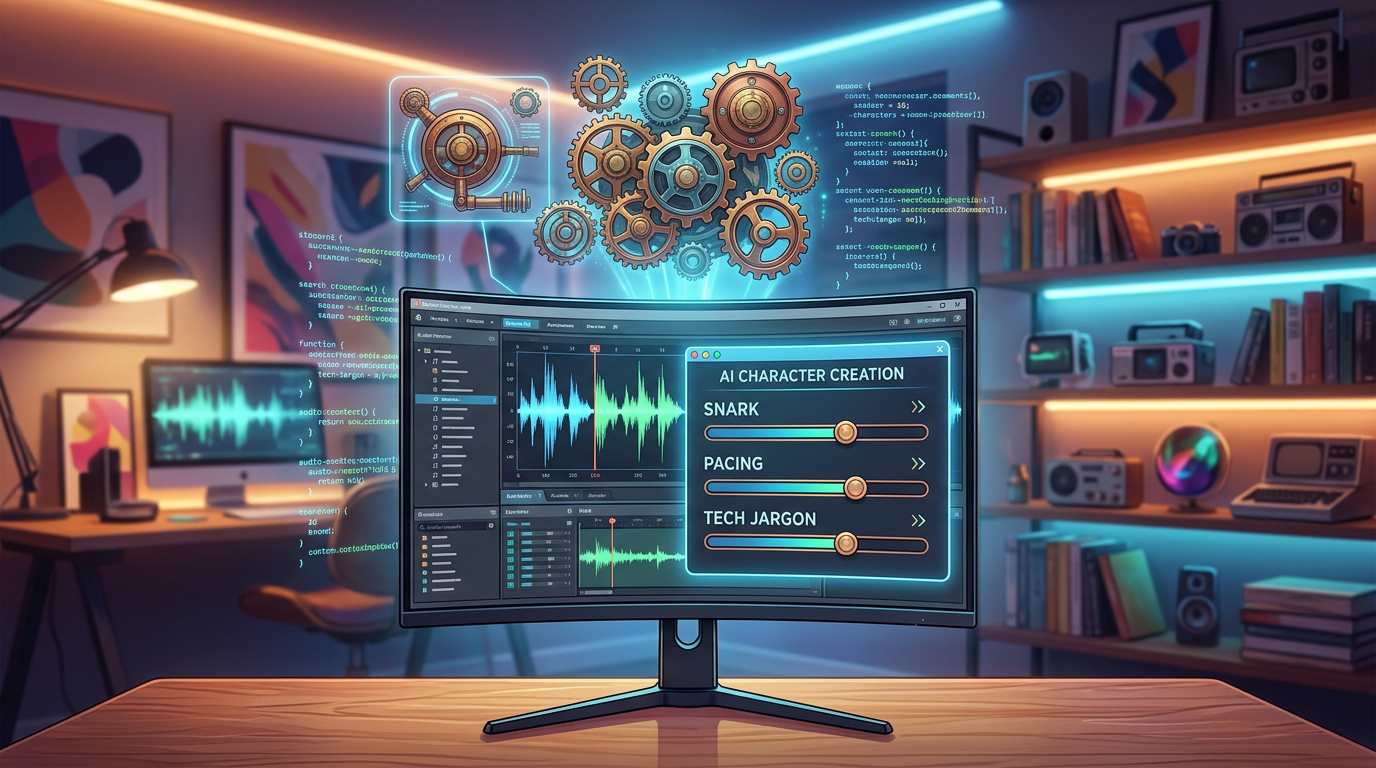
Start by defining the character's background, core traits, and linguistic quirks in the Fanfun character creator. In the personality field, don't just write "smart." Be highly specific: "A brilliant, slightly paranoid systems engineer who drinks too much caffeine, loves retro-futuristic aesthetics, and uses humor to deflect emotional intimacy." Add key vocabulary tags like "hacker jargon," "pop-culture references," and "deadpan sarcasm."
Step 2: Fine-Tune the Vocal Parameters
When selecting a voice profile on Fanfun, look for a tone that is youthful, energetic, and slightly cynical. Adjust the pacing parameters toward the faster end of the spectrum. You want a delivery that feels like the character's brain is working faster than their mouth can keep up, capturing that iconic Claudia Donovan staccato rhythm.
Step 3: Test, Iterate, and Play
The final step is conversational testing. Start an AI Chat session on Fanfun and throw complex scenarios at your new companion. See how they handle a crisis, a joke, or a technical question. Use the feedback loops to refine their responses until the comedic timing and sarcastic edge feel absolutely flawless.
What are Allison Scagliotti's most famous roles?
Allison Scagliotti is best known for her roles as Claudia Donovan in the sci-fi cult classic Warehouse 13, Mindy Crenshaw in the Nickelodeon sitcom Drake & Josh, and Camille Engelson in the sci-fi drama series Stitchers.
How do you write dialogue for a sarcastic, fast-talking tech character?
To write authentic dialogue for this archetype, combine highly technical jargon with mundane analogies, use short, rapid sentence structures, include self-interruptions (using dashes or ellipses), and weave in defensive pop-culture references.
Can I use Fanfun to create a custom sci-fi character voice?
Yes! Fanfun allows you to create custom AI personas, select and adjust vocal parameters for pacing and tone, and interact with them via voice generation, video messages, and interactive AI chat.
Why are fans moving from traditional Cameos to AI character interactions?
Traditional Cameos are expensive, one-way, and passive. Interactive AI-driven character interactions on Fanfun allow fans to have dynamic, two-way conversations, co-create stories, and engage in real-time roleplay with their favorite character types instantly and affordably.