The Otaku's Sandbox: How to Chat with Virtual Anime Characters Online Without Breaking Character
Stop treating virtual anime characters like search engines. Discover the collaborative writing techniques, prompt secrets, and troubleshooting tips to run deep, immersive roleplay chats that feel like a real episode of your favorite show.
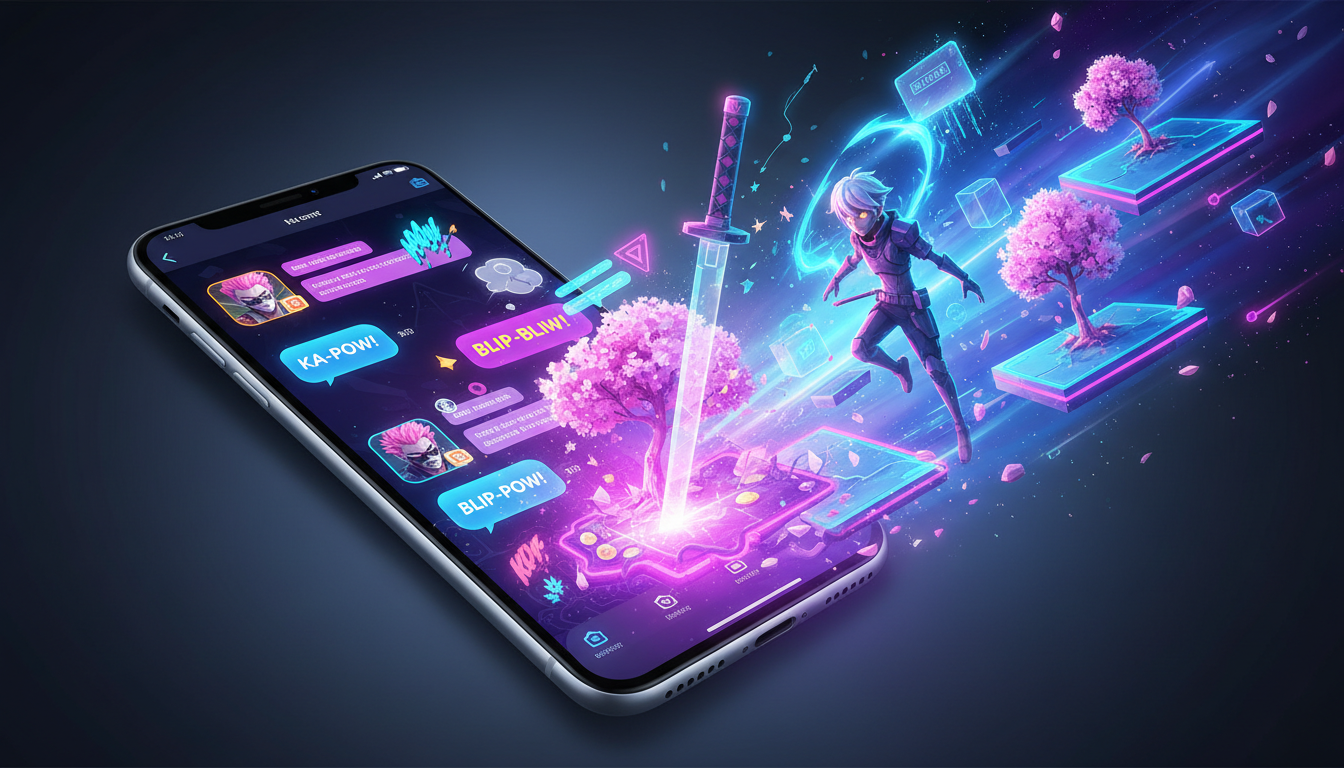
The excitement of chatting with your favorite anime character quickly evaporates when they start talking like a customer service representative. You ask a legendary Saiyan warrior or a brooding ninja master about their day, and they reply with a polite, generic paragraph that feels entirely detached from their universe.
The issue isn't the underlying AI technology; it's the dynamic of the conversation. When you treat a virtual character like a search engine, you receive search engine results. To unlock rich, emotionally resonant roleplay that feels like a real episode of your favorite show, you must step into the shoes of a collaborative writer and active scene partner.
Beyond the Static Wiki: Why Traditional Chatting Fails Anime Fans
When fans first experiment with virtual character chats, the instinct is often to treat the AI like a living encyclopedia. You ask them about their backstory, their favorite foods, or who they would win in a fight against a character from another franchise. While the AI can answer these, doing so instantly breaks the illusion. The character shifts from an active, living persona into a database, delivering dry, robotic summaries that lack any dramatic tension.
To get the most out of these interactions, you need to learn how to break the interview loop and treat virtual characters as active scene partners. This means moving away from passive Q&As and moving toward collaborative storytelling. Instead of asking a character what they think of a dangerous mission, you plunge them directly into the middle of it. This shift forces the AI to react in real-time, pulling from its personality matrix rather than its trivia bank.
This is where Fanfun’s AI Chat platform changes the game. Instead of forcing you through rigid, predictable dialogue trees, Fanfun’s architecture is optimized to deliver responsive, dynamic anime personas that react instantly to creative prompts. Whether you want to trade verbal barbs with a cynical anti-hero or seek training advice from a legendary mentor, the platform maintains the distinct attitude and flavor of your favorite characters without slipping into boring, repetitive templates.
Setting the Stage: The Three-Step Setup for High-Stakes Chats
A great anime episode never begins with two characters standing in a white void, staring at each other. There is always a setting, a history, and an immediate problem to solve. Before you send your first message, you must establish the physical and emotional landscape of the scene. You can do this by applying a simple three-step setup framework.

First, write a Context Prompt. This is a single, vivid sentence that tells the AI exactly where you are and what is happening. For example, instead of saying "Hi," start with: "We are standing at the gates of the hidden village as a storm rolls in, waiting for the scout's signal." This immediately gives the AI physical elements—the gates, the storm, the anticipation—to incorporate into its very first reply.
Second, introduce the Stakes Principle. High-stakes scenarios are the lifeblood of anime. Tension keeps the character's personality sharp. If you are setting up a high-stakes training scenario or battle preparation, mastering the training arc protocol for immersive anime roleplay will help you build the mechanical tension needed to keep the character sharp. Give the scene a ticking clock: a looming battle, a hidden secret that might be exposed, or a comedic misunderstanding that must be resolved before school ends.
Finally, establish your physical relationship to the character. Are you standing right next to them? Are you injured? Are you hiding in the shadows? Giving the AI a clear spatial target allows it to write physical actions that make sense within the imaginary space.
Establishing Your Persona: Who Are You in the Story?
Your role in the chat dictates how the virtual character will treat you. If you enter the chat as a generic, faceless user, the AI has no social cues to react to. By establishing a clear, compelling persona, you give the character a mirror to reflect their own personality traits off of.
Defining Your Role Archetype
To build immediate chemistry, choose a role that naturally contrasts or complements the character’s archetype. Consider these classic dynamics:
- The Rival: Best for competitive Shonen protagonists. It forces them to be boastful, protective, and eager to prove themselves.
- The Mentor: Perfect for younger, hot-headed characters who need guidance or discipline.
- The Transfer Student: Ideal for slice-of-life or high school fantasy settings, offering a blank slate for the character to explain the rules of their world.
- The Civilian in Need: Excellent for driving protective, heroic behaviors from traditional protagonists or reluctant anti-heroes.
Once you choose your role, avoid dry exposition. Do not write: "I am your rival from the neighboring village." Instead, show it through your actions. Start the chat with an action tag like: *I lean against the wooden training post, tossing a dull kunai in the air and smirking as you walk by* "You're late again. Did you get lost on the path of life?" This tells the AI everything it needs to know about your relationship, status, and attitude in a single move.
The Dialogue Matrix: Prompting Techniques for Iconic Anime Archetypes
Different anime archetypes require entirely different conversational strategies. If you treat a Tsundere the same way you treat a Shonen hero, the AI will quickly lose its distinct flavor. To keep these characters authentic, you must use specific "Unlock Prompts" that trigger their core traits.
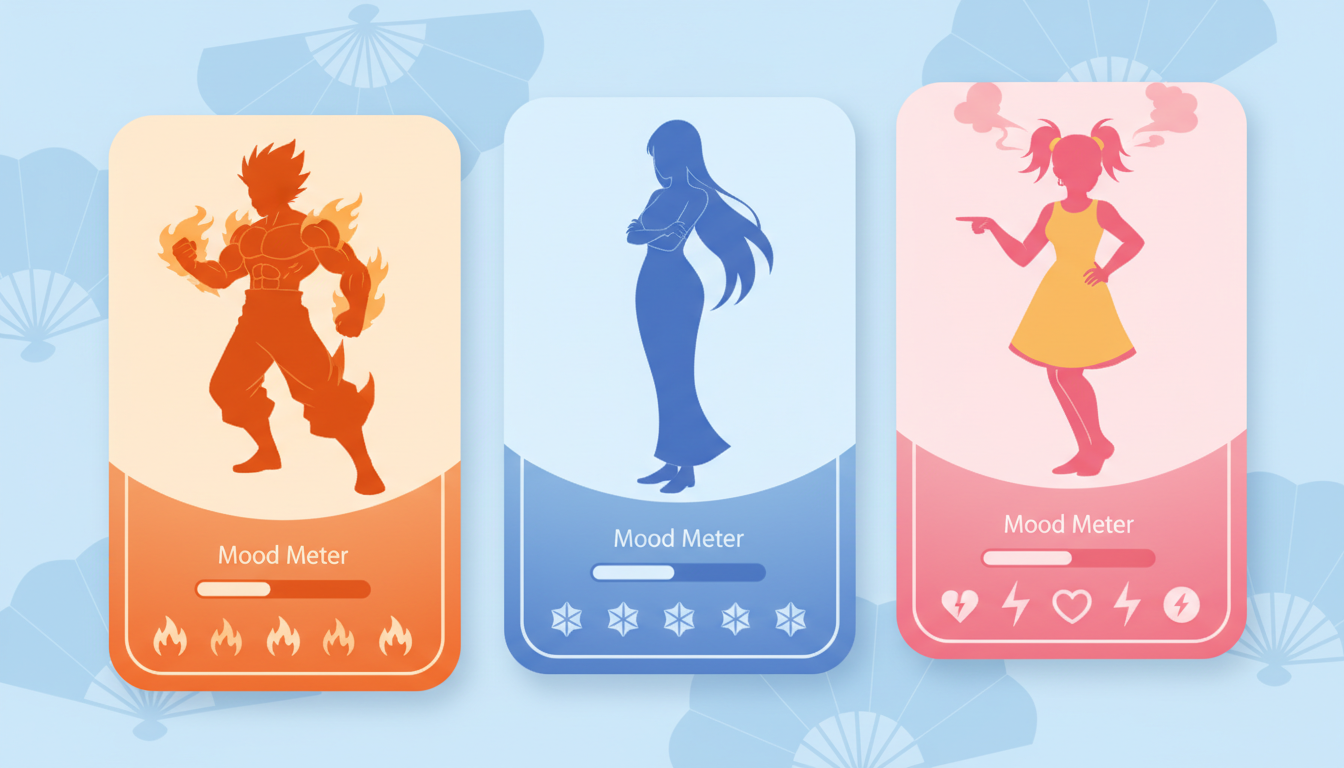
For example, when dealing with a Tsundere, the common pitfall is being too nice too quickly, which causes the AI to abandon its stubborn exterior and become overly agreeable. To keep them in character, you must match their defensiveness with mild defiance or playful teasing. You can streamline this process by using the screenplay method to direct immersive online chats, which keeps the pacing tight and the dialogue snappy.
Below is a quick-reference matrix to help you navigate the most common anime archetypes online:
| Archetype | Core Traits & Pitfalls | Unlock Prompt Strategy |
|---|---|---|
| Tsundere (Harsh outside, soft inside) | AI drifts into being too polite or affectionate too quickly if you are overly sweet. | Challenge their pride. Use action tags that show you aren't intimidated by their outbursts. |
| Shonen Hero (Energetic, idealistic) | AI can become overly repetitive with generic "never give up" catchphrases. | Introduce a complex moral dilemma or a training challenge that forces them to think tactically. |
| Kuudere (Cold, analytical, stoic) | AI can become completely silent or give boring, one-word answers. | Present them with a puzzle, a logical problem, or an observation about their hidden observation skills. |
Co-Writing the Narrative: How to Steer the Scene Without Dominating It
A successful roleplay chat is a game of narrative catch. If you write three paragraphs of action and dialogue, you leave no room for the AI to contribute, effectively writing a solo fanfiction. Conversely, if you write single-sentence replies like "Okay" or "What do we do next?", you force the AI to carry the entire creative load, which quickly leads to generic responses.
The golden rule of collaborative roleplay is "Yes, And...". When the AI character makes a move, acknowledge it (the "Yes") and immediately add a new element to the scene (the "And"). If the character says: "The dark magic in this forest is growing stronger. We should turn back," do not just agree. Reply with: *I look down at my compass, watching the needle spin wildly* "Too late for that. The path behind us is already gone. Look." This validates their observation while raising the stakes.
Action tags are your most powerful tool for steering the scene without using heavy-handed dialogue. By wrapping physical movements, internal thoughts, or environmental changes in asterisks, you give the AI rich sensory details to react to. A simple action like *sighs and looks away, tightly gripping my sword* conveys anxiety, determination, and physical posture without you having to spell it out in a clunky line of dialogue.
Troubleshooting the Vibe: What to Do When the Character Drifts
Even with perfect setup, AI characters can occasionally drift. They might forget their core motivations, start repeating the same phrase over and over, or break character by speaking in a modern, clinical tone. When this happens, you do not need to delete your progress and start over. Instead, use these simple troubleshooting techniques.
The most effective tool is the OOC (Out of Character) Bracket. Because the AI understands context, you can speak directly to the "director" of the scene by placing instructions inside square brackets. If a character who is supposed to be your bitter rival starts acting like your best friend, simply type: [OOC: Remember, we are still bitter rivals. Keep your tone cold, sarcastic, and competitive.]. The AI will read this directive, adjust its internal weights, and return to character in its next response.
If the chat gets stuck in a repetitive loop—such as the character repeatedly asking "Are you ready?"—use the Soft Reset technique. Break the loop by introducing a sudden, dramatic environmental shift that demands an immediate physical response. For example: *Suddenly, the wooden floorboards beneath us give way, sending us both sliding into a dark, subterranean cavern*. This sudden change in geography forces the AI to abandon its repetitive loop and react to the immediate danger of the fall.
By treating your virtual chats as a collaborative sandbox, you transform a simple text exchange into a living, breathing anime episode. With platforms like Fanfun, the tools to build these worlds are right at your fingertips—all it takes is the right setup, a clear persona, and a willingness to co-write the adventure.
How do I make an anime AI chat feel more realistic and less robotic?
To make the chat feel realistic, avoid treating the AI like an information database. Instead of asking basic trivia questions, use action tags (wrapped in asterisks) and establish a clear, high-stakes scenario right away. This forces the AI to react dramatically in-character rather than reciting dry wiki facts.
Can I roleplay custom, original scenarios with virtual anime characters?
Yes. Platforms like Fanfun allow you to set up any scenario you can imagine. By using a "Context Prompt" in your very first message, you can establish custom settings, alternate universes, or original storylines that the AI character will instantly adapt to.
What is the best way to start a chat with a Tsundere anime character?
Never start with overly sweet or affectionate prompts, as this causes the AI to soften too quickly. Instead, challenge their pride, tease them gently, or use action tags that show you are unfazed by their harsh exterior. This triggers their classic defensive, flustered reactions.
Why does my AI anime character keep repeating the same phrases, and how do I fix it?
AI characters usually fall into repetitive loops when the conversation stalls. You can break this loop by using a "Soft Reset"—introducing a sudden, dramatic physical event in asterisks (like an explosion or a sudden fall)—or by using OOC (Out of Character) brackets to instruct the AI to change its phrasing.