The Ginny Weasley Evolution: How to Channel Bonnie Wright’s Creative Energy in Modern Fan Content
Learn how Bonnie Wright transitioned from a franchise star to a director and activist. Discover how to use modern AI voice and video tools to direct, script, and generate your own high-quality fan content.

For a generation of fantasy fans, Bonnie Wright represents the ultimate slow-burn triumph. As Ginny Weasley, she evolved from a shy, diary-clutching eleven-year-old into a fierce, bat-bogey-hexing leader of Dumbledore’s Army. But Wright’s most compelling evolution happened after the cameras stopped rolling on the wizarding world, as she stepped away from acting to forge a career as an independent director, author, and environmental activist.
This transition from a passive performer inside a massive studio machine to an active, self-directed creator mirrors a massive cultural shift in how we engage with stories. Just as we analyze how Alfonso Ribeiro turned sitcom nostalgia into a hosting empire, Bonnie Wright's post-Hogwarts career shows that actors don't have to remain trapped in their early-career boxes. Today's fans are following a similar path: we are no longer content to simply watch our favorite characters from afar. Armed with modern AI tools, we are stepping into the director's chair ourselves, using platforms like Fanfun to turn passive nostalgia into highly personalized, interactive digital art.
From Hogwarts to Behind the Camera: The Bonnie Wright Evolution
To understand Bonnie Wright’s creative energy, one must look at her choices after the final wizarding film wrapped. Rather than coasting on the momentum of a multi-billion-dollar franchise, Wright chose to study filmmaking at the London College of Communication. She wanted to understand the mechanics of storytelling from the other side of the lens—directing short films like Separate We Come, Separate We Go and founding her own boutique production company, BonBonLumiere.

Alongside her film career, Wright has channeled her focus into environmental activism. Her book, Go Gently: Actionable Steps to Nurture Yourself and the Planet, and her work as a Greenpeace Ambassador highlight a creator who uses her platform to foster tangible, positive change. She is not just a face for a brand; she is an active architect of her own message.
This trajectory represents the ultimate archetype of creative agency. It shows that characters and stories are not static relics of the past; they are living, breathing templates that we can continue to shape. In the modern digital landscape, this same drive to create, direct, and customize is fueling a new wave of fan-generated media, shifting the power dynamic from major studios directly to the community.
The Shift in Fandom: Why Passive Shoutouts Don't Cut It Anymore
For years, the gold standard of fan-celebrity interaction was the paid shoutout. You would spend hundreds of dollars on a traditional platform, wait days or weeks, and receive a generic, fifteen-second video of an actor reading a script off their phone. While novel at first, these interactions are fundamentally passive. They are one-way streets that offer little room for genuine creativity, leaving fans as consumers rather than collaborators.
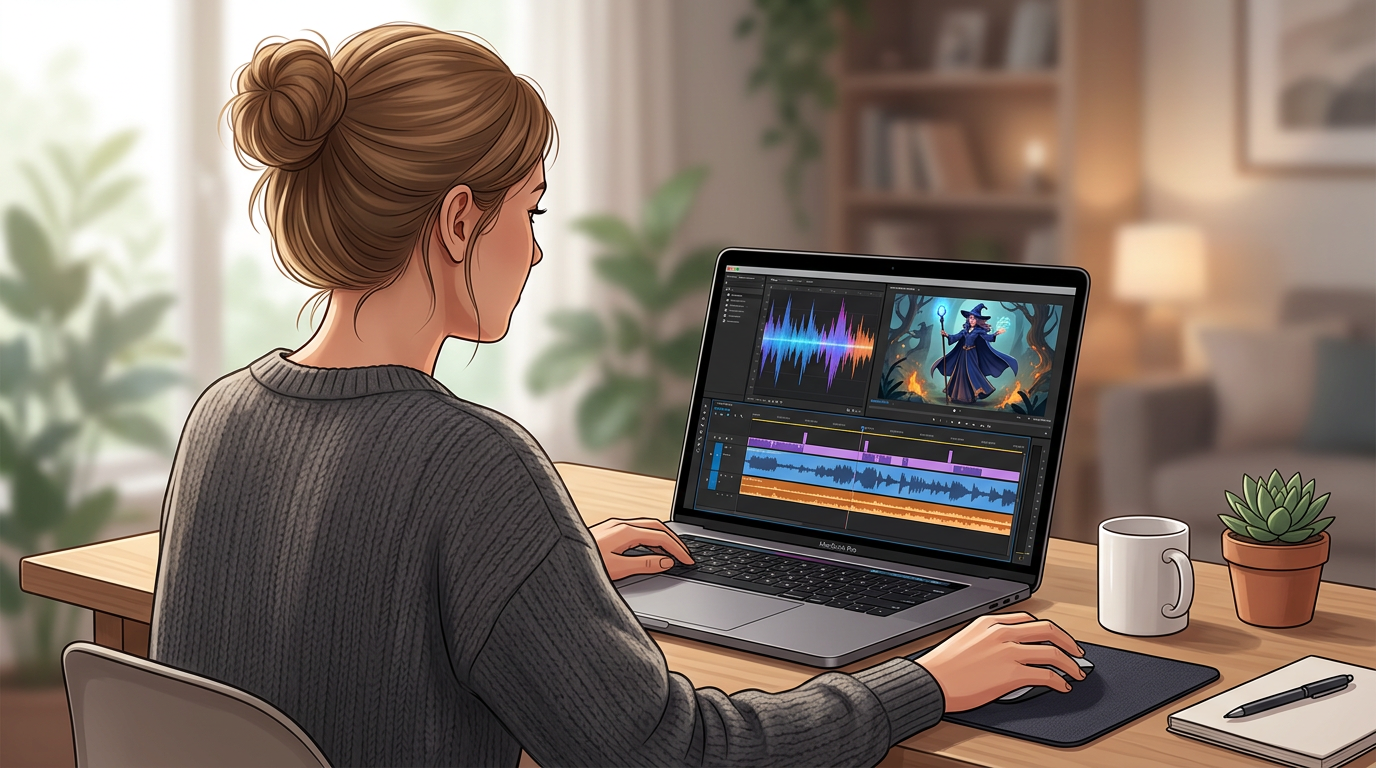
Today’s creators demand more. We want to build immersive campaigns, craft custom audiobooks, and script hilarious, hyper-specific scenarios that celebrate our niche communities. This is where modern AI platforms like Fanfun are redefining the landscape. Instead of waiting for a celebrity's schedule to open up, creators can instantly generate custom videos, voiceovers, and interactive dialogues that bring their unique visions to life.
When you look beyond the novelty of a Hard Rock Nick Cameo, the limitations of traditional, passive celebrity shoutouts become obvious. On Fanfun, fans aren't just buying a static video; they are directing the narrative. Whether a fan-fiction writer wants to instantly turn their written dialogue into a fully voiced audio drama, or a parent wants to generate a personalized magical message for their child in minutes, the technology allows for a democratization of production that aligns perfectly with Bonnie Wright’s own ethos of independent, self-directed creation.
Crafting the Perfect Wizarding Archetype: A Scriptwriting Guide
To create fan content that feels authentic and high-substance, you must master the specific vocal identity of your characters. A generic fantasy voice won't capture the grounded, sharp, and fiercely loyal essence of the wizarding world's most famous red-headed heroine. You need to write with her specific psychological profile in mind: a mix of British Received Pronunciation (RP), subtle sarcasm, and an underlying warmth born of growing up in a chaotic, loving household.
When writing scripts for an AI voice generator, you must think about rhythm, slang, and emotional pacing. Much like learning how to structure scripts for the ultimate AI voice generation, writing for a wizarding archetype requires specific pacing, pauses, and vocabulary. The key is to blend magical terminology with relatable, modern human emotions.
Vocal Blueprint and Scripting Templates
To get started, try using these two distinct script templates designed to capture different sides of this iconic magical archetype:
Template A: The Encouraging Birthday Wish (Warm but Sarcastic)
"Oh, brilliant. Another year older, and you still haven't figured out how to organize your desk without magic? Honestly, even my brother Ron manages to keep his room somewhat tidy... occasionally. But seriously, happy birthday. Put down the books, step away from the cauldron, and have a proper celebration today. You've earned it."
Template B: The Custom Fan-Fiction Narration (Dramatic and Determined)
"The wind over the Black Lake was freezing, but she didn't pull her cloak tighter. There was no time for comfort. The match was in twenty minutes, and the Slytherins were already warming up. She gripped her broom, felt the familiar grain of the wood beneath her fingers, and smiled. Let them try their worst. We're ready."
The Directing Masterclass: Bringing Your Script to Life
Writing a great script is only half the battle; the real magic happens in the director's chair. Just as Bonnie Wright learned to guide actors to deliver nuanced performances on indie film sets, you must learn to guide your AI voice generator to capture the perfect emotional performance.
AI voice engines are incredibly sensitive to punctuation, formatting, and phonetic spelling. If you want a line to sound breathless, sarcastic, or triumphant, you cannot simply paste raw text and hope for the best. You must actively direct the output. By learning how to direct celebrity voice AI like a professional showrunner, you can guide the emotional pacing, emphasis, and delivery of your scripts, elevating your fan projects from simple synthetic speech to cinematic storytelling.
Punctuation and Pacing Hacks for Magical Dialogue
To get the most authentic delivery, employ these quick directing tactics in your text prompts on Fanfun:
- The Dramatic Ellipsis (...): Use ellipses to force the AI to take a natural, contemplative breath. For example, writing "I think... we might actually win this" creates a completely different emotional weight than a flat sentence.
- Phonetic Spellings for Spells: Complex magical words can sometimes trip up voice models. Spell them out phonetically to guarantee perfect pronunciation (e.g., use "Ex-pelly-armus" or "Ar-resto Mo-momentum").
- Capitalization for Emphasis: If a word needs a sharp, sudden punch of energy, capitalize it. Writing "We need to leave NOW" signals the AI to shift its vocal intensity.
- Hyphenated Phrasing: To mimic the rapid-fire, witty banter of British wizarding dialogue, link quick thoughts with hyphens (e.g., "It's a-bit-of-a-mess, really").
Interactive Scenarios: Traditional Fan Edits vs. AI-Driven Storytelling
Fandom has always been a highly creative space, but the tools we use dictate the limits of our imagination. For years, fan fiction was restricted to text forums, and fan vids were limited to chopping up existing movie footage on complex editing software. Today, generative AI tools allow us to build entirely new narrative assets from scratch, combining high-quality voiceovers with custom scripts to create interactive experiences.
Let's look at how traditional fan editing compares to modern, AI-driven storytelling on platforms like Fanfun:
| Feature | Traditional Fan Edits (Video/Text) | AI-Driven Storytelling (Fanfun) |
|---|---|---|
| Production Time | Hours to weeks of manual editing and splicing | Minutes; instant generation of custom audio and video |
| Customization | Low; limited to existing movie clips and voice lines | Infinite; write any dialogue, scenario, or name |
| Audience Engagement | Passive viewing or reading | Interactive; users can chat in real-time or get custom videos |
| Technical Skill Required | High; requires video editing or professional writing skills | Low; intuitive prompt-based creation and design |
Three Creative Formats to Try Today
If you want to move beyond static edits, here are three highly engaging formats you can build on Fanfun right now:
- The Custom Audio-Drama Intro: Write a custom prologue for your fan-fiction chapter, generate the voiceover, and overlay it with soft wind or crackling fireplace sound effects to set the ultimate mood.
- The Interactive Magical Trivia Host: Set up an AI chat persona on Fanfun that acts as a witty, challenging wizarding quizmaster, testing your followers' knowledge of obscure magical lore.
- The Personalized Motivational "Howler": Create a lighthearted, booming voice message to send to a friend who needs a kickstart to finish their exams, styled after the famous screaming letters from the films.
Ethical Fan Creation: Respecting the Artist's Real-World Voice
As we embrace the incredible power of generative AI, we must also inherit the responsibility of using it ethically. Bonnie Wright has dedicated much of her life to advocacy, community building, and environmental protection. When we create content inspired by her work and her most famous character, we should do so in a way that respects her real-world legacy and values.
At Fanfun, we advocate for creative, positive, and high-substance fan parodies. There is a clear, bright line between using AI tools to celebrate a beloved fictional archetype—bringing joy, nostalgia, and creative community engagement to life—and using someone's likeness for malicious misrepresentation, scams, or commercial exploitation. Ethical fan creation means using these tools to build up the fandom, tell new stories, and foster connection.
By focusing on creative fan-fiction, personalized gifts, and community challenges, you can ensure your projects align with the collaborative, supportive spirit of modern fandom. Let your AI-driven projects be a tribute to the art of storytelling—honoring the journey of a young actress who stepped behind the camera to become a true creator, and inviting your audience to do exactly the same.
What is Bonnie Wright doing now?
Bonnie Wright is currently working as an independent film director, author, and environmental activist. She founded the production company BonBonLumiere and published the book Go Gently: Actionable Steps to Nurture Yourself and the Planet, which focuses on sustainable living and climate advocacy.
How did Bonnie Wright transition from acting to directing?
After completing her work on the wizarding franchise, Bonnie Wright attended the London College of Communication, where she studied filmmaking and earned her degree. She transitioned to directing by writing and directing short films, music videos, and commercial projects, focusing on independent, narrative-driven storytelling.
Can I use AI to create personalized wizarding videos?
Yes! With platforms like Fanfun, creators can instantly generate personalized videos, custom voiceovers, and interactive chats inspired by iconic wizarding archetypes. This allows you to create custom birthday wishes, fan-fiction narrations, and memes instantly without waiting on celebrity availability.
How can creators legally and ethically make fan content with AI voices?
Ethical AI creation relies on transparency, non-commercial use, and respect. Creators should use AI tools to generate transformative works like fan-fiction, parodies, and personalized gifts, avoiding any content that misrepresents the real-world views of the artist or attempts to deceive audiences for commercial gain. Fanfun actively promotes safe, creative, and community-driven fan expressions.