The Interactive Sandbox: How to Use AI Roleplay Chat Platforms to Stress-Test Your Creative Writing
Move beyond static character sheets. Learn how to treat AI roleplay platforms as active rehearsal spaces to pressure-test your characters' motives, dialogue, and reactions under dynamic conditions.
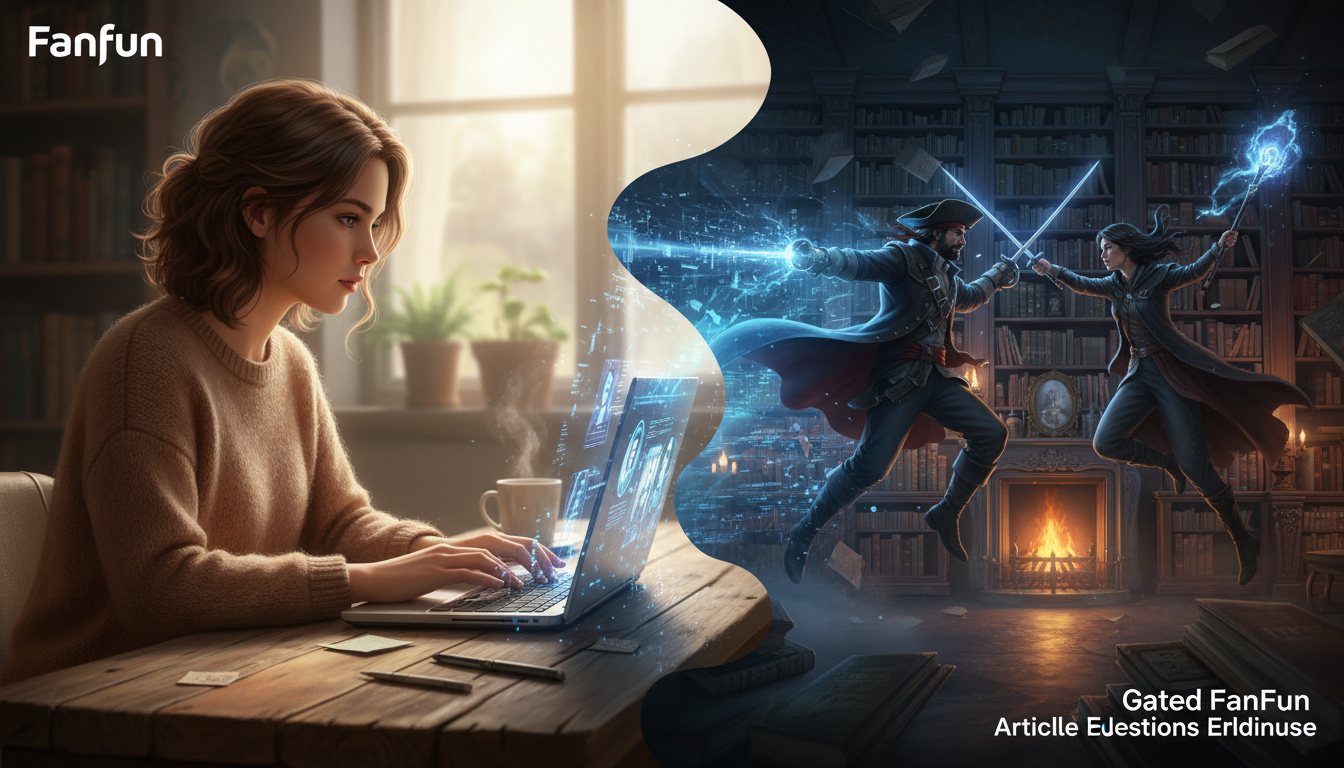
Every writer knows the frustration of a character sheet that looks perfect on paper but falls completely flat on the page. You have mapped out their backstories, their deepest fears, and their favorite foods, yet the moment they step into a scene, their dialogue feels stiff, predictable, and clean. Traditional outlining can only take you so far because it is a solitary, non-reactive exercise where you control both sides of the chessboard.
To truly understand how a character behaves under pressure, you need to throw them into an unpredictable environment where they must react in real time. Advanced writers are turning to interactive AI roleplay platforms as their personal, dynamic narrative sandboxes. By treating the AI as an actor in a scene rather than a simple search tool, you can pressure-test your characters' motives, dialogue, and reactions under dynamic, unpredictable conditions.
Beyond the Static Outline: Why Roleplay Chats Are the Ultimate Writer's Sandbox
Static character sheets are excellent for organizing facts, but they fail to capture authentic voice and spontaneous reactions. In a standard document, you might write that a character is 'quick-tempered yet fiercely loyal.' However, when you write both sides of a confrontation yourself, you unconsciously protect your characters. You make their arguments too clean, their realizations too convenient, and their conflicts too easily resolved. There is no friction.
Real-time, interactive roleplay introduces a necessary external force. When you chat with an AI configured as an opposing character, you no longer have absolute control over the narrative flow. The AI will push back, misunderstand your character's intentions, ask uncomfortable questions, or make unexpected demands. This forces you to defend your character's logic on the fly. If your protagonist claims to be a master diplomat, but the AI character easily sees through their bluff, you are forced to adjust and discover their genuine breaking points.
Additionally, there is a profound cognitive benefit to 'writing in dialogue' with an external agent. Bypassing the blank page syndrome becomes significantly easier when you are responding to an active prompt rather than trying to conjure a scene out of thin air. Instead of staring at a blinking cursor, you are reacting to a line of dialogue that was just spoken to you. This shift from active generation to active reaction lowers creative resistance and unlocks spontaneous prose that rarely emerges during a standard solo writing session.
Choosing Your Writing Partner: A Framework for Evaluating Roleplay Platforms
Not all interactive chat platforms are built for the nuance of high-level creative writing. When selecting a digital rehearsal space, you must balance the technical trade-offs between context window (how much of the past conversation the AI can remember) and tone adherence (how accurately the AI maintains its designated personality without slipping into generic assistant speak).
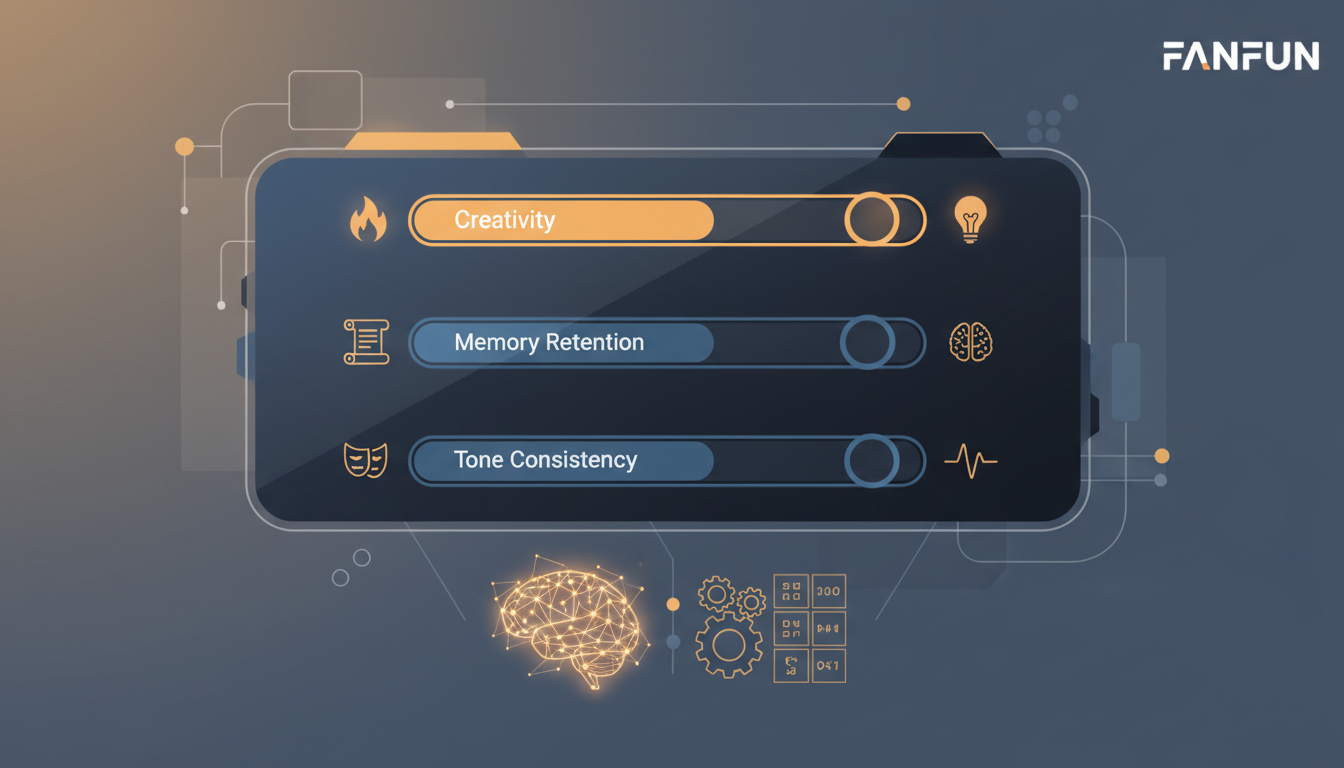
To find the right environment for your project, consider this evaluation framework when evaluating and choosing virtual character text chat platforms:
| Platform Focus | Memory Retention | Tone Customization | Best For |
|---|---|---|---|
| High-Context Models | Excellent (32k+ tokens) | Moderate (Requires deep prompting) | High-fantasy worldbuilding & long-arc subplots |
| Persona-Driven Chats | Moderate (4k-8k tokens) | Exceptional (Highly localized voice) | Intimate contemporary drama & rapid-fire banter |
| Multi-Agent Sandboxes | Variable | Complex (Harder to keep everyone in character) | Ensemble group scenes & dinner party conflicts |
If you are writing a sweeping historical epic, you will need a platform that prioritizes memory retention so the AI doesn't forget who died in chapter two. Conversely, if you are writing a sharp, modern dramedy, you should prioritize tone customization. In this scenario, you need an AI that can handle subtext, passive-aggression, and distinct linguistic quirks without reverting to polite, helpful AI platitudes.
Setting the Stage: How to Prompt and Direct the AI for High-Substance Scene Work
An AI character is only as good as its boundaries. If you start a chat with a generic prompt like "You are my rival, let's talk," the AI will likely default to melodramatic, cartoonish villainy. To get high-substance scene work, you must establish clear rules, constraints, and underlying tension before the first line of dialogue is exchanged. This process is known as directing interactive AI character chats.
Use the Director's Prompt Formula to structure your initial setup:
[Setting & Sensory Details] + [The Immediate Conflict] + [The AI's Secret Motivation] + [Behavioral Constraints]
For example, instead of telling the AI it is an angry boss, try this:
"We are in a cramped, poorly lit office smelling of stale coffee. You play Arthur, my managing editor. I have just walked in to tell you I lost the main source for our front-page expose. You are deeply stressed about budget cuts, but you cannot fire me because I am the only one who knows the source's identity. Do not resolve this conflict quickly. Do not speak for my character. Respond only in dialogue and internal physical actions. Start the scene by looking up from your desk."
By establishing that Arthur *cannot* fire the protagonist, you build immediate, unresolvable tension. The behavioral constraint "Do not speak for my character" is crucial; it prevents the AI from writing the entire scene for you. By feeding the AI specific sensory details (the smell of stale coffee, the poor lighting), you encourage the model to weave those elements into its responses, enriching the collaborative output with environmental texture.
Practical Exercises: Three Workflows to Unblock Your Narrative
Once your stage is set, you can run targeted exercises to stress-test your narrative. Here are three step-by-step workflows designed to break creative blocks and refine your draft.

Exercise 1: The Interrogation
The goal of this exercise is to uncover your protagonist's hidden flaws, secrets, and hypocrisies. Set up an AI character who is highly analytical, skeptical, and holds structural power over your protagonist—such as a detective, a therapist, or a suspicious mentor.
Enter the chat as your protagonist. Instruct the AI to question you relentlessly about a specific event in your story. Because you must answer in character, you will find yourself inventing justifications, lies, and emotional defense mechanisms on the fly. Often, the excuses you make up during this high-pressure chat will reveal your character's true flaws far better than any solo brainstorming session.
Exercise 2: The Alternate Path
If you have hit a wall in your plot, use the sandbox to test three wildly different directions for a single scene. Start the chat at the exact turning point of your chapter. Run the scene to its logical conclusion once. Then, reset the chat to the beginning and change one key variable.
In run A, have your character tell the truth. In run B, have them tell a blatant lie. In run C, have an unexpected physical event interrupt the conversation entirely. Comparing how the AI reacts to these different inputs provides immediate, practical decision support on which narrative path yields the highest dramatic tension.
Exercise 3: The Dialogue Polish
A character's voice should be as distinct as a fingerprint. To test if your dialogue is truly unique, try chatting with virtual movie stars online for scene work or using highly stylized literary archetypes. Paste a page of your drafted dialogue into the chat and ask the AI character to critique it in their own voice, or engage them in a rapid-fire debate using only your character's established vocabulary and speech patterns.
Pay close attention to where the conversation drags. If the AI easily predicts your character's responses, or if the banter feels repetitive, your dialogue is likely too on-the-nose. Use the chat to inject subtext, interrupt flow, and introduce realistic verbal friction.
Elevating the Scene: Integrating Fanfun's Interactive AI for Multi-Format Inspiration
Text-based roleplay is an exceptional starting point, but writing is a multi-sensory craft. To truly understand if a scene works, you need to hear the cadence of the words and feel the emotional weight of the delivery. This is where Fanfun bridges the gap between static text and dynamic multimedia inspiration.
With Fanfun, you do not need to spend hours configuring complex system prompts to get an interesting writing partner. You can instantly start an interactive chat with established archetypes, historical figures, and cultural icons. If you are writing a hard-boiled detective story, chatting directly with a classic noir detective persona on Fanfun allows you to absorb the genre's specific pacing, slang, and attitude without any setup friction.
More importantly, Fanfun allows you to transition seamlessly from text-based dialogue to voice. By using Fanfun's AI Voice Generator, you can take the dialogue generated during your roleplay sessions and hear how it actually sounds when spoken aloud. This is a game-changer for identifying clunky phrasing, awkward tongue-twisters, and unrealistic speech patterns. Hearing an AI interpretation of your dialogue read aloud with realistic dramatic tension reveals exactly where a scene's pacing succeeds—and where it falls flat.
By treating interactive AI not as a gimmick, but as an active rehearsal space, you can transform your writing process from a static, solitary struggle into a dynamic, collaborative performance. The next time you find yourself stuck on a scene or struggling to find a character's voice, step into the sandbox, set the stage, and let the cameras roll.
Can I use AI roleplay chats to write a novel?
Yes, but they are best used as a collaborative rehearsal space rather than a tool to generate the final prose. Use the chats to discover character voices, test plot viability, and break through writer's block, then translate those insights into your own unique narrative style.
How do I prevent the AI character from breaking character during roleplay?
Establish strict behavioral constraints in your initial "Director's Prompt." Remind the AI of its role, perspective, and limitations. If the AI begins to slip into generic assistant speak, gently edit its last response or issue a brief out-of-character instruction (e.g., "[OOC: Maintain Arthur's gruff tone and do not be polite]") to redirect the model.
What is the best AI platform for creative writing roleplay?
The best platform depends on your creative needs. For deep worldbuilding and complex plots, choose high-context models with large memory retention. For rapid-fire dialogue, character banter, and instant archetype interaction, platforms like Fanfun offer immediate, friction-free character chats and voice generation tools.
Do I own the copyright to stories and dialogue co-written with AI chat platforms?
Generally, copyright laws vary by jurisdiction, but pure AI-generated text cannot be copyrighted in many regions, including the US. However, using AI chats to brainstorm, outline, and refine ideas that you ultimately write yourself is completely standard and protects your creative ownership.