How to Write Script Dialogue That Fits a Medieval Knight Character Voice
Ditch the grammatically incorrect 'thees' and 'thous.' Learn how to write powerful, honorable dialogue for a medieval knight character voice that sounds natural when read by a synthetic voice generator.
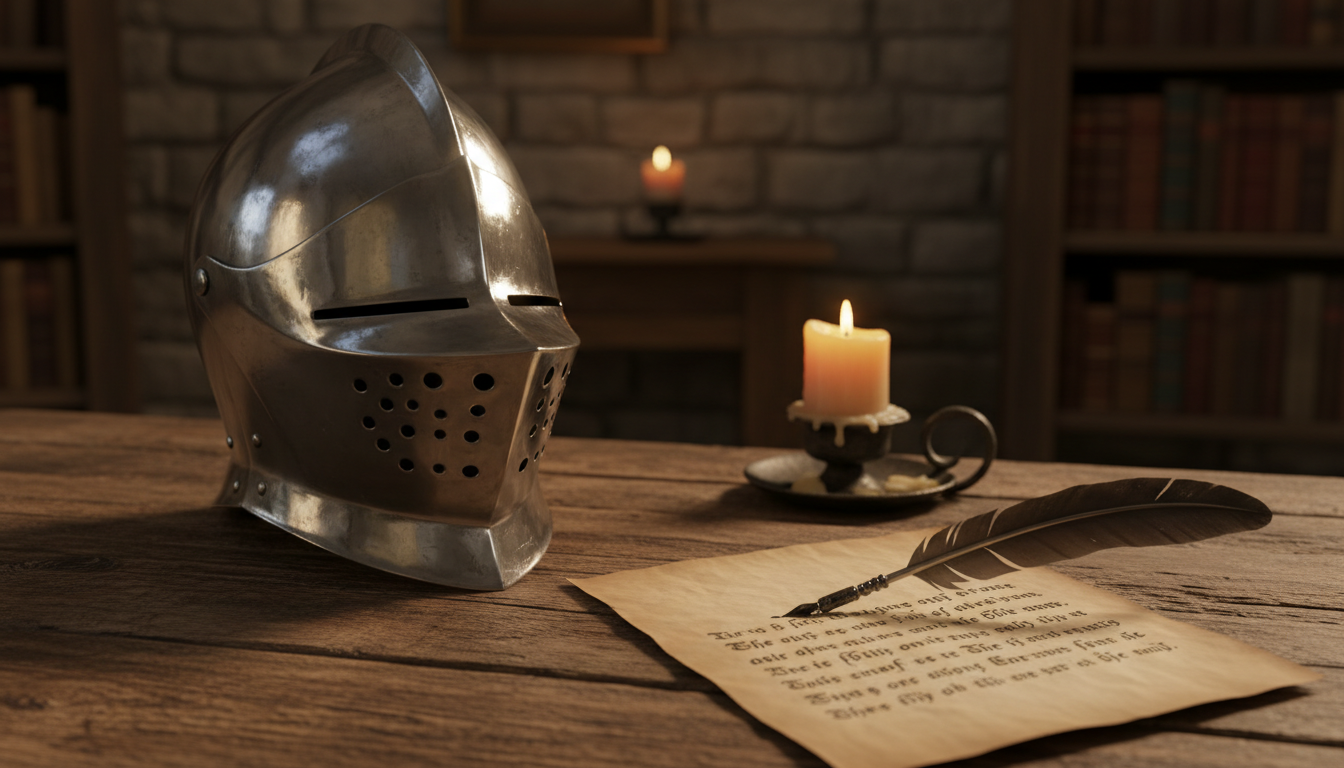
To write script dialogue that fits a medieval knight character voice, prioritize formal sentence structure, active verbs, and earnest honorifics over grammatically incorrect Old English clichés. By replacing casual contractions with full words (like "cannot" instead of "can't") and framing the message around a noble quest or duty, you can create a powerful, heroic performance. While synthetic voices can capture this dramatic weight beautifully, they do require specific pacing and strategic punctuation to avoid sounding rushed or artificial.
The Anatomy of Knightly Cadence: Dignity Over Clichés
Many writers assume that throwing "thee," "thou," and "forsooth" into every sentence is the fastest way to make a character sound medieval. In reality, unless you are deeply familiar with the grammatical rules of Early Modern English, incorrect usage of these pronouns can sound incredibly jarring to listeners. True knightly flavor comes from formal structure and an unwavering sense of dignity, not linguistic shortcuts.
To establish an instant noble tone, start by removing casual modern contractions. Replace "don't" with "do not," "can't" with "cannot," and "you're" with "you are." This slight shift immediately slows down the delivery, giving each word more weight and gravity. Additionally, ground your character in a chivalric world by using honorable terms of address. Address your listener as "my liege," "noble traveler," "fair companion," or "valiant friend" depending on their relationship to the knight.
Finally, frame the core message of your script around a sense of duty, honor, or questing. This thematic framework is incredibly effective when you are writing a medieval knight congratulations script for a virtual character video, as it elevates a standard milestone into a legendary triumph achieved through courage and perseverance.
The Knight's Lexicon: Choosing Words That Carry Weight
A knight's vocabulary should feel physical, grounded, and heroic. Modern speech is often passive and abstract, whereas historical or fantasy archetypes rely on active verbs and concrete nouns. Instead of saying your character will "try to help," have them "pledge their blade" or "champion your cause."
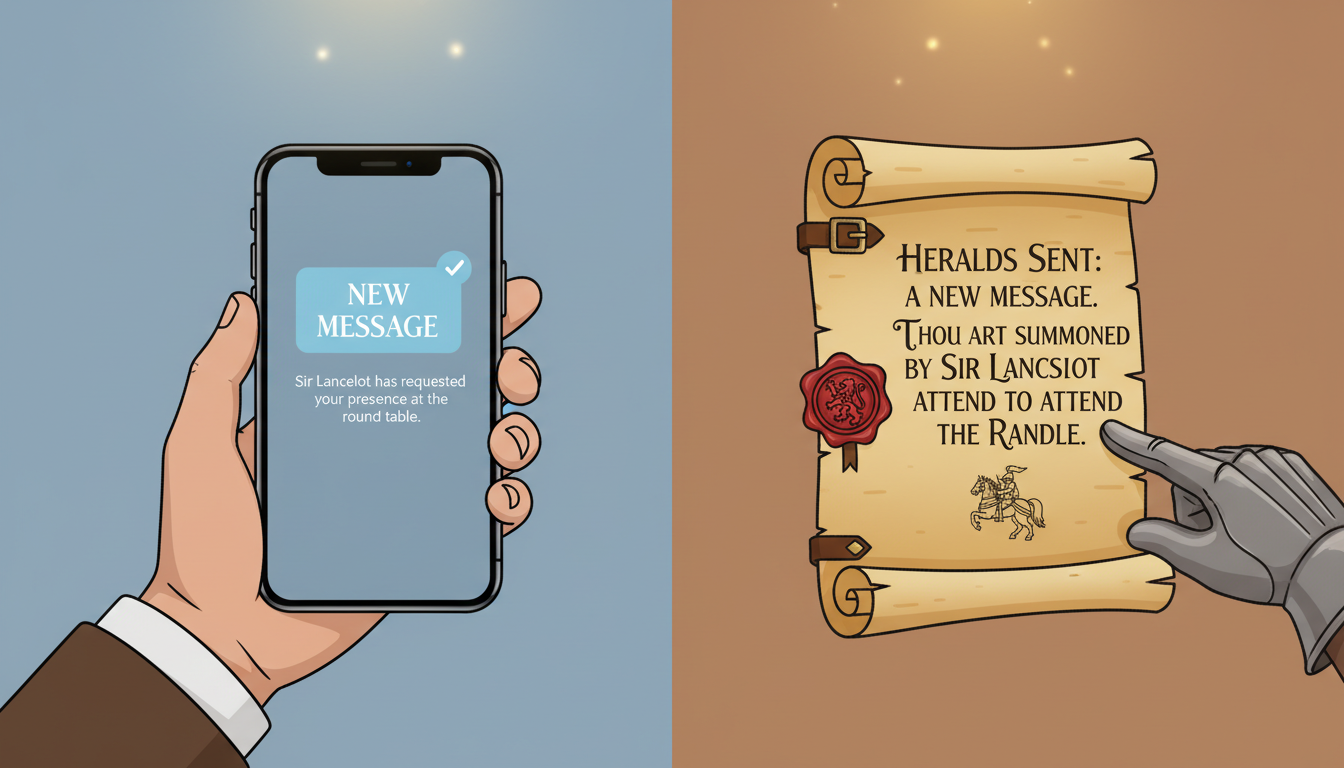
Keep your descriptions rooted in the physical reality of the era. Reference shields, banners, hearths, polished armor, and trusty steeds rather than abstract concepts. The emotional tone should remain earnest and sincere. While a knight can certainly be lighthearted, avoid modern sarcasm or irony, which can break the historical illusion instantly.
When utilizing synthetic voices, remember that a booming, battlefield-ready voice can sometimes overwhelm a personal message. For moments of quiet encouragement or solemn oaths, you might consider general techniques for adjusting character voice pitch for a softer speech tone in external editing software, or simply select a character with a naturally gentler delivery to ensure the message feels intimate rather than aggressive.
| Modern Phrase | Knightly Alternative |
|---|---|
| "Good luck on your test." | "May your blade stay sharp and your focus unwavering." |
| "I hope you have a great birthday." | "We shall raise a goblet by the hearth fire to honor your birth." |
| "Let me know if you need anything." | "Should danger find you, summon me, and my shield is yours." |
| "You did a really good job on this project." | "Your triumph today brings great honor to your banner." |
Formatting Your Knight Script for Natural Voice Synthesis
Writing a great script is only half the battle; formatting it so an AI voice generator reads it with the correct dramatic weight is just as important. Synthetic voices rely entirely on your punctuation to determine where to pause, breathe, and place emphasis.
Keep your sentences relatively short. Long, winding clauses can cause a virtual voice to run out of natural-sounding breath or rush through noble declarations. Use punctuation strategically to build tension. Em-dashes and ellipses are excellent tools for signaling dramatic pauses before a grand reveal or a solemn pledge. For example, writing "We stand... victorious" creates a much more powerful pause than "We stand victorious."
Additionally, writing out numbers and titles fully can help guide the voice generator. A synthetic voice might read "Sir Thomas III" as "Sir Thomas three" or "Sir Thomas the third" depending on its training. Writing it exactly as it should be spoken—such as "Sir Thomas the Third"—helps direct the pronunciation. This approach is useful when building custom voice tracks that match your video's visual pacing, helping to manage the overall timing of the message.
An Illustrative Knight Script Template
Below is a 30-second script template designed for a birthday or milestone celebration. It is formatted to fit within standard virtual character video limits while leaving space to naturally weave in your recipient's name and achievements.
"Halt, noble traveler! I, Sir [Knight's Name], have journeyed across the rugged peaks of [Place Name] to deliver these tidings. Word of your great triumph in [Achievement, e.g., turning thirty / conquering the exams] has reached the high halls. Let it be known... your courage inspires us all. May your shield guard you, and may your banner fly high in the winds of victory!"
If you are creating a custom video message on Fanfun, you can easily copy this template, swap out the placeholder text with your recipient's specific details, and paste it directly into the video generator. This allows you to preview and share a highly personalized, heroic greeting that sounds like it was penned by a true champion of the realm.
How do I make a knight character sound funny without breaking character?
The secret to knightly humor is taking trivial, modern situations incredibly seriously. Have your knight treat a minor modern inconvenience—like a slow internet connection or a lost set of car keys—as a dark curse or an epic trial sent by the gods, maintaining their formal, noble tone throughout the script.
Should I write in Middle English or modern English with a medieval flavor?
Always write in modern English with a medieval flavor. True Middle English (the language of Chaucer) is completely incomprehensible to modern listeners. Aim for modern grammar with formal structure, archaic vocabulary choices, and zero casual slang.
How long should a virtual knight greeting script be for a standard video message?
A standard 30-second video message usually accommodates between 60 and 75 words. Because a knight character voice demands a slower, more deliberate pace with dramatic pauses, aim for the lower end of that range (around 60 words) to prevent the voice generator from rushing.