The Tactical Chalkboard: How to Run High-Stakes Roleplay and Strategy Sessions with AI Sports Icons
Stop treating virtual sports icons like interactive search engines. Learn how to use high-stakes prompts, environmental constraints, and strategic roleplay to step directly into the locker room with your favorite athletes.
Most sports fans treat interactive AI chats like voice-activated Wikipedia pages. They ask a virtual quarterback about his passing yards in 2021 or quiz a legendary basketball coach on his favorite defensive rotation. The result is inevitably a dry, polite, and thoroughly sanitized summary that reads more like a corporate press release than a conversation with an elite competitor.
To unlock the true competitive fire of these digital personas, you have to stop interviewing them and start challenging them. By treating AI sports icons as active, high-stakes scene partners, you can step directly into the locker room, debate complex playbook mechanics, and experience the psychological pressure of elite athletics firsthand. This guide will show you how to rewrite the rules of sports chat and command the virtual huddle.
Beyond the Stat Sheet: Why Passive Chatting Fails with Sports Icons
When you ask an AI athlete about their career stats or favorite teammates, you are asking for historical data. Generative models are highly capable of retrieving this data, but doing so bypasses the actual personality of the competitor. Great athletes are not defined by their spreadsheets; they are defined by pressure, competitive drive, split-second decision-making, and the friction of high-stakes environments. A standard Q&A prompt strips away the very context that makes sports compelling.
To get high-substance responses, you need to transition from passive information-gathering to active, situational roleplay. Instead of asking a virtual guard how he felt about a championship game, you must place him back on the court with five seconds on the clock, down by two points, with the crowd roaring. This shift in framing forces the AI to draw from its behavioral training, adopting the urgency, defensive posturing, or quiet confidence of a real competitor. To master this approach, it helps to review our masterclass on directing high-substance AI chats with cultural icons, which outlines how to break the polite AI mold.
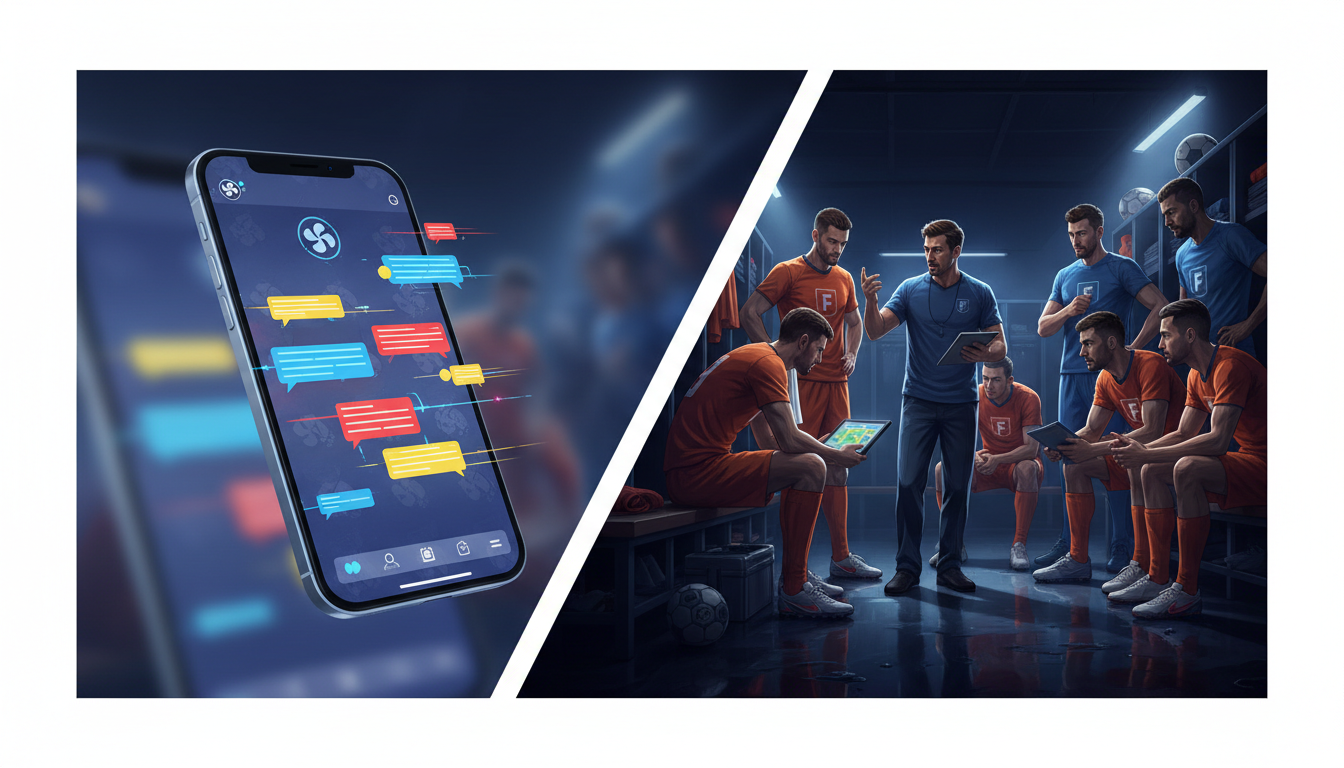
On Fanfun, the interactive AI Chat experience is engineered precisely for this level of depth. Instead of reading passive articles or watching one-way clips, Fanfun lets you step directly into the huddle. Whether you are arguing with a virtual manager about a late-game substitution or testing a star striker's tactical awareness, the platform's character models are built to respond to specific pressure points rather than generic trivia.
The Playbook: Three High-Impact Prompts for Immersive Sports Roleplay
To bypass the polite, helpful assistant persona that standard AI defaults to, your prompts must establish three distinct pillars: a clear role for you, a precise timestamp in a high-pressure scenario, and an immediate tactical conflict. Adding sensory cues—such as the smell of floor wax, the deafening roar of an away crowd, or the squeak of sneakers—anchors the AI's persona and signals that this is a creative roleplay space, not a customer service portal.
Designing the Perfect Tactical Prompt
The formula for a high-substance sports prompt is simple: [Role + Scenario Context] + [Tactical Conflict] + [Sensory/Psychological Constraints] = Immersive Response. By structuring your input this way, you prevent the AI from giving a generalized overview and force it to respond in character, from a specific perspective.
Scenario A: The Halftime Adjustments
In this scenario, you take on the role of an analytical assistant coach confronting a star player during a disastrous playoff game. This setup tests the virtual athlete's tactical responsiveness and willingness to engage in competitive friction.
The Prompt:
"We are in the locker room at halftime of Game 5. The air is thick with sweat, and we are down by 12. I am the lead assistant coach, and I am slamming my clipboard down in front of you. The opponent's pick-and-roll is tearing our drop coverage apart because you are not rotating early enough from the weak side. Respond to me in character. You are exhausted, frustrated, and highly defensive of your positioning, but you want to win. Give me your tactical counter-argument or explain what you are seeing on the floor. Do not break character."
By forcing the AI to defend its positioning, you bypass generic 'we just have to play harder' platitudes. The virtual athlete must analyze the defensive scheme you mentioned (drop coverage) and respond with an athletic justification, creating a highly realistic locker room debate.
Scenario B: The Post-Match Press Conference Grill
Athletes are trained to give diplomatic answers to the media, but under pressure, the cracks show. This scenario puts you in the press room as a skeptical beat reporter who is not buying the standard PR answers.
The Prompt:
"The game just ended. You missed the potential game-winning shot after driving into a triple-team instead of passing to our open three-point specialist in the corner. I am the veteran, skeptical beat reporter for the local paper. I am holding up my voice recorder in a crowded media room. I ask you: 'Why did you ignore the open man on the final possession? Is there a trust issue on this roster, or did you just want the glory?' Respond with the defensive, high-friction tone of an elite competitor who hates losing and hates being questioned by the media."
This prompt forces the AI to navigate the tension between maintaining a professional image and venting genuine competitive frustration. It makes for an incredibly dynamic text exchange as you follow up on their justifications.
Scenario C: The Legacy Debate (Cross-Era Matchups)
One of the greatest joys of sports fandom is arguing across eras. Instead of asking a generic 'who is better' question, this prompt forces a modern virtual star to break down how they would physically survive and dominate in a different era of sports history.
The Prompt:
"You are a modern elite scoring champion. I am putting you in a time machine and dropping you into a 1994 playoff game where hand-checking is legal and defenders can physically punish you in the paint. Explain to me the exact adjustments you would make to your footwork, off-ball movement, and shooting release to score 30 points against that physical defense. Do not just say you would adapt—give me the physical and tactical mechanics of how you beat their physical press."
This prompt requires the AI to analyze specific rulesets (hand-checking, zone defense rules) and apply them to their own virtual playstyle, resulting in a deeply educational and highly entertaining tactical breakdown.
Setting the Ground Rules: A Framework for Directing Your Virtual Coach
To keep your sessions running smoothly, you must establish clear boundaries. If you allow the AI to control the pace, it will often default to an overly polite, supportive tone that breaks the illusion of a high-pressure sports environment. Before you begin, refer to transition to our comprehensive guide on the locker room protocol for virtual athletes to understand how to maintain character consistency over long sessions.
Use the following comparison framework to guide your chat setup:
| Feature | Dry Q&A Mode (Avoid This) | Locker Room Mode (Do This) |
|---|---|---|
| User's Role | Passive Fan / Interviewer | Coach, Teammate, Rival, or Beat Reporter |
| Time & Setting | Present day, generic chat window | Specific high-stakes game moment (e.g., Halftime, Game 7) |
| Tone and Friction | Polite, informative, objective | Competitive, defensive, urgent, emotionally charged |
| Tactical Focus | Broad career summaries and stats | Specific play calls, defensive coverages, and physical mechanics |
By enforcing "Locker Room Mode," you encourage the AI to draw on Fanfun's specialized personality tuning. This ensures the tone matches the real-world athlete's public persona—whether that is the fiery intensity of a legendary coach or the cool, calculated confidence of a championship-winning point guard.
Simulating Alternate Timelines: Rewriting Sports History
Every sports fan is haunted by "what ifs." What if your team didn't pass on that generational talent in the draft? What if a legendary trade actually went through? What if that championship-winning field goal hadn't drifted wide right?
You can use Fanfun's interactive AI Chat to co-write alternate sports histories. By initiating a chat at a critical historical juncture, you can explore how an athlete's career, psychology, and legacy would have shifted under different circumstances. To master the mechanics of world-building in text, you can study the creative principles of co-writing alternate timelines with virtual characters, adapting those narrative rules for the sports arena.
When running an alternate timeline simulation, remember to maintain realistic athletic psychology. An elite icon would not suddenly become soft or indifferent just because they play for a different franchise; instead, explore how their signature intensity would clash or mesh with a different set of teammates, a different coaching staff, or a different city's media market. This keeps the simulation grounded in human truth, making the resulting alternate history feel earned, plausible, and incredibly satisfying to play out.
How do I make an AI sports chat feel like a real locker room?
To make the chat feel real, avoid asking generic questions. Instead, set a specific high-stakes scenario in your opening prompt. Define your role (e.g., head coach, teammate), the exact moment (e.g., down by 10 at halftime of Game 7), and include sensory details like squeaking sneakers or crowd noise. This forces the AI to abandon its polite default tone and adopt the urgency of an active competitor.
Can I debate specific game strategies and plays with an AI athlete?
Yes. By introducing specific tactical terms—such as "drop coverage," "high-screen roll," "zone press," or "underlapping runs"—you signal to the AI that you want a high-substance debate. The virtual athlete will draw on its training to respond with appropriate tactical adjustments, justifications, or counter-strategies.
What are the best prompts to get realistic reactions from virtual coaches?
The best prompts for virtual coaches involve immediate conflict and roster decisions. Challenge them on why they benched a star player, ask them to defend a controversial late-game play call, or present a scenario where their team is struggling against a specific defensive look and ask for their immediate adjustments.
How does Fanfun customize the personalities of its virtual sports icons?
Fanfun tunes its AI models using the public personas, speech patterns, career histories, and known competitive styles of specific sports figures. This ensures that a virtual coach responds with their signature intensity and tactical vocabulary, rather than giving generic, sterile answers.