The Sopranos Effect: Why Chris Caldovino’s Delivery Is the New Benchmark for Mob-Style Content
Mastering the gritty, deliberate delivery of character actors like Chris Caldovino is the secret to high-impact voiceovers. Learn how to use AI to bridge the gap between flat reading and compelling mob-boss narrative.
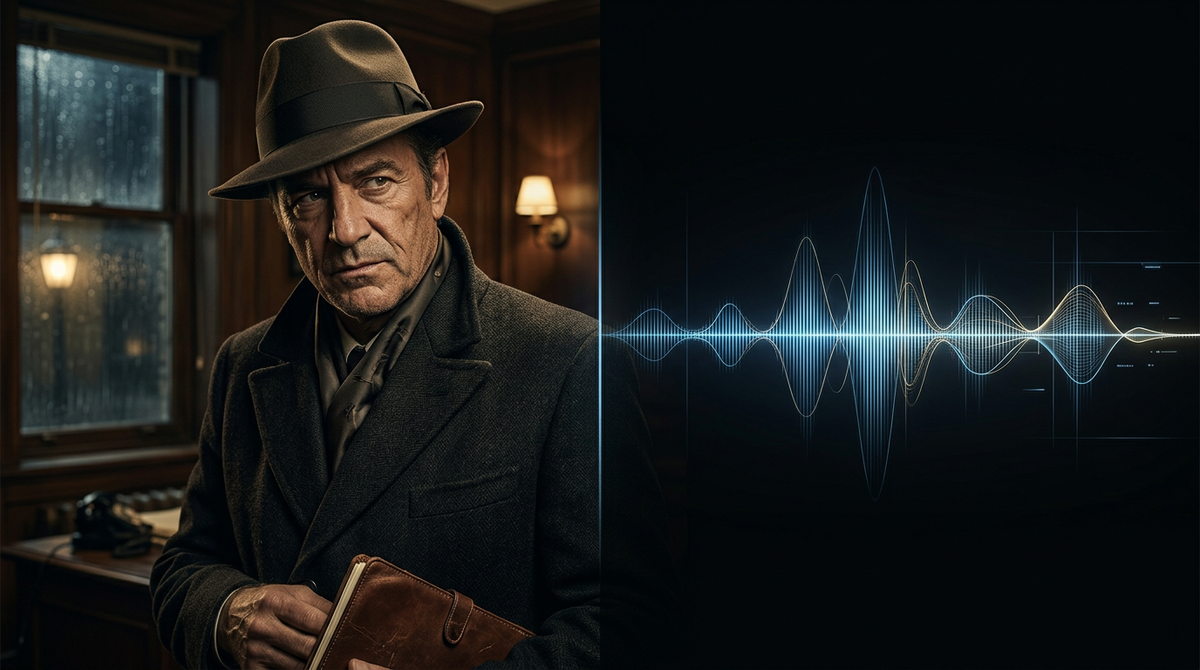
In the world of character-driven storytelling, the difference between a forgettable voiceover and a scene-stealer often comes down to what is left unsaid. Actors like Chris Caldovino have mastered a specific, street-smart delivery—a blend of gravelly texture, deliberate pacing, and a simmering intensity that commands attention.
This isn't just about sounding tough; it is about the architecture of a sentence, where the silence between words carries as much weight as the dialogue itself. For creators looking to inject this mob-boss energy into their own projects, understanding the mechanics of this cadence is essential for high-impact content creation.
The Anatomy of a Mob Monologue
The “Caldovino style” relies on three technical pillars: the stare-down pause, controlled texture, and the economy of emphasis. In film, the pause is a power move; it forces the listener to anticipate the next word, creating a vacuum of tension that the speaker eventually fills with a dry, matter-of-fact punchline. To replicate this, you must avoid the trap of over-acting. Intensity is rarely found in shouting; it is found in the restraint.

When you use an AI voice generator, the goal is to lean into the 'grit'—a subtle rasp in the lower register—while keeping the conversational speed slow and rhythmic. If the voice moves too quickly, you lose the gravitas. If it is too slow, you lose the listener. The sweet spot is a steady, rhythmic cadence that suggests the speaker has nothing to prove and nowhere to be.
The Physics of the 'Stare-Down' Pause
Why do these pauses work? In audio-only formats like podcasts or short-form social clips, silence acts as a visual cue. When a character stops mid-sentence, the brain registers it as a moment of decision-making or intimidation. In your script, don't just write a block of text. Use ellipses (...) to force the AI to hold a note or take a breath.
This isn't just about the technology; it's about the editorial choice to let the listener sit with the tension. When you use a platform like Fanfun, you aren't just selecting a voice; you are curating a performance. By treating the AI as a collaborator rather than a tool, you can manipulate these pauses to craft a monologue that feels like it was ripped straight from a high-stakes crime drama.
Capturing Character Archetypes with AI
The evolution of AI voice technology has shifted from generating generic, robotic tones toward capturing specific character archetypes. We are no longer limited to 'male voice 1' or 'female voice 2.' Today, platforms like Fanfun allow creators to experiment with nuanced, recognizable personas that bring built-in history and authority to a script.
By leveraging these specialized AI voices, you can move away from the 'tough guy' caricature and toward a more nuanced performance. Whether you are building a narrative podcast, a short-form crime thriller for TikTok, or a dark comedy sketch, the ability to dial in the specific level of grit allows you to match the voice to the exact mood of your content. This is the difference between a generic mobster and a character that feels lived-in and real.
From Screen to Script: Applying the Cadence
When writing for an AI voice, your script must be treated as a blueprint for performance. A simple test to see if your script is ready: read it out loud while timing yourself. If you are rushing, the AI will likely rush, too. To get that mob-boss delivery, you need to bake 'breathing room' into the text. Use line breaks to force the AI to handle the pacing, creating natural gaps that mimic a real, intimidating conversation.
It is helpful to contrast this with other archetypes. For instance, comparing the low-key, menacing delivery of a mob-boss persona with the larger-than-life, high-energy presence of Shaq illustrates how tone dictates the entire experience. While the former relies on stillness and silence, the latter thrives on projection and charisma. Choosing the right persona for your project is the first step in ensuring your content lands with the intended impact.
The New Era of Fan-Driven Media
The rise of AI voice tools has effectively democratized character-driven media, serving as the ultimate evolution of cameo alternatives. Creators are no longer waiting for celebrity availability or navigating the limitations of traditional shoutout platforms. Instead, they are building 'what-if' scenarios, fan dubs, and original narratives that place their favorite character archetypes in entirely new contexts.
This is a shift from passive consumption to active, creative participation. By using tools that offer flexible, interactive voice experiences, fans are becoming directors of their own content. The ability to generate these voices on demand—without the friction of traditional booking—means that the only limit is the script you write. Whether you are experimenting with the Dwayne Johnson Ai for a motivational parody or exploring the iconic, recognizable cadence of Spongebob Squarepants for a surrealist edit, the barrier to entry for high-quality production has never been lower.
Building Your Own Voiceover Toolkit
Different mediums require different levels of energy. Short-form TikTok content often demands an immediate hook, whereas long-form narrative podcasts allow for the slow burn. Here is a framework to help you match the right character voice to your project:
| Archetype | Energy Level | Ideal Use Case |
|---|---|---|
| The Heavy (Caldovino-style) | Low/Intense | Crime narratives, dark comedy, roasts |
| The Hero (e.g., The Rock Dwayne Johnson) | High/Authoritative | Promos, motivational content, high-stakes announcements |
| The Icon (e.g., Mickey Mouse) | High/Whimsical | Fan fiction, animation dubs, lighthearted memes |
| The Pop Culture Star (e.g., Ai Kylie Jenner) | Modern/Casual | Lifestyle vlogs, social media trends, brand promos |
By understanding these archetypes, you can curate a toolkit that serves your creative vision, ensuring that every project you produce feels authentic to the genre you are exploring. The future of content creation isn't just about having the best gear; it's about having the best characters at your fingertips, ready to deliver exactly the performance you need, exactly when you need it.
Advanced Tips for AI Performance
To truly master the mob-boss delivery, consider the environment of your character. A mobster in a quiet, dimly lit room speaks differently than one in a crowded, noisy restaurant. Use your script to indicate these settings. If the scene is chaotic, keep the sentences shorter and more clipped to reflect the urgency. If the scene is a one-on-one negotiation, expand the sentences to allow for more melodic, menacing flows.
Finally, remember that the best AI content often involves iteration. Don't be afraid to generate the same line multiple times with slight tweaks to the punctuation. The beauty of modern AI voice generators is the speed at which you can refine your work, turning a good script into a masterpiece of character-driven audio.
How do I get an AI voice to sound more like a specific character actor?
Focus on the script structure. Use punctuation (ellipses, commas) to control pacing and choose an AI persona that naturally leans into the gravelly or authoritative traits of the archetype you are emulating.
What are the best Cameo alternatives for character-style voiceovers?
Fanfun is the premier alternative, as it offers instant, scalable access to fictional characters and celebrity-style voices that traditional shoutout platforms cannot provide.
Can I use AI voices for professional voiceover projects?
Absolutely. Many content creators use AI voices for podcasts, YouTube, and marketing promos. Ensure you have the rights to the content you are generating and use high-quality, nuanced personas to maintain a professional standard.
How does Fanfun handle different character archetypes?
Fanfun provides a diverse library of characters ranging from sports icons to animated legends, allowing you to select the specific voice that fits the required tone, grit, and energy level of your script.