Beyond the Search Bar: Why Digital Icons Are Redefining Modern Fandom
Fandom is evolving from passive consumption to active, two-way interaction. Discover why fans are moving beyond simple biographical searches toward AI-powered digital experiences.
When fans search for biographical details about an influencer or a fictional character, they are often looking for more than just a birth date or a credit list. They are attempting to anchor a parasocial relationship in the reality of a timeline. In the past, this was the primary way we connected with celebrities—tracking milestones, birthdays, and career shifts. However, for modern creators who live in a state of perpetual digital presence, data points have become less relevant than the actual content output. The modern influencer doesn't just exist in interviews or magazines; they exist as a continuous, interactive stream of storytelling.
This shift has fundamentally changed the fan experience. We are moving away from the static, one-way consumption of content and toward a model where the creator’s "vibe" is something fans can engage with in real time. The digital creator is no longer just a person you watch; they are an archetype that persists across platforms, memes, and now, AI-driven interactive formats. This evolution demands a new set of tools for fans who want to participate in the culture rather than just observe it from the sidelines.
The Limits of Biographical Data
The urge to know a creator's age or background is rooted in a desire for proximity. We want to feel like we "know" the person behind the screen. But biographical data is inherently limited. It provides facts, but it doesn't provide connection. As fans become more sophisticated, they are realizing that the search bar is a dead end for engagement. Once you find the number, the interaction stops. You are left with a piece of trivia rather than an experience.
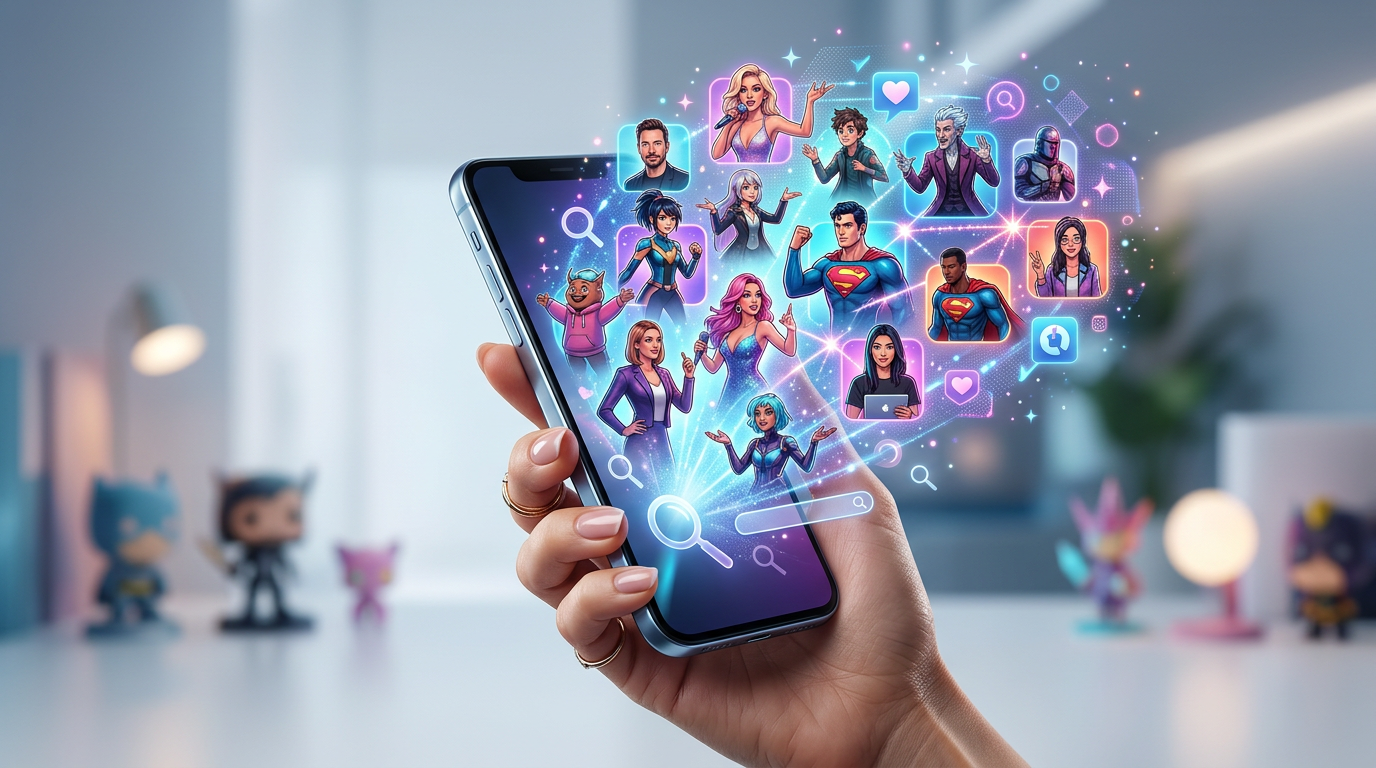
This is where platforms like Fanfun bridge the gap. Instead of just searching for information, fans can now use AI to step into a space where they can actually interact with the persona of their favorite icons. By transforming passive data into an active, conversational experience, fans can move beyond the limits of traditional social media and into a realm where they are the directors of the interaction.
The Psychology of Participatory Fandom
Why do we feel compelled to interact with icons? It’s rarely about the information itself and almost always about the emotional resonance of the character. When you engage with a persona, you are effectively participating in an extension of their narrative. This is the difference between reading a biography and co-authoring a moment. Whether you are looking to generate a custom birthday greeting or a witty roast, the ability to manipulate the persona's output—rather than simply reading their Wikipedia page—transforms the fan experience from a static observation into a creative act. This is the core of modern fandom: the transition from being a consumer of content to being a producer of culture.
From Passive Following to Active Interaction
Traditional social media platforms are designed for broadcasting, not conversing. You can comment on a post, but you are rarely heard. Today’s digital fandom requires more agency. Whether you want to simulate a conversation with a sports legend like Shaq or engage with the high-energy personality of Dwayne Johnson AI, the technology now exists to make those experiences personal and immediate. The ability to generate a custom message or a witty response from a persona you admire changes the dynamic from a one-way street to a collaborative playground.
Consider the difference between a static celebrity shoutout and an AI-driven interaction. A shoutout is a closed loop—you pay for a message that is delivered to you, often after a long wait. An AI persona, however, is a dynamic tool. It allows for two-way communication, meaning you can ask questions, request specific types of content, or even generate custom scenarios. This turns the fan from a spectator into a co-creator, allowing you to tailor the output to fit your specific needs, whether that's a birthday wish or a custom roast. The lack of friction in this process—the ability to generate content in minutes—is what separates modern digital fandom from the legacy models of the past.
The Architecture of Modern Fandom
To determine if your current fandom experience is working for you, use this framework to evaluate your engagement:
| Feature | Static Fandom (Searching) | Interactive Fandom (Fanfun) |
|---|---|---|
| Engagement | Watching | Conversing |
| Customization | None | High |
| Delivery | Immediate | Immediate |
| Role | Passive Observer | Active Creator |
As AI voice generators and interactive chat tools become standard, the distinction between a "real" person and a "digital persona" will continue to blur. The key is recognizing when you want to learn, and when you want to create. If you are looking for a birthday wish, a meme, or a fun, custom interaction, the digital persona offers a level of creative freedom that traditional media simply cannot match. You are no longer limited by what a celebrity is willing to say on camera; you are limited only by your own imagination.
Integrating Icons into Your Creative Workflow
Modern fandom is about what you can do with the tools at your disposal. Whether you are creating fan edits, building a birthday surprise, or exploring the creative potential of pop culture icons like Spongebob Squarepants, the goal is to have fun with the content. You aren't just observing these characters; you are utilizing them as building blocks for your own digital footprint.
For content creators, this is a massive shift. You can now incorporate the "voice" of a legend like Kobe Bean Bryant into a tribute project, or use the recognizable, polished charm of stars like Sydney Sweeney to add a layer of professional flair to your own original content. Even iconic characters like Mickey Mouse become accessible tools for storytelling. The most successful creators today are those who understand that these tools are not about replacing the real person, but about amplifying the energy that the character or celebrity represents. By leaning into this, fans can create experiences that are genuinely useful, highly personalized, and infinitely more engaging than a simple search result. The future of fandom isn't found in a biography; it's found in the conversation you start today. When you leverage platforms like Fanfun, you stop being a fan on the outside looking in, and you start participating in the very content that defines the culture you love.
How does AI interaction differ from a standard celebrity shoutout?
A standard shoutout is a one-way, fixed-cost video. AI interaction on Fanfun is a two-way, dynamic experience that allows for instant, custom responses, roasts, and messages, giving you total creative control.
Can I use these AI tools for professional content creation?
Yes. Content creators use Fanfun to generate voiceovers and character interactions that add personality and engagement to their own video projects, memes, and social media content.
Is there a waiting period for these AI interactions?
No. Unlike traditional celebrity booking platforms, Fanfun provides instant delivery, allowing you to generate content in minutes without waiting for celebrity availability.
How do I get started with a specific celebrity or character?
Simply visit the character or celebrity page on Fanfun, such as the Dwayne Johnson AI page, to begin generating your custom messages and interactions immediately.