Beyond the Static PDF: How to Design Interactive Virtual Birthday Cards with Real Pop-Culture Punch
Traditional virtual cards are often boring, static templates that get deleted immediately. Discover how to transform digital greetings into high-energy, interactive pop-culture experiences that your friends will actually want to save and share.
The standard virtual card is a tragedy of low effort. We have all received one: a generic, pre-designed template featuring pixelated digital glitter, a tinny midi version of "Happy Birthday," and a block of static text that reads like a corporate email. It is the digital equivalent of grabbing a dusty, generic card from a gas station on the way to a party. It is opened out of obligation, acknowledged with a polite thank-you text, and promptly deleted or forgotten in an overloaded email inbox.
But the digital medium should not be treated as a flat, digitized version of paper. When you treat the screen as an interactive canvas rather than a static page, you open up a world of creative possibilities. By shifting your approach to interactive, pop-culture-infused experiences, you can transform a routine birthday wish into a memorable highlight of the recipient's year. Leveraging tools like Fanfun, you can create immersive, personalized moments that celebrate their favorite fandoms, make them laugh, and actually feel worth saving and sharing.
Why Traditional Virtual Birthday Cards Feel Like an Afterthought (and How to Fix It)
The core problem with traditional e-cards is that they demand nothing from the recipient but passive consumption. They are designed for mass appeal, which means they lack the specific, sharp edges that make real-world relationships interesting. A card that is designed to work for everyone ultimately works for no one. To fix this, we have to rethink how we apply the psychology of gift-giving to digital spaces.
A truly great gift relies on specificity: inside jokes, shared fandoms, and custom-tailored media that proves you actually know and understand the recipient. When you shift your focus toward designing virtual gifts that don't feel like an afterthought, you stop thinking about templates and start thinking about experiences. High-substance virtual cards leverage interactive elements, audio-visual surprises, and personalized AI integrations to create an emotional impact that a paper envelope simply cannot match.
4 Creative Virtual Card Frameworks That Go Beyond the Text
To break out of the static template rut, you need a framework that utilizes modern media formats. Instead of writing a paragraph of text, consider these four highly engaging, interactive digital card concepts.
Concept 1: The Interactive Character Roast
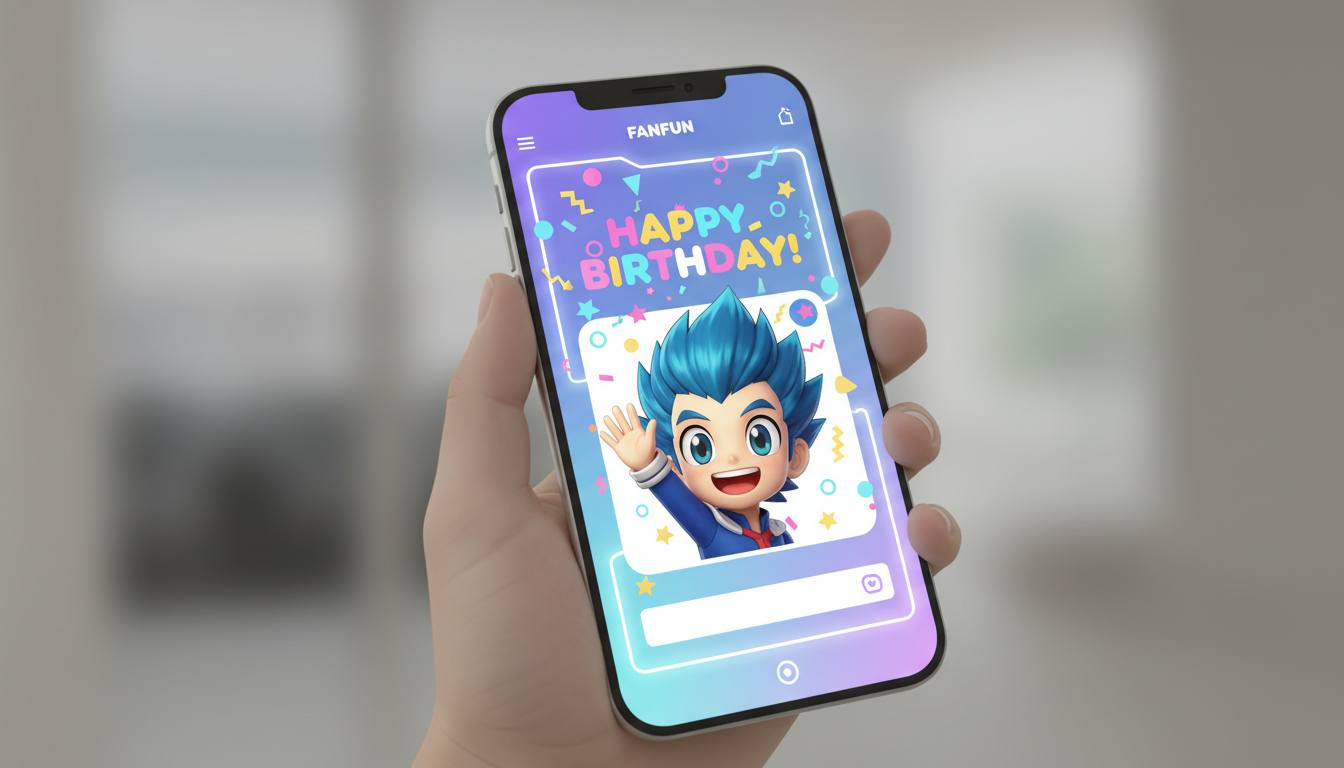
Instead of a standard "hope you have a great day" message, imagine having a legendary anime character, a beloved cartoon icon, or a famous sports figure playfully roast the birthday recipient. Using Fanfun's AI video generation, you can script a custom video where an AI version of their favorite character calls them out for their specific quirks—like their terrible gaming habits, their obsession with iced coffee, or their inability to arrive on time. For guidance on how to execute this perfectly, check out our guide on directing custom birthday video greetings.
Concept 2: The Multi-Media Fan Dub
If your friend is a movie buff, take an iconic scene from their favorite cinematic universe and replace the original audio with a custom-tailored birthday message. You can use an AI voice generator to craft a script where the hero of an action movie or the lead in a dramatic fantasy film is suddenly discussing your friend's upcoming birthday party. Layering this custom voiceover over high-quality video clips creates a hilarious, high-production-value greeting that feels incredibly premium.
Concept 3: The Gamified Birthday Quest
Turn the card itself into a digital game. Instead of sending a single link, send a sequence of digital clues. For example, you can hide the final birthday message behind a password-protected link, where the password is the answer to a highly specific inside joke. You can have them solve a custom word puzzle, track down a specific coordinate on Google Maps from a trip you took together, or answer trivia about their own life to unlock the final video greeting.
Concept 4: The Live-Chat Experience
Instead of a static video, give them an active experience. You can set up a personalized interactive session where they get to chat directly with an AI persona of their favorite cultural icon. Whether they want to talk strategy with an AI version of a famous athlete or engage in playful banter with an anime hero, this interactive format turns a passive card into a live conversation. Learn more about setting up these custom interactions in our guide to chatting with virtual movie stars.
The Virtual Card Execution Matrix: Matching Formats to Personality Types
Not every digital card format works for every recipient. A high-octane video roast might thrill a meme-loving college friend but completely overwhelm a quiet, film-loving relative. Use the matrix below to match the perfect interactive format to your recipient's digital habits and personality archetype.
| Recipient Archetype | Ideal Virtual Card Format | Primary Tools Required | The Vibe |
|---|---|---|---|
| The Meme Lord | Interactive Character Roast | Fanfun AI Video Generator | Chaotic, hilarious, high-energy, self-deprecating |
| The Cinephile | Multi-Media Fan Dub | AI Voice Generator & Video Editor | Cinematic, clever, highly detailed, dramatic |
| The Hardcore Gamer | Gamified Birthday Quest | Interactive forms, digital clues, custom puzzles | Challenging, rewarding, mysterious, nostalgic |
| The Fandom Fanatic | The Live-Chat Experience | Fanfun AI Interactive Chat | Personalized, immersive, surprising, engaging |
How to Direct an AI Character for the Ultimate Birthday Greeting
If you choose to use an AI character video or voiceover for your virtual card, the secret to making it land lies in your direction. AI tools are incredibly powerful, but they rely on the quality of your inputs. To make the greeting feel genuine and shockingly personal, you must avoid generic praise and lean heavily into specificity.
Writing the Perfect Script: Specificity is Your Superpower
When writing a script for an AI character on Fanfun, skip the standard "Happy Birthday, have a great day!" platitudes. Instead, construct your script around three core elements:
- The Hyper-Specific Hook: Open with a reference that immediately proves this isn't a pre-made template. Mention their pet's highly unusual name, their specific job title, or the exact city they just moved to.
- The Playful Conflict: Introduce a lighthearted roast or inside joke. If the character is an AI sports star, have them comment on the recipient's terrible fantasy football draft. If it is an anime character, have them mention the recipient's massive backlog of unwatched shows.
- The Hype-Up: Pivot from the roast into a genuine moment of celebration. Let the character deliver a high-energy toast that makes the recipient feel like the absolute main character of their day.
Additionally, pay attention to the technical aspects of voice generation. AI voice engines perform best when you write phonetically for difficult names or slang. If your friend's name is unusual, spell it out phonetically in parentheses. Use punctuation like ellipses (...) or dashes (—) to force natural pauses, ensuring the final voiceover has the perfect comedic timing and dramatic pacing.
Best Practices for Delivering Your Virtual Masterpiece
Even the most brilliant interactive card will fail if it gets lost in a spam folder or delivered at an inconvenient time. The final step in creating a high-impact digital card is executing a seamless, memorable delivery.
Avoid email whenever possible. Email is associated with work, bills, and marketing newsletters. Instead, deliver your interactive card where they naturally hang out with friends—whether that is a dedicated Discord channel, a lively WhatsApp group chat, or a custom-built, simple landing page. If you are planning long-distance digital celebrations, timing is everything. Coordinate with a group of friends to drop the link at a specific hour, creating a digital "surprise party" effect in their notifications.
Finally, make sure the card is highly accessible. Test the links on both mobile and desktop screens before sending. If you are pairing the virtual card with a physical gift, you can print a custom QR code onto a physical item or a simple cardstock placeholder. When they scan it, they are instantly transported to the high-energy, interactive pop-culture greeting you designed, giving them the best of both the physical and digital worlds.
How do I make a virtual birthday card feel personal instead of lazy?
To make a virtual card feel personal, avoid generic templates and focus on specificity. Incorporate hyper-specific inside jokes, references to their favorite pop-culture fandoms, and custom media. Using platforms like Fanfun to generate custom video messages or interactive AI chats from their favorite characters instantly elevates the card from a lazy afterthought to a thoughtful, personalized experience.
What are some free or budget-friendly alternatives to physical cards?
Instead of buying expensive physical cards that end up in the trash, you can design highly creative digital alternatives. Try creating a gamified digital quest using free online form builders, editing a custom fan-dub voiceover over a movie scene, or using Fanfun to generate an affordable, high-impact personalized AI character greeting.
Can I use AI voices to create custom birthday greetings?
Yes! AI voice generators allow you to write a custom script packed with inside jokes and have it read aloud by realistic AI interpretations of famous characters, movie stars, or cultural icons. For the best results, use phonetic spelling for difficult names and use punctuation to control the pacing and comedic timing of the voiceover.
How do I send a virtual birthday card so it doesn't end up in spam?
Avoid sending your virtual card via standard email, which often gets filtered into promo or spam folders. Instead, deliver the card through direct messaging platforms like Discord, WhatsApp, or iMessage. You can also print a custom QR code on a small physical token, allowing the recipient to scan it and unlock their interactive digital experience instantly.